Skip to Content Facebook Feature Image

Current account not linearly linked to currency exchange rates: PBOC

China

China

China

Current account not linearly linked to currency exchange rates: PBOC

2026-10-09 16:59 Last Updated At:18:18

China's central bank on Thursday released its policy stance on the RMB exchange rate, stating that no linear relationship exists between the current account and exchange rates.

The PBOC clarified in its statement that exchange rates represent the relative value between currencies and are influenced by a multitude of factors, including economic growth, monetary policy, financial markets, geopolitics, and unexpected risk events.

In terms of trade channels, the ratio of global trade volume to global foreign exchange trading volume has fallen from approximately 1:35 in the 1990s to 1:70 by 2025, indicating a diminishing correlation between trade and exchange rates.

The continuous accumulation of financial assets across nations since the turn of the century has amplified the impact of valuation changes and cross-border asset allocation on global imbalances, thereby intensifying spillover effects. Historical experience also shows that sharp fluctuations in the exchange rates of emerging markets are frequently triggered by capital flows in or out of a country.

However, according to the PBOC's policy stance, there is no linear relationship between the current account and exchange rates. A current account surplus does not necessarily imply that the domestic currency is undervalued or requires appreciation, and in recent years, several countries with current account surpluses, such as Japan, Switzerland, and Germany, have actually seen their currencies depreciate.

"In the case of China, funds flowing in from the current account surplus are channeled back into the global economy through outward investments by enterprises and banks, maintaining a broadly balanced balance of payments. Thus, a current account surplus does not necessarily drive an appreciation of the local currency. Conversely, a current account deficit does not inevitably lead to currency depreciation. The United States, for instance, has long run substantial current account deficits, yet the U.S. dollar has generally remained strong," said Dong Ximiao, chief economist of Merchants Union Consumer Finance.

Current account not linearly linked to currency exchange rates: PBOC

Current account not linearly linked to currency exchange rates: PBOC
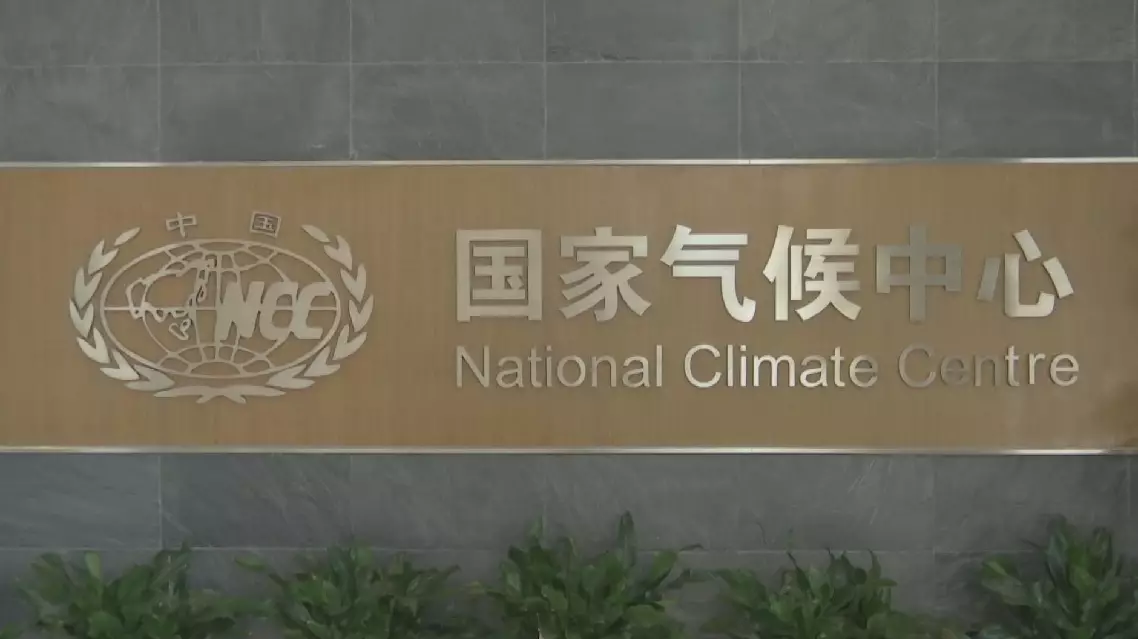
A super El Nino event officially formed in September 2026, monitoring data from China's National Climate Center showed on Friday.

Zhao Junhu, chief forecaster at the center, said that the equatorial central and eastern Pacific entered an El Nino state in May this year, with sea surface temperatures in the key monitoring region rising rapidly and continuously from May to September.

The three-month running mean of the sea surface temperature (SST) index in the monitoring region has remained above 0.5 degrees Celsius for five consecutive months. The index exceeded 2.5 degrees Celsius for the July-September period, meeting the threshold for a super El Nino event.

The event is classified as an eastern Pacific-type El Nino, in which the warmest sea surface temperatures are concentrated in the equatorial eastern Pacific.

Monitoring data showed that sea surface temperatures across most of the equatorial Pacific in September were above average of the same period, with temperatures in the warm pool of the eastern Pacific exceeding the climatological average by more than 3 degrees Celsius.

The SST index for the monitoring region reached 2.94 degrees Celsius in September, up 0.35 degrees Celsius from August. The average index for the July-September period stood at 2.54 degrees Celsius.

Based on a combination of domestic and international dynamical climate models and statistical forecasting methods, the center expects sea surface temperatures in the equatorial central and eastern Pacific to continue rising over the next three months, peaking in late autumn or early winter, Zhao said.

The event is expected to become the strongest El Nino on record since systematic monitoring began, he added.

Super El Nino event formed in September: China's National Climate Center

Super El Nino event formed in September: China's National Climate Center

Super El Nino event formed in September: China's National Climate Center

Super El Nino event formed in September: China's National Climate Center

Recommended Articles