The U.S. dollar weakened in late trading on Monday.
The dollar index, which measures the greenback against six major peers, lost 0.16 percent to 101.719 at 2000 GMT.
In late New York trading, the euro advanced to 1.1194 dollars from 1.1167 dollars in the previous session, and the British pound climbed to 1.3410 dollars from 1.3394 U.S. dollars in the previous session.
The U.S. dollar bought 157.91 Japanese yen, higher than 157.37 Japanese yen in the previous session. The U.S. dollar fell to 0.8183 Swiss francs from 0.8236 Swiss francs, and it added to 1.3987 Canadian dollars from 1.3956 Canadian dollars. The U.S. dollar declined to 9.7807 Swedish Kronor from 9.8170 Swedish Kronor.
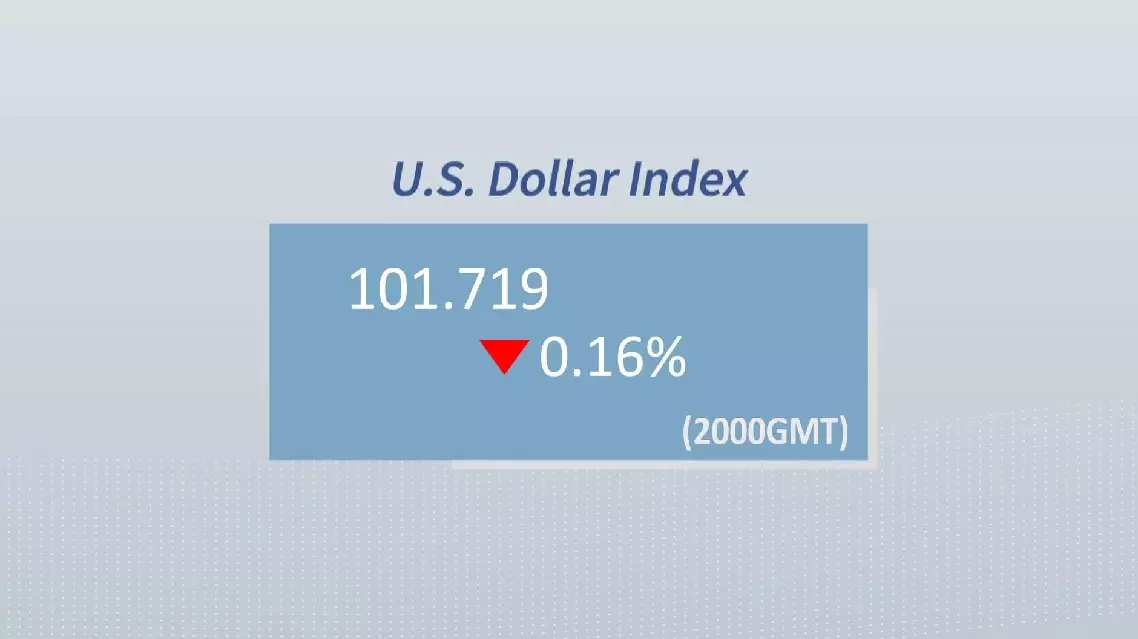
U.S. dollar ticks down
U.S. stocks ended mixed on Monday as technology shares gave back early-session gains, while a sharp plunge in oil prices helped lift industrial and other non-energy stocks.
The Dow Jones Industrial Average rose 213.67 points, or 0.41 percent, to 51,983.98. The benchmark S and P 500 fell 38.67 points, or 0.51 percent, to 7,541.40, while the tech-heavy Nasdaq Composite Index shed 272.68 points, or 1.07 percent, to close at 25,164.32.
Seven of the 11 major S and P 500 sectors finished in positive territory, with consumer discretionary and materials leading the gainers by adding 2.25 percent and 1.83 percent, respectively. Energy and technology paced the laggards, tumbling 3.97 percent and 2.66 percent, respectively.
Wall Street struggled to regain its footing after a bruising month for growth stocks, with the Nasdaq falling 5.2 percent in October. Semiconductor manufacturers faced sustained selling pressure, while shares of Apple fell 1.83 percent ahead of the company's fiscal fourth-quarter earnings release scheduled after the closing bell.
Meanwhile, investor attention remained focused on the artificial intelligence landscape after AI startup Anthropic released an amended S-1 registration statement disclosing its third-quarter financial results.
Traditional economy and industrial stocks helped drive the Dow higher. Architectural coatings manufacturer Sherwin-Williams surged nearly six percent, and home improvement retailer Home Depot advanced 3.6 percent. Conglomerate Honeywell International, industrial manufacturer 3M, and aerospace giant Boeing also posted solid advances, each climbing more than two percent.
In energy markets, crude oil futures dropped over seven percent following reports that the United States and Iran are exploring diplomatic channels to de-escalate ongoing hostilities. Global benchmark Brent crude futures dropped to 104.77 U.S. dollars per barrel on the London ICE Futures Exchange.
On the macroeconomic front, U.S. manufacturing activity continued to expand in October, though at a slightly moderated pace. The S and P Global U.S. Manufacturing Purchasing Managers' Index was revised down to 54.9 in October from an initial estimate of 56, compared with 55.9 recorded in September.
Despite the downward revision, the gauge remained above the critical 50 expansion threshold for a 15th consecutive month, signaling underlying factory resilience even as manufacturers contend with supply chain disruptions and persistent input-cost pressures.
Investors are now looking ahead to a busy week of labor market data, culminating in the release of the U.S. Bureau of Labor Statistics' October employment report on Friday.
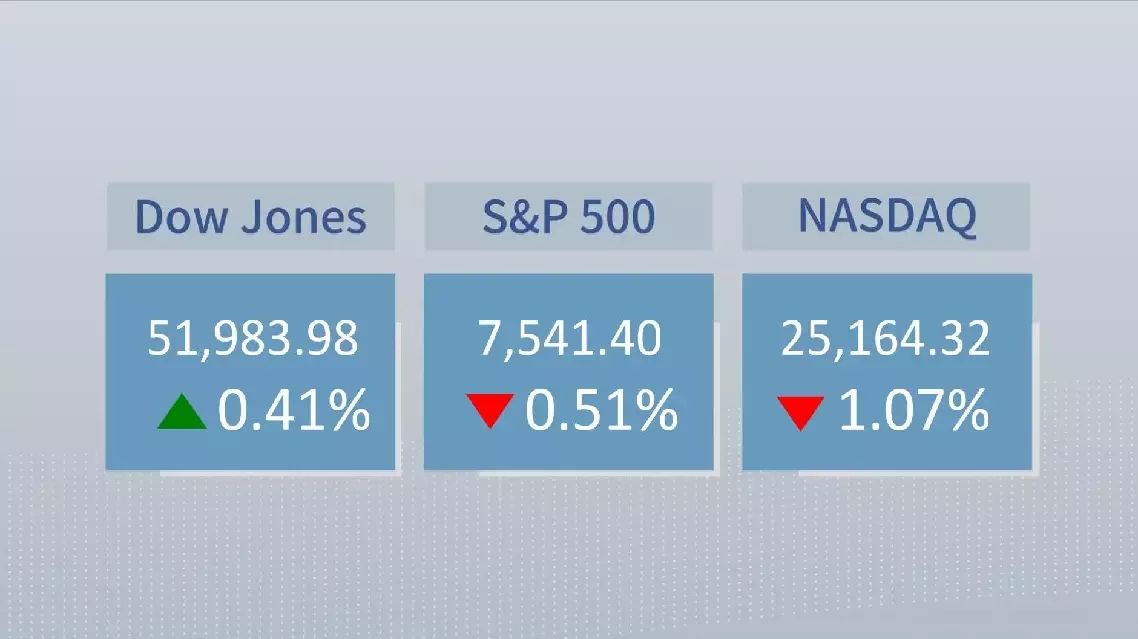
U.S. stocks close mixed as tech sell-off offsets industrial gains