China's second domestically built large cruise ship, Adora Flora City, was delivered to its operator Adora Cruises -- a Chinese-American cruise line -- in Shanghai on Friday, marking the country's entry into a new phase of serial large cruise ship building.
The cruise ship, which features distinctive Chinese-style characteristics, is scheduled to launch its inaugural season from the Nansha International Cruise Home Port in Guangzhou, capital of Guangdong Province in south China.
Adora Flora City was built by Shanghai Waigaoqiao Shipbuilding Company, a subsidiary of China State Shipbuilding Corporation (CSSC). Construction of the cruise ship began in August 2022.
Compared with China's first domestically built large cruise ship, Adora Magic City, the overall construction efficiency improved by 20 percent, according to project figures.
The new ship is larger, with more advanced onboard equipment. Its gross tonnage has increased by 6,400 tons to 141,900 tons, and its total length has increased by 17.4 meters to 341 meters. It has 2,130 guest cabins and can accommodate 5,232 passengers at full capacity.
"Our second homegrown large cruise ship saw a reduction of nearly four million work hours compared to its predecessor. Normally, a civilian vessel takes about one million work hours to build. The reduction in manual labor was substantial, and the work efficiency improved very quickly. For the new large cruise ship, the construction time was shortened by eight months, and the localization rate for interior materials fitting has reached 80 percent," said Chen Jianwei, deputy general manager of Shanghai Waigaoqiao Shipbuilding Company.
Large cruise ships are among the most complex giant system engineering projects in the global industrial system, said Chen Gang, on-site chief commander and chief designer of China's domestically built large cruise ship project.
Adora Flora City has as many as 25 million parts components, and drives the development of about 1,500 upstream and downstream supporting suppliers, reflecting the country's comprehensive industrial strength and advanced manufacturing level, he added.
"As far as the research and development side is concerned, we have preliminarily established a cruise research and development system and completed the implementation and verification of key technologies. In terms of the construction side, we have established the design system and standards for our production. In terms of the supply chain side, we have cultivated a supply chain system based on domestic and international dual circulations. We will follow the parallel strategy of manufacturing, designing, and research and development across generations. The forward conceptual design for China's third homegrown large cruise ship has already begun," Chen said.
After delivery, Adora Flora City will conduct trial voyages and carry out various preparatory tasks before its scheduled maiden voyage. It is due to arrive at the Nansha International Cruise Home Port on Nov. 12, with its inaugural season set to begin on Nov. 22.
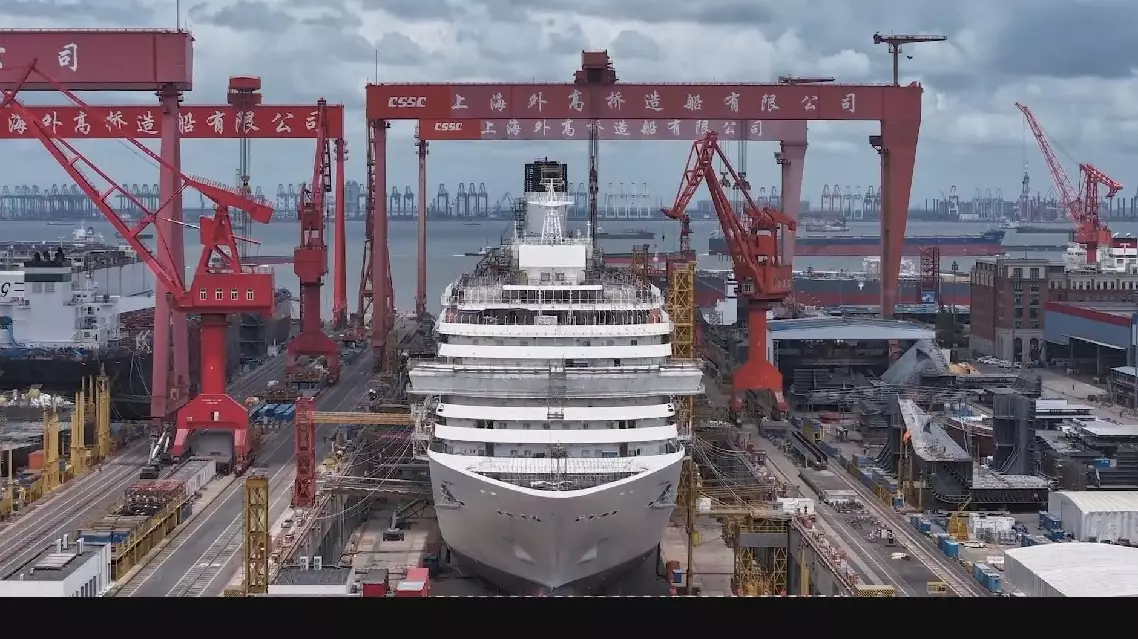
China's second homegrown large cruise ship delivered in Shanghai
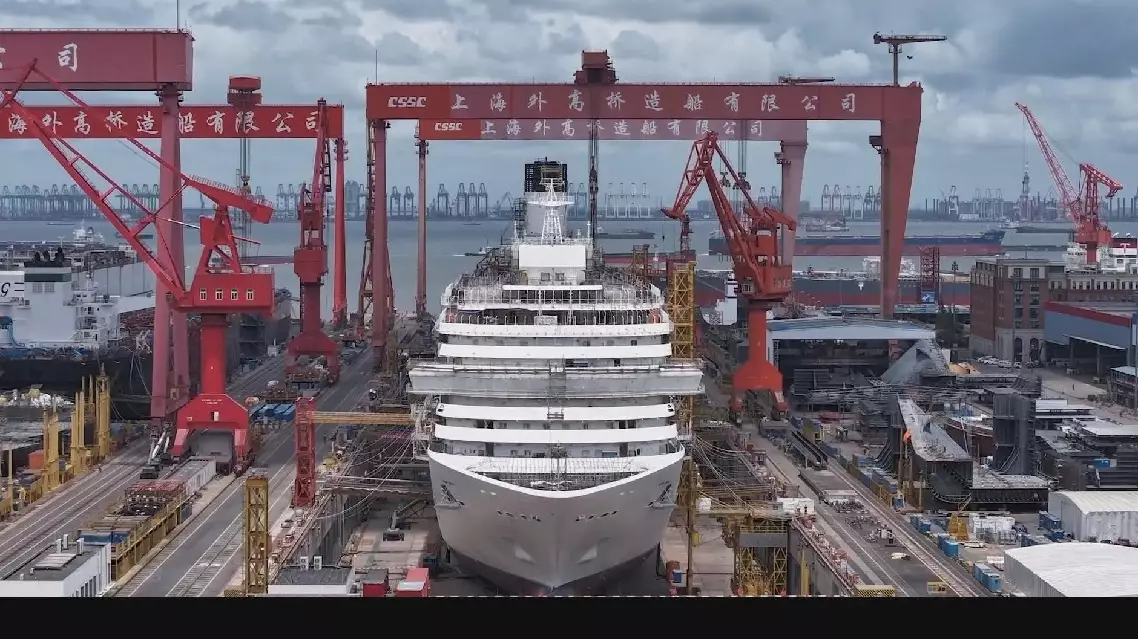
China's second homegrown large cruise ship delivered in Shanghai
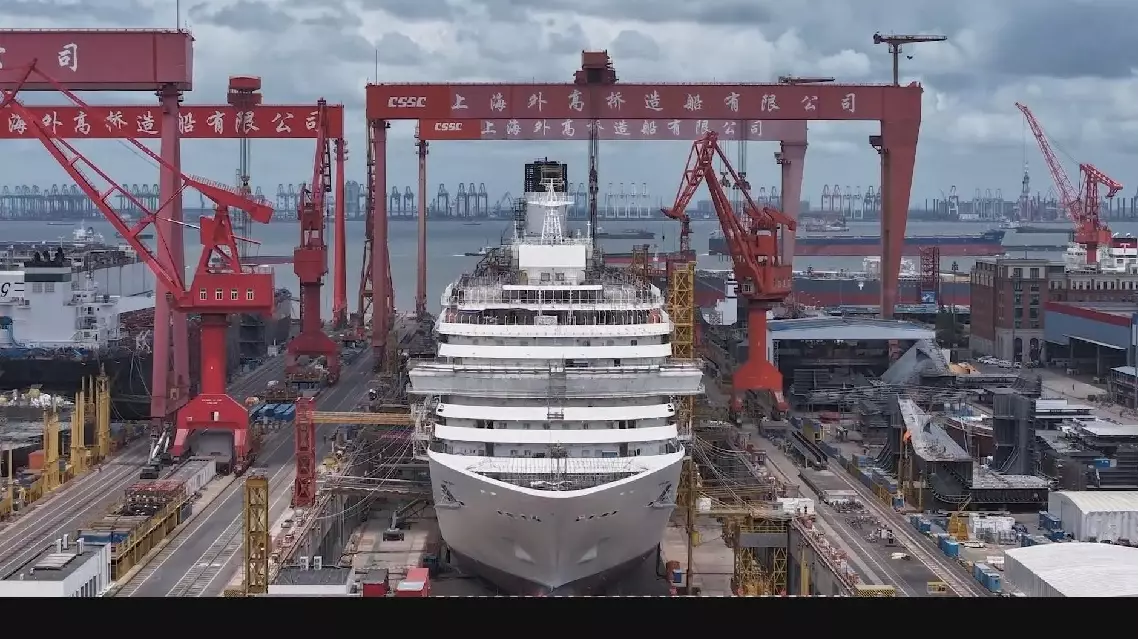
China's second homegrown large cruise ship delivered in Shanghai