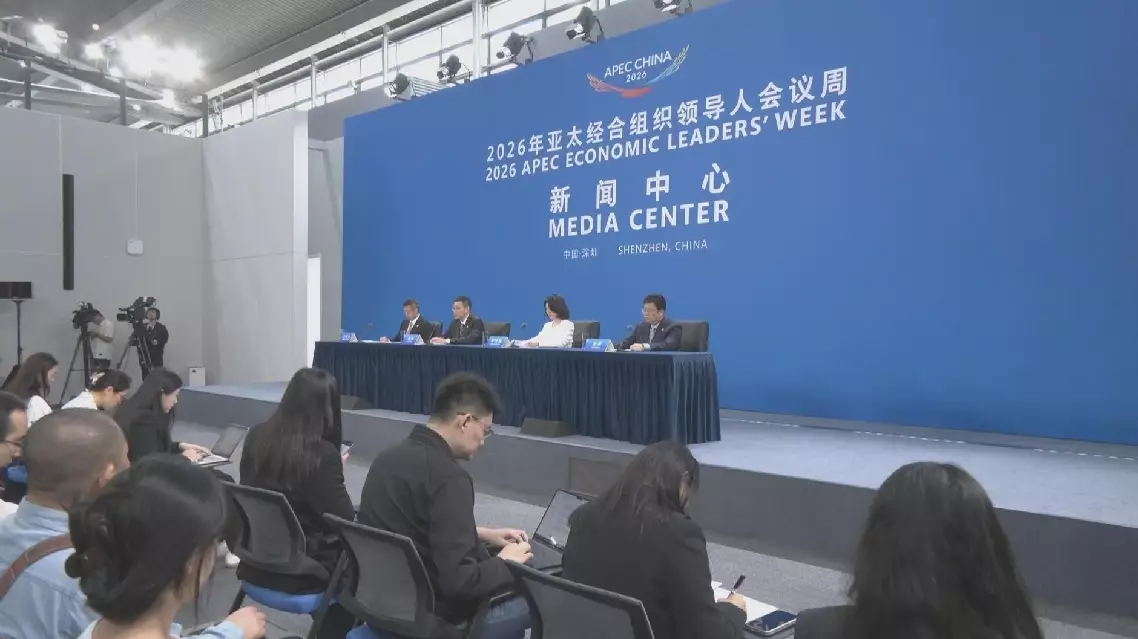
An initiative will be released as an outcome document for the first time at the APEC CEO Summit, which is scheduled to be held in Shenzhen, south China's Guangdong Province, on Tuesday and Wednesday, said an official from the China Council for the Promotion of International Trade (CCPIT) on Sunday.
Li Qingshuang, vice chairwoman of the CCPIT, said at a press conference in Shenzhen that the CEO Summit will bring together more than 2,000 representatives from political and business communities, including leaders of APEC economies.
Under the theme "To Prosper and Win the Future Together," core topics and special topic discussions at the CEO Summit will focus on Jointly Crafting a New Blueprint of Connectivity, Building an Open and Inclusive Artificial Intelligence Innovation Ecosystem, Building a New Paradigm for Sustainable Development in the Asia-Pacific, Jointly Charting a New Journey for the Free Trade Area of the Asia-Pacific, Exploring a New Path for the Digital Economy Cooperation, The Guangdong-Hong Kong-Macao Greater Bay Area and Asia-Pacific Development Opportunities, and Promoting Synergized Digital and Green Transformation, Li said. "The summit will bring together research achievements and exchange consensus, and form and release the Shenzhen Initiative at the APEC CEO Summit 2026. This will be the first time in the 30 years since the CEO Summit was established that an outcome document is released in the form of an initiative. The initiative will systematically incorporate and integrate the core propositions of the business community, offer suggestions and strategies to APEC Economic Leaders' Meeting, provide consensus and reference for subsequent business cooperation in the Asia-Pacific region, and build a common action framework that can be implemented and followed up to continuously deepen and consolidate Asia-Pacific business cooperation," Li said.
The 33rd APEC Economic Leaders' Meeting will be held in Shenzhen on Wednesday and Thursday under the theme "Building an Asia-Pacific Community to Prosper Together."
Initiative to be released at APEC CEO Summit 2026: official
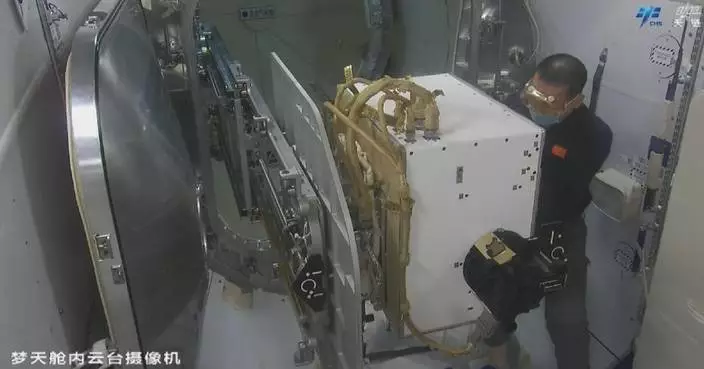
China's space station has made steady progress in its fourth round of space radiation exposure experiments over the past week, with samples including nanozymes, actinomycetes and plant seeds brought back after completing a five-month exposure outside the station.
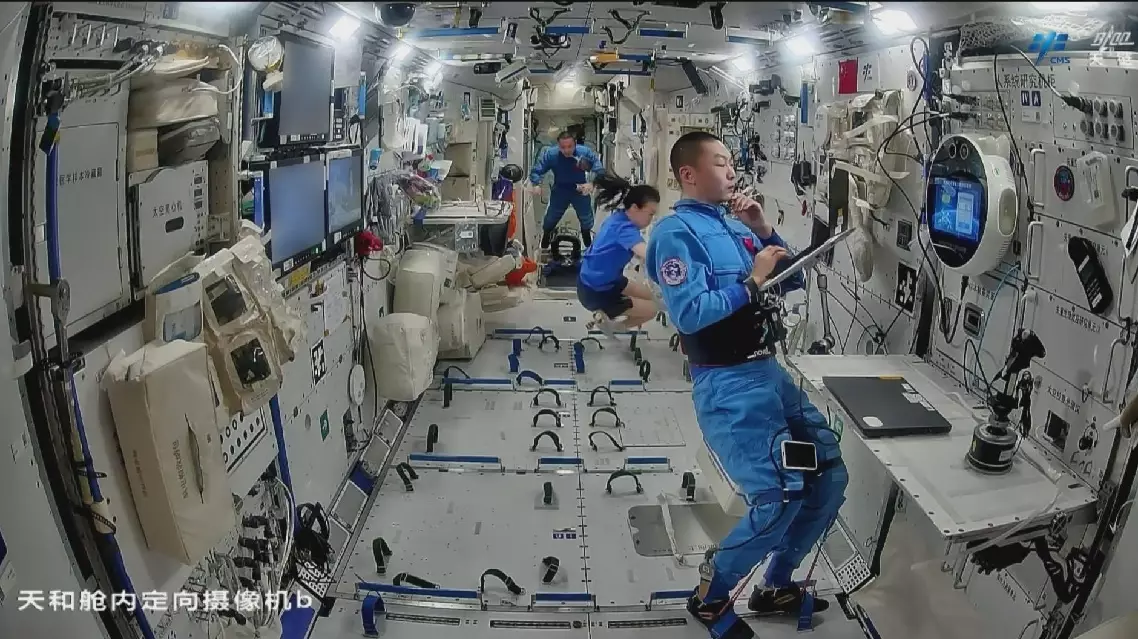
The three Shenzhou-23 astronauts -- Zhu Yangzhu, Zhang Zhiyuan and Li Jiaying -- completed the retrieval, removal and storage of the samples, as well as the handling of the exposure device.
Once returned to Earth, the samples will undergo further analysis to help researchers better understand how space radiation affects living organisms.
The experiment is part of China's broader research into the effects of the space environment on biological systems, particularly the impact of prolonged exposure to space radiation.
The crew also carried out a range of scientific experiments and routine maintenance work aboard the Tiangong space station.
In a study of musculoskeletal responses to microgravity, the astronauts used foot-pressure measurement equipment to collect data during typical workdays. The findings will help researchers examine how the forces acting on bones and muscles vary under different conditions in orbit.
The astronauts also collected nasal and environmental surface swab samples for research into interactions between viruses and immune metabolism.
In addition, they completed assessments of their emergency decision-making abilities and tests of their emotional states in orbit. The data will help ground-based researchers track changes in the crew's decision-making and emotional responses over the course of a space mission. The trio continued routine maintenance of the station's living environment, monitoring cabin air quality through total volatile organic compound test and air cleanliness test. They also replaced components in the regenerative life-support system and the hot-air heating unit in the space kitchen, and cleaned the cabin.
All three astronauts kept to their exercise schedules and used equipment designed to counter the effects of weightlessness, including a device to help prevent bone loss, to maintain their health during the mission.
China's Tiangong space station has entered an era of long-term human habitation. The Shenzhou-23 spacecraft was launched on May 24, carrying three astronauts, two of whom are nearing the end of their sixth month in orbit, while the third is scheduled to remain in space for a full year.
China space station advances fourth round of radiation exposure experiments