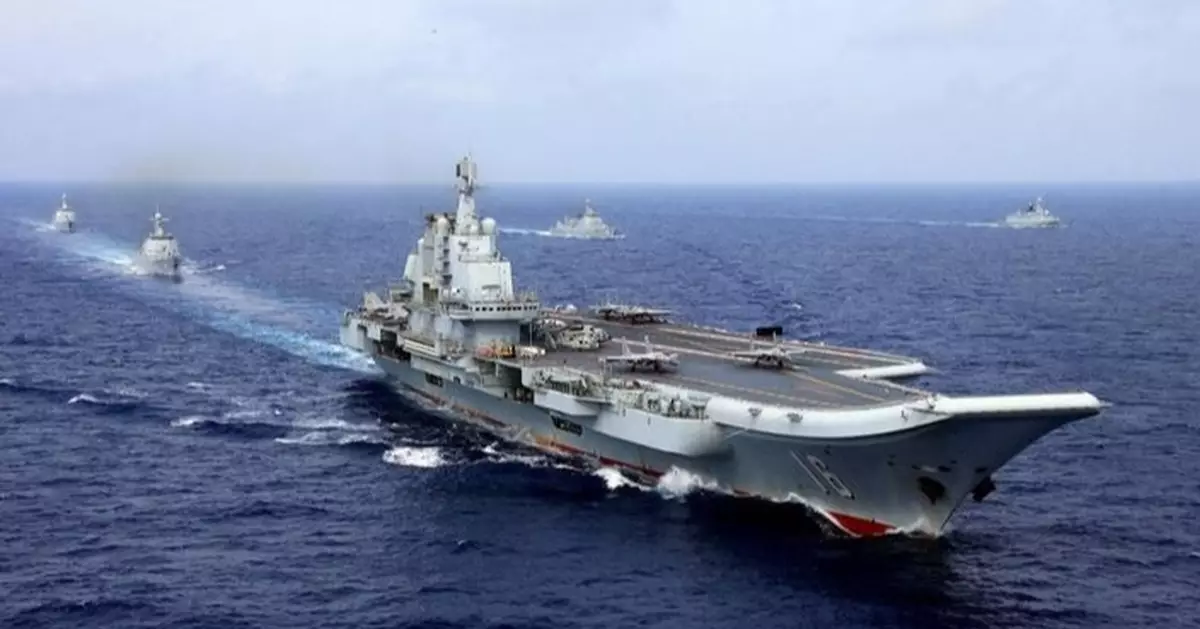

The Western Pacific put on a rare show in early November: the aircraft carriers Liaoning and Fujian were both active at sea at the same time. On November 3, Wu Chao-hsieh, the head of Taiwan's security department, posted a situation map on social media claiming that the Chinese Navy and China Coast Guard had deployed more than 100 vessels in the Western Pacific. That figure comes from Taiwan's own public statements, and no independent source can currently verify it ship by ship.
Two Carriers at Sea
Click to Gallery
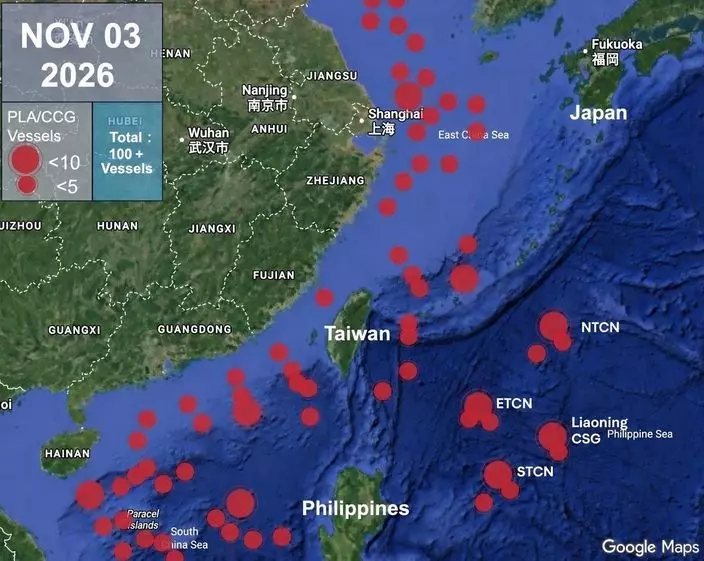
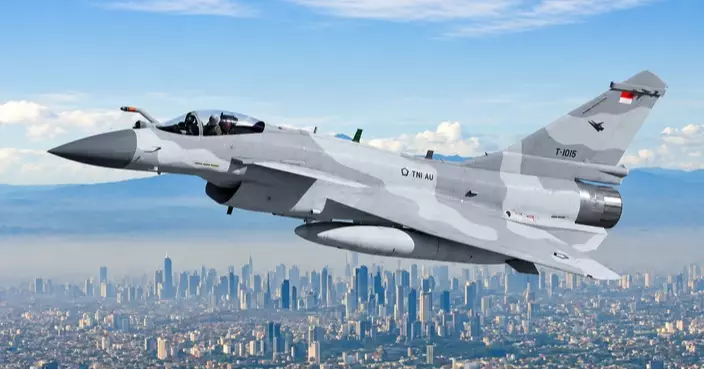
Taiwan map: PLA, coast guard vessels spread wide around island
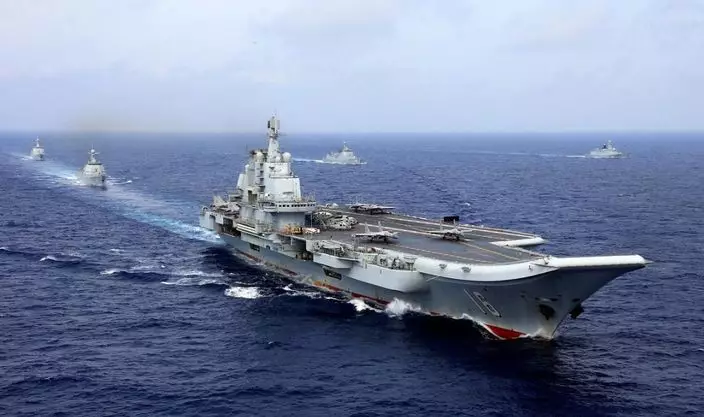
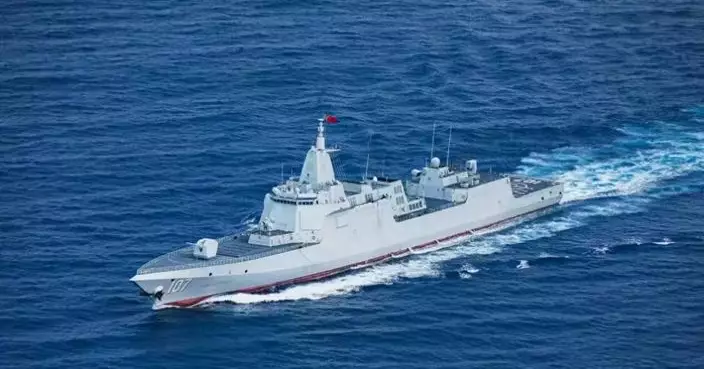
Liaoning carrier group drills in distant Western Pacific.
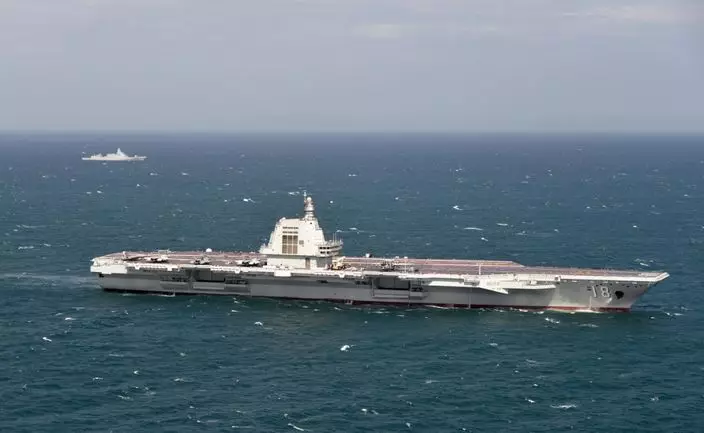
Fujian steps up sea trials toward full combat readiness.
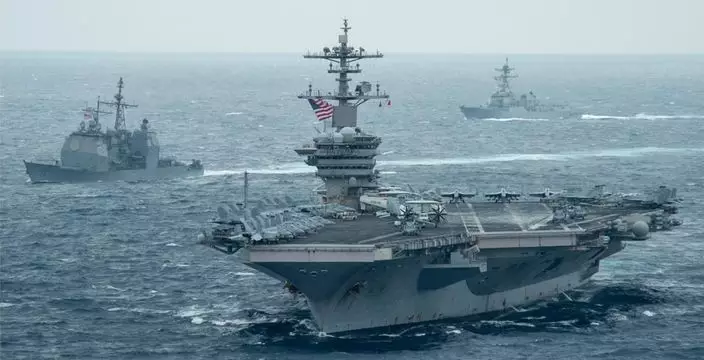
US carrier strike group transits waters for Middle East
The Institute for the Study of War (ISW) offers a different reading. China, the US think tank argues, may be running a large-scale military operation that was never publicly announced and carries no fixed exercise name, simulating the encirclement and isolation of the Taiwan region. Make no mistake: this is an analytical judgment built from vessel deployments, satellite imagery and open-source information. It is not how the Chinese military describes its own activity.
Taiwan map: PLA, coast guard vessels spread wide around island
The Liaoning's route tells its own story. According to the Joint Staff Office of Japan's Ministry of Defense, the carrier group transited the Miyako Strait into the Western Pacific on October 14. It then passed through the Basilan Strait in the Philippines into the Sulawesi Sea on October 22-23, swung northeast into the Philippine Sea, and was still operating there in early November. Its escorts included multiple 10,000-ton Type 055 destroyers, Type 052D destroyers and large replenishment ships.
Liaoning carrier group drills in distant Western Pacific.
The Fujian is at a different stage. November 5 marks one year since it entered service. Satellite imagery from November 2 showed the carrier about 115 kilometers southeast of Sanya, heading east.
CCTV reporting makes the progress explicit. Within its first year of service, the Fujian sailed south through the Taiwan Strait into the South China Sea, then north to the East China Sea and Yellow Sea, completing cross-sea-area test training. The takeaway: the carrier has demonstrated the ability to operate in distant waters across sea areas. And 2026 looms as the pivotal year for its transition from basically forming combat capability to fully forming it.
Reading the Deployment
First, a word of caution. Satellite imagery can confirm where the vessels are and which way they are heading. It cannot prove the vessel has already sailed toward southern Taiwan.
The Fujian may be in service and equipped with electromagnetic catapults, but a new carrier's combat power takes more than that. Carrier-aircraft coordination, deck scheduling, formation operations and sustained support all have to fall into place. The Liaoning is operating in distant seas while the Fujian climbs its training curve. Two carriers at sea at the same time does not mean they have joined forces.
Fujian steps up sea trials toward full combat readiness.
The 100-plus vessels marked on Wu Chao-hsieh's situation map need to be broken down. The ISW report says they include both naval and coast guard forces, spread across two main areas. One group sits between Taiwan and Guam, including the Liaoning carrier formation and multiple vessel formations from three theater commands.
The other group operates around Taiwan, including at least six coast guard ships and an unspecified number of naval vessels. The ISW particularly stresses that the deployment involves the Eastern, Southern and Northern theater commands. Major surface forces from three coastal theater commands all taking part in far-seas operations at the same time is not common.
Air power deserves attention too. Taiwan announced on November 3 that it detected 49 PLA aircraft sorties between 6 a.m. on November 2 and 6 a.m. on November 3. Of those, 31 entered its declared air defense identification zone.
US carrier strike group transits waters for Middle East
The ISW believes these aircraft activities may have coordinated with the vessel deployments toward the Western Pacific. But the specific aircraft types, the nature of the missions, and whether they coordinated directly with the carrier formation all remain unclear. Public evidence is still thin.
The Missing Codename
The missing codename is the tell. In recent years, large PLA operations around the Taiwan Strait usually came with a public exercise name, such as the Joint Sword series.
A name is a signal in itself. It tells outsiders that forces are exercising, and it hints at how far they plan to go.
ISW's read is blunt: this time there is none. Ships are moving, aircraft are flying, and a carrier is leaving port, but no public exercise label has appeared.
The think tank sees a possible capability on display: shifting fast from routine deployment to military operations, while skipping the buffer step of announcing an exercise. That logic holds up only with a caveat. No public announcement does not mean combat missions are already under way, and it certainly does not mean a combat state has begun.
Large-scale force movements can still be training, deterrence, or combat-readiness verification.
ISW also reads the pieces together: the carriers Liaoning and Fujian, China Coast Guard forces, and deployments from three theater commands. Taken as one picture, they point toward a sea-air isolation concept.
Isolation, in this framing, is not a classic amphibious landing. It is about controlling maritime traffic, deterring outside support forces, and coordinating pressure from several directions.
Not the Same Chessboard
One contrast is easy to miss: the US carrier is in transit, not in a standoff. While the Liaoning operates in the Philippine Sea and the Fujian trains in the South China Sea, the US Navy's Roosevelt carrier strike group is sailing from the South China Sea to Singapore. The Roosevelt reportedly arrived in Singapore on November 6 and docked at Changi Naval Base, and will continue through the Strait of Malacca to the Middle East to relieve the Washington, which has already been deployed for a long stretch.
The Western Pacific may look like two Chinese carriers against one American carrier. But the US carrier is hurrying off to another theater. Sharing the same broad waters does not mean playing on the same chessboard.
The value of the ISW report is not whether it correctly guessed what China is doing. It lies in what it reveals about the focus of US defense analysts. They used to ask whether the PLA will fight. Now they ask how far the PLA can go without firing a shot.
From exercise to quarantine, from landing to blockade, the analytical framework has shifted. The US assessment of the Taiwan Strait situation is extending from the outbreak of conflict toward gray-zone pressure.
But there is a fundamental logical mismatch here worth pointing out. When US think tanks use terms such as "quarantine" and "blockade" to describe PLA actions, they are essentially fitting US military concepts onto Chinese military practice.
Beijing Sets the Pace
On Oct. 29, China's Ministry of National Defense gave the official line on the Liaoning carrier group's far-sea activity: it is a routine arrangement inside the annual plan, meant to test and improve far-sea combat capability, and it does not target any specific country or objective.
That is the official characterization of the Liaoning carrier group's training. It cannot be stretched into one blanket label for the Fujian's current departure from port, every vessel deployment, and all air activity.
For China, the hard power is already visible: two carriers deployed, three theater commands coordinating, and sea and air forces linking up in multiple directions. That buildup is real.
The Fujian is still moving from basic combat capability toward full combat capability. The Liaoning, by contrast, has already settled into a smooth far-sea deployment rhythm.
As for when these capabilities might be used, and in what form, the initiative sits in Beijing, not in an ISW report.
US think tanks can analyze, speculate, and stay alert. But the PLA moves at its own pace, and one report will not change that.
The Art of Stopping War
** 博客文章文責自負,不代表本公司立場 **