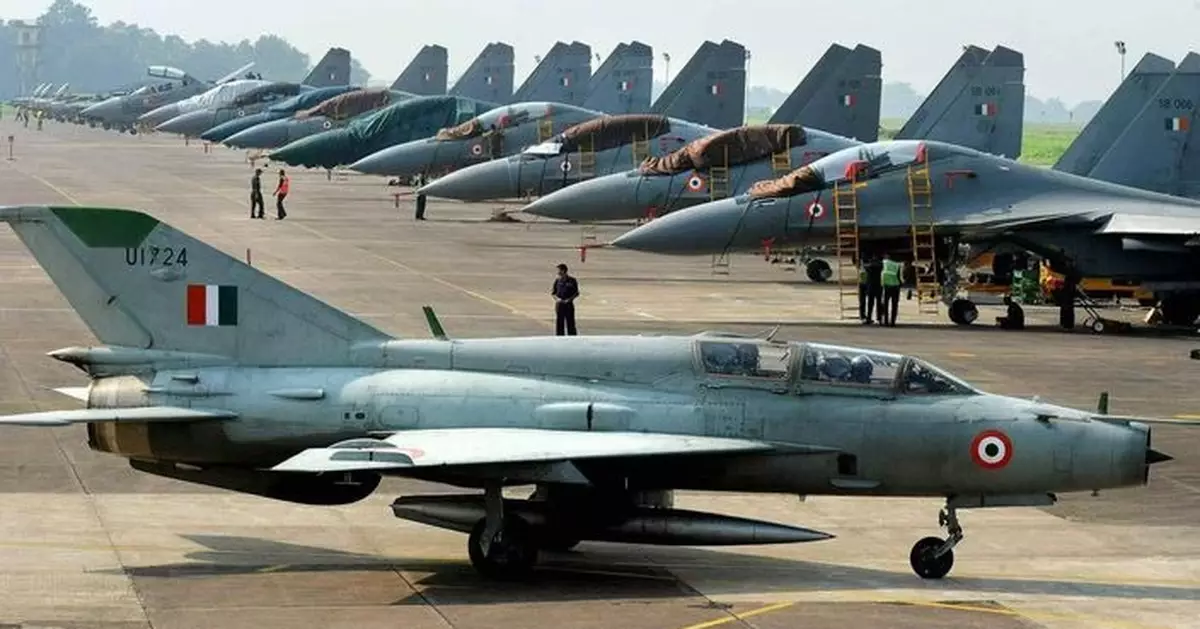
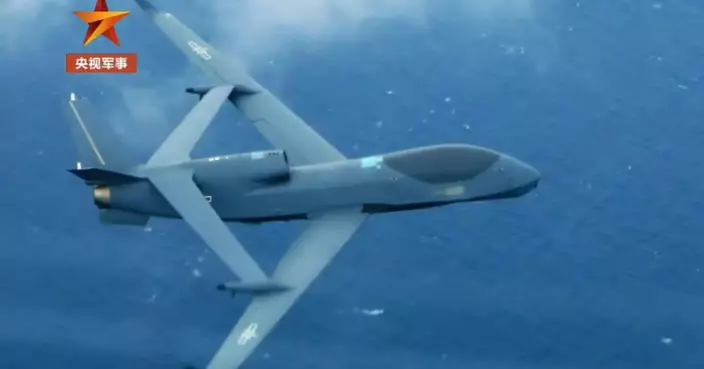
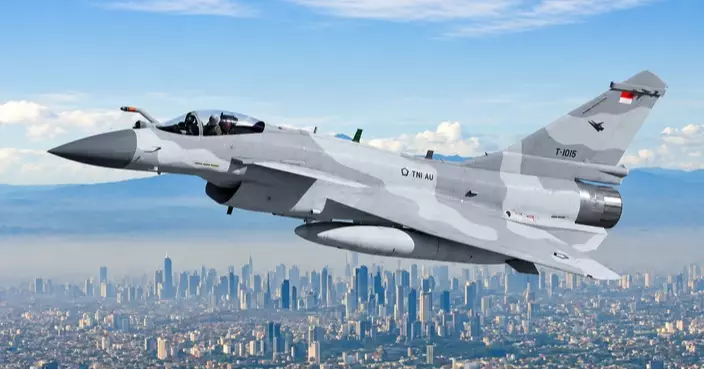
India's Outlook magazine broke the story: on November 12, a Chinese military aircraft entered Indian airspace over the Sikkim region and circled for 20 to 25 minutes at 25,000 feet. The Indian Air Force picked it up but never scrambled an interception. And it declined to comment on the matter.
A Mystery Over Sikkim
Everything else is a blur. The aircraft type is unclear. The precise flight path is unclear. When it left is unclear.
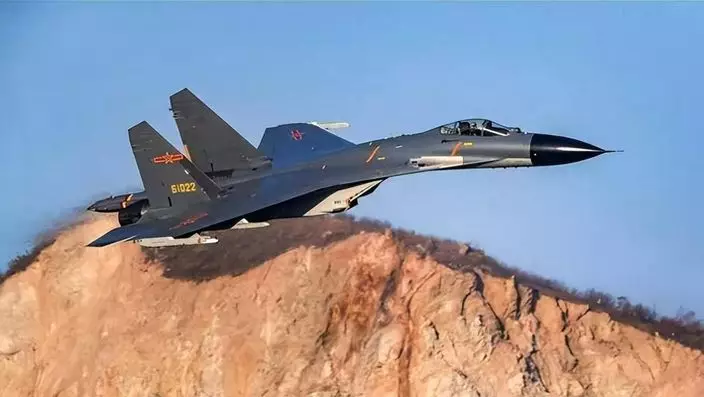
China patrols borders normally; any aircraft over Sikkim alarms India.
The one solid fact in the whole report is not what the Chinese aircraft did, it is that the Indian Air Force did nothing. The news came from an unnamed source, with the aircraft type, flight path and timing all murky. Yet Indian media shouted it from the rooftops.
On the international social media platform X, the story spread far and wide.
Why the Chicken's Neck Matters
Start with the map. From the skies over Sikkim, you get a clear view of the entire Siliguri Corridor, the narrow land route connecting India's heartland to its northeastern states. At its tightest point the corridor is just 20 to 22 kilometers wide, and it is the only land link between the northeast and the rest of India. No wonder the Indians have a nickname for this critical strip: the Chicken's Neck.
The northeastern states of Assam, Nagaland and Manipur depend on this long, fragile passage for their daily flows of people and goods with the rest of the country. So any aircraft that turns up in the corridor's airspace reads as a highly sensitive signal in India, and it gets watched closely.
Now hold that thought. If a foreign military aircraft circled over that spot for more than 20 minutes and the Indian Air Force did nothing at all, that alone is unusual. What it implies is more intriguing than the mere presence of a military plane in the area, and far more worth digging into.
The explanation Indian media offered is that the Air Force failed to launch an interception. That phrasing is interesting. 'Failed' could mean there was no time, no capability, or no desire.

New Delhi quietly handles incident, weighing border and public opinion.
Each reading points to a very different conclusion. No time would mean holes in the early warning and response chain. No capability would mean India lacked the means to intercept at that altitude and that location. No desire would mean New Delhi weighed its options and chose not to make a fuss.
The report never says which one it was. But the refusal to comment itself leans toward the third.
If the Indian Air Force had genuinely had its airspace violated and could not stop the intruder, the normal playbook is protest, summoning officials, issuing a statement and pinning the blame on China. Silence tells you the Air Force is managing the situation instead.
Media Hype, Official Silence
Now consider the role India's media played. Outlook India built its report on a single unnamed source. The aircraft type, the flight path, the departure time: all unknown. Yet the keywords "Siliguri Corridor" and "chokehold" were all present and accounted for.
This is a familiar template in Indian media coverage of China. Take a vague source, manufacture a concrete incident from it, then blow it up with geographic anxiety. The report's real payload is not what happened. It is the feeling that China can grab India by the throat whenever it wants.
The irony is that the story exposes the other side too. If Chinese military aircraft really did show up, the Indian Air Force chose to say nothing.
The people hyping the "threat" and the people staying silent in the face of it sit on the same side.
Bhutan Is the Real Story
There is a structural issue worth spelling out. China and India have no territorial dispute over Sikkim, and the report itself concedes as much. New Delhi's tension in this direction does not come from the boundary line itself. It comes from Bhutan.
Bhutan has yet to establish diplomatic ties with a single one of the five permanent members of the UN Security Council. India's grip on the kingdom is an open secret. Sikkim was annexed by India in 1975, and Bhutan is the next state New Delhi counts as inside its sphere of influence.
China-Bhutan boundary talks have been moving forward for years, and India's anxiety over that process gets projected onto every aircraft that appears over Sikkim. The planes are one thing. What India's really worried about is Bhutan.
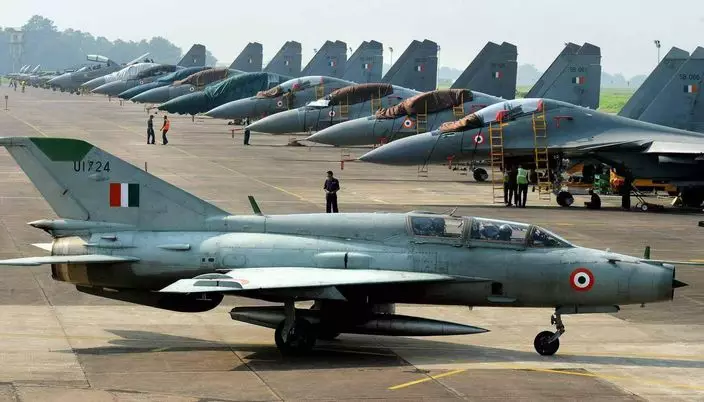
Indian Air Force detects target but never intercepts, showing dilemma.
New Delhi's Delicate Bind
Now the full picture comes into focus. An unidentified Chinese military aircraft turns up in an extremely sensitive spot. The Indian Air Force detects it but does nothing. And Indian media, citing an anonymous source, breaks the story while stressing that no interception was launched and officials would not comment.
Put those three facts together, and they say less about the aircraft itself than about India's delicate bind along this stretch of the border. Intercept, and New Delhi may lack the conditions to act in time, or judge the risk too high. Don't intercept, and it becomes hard to explain to the public. The final choice: let the media do the talking while officials stay silent.
There is also a technical wrinkle. In mountain terrain, ridges block radar, and an altitude reading of 25,000 feet is not enough to reconstruct a full flight path. The aircraft may simply have been patrolling close to the Chinese side. Once Indian radar picked up its signal, the media played it up as an entry into Indian airspace.
The Line of Actual Control between China and India has never been formally demarcated, and the two sides have long differed over where it runs. China has consistently said it carries out normal patrol and control activities in the border areas. Between what radar sees and an actual border crossing lies the question of where the line is. That is exactly the layer the reports leave out.
Signals Without Words
There is no need to dance to the Indian media's tune on this one. If a military aircraft really did appear at that spot, the flight itself is a signal. The message is aimed not just at India, but also at Bhutan and the border negotiations behind it.
The Indian Air Force's silence is a signal too. Its audience is public opinion at home and the Chinese side across the negotiating table. Both sides are speaking through actions, and neither plans to say the quiet part out loud.
Expect this state of affairs to drag on along the border for a long time, until the game over Bhutan is finally played out.
The Art of Stopping War
** 博客文章文責自負,不代表本公司立場 **
The Western Pacific put on a rare show in early November: the aircraft carriers Liaoning and Fujian were both active at sea at the same time. On November 3, Wu Chao-hsieh, the head of Taiwan's security department, posted a situation map on social media claiming that the Chinese Navy and China Coast Guard had deployed more than 100 vessels in the Western Pacific. That figure comes from Taiwan's own public statements, and no independent source can currently verify it ship by ship.
Two Carriers at Sea
The Institute for the Study of War (ISW) offers a different reading. China, the US think tank argues, may be running a large-scale military operation that was never publicly announced and carries no fixed exercise name, simulating the encirclement and isolation of the Taiwan region. Make no mistake: this is an analytical judgment built from vessel deployments, satellite imagery and open-source information. It is not how the Chinese military describes its own activity.
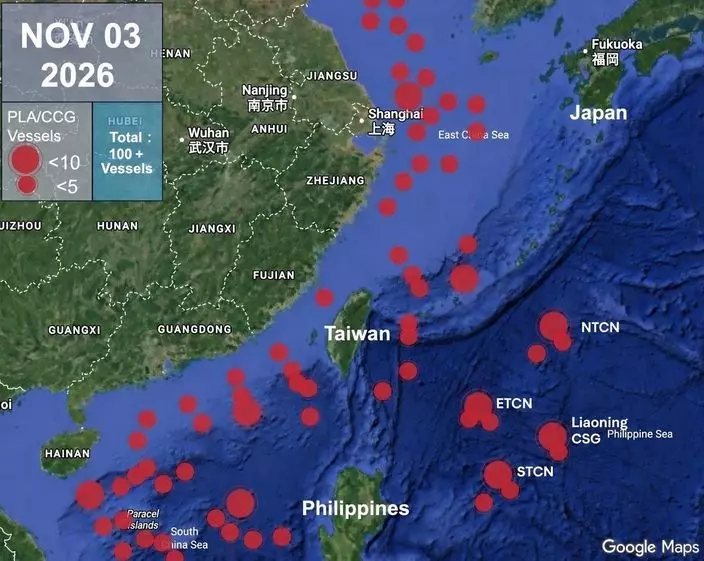
Taiwan map: PLA, coast guard vessels spread wide around island
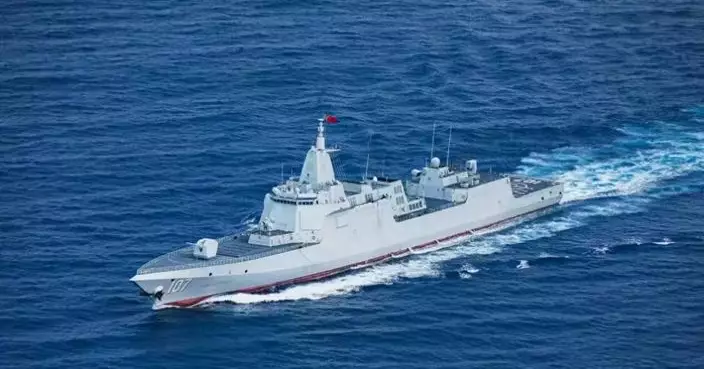
The Liaoning's route tells its own story. According to the Joint Staff Office of Japan's Ministry of Defense, the carrier group transited the Miyako Strait into the Western Pacific on October 14. It then passed through the Basilan Strait in the Philippines into the Sulawesi Sea on October 22-23, swung northeast into the Philippine Sea, and was still operating there in early November. Its escorts included multiple 10,000-ton Type 055 destroyers, Type 052D destroyers and large replenishment ships.
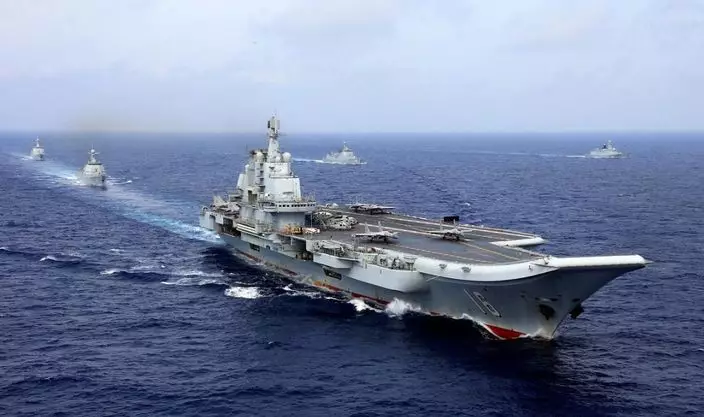
Liaoning carrier group drills in distant Western Pacific.
The Fujian is at a different stage. November 5 marks one year since it entered service. Satellite imagery from November 2 showed the carrier about 115 kilometers southeast of Sanya, heading east.
CCTV reporting makes the progress explicit. Within its first year of service, the Fujian sailed south through the Taiwan Strait into the South China Sea, then north to the East China Sea and Yellow Sea, completing cross-sea-area test training. The takeaway: the carrier has demonstrated the ability to operate in distant waters across sea areas. And 2026 looms as the pivotal year for its transition from basically forming combat capability to fully forming it.
Reading the Deployment
First, a word of caution. Satellite imagery can confirm where the vessels are and which way they are heading. It cannot prove the vessel has already sailed toward southern Taiwan.
The Fujian may be in service and equipped with electromagnetic catapults, but a new carrier's combat power takes more than that. Carrier-aircraft coordination, deck scheduling, formation operations and sustained support all have to fall into place. The Liaoning is operating in distant seas while the Fujian climbs its training curve. Two carriers at sea at the same time does not mean they have joined forces.
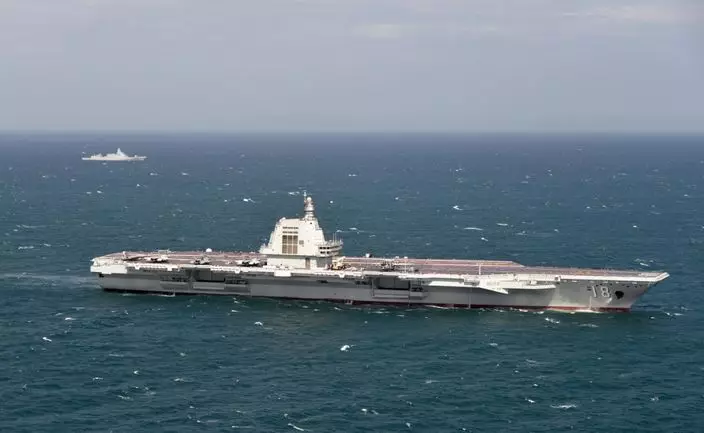
Fujian steps up sea trials toward full combat readiness.
The 100-plus vessels marked on Wu Chao-hsieh's situation map need to be broken down. The ISW report says they include both naval and coast guard forces, spread across two main areas. One group sits between Taiwan and Guam, including the Liaoning carrier formation and multiple vessel formations from three theater commands.
The other group operates around Taiwan, including at least six coast guard ships and an unspecified number of naval vessels. The ISW particularly stresses that the deployment involves the Eastern, Southern and Northern theater commands. Major surface forces from three coastal theater commands all taking part in far-seas operations at the same time is not common.
Air power deserves attention too. Taiwan announced on November 3 that it detected 49 PLA aircraft sorties between 6 a.m. on November 2 and 6 a.m. on November 3. Of those, 31 entered its declared air defense identification zone.
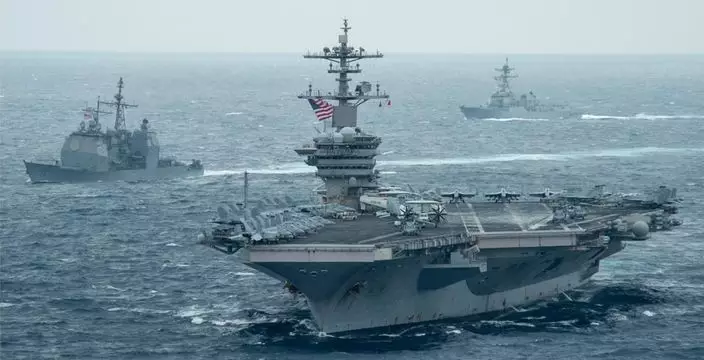
US carrier strike group transits waters for Middle East
The ISW believes these aircraft activities may have coordinated with the vessel deployments toward the Western Pacific. But the specific aircraft types, the nature of the missions, and whether they coordinated directly with the carrier formation all remain unclear. Public evidence is still thin.
The Missing Codename
The missing codename is the tell. In recent years, large PLA operations around the Taiwan Strait usually came with a public exercise name, such as the Joint Sword series.
A name is a signal in itself. It tells outsiders that forces are exercising, and it hints at how far they plan to go.
ISW's read is blunt: this time there is none. Ships are moving, aircraft are flying, and a carrier is leaving port, but no public exercise label has appeared.
The think tank sees a possible capability on display: shifting fast from routine deployment to military operations, while skipping the buffer step of announcing an exercise. That logic holds up only with a caveat. No public announcement does not mean combat missions are already under way, and it certainly does not mean a combat state has begun.
Large-scale force movements can still be training, deterrence, or combat-readiness verification.
ISW also reads the pieces together: the carriers Liaoning and Fujian, China Coast Guard forces, and deployments from three theater commands. Taken as one picture, they point toward a sea-air isolation concept.
Isolation, in this framing, is not a classic amphibious landing. It is about controlling maritime traffic, deterring outside support forces, and coordinating pressure from several directions.
Not the Same Chessboard
One contrast is easy to miss: the US carrier is in transit, not in a standoff. While the Liaoning operates in the Philippine Sea and the Fujian trains in the South China Sea, the US Navy's Roosevelt carrier strike group is sailing from the South China Sea to Singapore. The Roosevelt reportedly arrived in Singapore on November 6 and docked at Changi Naval Base, and will continue through the Strait of Malacca to the Middle East to relieve the Washington, which has already been deployed for a long stretch.
The Western Pacific may look like two Chinese carriers against one American carrier. But the US carrier is hurrying off to another theater. Sharing the same broad waters does not mean playing on the same chessboard.
The value of the ISW report is not whether it correctly guessed what China is doing. It lies in what it reveals about the focus of US defense analysts. They used to ask whether the PLA will fight. Now they ask how far the PLA can go without firing a shot.
From exercise to quarantine, from landing to blockade, the analytical framework has shifted. The US assessment of the Taiwan Strait situation is extending from the outbreak of conflict toward gray-zone pressure.
But there is a fundamental logical mismatch here worth pointing out. When US think tanks use terms such as "quarantine" and "blockade" to describe PLA actions, they are essentially fitting US military concepts onto Chinese military practice.
Beijing Sets the Pace
On Oct. 29, China's Ministry of National Defense gave the official line on the Liaoning carrier group's far-sea activity: it is a routine arrangement inside the annual plan, meant to test and improve far-sea combat capability, and it does not target any specific country or objective.
That is the official characterization of the Liaoning carrier group's training. It cannot be stretched into one blanket label for the Fujian's current departure from port, every vessel deployment, and all air activity.
For China, the hard power is already visible: two carriers deployed, three theater commands coordinating, and sea and air forces linking up in multiple directions. That buildup is real.
The Fujian is still moving from basic combat capability toward full combat capability. The Liaoning, by contrast, has already settled into a smooth far-sea deployment rhythm.
As for when these capabilities might be used, and in what form, the initiative sits in Beijing, not in an ISW report.
US think tanks can analyze, speculate, and stay alert. But the PLA moves at its own pace, and one report will not change that.