NEW YORK--(BUSINESS WIRE)--Nov 24, 2026--
Following Gov. Kathy Hochul’s signing of legislation restricting sales of high-potency 7-hydroxymitragynine (7-OH) products on Nov. 23, Mountainside Treatment Center is encouraging New Yorkers who use these products regularly to talk with a healthcare professional before they’re gone from shelves. The law takes effect 90 days after signing and prohibits sales of products containing more than 2% 7-OH by total alkaloid content or more than one milligram per serving.
This press release features multimedia. View the full release here: https://www.businesswire.com/news/home/20261124906990/en/
“Some of the people we see have been going to work and getting through the day without their family knowing they’re using 7-OH,” said Jana Wu, LCSW, LADC, director of clinical integration at Mountainside Treatment Center. “Then they enter withdrawal and they’re drenched in sweat, severely nauseated, agitated and anxious that it makes it extremely difficult to function. For some families, that’s the first time they learn what’s been going on.”
7-OH occurs naturally in trace amounts in kratom. Concentrated products can produce opioid-like effects and lead to dependence and withdrawal. “We are seeing people come in sicker and sicker, with much more pronounced symptoms of withdrawal,” Wu said. Withdrawal symptoms have become more severe in recent years as products have grown more potent. Some clients have described symptoms that were difficult to manage at home, including some who sought emergency care.
Wu was treating clients in Connecticut this spring as retailers were directed to pull kratom products from shelves. Mountainside also saw an increase in kratom-related admissions at its Canaan campus following Massachusetts’ emergency retail restrictions, which took effect Aug. 28. Both states took broader action covering kratom as well as concentrated 7-OH products.
“When Connecticut stores started taking these products off the shelves, we were already working with people who were having a hard time stopping,” Wu said. “People will still need care when access changes.”
In addition to medically supervised detox, Mountainside offers a free, clinician-led virtual support group, Let’s Talk Kratom, on Tuesdays from 7 to 8 p.m. ET. The group is open to the public and gives people a place to talk with others who understand what they’re going through.
About Mountainside Treatment Center
Mountainside Treatment Center is a nationally recognized behavioral health organization specializing in the treatment of substance use disorders and co-occurring mental health conditions. Through evidence-based care, innovative programming, and community partnerships, Mountainside helps build meaningful lives in recovery.
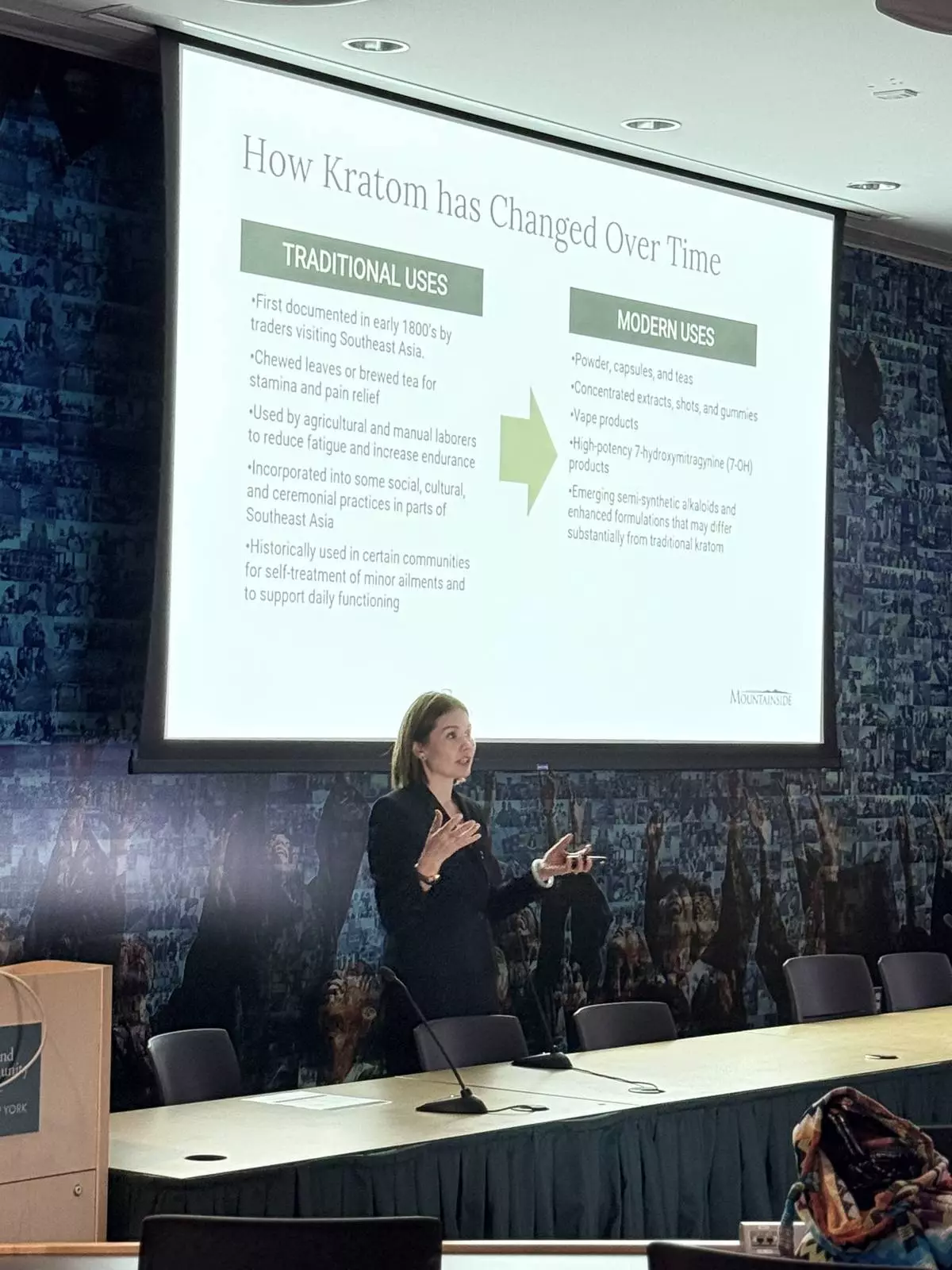
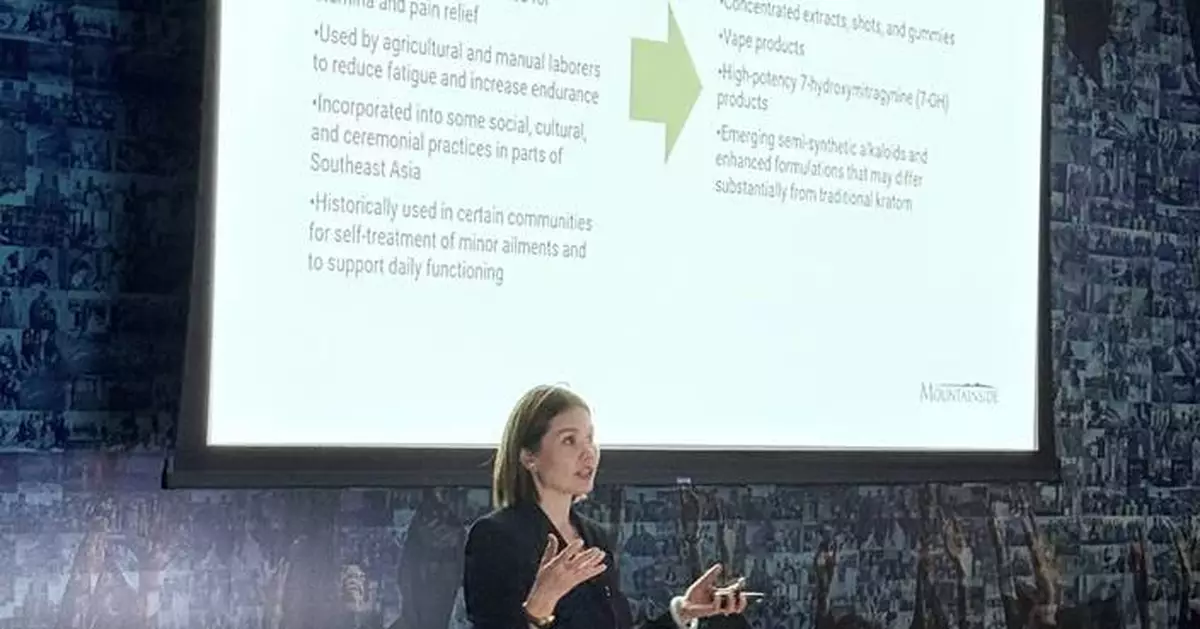
Jana Wu, director of clinical integration at Mountainside Treatment Center presents on how kratom use has changed in recent years.
More than 10 months on from a chaotic, controversial final, Senegal is Africa's soccer champion once again.
Senegal won back the Africa Cup of Nations title in a legal fight on Tuesday after the Court of Arbitration for Sport overturned an earlier ruling which handed the trophy to Morocco.
Senegal won the Africa Cup on the field in Morocco in January and then lost it in a legal case in March because its players walked off the field in protest in second-half stoppage time.
CAS has now rejected that earlier ruling, based on referee Jean-Jacques Ndala’s decision to let the game resume after the protest.
”The Court of Arbitration for Sport has delivered justice to sport," Senegalese soccer federation president Abdoulaye Fall said in a statement.
The legal battle may not be over yet after Morocco announced plans to appeal, likely to Switzerland's supreme court, in a challenge to the integrity of a senior CAS judge.
Tournament regulations said a team which refuses to play should be considered to have lost the game, but CAS said those rules were meant only for cases “when a team’s conduct leads the referee to call off the game permanently.”
Ndala “did not err in law” when he resumed the game and had “sole authority” to make that call, CAS said, adding its three judges were unanimous.
“The panel acknowledged that the referee had to make a decision in an atmosphere of extreme tension,” CAS said. “However, these circumstances do not justify describing the decision as ‘arbitrary.’ On the contrary, the referee’s judgment did not appear to have been affected by factors external to the game.”
Morocco's soccer federation detailed plans for an appeal that targets one of the three judges on the CAS panel.
In a statement, the Moroccan federation protested what it described as the court’s failure to address potential integrity concerns, alleging “confirmed communication” between German arbitrator Ulrich Haas and Fall, the Senegalese soccer president, 48 hours before the decision was issued.
The CAS director general, Matthieu Reeb, acknowledged to reporters at the court in Lausanne that a Moroccan protest was received just minutes before the verdict was announced.
Reeb said the court's panel "in charge of petitions for challenge has conceded that there was not enough elements at this stage to postpone the notification of the award.”
CAS verdicts can be challenged at Switzerland’s supreme court, also in Lausanne, though only on limited procedural grounds of which a judge's integrity could be one.
Haas has been among the most respected and in-demand CAS judges in the past 20 years, selected by parties in storied cases involving Manchester City's beating a Champions League ban by UEFA, tennis star Simona Halep's doping case and Africa's Champions League final in 2019.
Patrick Kabou, a lawyer for the Senegalese Soccer Federation, called the alleged communication between Fall and Haas “unreal.”
Senegal won the final 1-0 after extra time with chaos on the field and violent clashes in the stands. Even the ball boys were involved in scuffles as they tried to snatch towels that Senegal goalkeeper Edouard Mendy was using to keep his gloves dry.
The result was overturned two months later as a 3-0 default win for Morocco by an appeals panel appointed by the Confederation of African Football (CAF).
Senegal beat AFCON host nation Morocco after a 15-minute delay in play. At 0-0, Senegal’s team walked off the field to protest Morocco being awarded a penalty kick in the last minute of regulation time.
Match referee Ndala of Congo eventually allowed the game to restart, Morocco’s penalty by Real Madrid forward Brahim Diaz — a slow chip shot known as a “Panenka” — was saved, and Senegal won in extra time.
The drama continued through the months of legal tussles. Senegal's players paraded with the trophy ahead of a game in March against Peru, even though Morocco was recognized as the champion at that point.
Both teams played at the World Cup believing themselves to be the rightful champion of Africa.
Senegal had the laws of the game on its side, and Morocco had the tournament regulations.
The laws of soccer state that referee decisions are final. CAS backed that position with its own “field of play” doctrine, that on-field calls by a referee generally can't be taken to the sports court.
“By blowing his whistle to restart play, the referee considered that the conditions for resuming the match had been met — both teams were on the pitch again, and both expressed their willingness to resume,” CAS said.
In the first legal case in March, CAF appeal judges cited AFCON tournament regulations that if a team “refuses to play or leaves the ground before the regular end of the match without the authorization of the referee, it shall be considered loser and shall be eliminated for good from the current competition.”
The CAS judges heard evidence at a one-day hearing last month and the court promised a verdict by the end of November with a full written ruling of its judges setting out reasons for their decision.
The next men’s AFCON starts in June co-hosted by Kenya, Uganda, and Tanzania. Morocco will aim to end a wait for the title which now stands at 50 years.
"Senegal won on the pitch, and the court simply confirmed what we all already knew: We are the real champions of Africa,” said Mariama Sidibé, 35, an accountant in the capital, Dakar.
Sidibé said the dispute between Morocco and Senegal should now be left in the past.
“With all of this behind us, we should focus on what unites us now, and who knows, maybe Morocco can have its revenge on the field during the next AFCON this summer,” she said.
“At the end of the day Morocco and Senegal are brothers,” Sidibé added, referring to the countries' long shared close ties built on religion, trade and culture.
Sidi Sylla, a philosophy student at Dakar’s main university, said the court’s ruling was “not just a win for Senegal but for football in general.”
CAS rulings have stripped many athletes of Olympic medals for doping, but it's rare to overturn the result of a major soccer competition.
CAS refused to change the results of the 2019 Asian Cup, dismissing an appeal that the star striker on winning team Qatar shouldn't have been eligible for the tournament.
A lengthy legal battle over the same year's African Champions League final also ended with the original winner, Esperance of Tunisia, taking the title after its opponent Wydad from Morocco refused to play on.
One notable CAS ruling on a team sport title came at the Winter Olympics in 2022. A doping case involving then-15-year-old Russian figure skater Kamila Valieva ended up with her disqualification, and the Russian team being dropped from gold to bronze in the team event.
Mark Banchereau and Eve Brennan in Dakar, Senegal, Akram Oubachir in Casablanca, Morocco, and Jamey Keaten in Lausanne, Switzerland, contributed to this report.
See AP’s full soccer coverage here
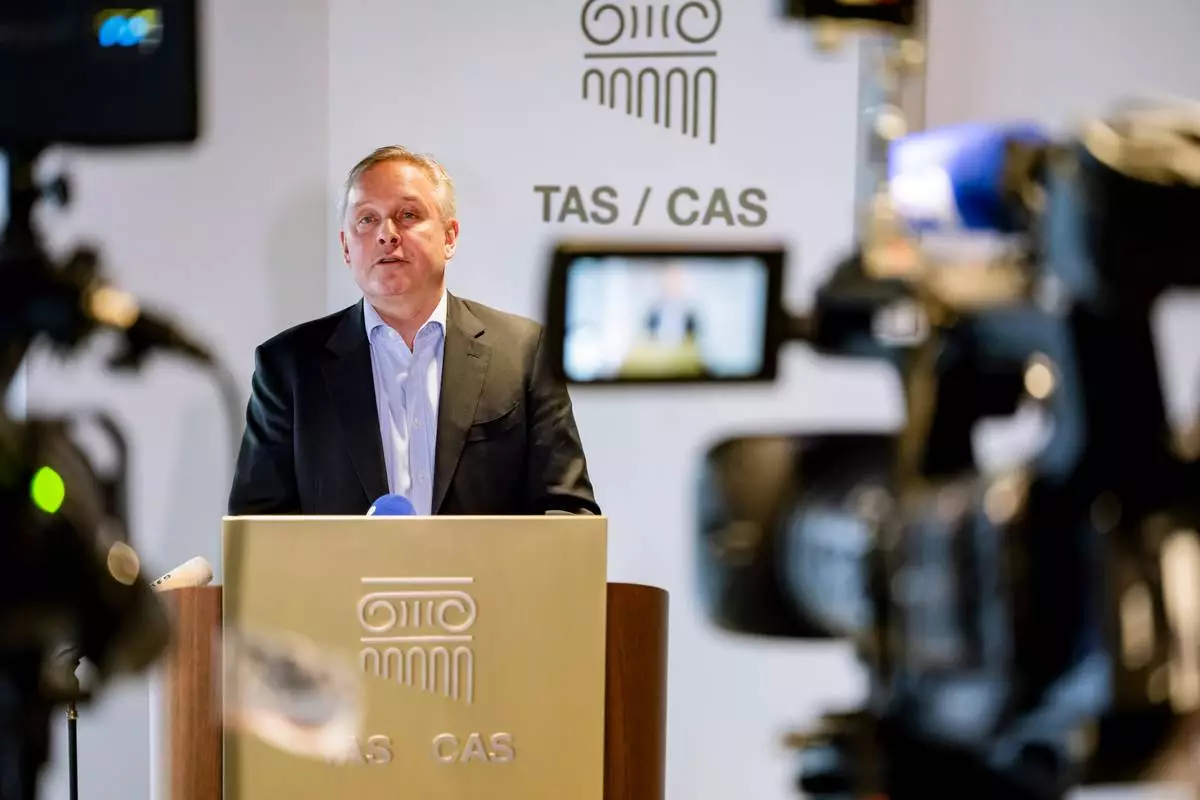
Matthieu Reeb, Director general of the Court of Arbitration for Sport (CAS) announces to the journalists the decision of the Court of Arbitration for Sport regarding the appeal filed by Senegalese Football Federation following the 2025 Africa Cup of Nations (AFCON) final, at the CAS headquarters in Lausanne, Switzerland, Tuesday, Nov. 24, 2026. (Jean-Christophe Bott/Keystone via AP)
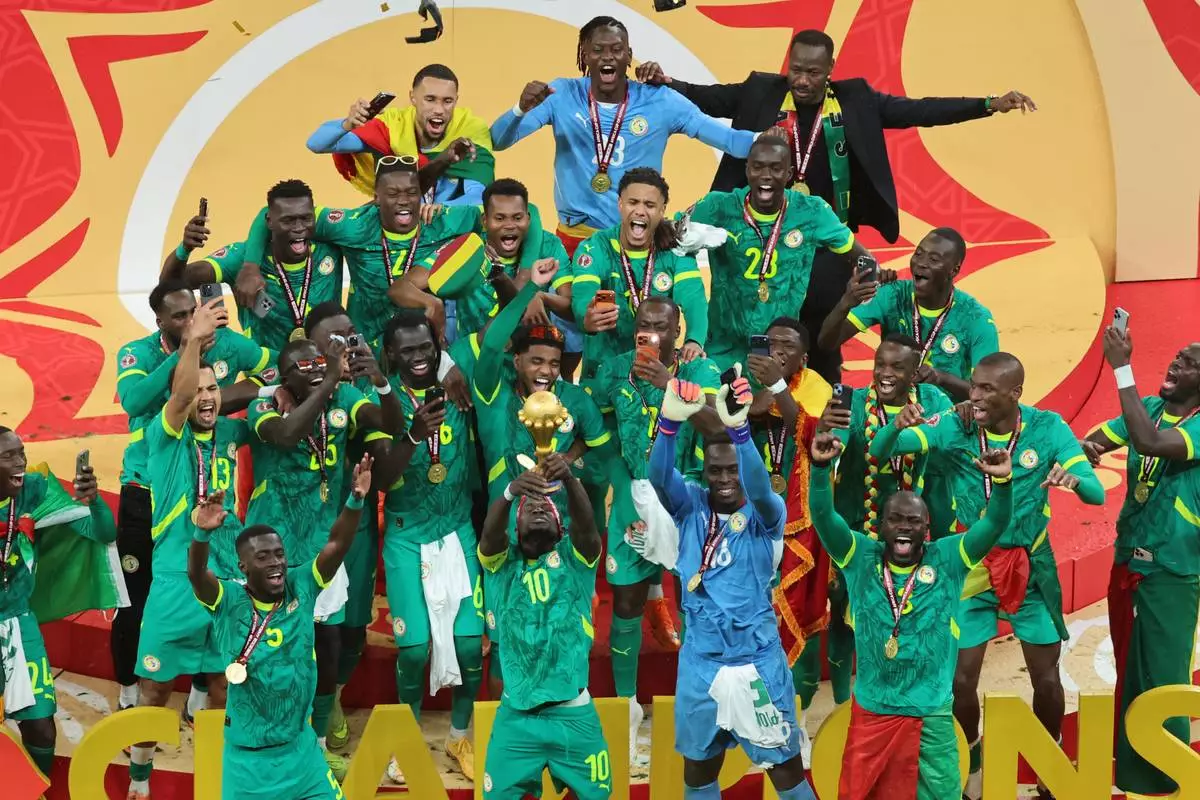
FILE - Senegal's Sadio Mane holds the trophy aloft as he celebrates with teammates after winning the Africa Cup of Nations final soccer match between Senegal and Morocco in Rabat, Morocco, Jan. 18, 2026. (AP Photo/Youssef Loulidi, File)

FILE - Senegal's Sadio Mane holds the trophy aloft as he celebrates with teammates after winning the Africa Cup of Nations final soccer match between Senegal and Morocco in Rabat, Morocco, Sunday, Jan. 18, 2026. (AP Photo/Youssef Loulidi, File)