

Shenzhou-24 is slated to lift off at 8:18 a.m. Beijing time on November 25. The crew pairs Chinese astronauts Tang Hongbo and Wu Yi with Pakistan's Muhammad Zeeshan Ali. Tang, flying his third crewed mission, will serve as commander.
Countdown to a Historic Launch
Click to Gallery
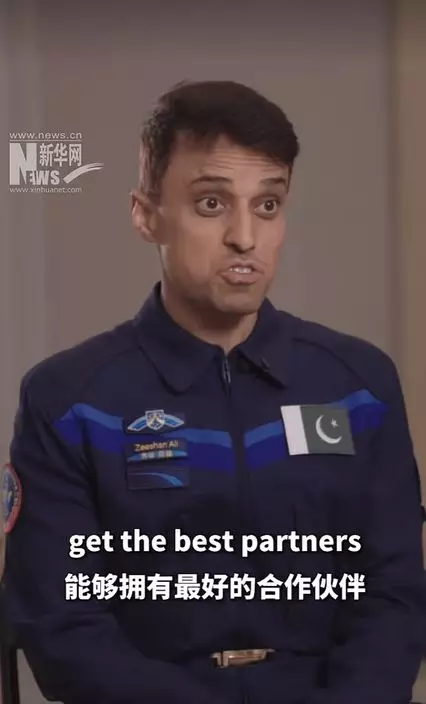
Pakistan's Ali: first foreign astronaut to visit Tiangong
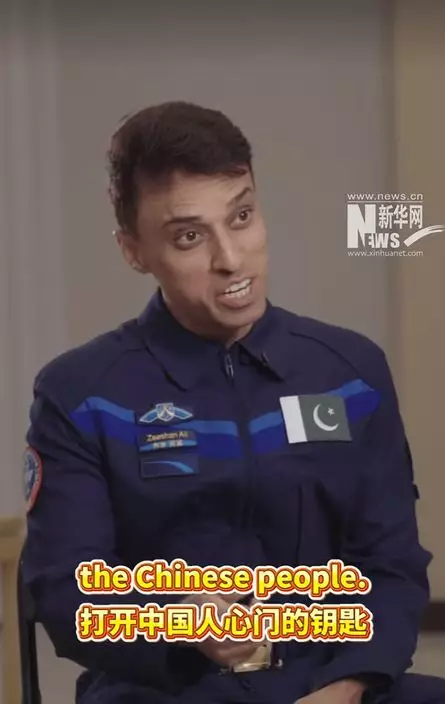
Pakistan's Ali: first foreign astronaut to visit Tiangong
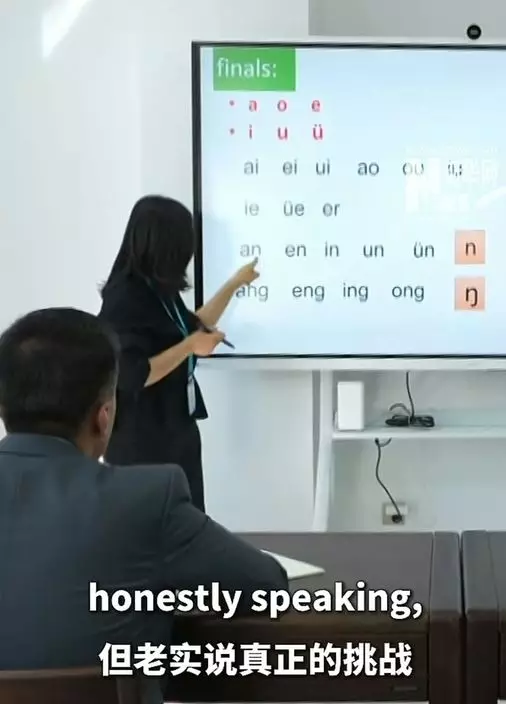
Ali studied Chinese at Islamabad's Confucius Institute
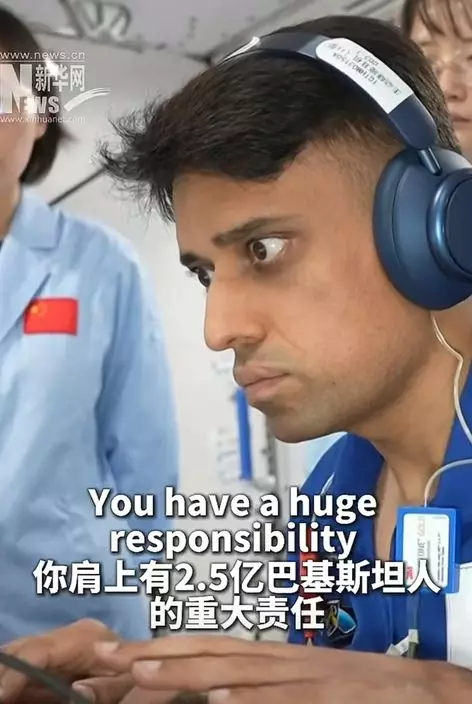
Ali studied Chinese at Islamabad's Confucius Institute
Ali: Pakistan and China are all-weather old friends
Ali to run Pakistan science experiments on short station stay
Ali is about to make history twice over. He will be the first foreign astronaut to visit China's "Tiangong" space station, and the first Pakistani ever to reach space.
His backstory is just as striking. Ali started from zero in Chinese, yet chewed through the aerospace command vocabulary in only seven months. He now jokes confidently with his crewmates in Chinese and proudly declares Kung Pao Chicken his favorite dish.
Pakistan's Ali: first foreign astronaut to visit Tiangong
Pakistan's Ali: first foreign astronaut to visit Tiangong
At the Shenzhou-24 crew meet-and-greet, Zeeshan Ali fielded every question from reporters in Chinese, showing off just how far his language skills have come.
He reached for the Tang poet Wang Zhihuan's "On the Stork Tower" to describe his training: "To see a thousand miles farther, climb one more storey high." Then he borrowed Li Bai's soaring line, "The great roc rises with the wind one day, soaring ninety thousand miles into the sky," as a wish for China-Pakistan space cooperation.
He did not stop there. Ali recited Wang Bo's "A bosom friend afar brings a distant land near" and Su Shi's "May we all be blessed with longevity, though far apart, we still share the beauty of the moon," right there on the spot. He even sang "The Same Song" in Chinese.
Ali studied Chinese at Islamabad's Confucius Institute
Ali studied Chinese at Islamabad's Confucius Institute
From Pinyin to Poetry
Ali's Chinese journey began at the Confucius Institute in Islamabad, Pakistan. Classical Chinese poetry soon became his favorite.
Qu Zhaowei, Party secretary of Beijing Language and Culture University, says Ali and the other Pakistani astronaut selected for the mission both studied Chinese at BLCU's Confucius Institute in Islamabad. Language skills matter enormously in highly specialized fields like aerospace, he notes. Personnel must grasp technical concepts, professional instructions and operating procedures with precision.
Over seven months of training, Ali started from scratch with pinyin. He mastered the Chinese commands built into flight procedures to meet the demands of on-orbit missions. In his downtime, he practiced calligraphy and read poetry to soak up Chinese culture.
Learning Chinese, he says, is like holding a key to the hearts of the Chinese people. Only by understanding the language can you truly touch them.
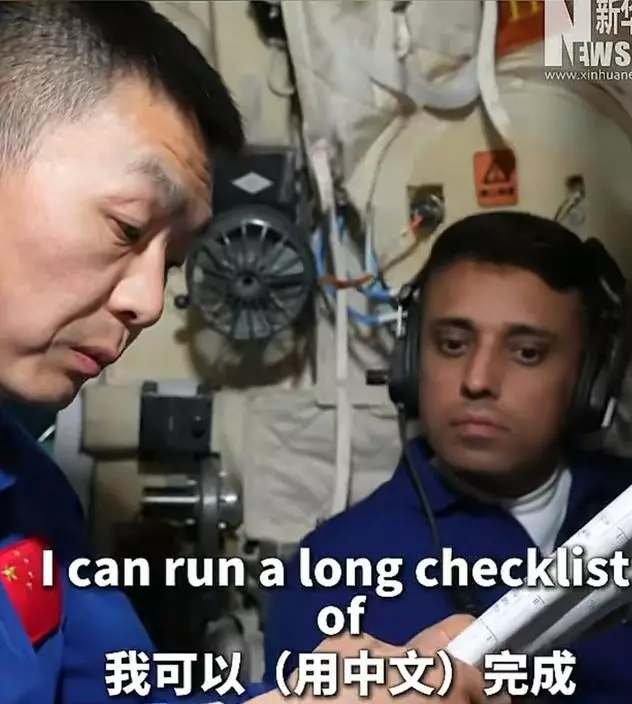
Today he jokes confidently with his crewmates in Chinese. 'I can use Chinese to complete various checklists for the spacecraft and the Shenzhou spacecraft,' he says.
Ali, who holds a master's degree, was born in August 1986 and serves as a lieutenant colonel pilot in the Pakistan Air Force. He is the first foreign astronaut welcomed aboard the China Space Station. His journey carries China-Pakistan friendship into orbit and shows Tiangong opening its doors to global partners with an open, shared posture.
The emblem of the Shenzhou-24 crewed mission features a sprig of jasmine, Pakistan's national flower, a dazzling footnote to the flight. That sprig of jasmine will ride into space with the Pakistani astronaut and bloom aboard Tiangong.
Ali: Pakistan and China are all-weather old friends
Friendship Reaches Space
Pakistan and China are all-weather old friends, Ali said, and their aerospace cooperation goes back a long way. From aircraft of every kind to satellite projects, the partnership keeps deepening. He called the first China-Pakistan crewed space cooperation a historic moment for both countries.
The timing adds weight. The year 2026 marks the 75th anniversary of the establishment of China-Pakistan diplomatic relations, and practical cooperation between the two countries keeps expanding into new fields. Now the measure of this friendship will rise from the ground into space.
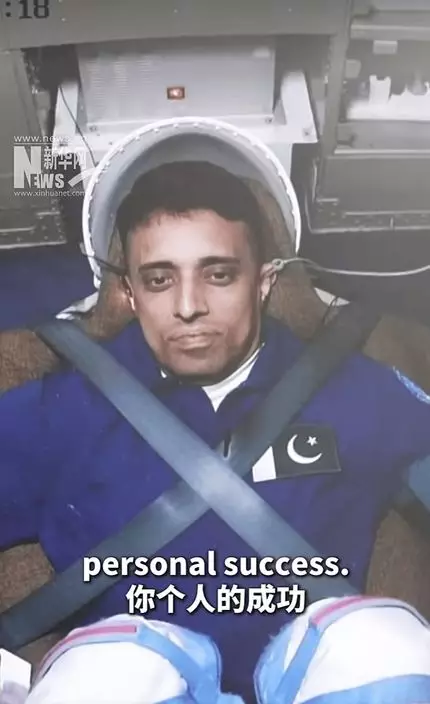
Ali also spoke of his family. In an interview with CCTV, he said his wife supports him fully, and he quoted her words to him: "This is not your personal success; you carry on your shoulders the great responsibility of 250 million Pakistanis."
Ali to run Pakistan science experiments on short station stay
Under the mission plan, Ali will make a short-term in-orbit stay aboard the Chinese Space Station as a payload specialist. His focus there: scientific experiment projects from Pakistan.
The mission will carry out four China-Pakistan cooperative science projects in the fields of biotechnology and materials. The Pakistani astronaut will run an in-orbit experiment on cyanobacteria, a photosynthetic microorganism. His key tasks are installing the experiment samples and units and carrying out the in-orbit experiments.
Once the short-term mission ends, he will return to Earth aboard the Shenzhou-23 spacecraft together with Li Jiaying and Zhang Zhiyuan of the Shenzhou-23 crew. Astronaut Zhu Yangzhu will stay behind at the space station to complete a one-year in-orbit stay test.
A Starting Line
As he prepares to blast off, Ali hopes this flight is not his personal finish line. He wants it to be a starting line drawn for more of Pakistan's young people.
"I want to send my compatriots a clear message," he said. "I hope everyone draws inspiration from my experience and this mission, and keeps pushing forward on the foundation of what I have achieved. After that, may Pakistan reach a higher level of development, may China-Pakistan friendship climb to new heights, and may space exploration open a brand-new chapter and broader horizons."
Mao Paishou
** 博客文章文責自負,不代表本公司立場 **