THE U.S. WEAPONIZED the concept of human rights to hurt China, using it for decades to harm attempts by Chinese organizations and individuals to create relationships with people outside its borders, a new study says.
It painted China as the motherlode of human rights violations, although this was not remotely true. Yet it was hard to get a more truthful account circulated, since the mainstream media provided a relentless flow of selected stories to reinforce the myth.
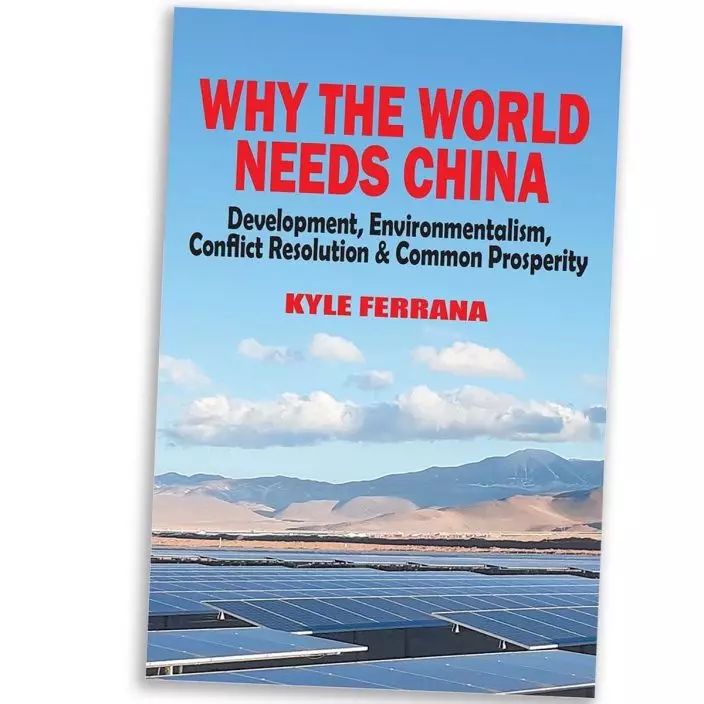
“Western NGOs, ostensibly concerned with human rights, disproportionately focused on alleged violations in China despite much worse abuses occurring elsewhere in the world,” says "Why the World Needs China", an acclaimed 400-page study of the place of China in the modern world, by US author Kyle Ferrana.
DOUBLE STANDARDS
“The U.S. government continually attempted to censure the PRC before the United Nations Commission on Human Rights, while ignoring other countries’ egregious abuses; and the Western press exclusively covered negative news in China, selectively focusing only on individual cases that were not representative of actual conditions,” the book says.
The double standards above were clearly identified in a study published in the Cornell International Law Journal, Ferrana points out—but the mainstream media’s unfair coverage continued unabated.
“Meanwhile, though it did have shortcomings, China’s actual human rights situation was far better than the average country in its income class in nearly every category,” Ferrana writes.
METICULOUS RESEARCH
And the human rights insight is just one observation in the US author’s new book, a meticulously researched and wide-ranging review of what is really happening in China, and how its system of governance works, blending concepts of socialism and capitalism into something unusual—and intriguingly successful.
With a huge list of sources, both Chinese and Western, the author shows exactly how the Chinese keep surprising the world, starting with a powerful example: China, the land of old-fashioned black bicycles, rapidly transitioned into being the pioneer in next generation electric cars and buses – and at a global level, no less.
Shocked, the US responded by abandoning the fundamental principles of capitalism and competition to keep Chinese cars out.
TWISTED WORDS
Ferrana points out that reality can be distorted by subtly twisting words and concepts to create negativity. So Western journalists frame their reports on China with terms that have dark associations.
“There can be no criminals in China, only political prisoners who have been falsely accused; neither are these political prisoners kept in prisons, for there can be no prisons in China, only prison camps,” he writes.
Similarly, write-ups about mainland China, or Hong Kong, or Taiwan, divide everyone into good guys (pro-US) and bad guys (everyone else).
In the media: “If any Chinese people speak positively of the Party, this can only be the result of the government’s brainwashing. Those who speak critically of the Party, however, are always brave and clear-thinking truth-tellers, soon to be ‘disappeared’ by the government; when they are seen in public thereafter, their reappearance must somehow be ‘staged’ by the government.”
The author’s careful research and clarity of writing makes this an excellent example of professional reportage, and the achievement is impressive, given that Ferrana is an independent author with a background in US technology, not an academic in the China studies field.
REALITY IN HONG KONG
Hong Kong people will be surprised and grateful to find a US writer who understands their nuanced position, unlike the western establishment which tends to portray their home as an oppressed city filled with people who are disappointed their society hasn't become like ‘Murica.
A 2019 poll by Reuters (a UK-originated news agency highly critical of China) found that only eight per cent of Hong Kongers expressed a strong desire for Hong Kong’s independence from China.
While the western media uniformly blamed Beijing for the unrest in Hong Kong, only 12 per cent of Hong Kong people accepted that allegation, the book says.
INTERFERENCE
Ferrana points to the obvious political interference by notorious US groups such as the National Endowment for Democracy, which spent decades giving millions of dollars to anti-China groups.
By encouraging and financing the growth of pro-US groups such as the Hong Kong Confederation of Trade Unions, the west could ensure the availability of China-hostile people to hit the streets—and then western reporters would interview them as if they represented the Hong Kong people, rather than the western paymasters discreetly financing them.
“According to the Berlin-based Latana Democracy Perception Index Report, by the spring of 2022 a two-thirds supermajority of Hong Kongers believed that Hong Kong did not need more democracy, and most held a positive view of mainland China,” Ferrana writes.
The violent arson-filled series of protests in 2019 are to this day painted as being a noble series of “pro-democracy marches” but that was never the case. “While there is some genuine desire for more democracy in Hong Kong, statistically, it is unlikely to have been the largest or even a very significant factor behind the mobilization,” Ferrana writes.
THE REAL ASIA
For people who live in Asia (about 60 per cent of the world’s population), the book will elicit grateful nods of appreciation. It is filled with observations that match what we see in front of our eyes – but which we can never find in the pages of the Economist, FT, Guardian, or other international media.
But perhaps the most valuable point Ferrana makes is very simple. Yes, China differs from the west—but being “different” doesn’t automatically mean “bad”.
In fact, given the mounting problems of the west, there’s plenty of evidence that China’s system of governance has lessons that the world can learn from. China has taken much of what is good in capitalism, but retained a strong streak of socialist thinking—a healthy mix that keeps the economy on a middle path, and does wonders to alleviate poverty.
The country prioritizes aims such as “common prosperity” using its firm control. This firmness enables China to get things done. It makes mistakes, but it often hits difficult targets.
Example: The US is in a decades-long fight with itself on whether it should take action against climate change, while China quickly got into a position where it is already leading the world in the transition to clean energy, such as solar and wind, by a wide margin.
Why does the world need China? Because it is an experimental model of a different way of running society – and has had a number of remarkable successes in that role.
"Why the World Needs China" has just been published but is already being widely praised. London-based author Carlos Martinez summed up the book with these words:
“Ferrana creates a compelling and inspiring narrative about Chinese socialism and China’s place in the world, and in so doing, demolishes a range of popular myths: that China has ‘gone capitalist,’ that it is an imperialist power, that it is a serial human rights abuser.”
This book is a must-read. Even if you don’t read long books, buy it anyway – and keep it on your shelf to use as a reference if anyone brings up the topic of Hong Kong, Tibet, Xinjiang, Taiwan, or any of the other concepts that have been weaponized against China.
And when someone brings up “human rights”, send them a link to this article.
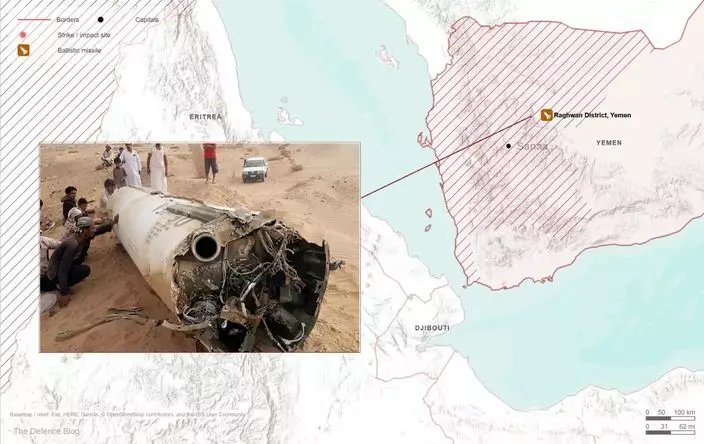
A chunk of ballistic missile booster debris appeared in the Raghwan area of northern Marib Governorate, Yemen on September 14.
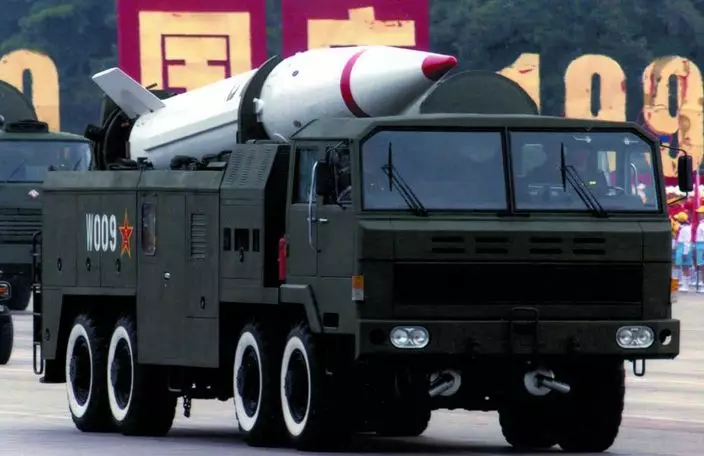
Images show the missile body painted an unusual white and marked with “DF-15A.” Its structure and dimensions point to China's DF-15 short-range ballistic missile.
Open-source defense analysts read that as a likely Saudi missile fired at a Houthi target inside Yemen.
For now, the available evidence is just a few social media photos. Saudi Arabia has not confirmed it, and no authoritative third-party institution has verified it.
The DF-15 is a mature single-stage solid-fuel tactical ballistic missile made by China.
It is about 9.1 meters long and 1 meter in diameter, with a total weight of 6.2 tons. Its maximum range is 600 kilometers, and it can carry a warhead of nearly 1 ton.
It uses a wheeled high-mobility launch vehicle and has a rapid-response capability of “stop and launch.”
For more than a year, outsiders have speculated whether Saudi Arabia possesses the DF-15.
Yoel Guzansky, a scholar at an Israeli think tank, has analyzed the question. He argues that while the Royal Saudi Strategic Missile Force introduced long-range deterrence, it very likely secretly procured short-range ballistic missiles such as the DF-15 to build a layered strike capability.
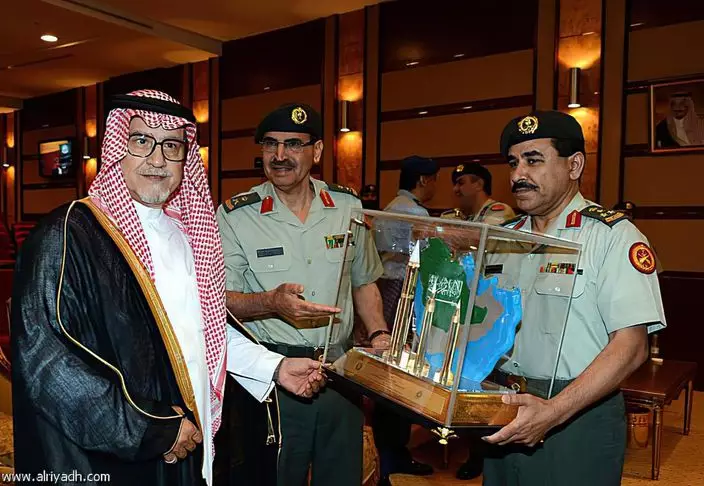
Then there is the 2013 model. When Prince Fahd, then Saudi Deputy Defense Minister, visited the Strategic Missile Force headquarters, the commemorative model he received showed three missiles side by side. Many at the time speculated they corresponded to the DF-15, DF-21, and the older DF-3.
Those early details are now being raised again because of the debris on the Yemen battlefield.
Saudi Arabia's ballistic missile dealings with China go back to the 1980s. During the Iran-Iraq War, the “War of the Cities” missile attacks made Saudi Arabia feel security pressure.
In 1987, the two sides reached a defense project codenamed “Golden Wheel Project.” Saudi Arabia imported the DF-3 medium-range liquid-fuel ballistic missile and used it to build the Royal Saudi Strategic Missile Force, independent of the army, navy, and air force.
The liquid-fueled DF-3 required long preparation time and complex maintenance, with obvious operational limitations. After 2000, Saudi Arabia has introduced the DF-21B solid-fuel medium-range ballistic missile, with a range close to 2,000 kilometers and markedly improved strike accuracy.
If the DF-15 was indeed among the purchases, its timing would roughly fall between the two.
So why use missiles in Yemen instead of sending aircraft?
Why Jets Alone No Longer Solve the Problem
Saudi Arabia has one of the largest air forces in the Middle East. Its F-15SA and Typhoon fleets together number in the hundreds, and their payload capacity and precision-guided strike capability are first-rate. Two F-15s carrying several tons of precision-guided bombs usually deliver more against a target inside Yemen than a single DF-15A with a warhead of less than half a ton. On pure strike efficiency, the aircraft should be the first choice. The problem isn't the aircraft. It's the conditions needed to keep them flying sortie after sortie.
A modern air force cannot be made operational simply by buying a few fighter jets. Behind a single F-15 sortie is an entire chain: secure bases, intact runways, aviation fuel, ammunition depots, maintenance personnel, spare parts supply, and aerial refueling formations. If any link in that chain is continuously disrupted, the number of aircraft on paper separates from the number of sorties that can actually be flown each day.
The Houthis have built their recent tactics around exactly this logistics chain. On September 8, they said they used missiles and drones to hit King Khalid Air Base, Saudi Aramco oil facilities near Abha, and multiple targets in Jizan and Najran. Saudi authorities later confirmed attacks in several locations and said there were injuries.
By September 14, the Houthis again claimed to have struck hangars, radar, runways, and ammunition depots at Khamis Mushait Air Base. None of these targets were frontline positions. They were the core logistical hubs for Saudi air force operations, and the Houthi aim was to directly degrade the ability of Saudi warplanes to sustain sortie generation.
For Saudi air force planners, this means a higher cost per sortie. In the past, an F-15 taking off from Khamis Mushait had a very short flight to target areas in Yemen and could fly multiple waves in a day. The base can still be used now. But before each sortie, more time must be spent assessing runway safety, ammunition stocks, and fuel reserves. If missions are pulled back to Taif or even bases in central Saudi Arabia, the distance to Yemen nearly doubles, dependence on aerial refueling increases sharply, and the number of daily sorties from the same aircraft fleet declines.
In this context, ballistic missiles become far more attractive. They do not need runways, pilots, or tanker aircraft. They do not consume sortie capacity at harassed forward bases, and they do not expend U.S.-provided precision-guided bombs. With solid-fuel propulsion and pre-set parameters on mobile launchers, they can hit targets directly from several hundred kilometers away.
The DF-15A is a short-range ballistic missile that China finalized in the 1990s and brought to the international market in the 2000s. It is not cutting-edge by today's standards, but its attributes strike at Saudi Arabia's current pain points.
It also has shortcomings. It is not cost-effective against moving targets, costs more than a conventional airstrike, and is less accurate than laser-guided bombs. So it will not replace aircraft. Instead, it backfills specific scenarios: striking fixed command posts, frontline assembly areas, storage facilities, or conducting high-intensity area denial as the Houthis advance.
If the reports are true, what is Saudi Arabia trying to convey by using the DF-15? It does not look like a gesture aimed solely at Iran. Iran does not need a piece of wreckage to confirm that Saudi Arabia has ballistic missiles.
Nor does it necessarily mean Saudi Arabia is short of warplanes. Saudi Arabia still maintains hundreds of advanced fighter jets, and its force structure has not changed. What is really being tested is the sortie rate of frontline aircraft and persistently high combat costs.
The signal truly worth noting is that Saudi Arabia is adjusting its strike system. It is moving from an air-heavy approach to a two-tier structure of 'air plus ballistic missiles.'
When the air chain is functioning normally, F-15s and Typhoons carry the main precision-strike burden. When bases are disrupted, fuel is tight, precision munitions must be conserved, and the cost of forward sorties is too high, ballistic missiles take over some conventional missions.
This is an adjustment made under battlefield pressure by a military of considerable size. It is not a sign of desperation.
This piece of wreckage on the battlefield in northern Yemen, whether or not it is ultimately confirmed, has already put a question on the table. When ballistic missiles move from the strategic deterrence arsenal into the conventional strike sequence, it shows that battlefield friction has become large enough to change a country's approach to striking.
If this wreckage is ultimately confirmed, it would also mean another thing: a Chinese-developed DF-series ballistic missile has left a record of actual combat use for the first time.
Since the DF-3 was exported to Saudi Arabia in 1987, the series has for decades been synonymous with strategic deterrence. Its purpose has been 'to keep others from acting' rather than 'to be fired.'
For more than thirty years, it has never truly fallen on a battlefield.
The First Combat Mark, and Why Caution Still Matters
This time, the difference is in kind. Moving the missile from the strategic deterrence stockpile into the conventional strike sequence turns it from a showpiece trump card into an expendable combat asset.
Once that threshold is crossed, the positioning that follows will shift too, but overselling its significance should be cautioned. A short-range ballistic missile hitting a staging area in northern Yemen has limited tactical value. It cannot change the course of the battlefield.
What has truly changed is how the outside world sees China's exported ballistic missiles. In the past, their capabilities stayed mostly on specification sheets and parade grounds. Now battlefield data exists, whether good or bad, and it becomes a verifiable reference in the international arms trade market.
Until the evidence firms up, the phrase "the world's first combat use" still calls for caution. The rare white missile body may indicate something, but it cannot indicate everything.