
Skip to Content Facebook Feature Image

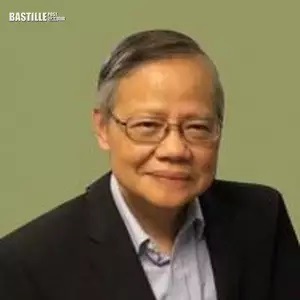
Former president of Civic Party enjoys high life of gourmet meals while his former political allies swallow prison life

Blog

Former president of Civic Party enjoys high life of gourmet meals while his former political allies swallow prison life
Blog

Blog

Former president of Civic Party enjoys high life of gourmet meals while his former political allies swallow prison life

2025-01-08 09:26 Last Updated At:09:26

Alan Leung Ka-kit, the former president of the Civic Party, recently posted a “farewell to 2024”  message on  Facebook. In the post, he elaborated the idea of "living in the moment" by sharing photos of himself enjoying gourmet meals at the Spring Moon Restaurant of the Peninsula Hotel. He further illustrated his “moment”  with quotes from Tang dynasty poetry, evoking a sentiment of "no matter how the winds may change, I remain carefree."

However, Leung’s post had drawn quite a number of mocking comments. Many netizens juxtaposed his carefree demeanour displaced on the New Year’s Eve with the much grave situation faced by his former political allies, some of whom were spending the New Year in prison. The criticism was sharp, highlighting the contrast between Leung’s enjoyment and the plight of those who had once stood with him. This served as a reminder of how Leung, once a leading figure in Hong Kong's pan-democratic camp, had skilfully avoided the political risks that ensnared others.

Leung, once a prominent leader of Hong Kong's pan-democratic movement, has long been known for his political astuteness. According to insider reports, Leung had started to show his ability to "dodge danger" and avoid serious risks  at his early recognition of the changing political environment. Unlike others, such as Benny Tai and Alvin Yeung, who continued their activism despite being fully aware of the impending dangers, Leung managed to tactfully distance himself from risky positions, feigning naiveté while avoiding involvement in potentially hazardous political actions.

On New Year's Eve at the Spring Moon Restaurant, in addition to showing off pictures of his gourmet meals, Leung quoted a passage from Tang dynasty poet Wang Han's Liangzhou Ci: "I want to finish the beautiful wine in the glowing cup, but the pipa is urging me to get on the horse. I lie drunk on the battlefield, but don't you laugh at me, for how many could return from wars in history?" Some political observers opined that Leung was using the line "how many could return from wars in history" as a metaphor for his former political allies who had walked a path of no return.

However, many comments criticized Leung's apparent detachment from reality, pointing out his indulgence in luxury while his former comrades languished in prison. One remarked, "Mr. Leung, congratulations on enjoying life at the Peninsula so carefree. But how should your imprisoned comrades ‘live in the moment’?" Another comment said, "In the Hong Kong of this moment, only this came to my mind: 'It is better to relentlessly pursue an enemy than to seek fame by imitating a tyrant.'” Political observers interpreted this as a call to continue to pursue accountability of those responsible for the 2019 unrest. Wonder if Leung’s heart would miss a beat hearing that.

Leung's departure from active politics allowed him to avoid the legal consequences that ensnared his peers. Reports indicate that, in the months leading up to the implementation of the Hong Kong National Security Law, Leung recognized the imminent dangers and skilfully distanced himself from key decisions. Political insiders revealed that, according to testimony from prosecution witness Au Nok-hin in the 2020 '35+' subversion case, in 2020, after a closed-door meeting where Benny Tai, Lee Wing-tat, Lee Cheuk-yan, and Raphael Wong discussed the details of an illegal primary election, they decided to reach out to other pan-democratic party leaders for further discussions and immediately arranged a meeting with Civic Party leader Alan Leung Ka-kit. However, during the meeting, Leung claimed he had retired from frontline politics and suggested that the matter should be taken up with the Civic Party’s executive committee. This strategic move allowed him to sidestep direct involvement in high-risk activities, while others like Alvin Yeung, Kwok Ka-ki and Jeremy Tam were caught in the fallout.

As the political climate worsened, Leung understood that the Civic Party was facing imminent peril. To protect himself, he and a few core members decided to disband the party before it could be targeted.

On the day the Civic Party officially dissolved, Leung quoted a line from a Song dynasty poem, saying, "There is neither wind nor rain, nor clear skies" as an expression of his resignation. But it drew sharp criticism from Secretary for Security Chris Tang. Tang was dismayed by Leung’s frivolous attitude which was intended to distance himself and those leaders of the Civic Party from the 2019 riots. Secretary Tang's criticism was valid—Leung and other senior Civic Party members, such as Audrey Eu, could not evade responsibility for their roles in the chaos of 2019.

In fact, Leung is not alone who have avoided repercussions. Apart from Audrey Eu, there are Martin Lee, Anson Chan, and Lee Wing-tat. One must wonder: Do they have a sense of quilt over the imprisonment of the younger generation? Or, like Leung, carefree and continue to "live in the moment,"  and detach themselves from the consequences of their leads?

Lai Ting Yiu


What Say You?

** 博客文章文責自負,不代表本公司立場 **

There is a Western saying: "You look at the speck of sawdust in your brother’s eye and pay no attention to the plank in your own eye." This proverb fittingly describes Sam Townend, Chairman of the British Bar Association, who recently criticized the rule of law in Hong Kong. In his address at the commencement of the British legal year, Townend refrained from addressing domestic issues, instead focusing his sharp critique on Hong Kong. He claimed that the rule of law in Hong Kong has been eroded by “unchecked executive control”, suggesting that the administration had overridden the judiciary. Despite his stern rhetoric, he failed to provide any concrete evidence to substantiate his claims. Legal professionals were taken aback by his remarks, immediately recalling the "Rwanda controversy" staged by the British government just a month earlier. In that incident, the British government exerted political pressure on the judiciary, compromising human rights principles to authorize the controversial “Safety of Rwanda (Asylum and Immigration)” act.

In its efforts to curb illegal immigration, the British government launched the "Safety of Rwanda" initiative—a scheme that could serve as a textbook example of poor legal practice. Over recent years, the increasing influx of illegal immigrants led senior Conservative Party members to devise a plan to transfer them to Rwanda by means of  substantial acceptance fees payable to Rwanda. This arrangement, essentially a form of human trafficking, treats refugees in a dehumanizing manner. While British officials frequently criticize the human rights situation in Hong Kong, the Rwanda act is a blatant example of the UK’s own disregard for human rights.

The act, which treats refugees as scum, faced widespread legal challenges and was ultimately brought before the Supreme Court. The Court dismissed the government’s appeal, ruling that the transfer of migrants to Rwanda was illegal. The judge cited Rwanda's poor human rights record, declaring it could not be considered a "safe third country," and highlighted the risk of migrants being returned to their countries of origin or facing inhumane treatment in Rwanda.

In light of this judicial obstacle, the British government was forced to temporarily suspend the plan. However, under intense pressure due to the immigration crisis and wielding the Conservative Party’s parliamentary majority, the government pushed through legislation declaring Rwanda a "safe country." This legal provision effectively compelled the courts to align with the new legislation, preventing them from ruling the transfer of migrants to Rwanda as illegal in the future.

The Conservative government aggressively defended the "Rwanda  Act," rejecting all parliamentary amendments until it passed. This manoeuvre demonstrated the overwhelming power of the executive branch, compelling the judiciary to submit to what some have described as an “iron fist” of executive authority. Prime Minister Rishi Sunak declared that flights transporting migrants to Rwanda would commence within ten weeks to swiftly resolve the situation.

Volker Türk, the United Nations High Commissioner for Human Rights, condemned the legislation, stating that it "undermines the ability of British courts to review refugee removal decisions" and "seriously impedes the rule of law in the United Kingdom." He further warned that it could establish a dangerous precedent on the global stage.

UK legal professionals have since questioned Townend: Why did he not criticize the British government’s actions, which clearly exemplify “executive overreach” and severely undermine the rule of law? Instead, he launched “empty attacks” against Hong Kong, alleging that its rule of law had been supplanted by executive power without offering any evidence.

One legal expert noted that this is not an isolated case. There has long been a “hawkish” faction within the British political elite that has exhibited hostility towards China and the Hong Kong Special Administrative Region, as seen during the trial of the LAI Chi-ying case. Several British judges appointed as non-permanent judges of Hong Kong's Court of Final Appeal have faced intense backlash, with some resigning or retiring early under pressure. It appears that Townend, influenced by this faction, has now joined the chorus of critics targeting Hong Kong.

My legal colleagues and I would very much appreciate it if a journalist were to ask Mr. Townend for his opinion on the British government’s “Rwanda controversy.” Is this not a prime example of the executive undermining judicial independence, as he claims? If so, perhaps he should first address domestic concerns before criticizing Hong Kong.

Lai Ting Yiu

Recommended Articles