A modern Chinese-built floating dry dock in Cuba, the largest and most modern in both Cuba and the entire Caribbean, has enhanced the country's capabilities to build and repair ships, thus boosting its maritime industry's competitiveness in the global market after over a year of operation.
The dock, built in China's Huarun Dadong shipyards and financed by a multimillion-dollar credit from the Chinese government, started operation in the Havana Harbor in 2023. This 220-meter-long and 48-meter-wide dock can accommodate cargo ships up to 65,000 displacement tons.
Johannes Milian, manager of Cuba's state-owned Caribbean Drydock Company, which operates the dock, said it has helped enhancing shipyard operations in the Havana Harbor.
"Since the dock started operations back in 2023, we have repaired eight ships, including the recovery of boats of our local fleet, which had a positive impact on the country's economy," Milian said.
The Cuban company employs around 500 skilled workers who undertake a variety of boat repairs.
"We do boat hull maintenance, electrical or mechanical work, crane repairs and steel treatment, any kind of work either in the inside or the outside of the ship," said Alvaro Barroso, the company's repair chief.
Both Barroso and Milian said the dock has not only expanded the company's capabilities and improved employee skills but has also granted the maritime industry in Cuba a competitive edge in the international market, with a growing number of foreign clients seeking repairs.
"Our prospects with this dry dock target the foreign market so we can collect hard currency to purchase the materials and resources we need to recover and upgrade our naval operations," Milian said.
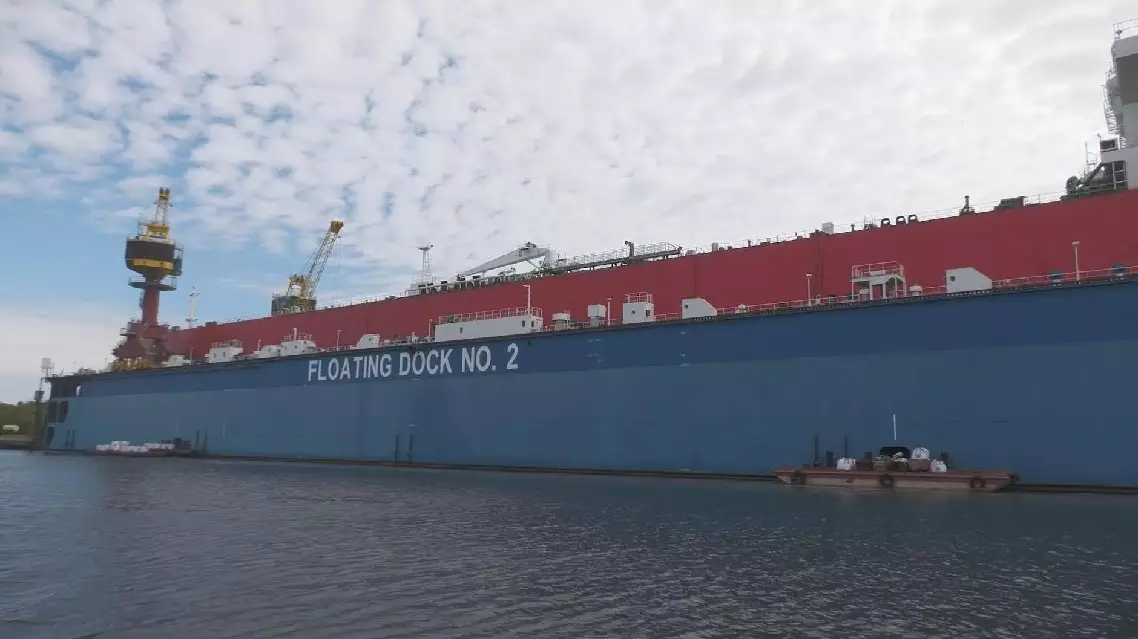
Chinese-built floating dry dock enhances Cuba's maritime industry competitiveness
Ukrainian President Volodymyr Zelensky voiced support Monday for the "energy ceasefire" initiative announced by U.S. President Donald Trump, saying that the proposal creates a viable path toward halting attacks on energy infrastructure.
Trump announced an immediate "energy ceasefire" between Russia and Ukraine on Sunday.
"Effective immediately," Trump wrote on his Truth Social platform, adding that "both parties have agreed."
The declaration came just two days after Trump unveiled a diesel supply deal with Russia.
"If Russia does not agree to an energy ceasefire, we will respond," Zelensky said on Monday.
As part of a reciprocal exchange, Zelensky said, Ukraine would be willing to halt strikes on Russian diesel infrastructure if Ukrainian energy facilities receive security guarantees and are spared from Russian attacks.
On the same day, Ukraine's state-run energy company Naftogaz said that Russian forces launched a drone strike early Monday morning against natural gas production facilities in the Kharkiv region.
The airstrike damaged critical equipment, sparked a fire, and disrupted the normal operations of the facility. Emergency crews were dispatched to the site to carry out repairs, restore damaged systems, and handle the aftermath of the blaze, according to Naftogaz.
Russian authorities have not yet responded to the incident.
On Saturday, Trump said Russia was willing to reach a deal to end the conflict in Ukraine but accused Zelensky of resisting a negotiated settlement. He also called on Ukraine to hold an election and choose a new leader who could make a deal with Moscow.
In response to Trump's remarks, Kremlin Spokesman Dmitry Peskov said on Sunday that it is vital for Moscow to see political will within the Kiev regime to accept reality and advance a peaceful settlement to the conflict.
Zelensky responded on Sunday that he would call a vote if Russian President Vladimir Putin agreed to a 60-day ceasefire, and that it was "up to Ukrainians" to choose their leader. Presidential elections, originally due in 2024, have been postponed under martial law.
The dispute over the ceasefire comes as rising energy prices have become a growing political concern for Trump ahead of the U.S. midterm elections.
On Friday, Trump announced a deal with Putin under which Russia would supply diesel fuel to the United States and global markets. Trump described it as a necessary step to bring down soaring diesel prices, which he attributed largely to Ukrainian strikes on Russian energy infrastructure.
Zelensky rejected the suggestion that he was responsible for rising energy prices, saying that "everybody in the world" knew that the war in the Middle East was a bigger factor.

Ukraine says it backs U.S. 'energy ceasefire' initiative

Ukraine says it backs U.S. 'energy ceasefire' initiative