Skip to Content Facebook Feature Image

Iran says death toll from U.S.-Israeli strikes exceeds 1,300

China

China

China

Iran says death toll from U.S.-Israeli strikes exceeds 1,300

2026-03-07 19:25 Last Updated At:21:07

Iran said on Friday evening that at least 1,332 civilians have been killed in the U.S. and Israeli strikes on the country since fighting began on Feb. 28, with thousands of others being injured.

The toll follows joint U.S.-Israeli attacks on Tehran and several other Iranian cities starting Feb. 28 morning, which resulted in the deaths of Iran's Supreme Leader Ali Khamenei, his family members, top military commanders, and many civilians.

Iran has since responded with multiple waves of missile and drone attacks targeting Israel and U.S. assets across the region.

The Iranian Navy on Friday evening announced that it had launched a shore-to-sea ballistic missile at the USS Abraham Lincoln aircraft carrier. Subsequently, Iran's Islamic Revolutionary Guard Corps (IRGC) announced early Saturday morning that it had carried out the 24th round of military operations against Israel's Tel Aviv, with all three missiles hitting their intended targets.

In an earlier announcement, the Iranian military said that from the wee hours until noon on Saturday, Iranian navy forces had conducted large-scale drone attacks targeting some U.S. assets and Israeli radar facilities in the region.

Explosions were heard in the Iranian capital of Tehran in the early hours of Saturday. The area targeted by the U.S. and Israeli airstrikes was near the Mehrabad International Airport in the urban area of Tehran. Additionally, explosions occurred in central, western and southwestern Iran, including at two medical centers in the southwestern province of Khuzestan.

After the escalation of the situation, Iranian authorities have sent alerts to the public via text messages. In one of the messages a China Central Television (CCTV) reporter in Tehran received, the Iranian police said that they would resolutely crack down on theft and other illegal and criminal activities to protect the safety of citizens' property. The police authority reminded the public to provide clues immediately if they notice any suspected spies or suspicious individuals.

In another text message, Iranian intelligence authority expressed the hope that the public would report sightings of drones and fighter jets to official accounts on local social media, including their specific locations, numbers and flight route.

Iran says death toll from U.S.-Israeli strikes exceeds 1,300
Iran says death toll from U.S.-Israeli strikes exceeds 1,300

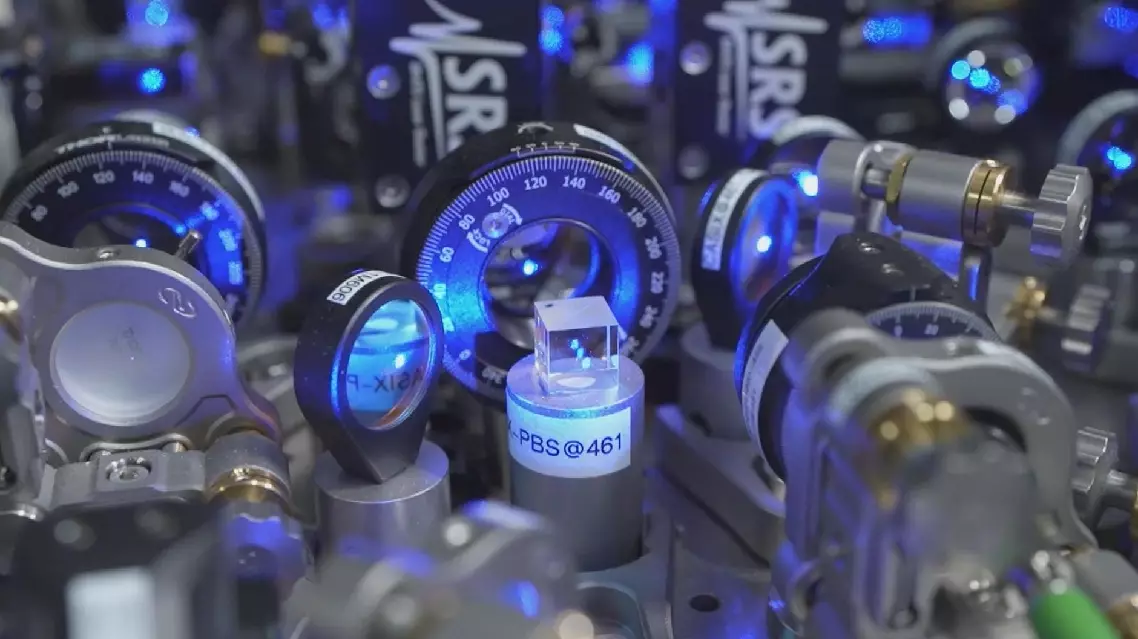
Researchers from the University of Science and Technology of China have achieved a major breakthrough in optical clock technology, developing a strontium optical lattice clock with stability and uncertainty both surpassing the 10⁻¹⁹ level, meaning the clock would lose or gain less than one second over roughly 30 billion years.

The findings were published in the international metrology journal Metrologia on Thursday.

Optical clocks are considered the most precise timekeeping devices currently available. They measure time by using the frequency of light emitted when electrons transition between energy levels in atoms. They can directly support the redefinition of the second in the International System of Units.

"This breakthrough enables China to rank among the top in the world in the development of optical clocks. It also provides a feasible technical path for the development of transportable optical clocks and satellite-borne optical clocks, and lays a solid and reliable foundation for using optical clock technology in areas such as testing fundamental laws of physics, supporting next-generation satellite navigation systems, and establishing a globally unified ultra-high-precision time reference," said Dai Hanning, professor of the university.

Beyond time-keeping, optical clocks can provide highly accurate time references for modern technologies such as satellite navigation, telecommunications and precision measurements. They also offer new experimental platforms for testing fundamental physics, including general relativity, as well as for the detection of gravitational waves and dark matter.

Achieving both stability and uncertainty at the 10⁻¹⁹ level opens the door to a range of frontier applications. These include millimeter-level measurements of gravitational potential and altitude, which could help monitor crustal deformation, groundwater changes and volcanic activity, as well as improve geoid mapping for disaster prevention and resource exploration.

Chinese optical clock accurate to within 1 second over 30 bln years

Chinese optical clock accurate to within 1 second over 30 bln years

Chinese researchers develop world's most precise optical clock

Chinese researchers develop world's most precise optical clock

Recommended Articles