The Munich-based ifo Institute for Economic Research has lowered its economic growth forecast for Germany in its latest report released on Monday.
The institute now expects Germany's GDP to grow by only 0.2 percent this year, a 0.2 percentage point downgrade from its previous prediction.
The report highlights weak industrial demand and increasing global competition as key challenges for Germany's economy.
In addition, domestic and international political uncertainties pose significant risks to economic stability. Notably, concerns are mounting over the protectionist and unpredictable economic policies of U.S. President Donald Trump. If the U.S. expands tariffs on European goods, Germany's export sector could face severe disruptions.
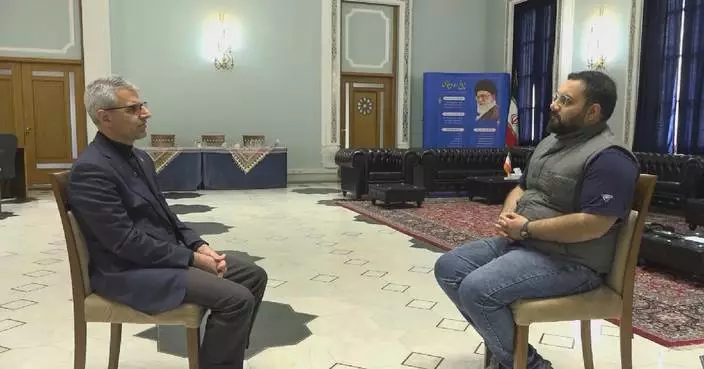
Clemens Fuest, president of the ifo Institute, said in an interview that the instability caused by U.S. policies is "poison" for the economy.
On the same day, German automaker Audi announced an agreement with its labor union to cut approximately 7,500 jobs in Germany by 2029.
The move is part of the company's strategy to reduce costs and enhance competitiveness.
At the same time, Audi confirmed plans to invest eight billion euros (around 8.7 billion U.S. dollars) over the next five years in its German factories to drive technological innovation and upgrade production lines.
Audi is not the only German automaker facing job cuts. Volkswagen previously announced plans to lay off 35,000 employees in Germany, Porsche intends to cut 1,900 jobs, and Mercedes-Benz aims to reduce thousands of positions by 2027.
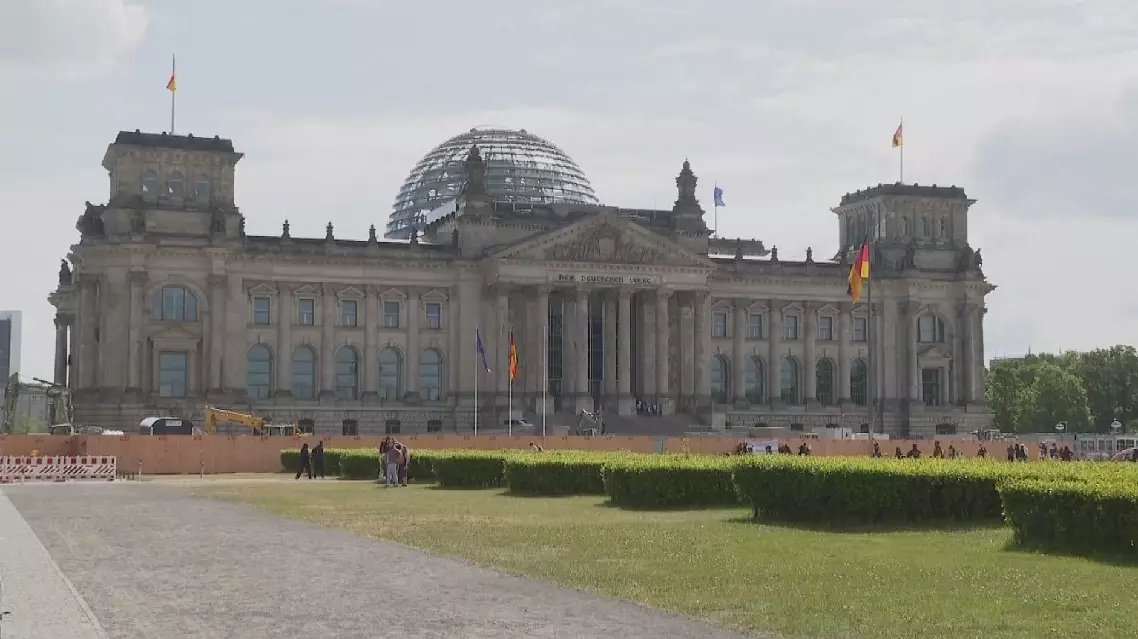
US economic policy uncertainty weighs on Germany’s growth outlook
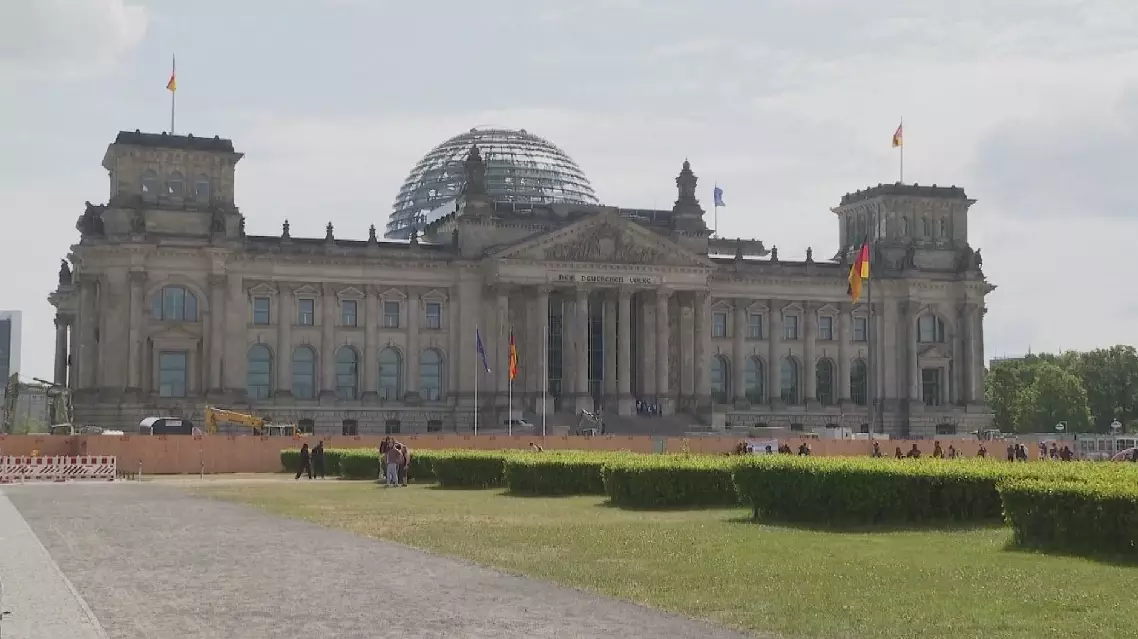
US economic policy uncertainty weighs on Germany’s growth outlook
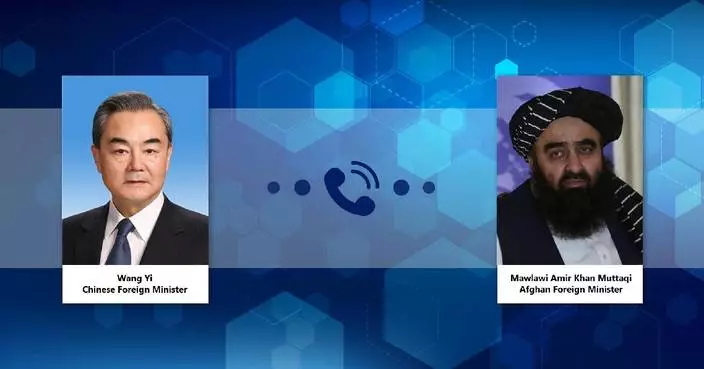
Chinese Foreign Minister Wang Yi said on Friday that both China and the Netherlands being committed to promoting mutually beneficial cooperation in an open and pragmatic spirit is in line with the shared interests of the two sides.
This is also conducive to the sound development of China-European Union (EU) relations as well as the security and stability of the global industrial and supply chains, he said.
Wang, also a member of the Political Bureau of the Communist Party of China Central Committee, made the remarks in a phone conversation with Dutch Foreign Minister Tom Berendson at the latter's request.
Wang congratulated Berendson on his assuming office as the Netherlands' new foreign minister and said that China and the Netherlands are important partners of cooperation to each other.
China appreciates the positive signal released by the new Dutch government of valuing its relations with China, he said, noting that China's foreign policy maintains coherence and stability, and that China is willing to work with the Netherlands to strengthen exchanges and communication, promote mutual understanding and trust, and consistently deepen their open and pragmatic partnership for comprehensive cooperation.
Wang briefed his Dutch counterpart on the outcomes of China's just concluded "two sessions," noting that China will remain committed to opening wider to the outside world and expanding institutional opening-up, bringing more opportunities to countries around the world, including the Netherlands.
China-Netherlands economic and trade cooperation enjoys mutual complementarity of advantages, mutual benefit and win-win results, Wang noted.
He expressed hope that the new government of the Netherlands will take on a new look and new challenges, adhere to independence and self-autonomy, and support the normal economic and trade exchanges between enterprises of the two countries.
It is hoped that the Dutch side would push EU institutions to understand China in an objective and rational manner, and adhere to the positioning of partnership and open cooperation between China and the EU, Wang said.
For his part, Berendson said the new government of the Netherlands speaks highly of the achievements China has made in its rapid development, and regards the relations with China as one of its most important bilateral relationships.
Berendson said his country is willing to keep high-level exchanges with China, leverage bilateral mechanisms such as the political consultation between foreign ministries and the mixed economic and trade committee, increase dialogue and exchanges at all levels, deepen the pragmatic cooperation in climate change, water resource management and other areas, and jointly defend multilateralism, consistently advancing the bilateral open and pragmatic partnership for comprehensive cooperation to new levels.
The Dutch side is willing to play a constructive role for the sound and steady development of EU-China relations, he said.
The two sides also exchanged views on issues including the Ukraine crisis.
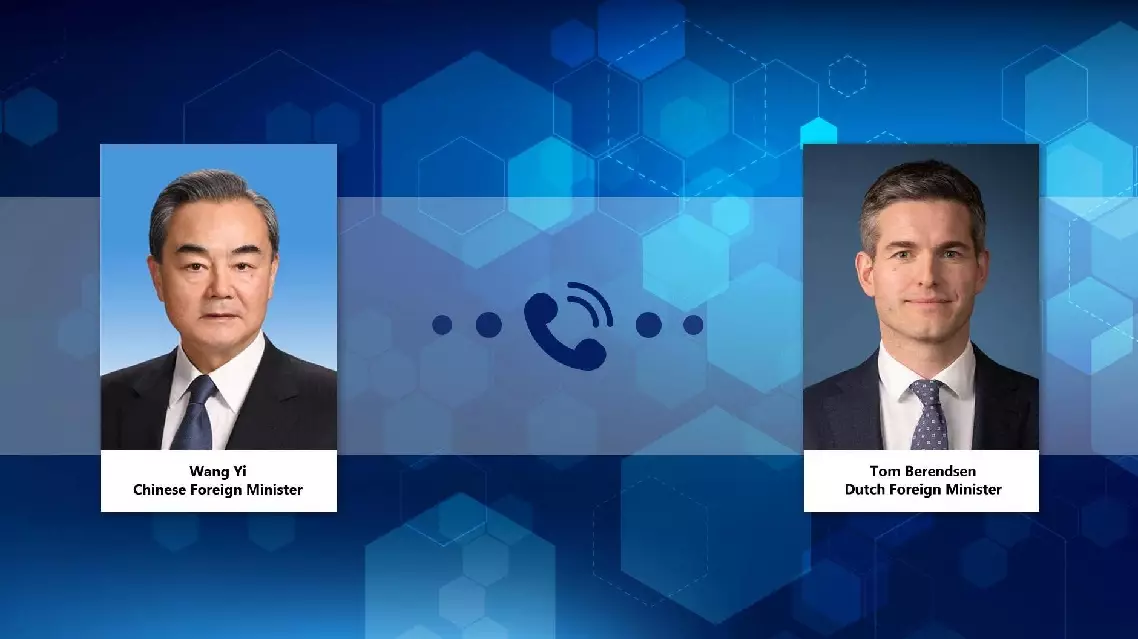
China-Netherlands mutually beneficial cooperation in line with common interests: Chinese FM