Pope Francis passed away on Monday, and the cardinals with voting rights have already gathered at the Vatican, ready to elect the new pope behind closed doors. Thus, the “papal election” has officially begun. Cardinal Joseph Zen, now over 90 and known for his “yellow camp” stance, is ineligible to vote due to his age. Yet, true to his combative nature, he has openly complained, criticizing the timing of the conclave as too rushed for cardinals from distant regions, particularly Hong Kong’s Bishop Stephen Chow, to arrive in time. He did not spell out his real grievance, but it is reasonable to infer that he regrets being unable to lobby Bishop Chow on how to vote, losing his only chance to influence the outcome.
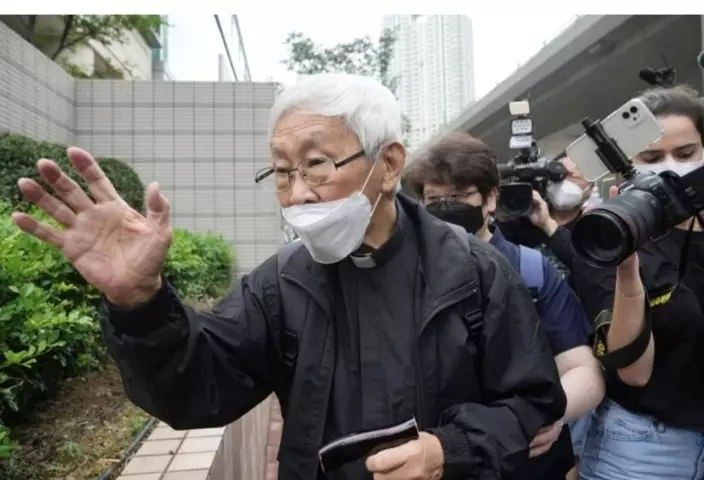
Cardinal Zen has long been a hardline anti-China hawk, with ambiguous ties to Jimmy Lai, and is at odds with the Vatican’s pro-Sino-Vatican rapprochement faction. As a result, he has been marginalized and left an outsider. Unwilling to accept this, he has seized the opportunity of the current “papal election” to vent his frustrations.
Zen is especially anxious about the outcome because his rival, the current Vatican Secretary of State Cardinal Pietro Parolin, is a frontrunner. If Parolin becomes pope, it would accelerate the establishment of diplomatic ties between China and the Vatican—something Zen vehemently opposes. Despite his intentions, Zen is powerless to stop the tide, having long been sidelined by the Vatican. In recent years, he has repeatedly traveled to Rome seeking an audience with the pope, only to be rebuffed, a clear sign of his loss of influence. For this election, he can only watch bitterly as a bystander.
Zen has always been a hawk against Sino-Vatican reconciliation, a stance rooted in complex political networks. Most notably, he and Jimmy Lai are as close as brothers, with Zen receiving over HK$20 million (equivalent to USD2.56 million) in private donations from Lai over the years—an unresolved and unexplained financial relationship. Zen also maintains close ties with Western anti-China politicians, frequently engaging in covert dealings. Because of his outspoken anti-China position, he has been in a longstanding conflict with the Vatican’s pro-China faction, clashing with them on multiple occasions. One of his chief adversaries is, in fact, the current Secretary of State Parolin, now a leading papal candidate.
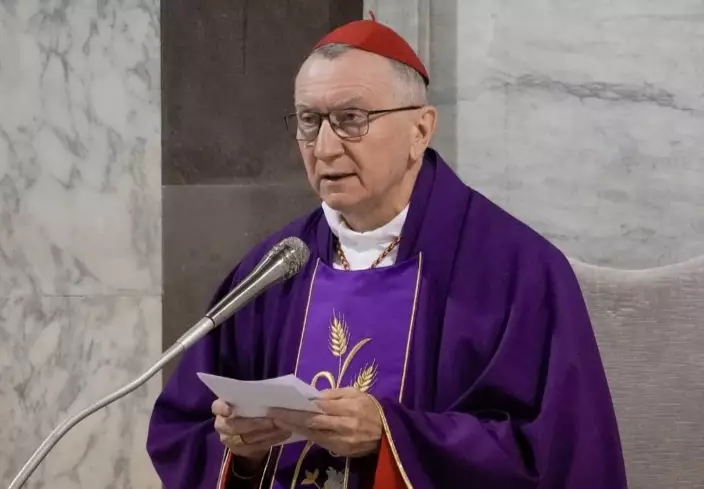
Parolin, the Vatican’s Secretary of State and a frontrunner in this papal election, has been sharply criticized by Zen for “compromising with Beijing.” Yet Zen has no influence whatsoever on the election’s outcome.
One incident clearly highlights their rift: In 2018, the Vatican and China signed a provisional agreement on the appointment of mainland bishops, which was renewed for another two years in 2020. Zen vehemently opposed the deal, arguing that the Chinese government could use it as a tool to suppress the underground church. To voice his objections and urge the Vatican to speak out against the Hong Kong National Security Law, Zen traveled to Rome himself to seek an audience with Pope Francis. After waiting three days without being received, he left in frustration, having effectively been shown the door.
He later aired his grievances to anti-China media, revealing so-called “Vatican inside stories,” claiming that the real power in the Vatican was not the pope but Secretary of State Parolin, a member of the ruling faction who has long pushed for compromise with Beijing. Zen believes that because this faction strongly advocates for Sino-Vatican ties, the Vatican has refrained from forcefully condemning the National Security Law.
Zen was not wrong: By the time the provisional agreement on bishop appointments was signed in 2018, rapprochement with China had become the Vatican’s mainstream policy. Zen was completely shut out of the process—he saw none of the agreement’s details and was not consulted, treated as an outsider. In May 2022, after the arrest of Zen as a trustee of the “612 Humanitarian Relief Fund”, Parolin told the media that Zen’s arrest would not affect the renewal of the provisional agreement on bishop appointments between China and the Vatican. In other words, Zen’s troubles were irrelevant to the Vatican’s China policy—to put it bluntly, “he’s as good as invisible.”
It is only natural that the Vatican has sidelined Zen. This highly political cardinal has, from the Occupy Central movement to the 2019 riots, consistently aligned himself with Western and Hong Kong’s anti-China forces, especially maintaining an ambiguous relationship with Jimmy Lai. He is no longer merely a clergyman. Allowing him to participate in Vatican decision-making would only disrupt the normalization of Sino-Vatican relations, precisely the outcome sought by Western hawks and Taiwan’s pro-independence camp.
Given what Zen has done —including receiving tens of millions from Lai—it is already fortunate for him that he has avoided jail. He should just retire quietly and enjoy his remaining years.
Lai Ting Yiu
What Say You?
** 博客文章文責自負,不代表本公司立場 **
Donald Trump's tariff war has been marked by erratic flip-flopping, chaotic policy-making, and implementation full of loopholes and oversights—difficult to imagine as the work of a professional White House team. This raises the question: who are the core decision-makers behind this mess? An academic friend told me that Trump's "chief strategist" for tariff policies, Peter Navarro, despite holding a Harvard doctorate, is academically incompetent and has fabricated content in his publications. Worse still, he has used biased and incorrect reasoning to malign China, influencing Trump to adopt aggressive measures against Beijing.
As for the other key player, Commerce Secretary Howard Lutnick, who comes from financial circles and is despised on Wall Street for his unscrupulous money-making tactics. The two could be called the "Evil Duo" of Trump's core team. Lutnick's relationship with Trump solidified over three years ago when he helped Trump raise funds for his social media platform and cryptocurrency business, earning Trump's appreciation. This eventually led to his appointment as Commerce Secretary and the vanguard of this trade war. Looking at these two individuals' "stories" helps explain why the current tariff policies are so disastrous.
During recent internal conflicts within Trump's team, his "favorite" Elon Musk suddenly attacked Navarro, calling him "truly a moron" and "dumber than a sack of bricks." While Musk didn't explicitly call for Trump to fire Navarro, the implication was clear. However, these harsh attacks failed to undermine Navarro's position in the team, as his "loyalty" and extreme views on China continue to be highly valued by Trump.
Although Navarro holds a Harvard doctorate in economics and has published several books, his academic standing is extremely low. One economics professor pointed out that Navarro's understanding of trade deficits is based on errors "that even a first-year high school student wouldn't make." More controversially, he repeatedly cited views from an economist named Ron Vara in his books, only for it to be revealed later that this scholar was entirely fictional—a fabrication. When confronted, he could only sheepishly explain that it was merely a pen name.
Despite his academic inadequacies, Navarro's radical demonization of China in his writings caught Trump's attention. His 2016 book "Death by China," for instance, consistently exaggerates China's harm to the United States, later systematizing these claims into "Seven Deadly Sins." Trump described Navarro as a "visionary" economist who would "develop trade policies that shrink our trade deficit, expand our growth, and help stop the exodus of jobs from our shores" and subsequently invited Navarro to join his campaign team as a policy advisor.
After Trump first entered the White House, Navarro rose to prominence, becoming Director of the Office of Trade and Manufacturing Policy. The following year, he published six strategies targeting "China's damage to US economy and national security," which can be seen as the prototype for the current tariff policies against China.
Beyond his extreme views on China, Navarro's greatest asset in gaining Trump's favor is his "unwavering loyalty." After Trump's 2020 election defeat, Navarro vocally contested the results, publishing hateful rhetoric that helped incite the far-right Capitol riot. When summoned to testify before Congress, he refused to appear and was ultimately convicted of contempt of Congress, serving four months in prison.
His willingness to go to jail like a "martyr" became political capital for advancement. When Trump returned to power, he naturally rewarded Navarro, inviting him back and entrusting him with planning the tariff war, making him a star in the core team. However, Navarro remains academically deficient, excessively radical on China, and has a history of "deception." Unsurprisingly, his policies are full of loopholes, not only disrupting the global trade order but also causing American businesses to cry out in pain—no wonder Musk is so furious with him.
The other member of the "Evil Duo" is Commerce Secretary Howard Lutnick. This man has long operated in Wall Street with a poor reputation. Having previously helped Trump raise funds for social media and cryptocurrency ventures, he earned Trump's favor and was unexpectedly elevated to the important position of Commerce Secretary, becoming the vanguard of this tariff war. As the tariff policy has thrown Wall Street into chaos, he has incurred widespread anger, with calls for his resignation growing louder by the day.
Lutnick was a managing director at investment firm Cantor Fitzgerald and has recently been heavily involved in cryptocurrency trading—precisely the area that interests the Trump family most. Their shared business interests have strengthened their relationship. Based on their long-term "two-in-one" business investment relationship and shared ideology, Trump appointed him to an important position immediately upon returning to power, with little regard for his actual abilities or experience.
In fact, his reputation on Wall Street has consistently been poor. Some who have worked with him claim he often used company resources for personal trades at the expense of investors' interests and ruthlessly exploited employees, earning widespread resentment. This led to his nickname: "Wall Street's Most Despised Person."
That such a deeply flawed character now controls the trade war, affecting global trade and the economic livelihoods of many countries (including America itself), is truly chilling.
Lai Ting Yiu