Life science experiments conducted onboard China's Tiangong space station will not only help experts to better protect the health of astronauts, but also provide vital new ideas for human disease treatment back on Earth, a Chinese researcher said in Beijing on Wednesday.
Pei Weiwei, an associate researcher at the State Key Laboratory of Radiation Medicine and Protection of Soochow University, was speaking after a special handover ceremony was held where scientists received the samples brought back by the Shenzhou-19 space mission, which landed earlier that day.
The mission's three crew members touched down safely at the Dongfeng landing site in north China's Inner Mongolia Autonomous Region around Wednesday lunchtime, after their return had been postponed by a day due to unfavorable weather conditions on the ground.
During their six-month stay in space, Shenzhou-19 mission commander Cai Xuzhe, alongside young astronauts Song Lingdong and Wang Haoze, who is also China's first female space engineer, carried out an extensive series of scientific experiments and medical tests to assess the impact of space travel on human health and on other living organisms.
The returned samples include bone cells, human induced pluripotent stem cells and human bronchial epithelial cells. Scientists will conduct molecular biology research on these key samples, assessing the effects of the zero-gravity environment on human tissues and the impact of space radiation, according to Pei.
"The carcinogenicity of space radiation has always been a focus of our research, and the epithelial cells of the lungs are the most susceptible to tumors. So we are studying the evolution of lung epithelial cells into tumor cells in space radiation and some of its mechanisms. Based on this data, we aim to establish a space radiation risk assessment system suitable for Chinese astronauts. At the same time, we hope to provide some theoretical support for radiation monitoring and a complete radiation protection system," he said.
Pei said that such experiments and related research will not only help protect the health of astronauts, but can also offer new ideas to human health problems back on Earth, such as the diagnosis and treatment of lung cancer. It will also provide a new theoretical basis and experimental support for exploring health problems such as osteoporosis, muscle atrophy and decreased cardiovascular function, he added.
Space life science mainly studies the responses and changes of life activities at all levels from biomolecules to organisms under conditions such as microgravity, space radiation, and sub-magnetism, as well as their combined conditions, and explores the deep mechanisms of life phenomena.
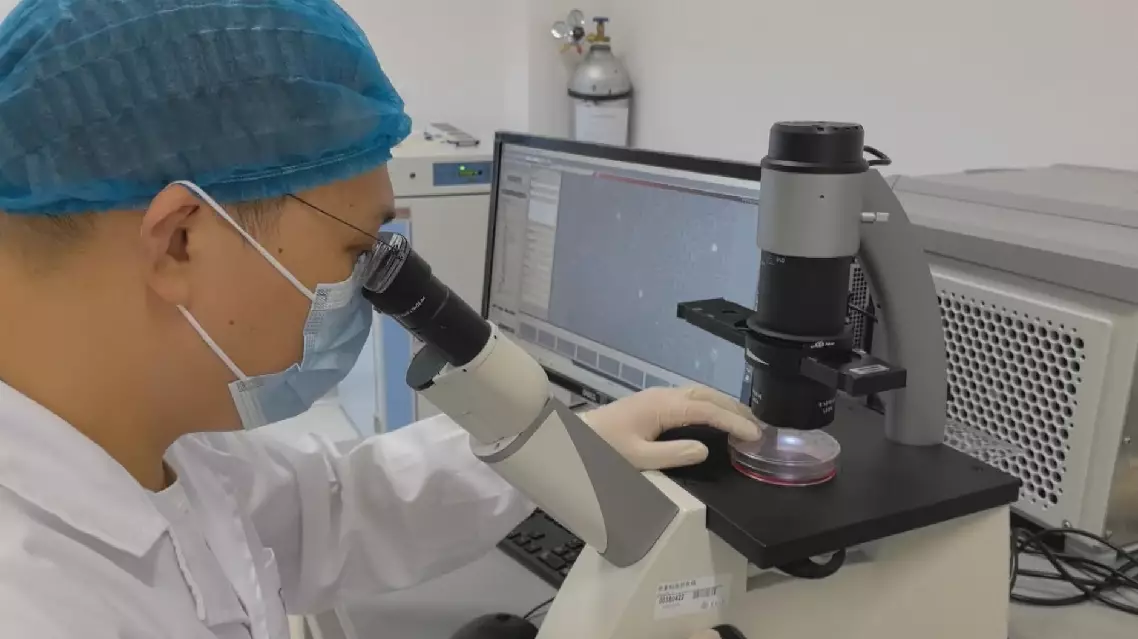
Space experiments can offer new approaches to tackling human health issues: expert
China is willing to provide humanitarian assistance to Cambodia to help resettle displaced people in border areas, Chinese Foreign Minister Wang Yi said on Sunday in Yuxi, southwest China's Yunnan Province.
Wang, also a member of the Political Bureau of the Communist Party of China Central Committee, made the remarks during a meeting with Prak Sokhonn, Cambodian Deputy Prime Minister and Minister of Foreign Affairs and International Cooperation.
Following the signing of a joint statement agreeing to a ceasefire, the Cambodian and Thai foreign ministers are leading delegations meeting in Yunnan from Dec. 28 to 29 at Wang's invitation.
China has been closely following the tense situation on the Cambodia-Thailand border and remains committed to facilitating peace through talks, Wang said, adding that China congratulates both sides on reaching a ceasefire agreement.
The ceasefire marks the beginning of peacebuilding, Wang said, calling on the two sides to proceed in a phased and measured approach to promote a comprehensive and lasting ceasefire, restore normal interactions, rebuild mutual trust, achieve turnaround in bilateral relations, and uphold peace and stability in the region.
He said that both countries can make good use of this face-to-face opportunity for diplomatic and military representatives to engage in dialogue and communication in a flexible manner, enhance mutual understanding, and build mutual trust. He also expressed hope that all sides would jointly send a message of peace from Yunnan, reach a consensus on peace, and demonstrate prospects for peace.
China supports ASEAN in playing its due role and stands ready to provide assistance to the ASEAN observation mission in monitoring the ceasefire, Wang said.
He added that China also hopes Cambodia will continue to enhance protection for Chinese citizens and projects in the country.
Cambodia highly values China's positive role in mediating the conflict, said Prak Sokhonn, citing the informal tea gathering among the foreign ministers of Cambodia, China and Thailand in Anning, Yunnan Province, as well as shuttle diplomacy conducted by China's special envoy.
Thanks to the joint efforts of China and other parties, Cambodia and Thailand were able to convene a meeting of the Joint Boundary Commission, and their militaries signed a ceasefire agreement, he said.
Sokhonn said Cambodia is ready to work with Thailand to fully implement the ceasefire agreement, make full use of existing dialogue mechanisms, and steadily build mutual trust between the two countries and their armed forces.
These steps, he noted, are vital to restoring bilateral exchanges, normalizing relations, and resolving the boundary issue at an early date.
Cambodia hopes for the early arrival of peace and expects the trilateral meeting to help rebuild lasting stability, he said.
The two sides also exchanged views on China-Cambodia relations, agreeing that under the strategic guidance of the leaders of the two countries, positive progress has been made in building an all-weather Cambodia-China community with a shared future in the new era.
The Cambodian side expressed gratitude for China's support and assistance to its development, describing China as its most reliable and trusted partner. It reaffirmed its adherence to the one-China principle, its opposition to Taiwan secessionism, and its support for China's reunification cause.
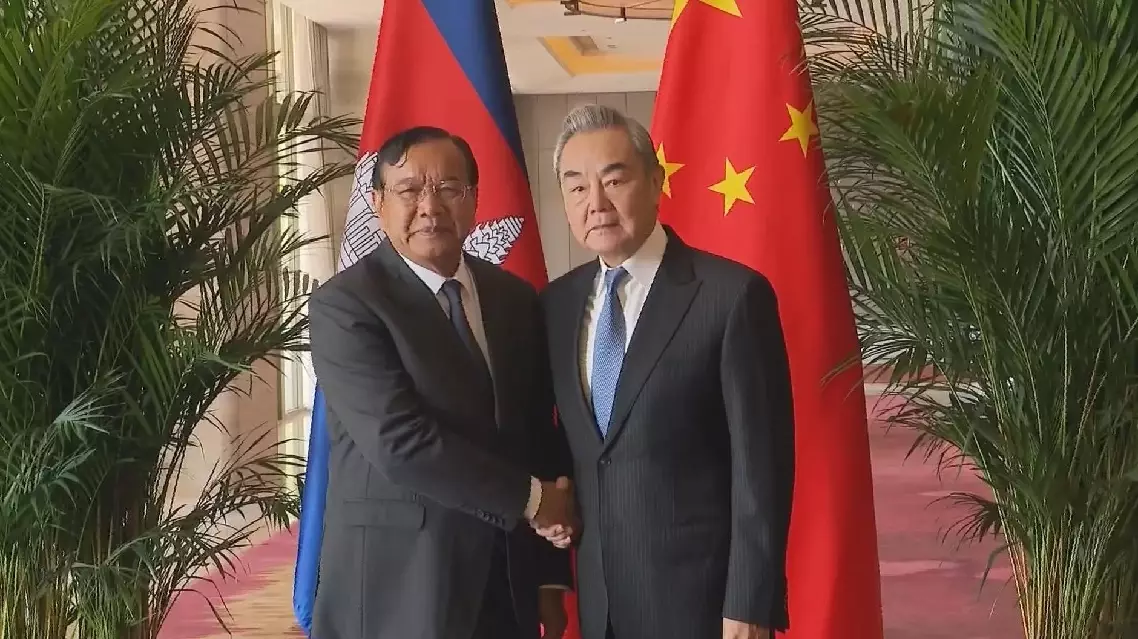
China will deliver humanitarian aid to Cambodia for displaced people along border: Chinese FM