As the United States and China begin high-level contact over tariffs, though not yet formal negotiations, in an online interview Trump, when asked, said that he would raise the case of Jimmy Lai, the jailed Hong Kong media tycoon, in trade discussions with China. For Lai, now behind bars, the news may offer a glimmer of hope: a reminder that his onetime champion has not forgotten him. Yet, according to a longtime observer of Jimmy Lai’s case, Trump’s remarks are unlikely to affect the outcome. Four reasons:
A Casual Remark, Not a Policy Pledge
First, Trump’s comment was delivered with a marked lack of urgency, echoing his tone in a previous interview with the same conservative host, Hugh Hewitt. The statement sounded offhand, almost as if he were saying, “There’s no harm in mentioning it,” rather than signaling a serious negotiating position. Last October, during the presidential election campaign, Trump was asked on Hewitt’s radio program if he would press President Xi Jinping to release Jimmy Lai should he return to office. His reply, “I would one hundred percent do that”, was tossed off with little conviction.
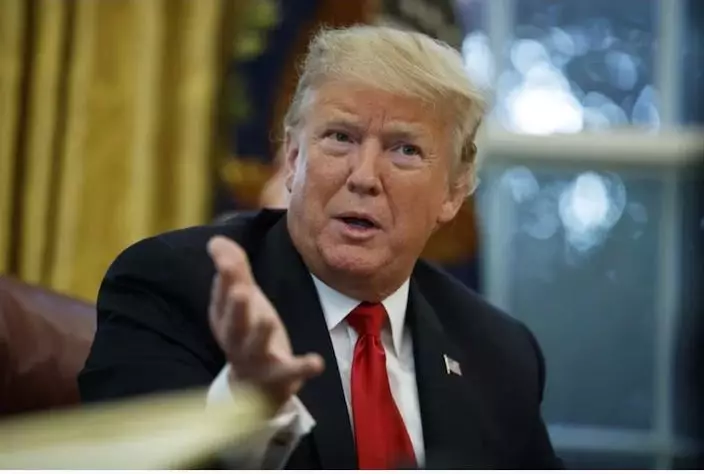
Recently, Donald Trump told an online interviewer he would raise Jimmy Lai’s case in US-China trade talks. A close observer on the Lai case cited four reasons why Trump is unlikely to use Lai as a bargaining chip.
A Record of Shifting Positions
Second, Trump is known for changing his stance with little warning. He has often contradicted himself, sometimes denying he ever made certain promises. If he later concludes that raising Jimmy Lai’s case is not advantageous, he could simply drop the matter, acting as if it had never come up. In Trump’s view, Lai is a spent pawn; if the issue no longer serves his interests, he will abandon it without hesitation.
A Minor Issue in a Complex Negotiation
Third, the US-China trade agenda is dominated by issues with sweeping economic and financial consequences. The fate of Jimmy Lai, for all its symbolic weight, is insignificant in this context. The case is so marginal that it would hardly register in the calculus of either side. It is difficult to imagine American negotiators expending political capital on such a peripheral matter.
Beijing’s Unyielding Position
Finally, and most importantly, Beijing’s position on the Lai case is unambiguous. As noted in a November commentary by Zhuo Wei in the state-run Ta Kung Pao, China adheres to a “three no’s” principle: no external interference in the judicial process, no concessions under foreign pressure, and no room for negotiation or deals. The core message is strict adherence to the law. Political intervention, even from foreign officials or presidents, is not tolerated. Any such attempt would be considered illegal and could result in prosecution.
In short, the case is being handled strictly according to Hong Kong laws, and Beijing has made clear that there is no room for negotiation. As the commentary put it, “there is no space for any bargaining.” Even if Trump were to intervene personally, the result would be the same: the central government will fully support the Hong Kong judiciary in handling the case impartially and according to the law.
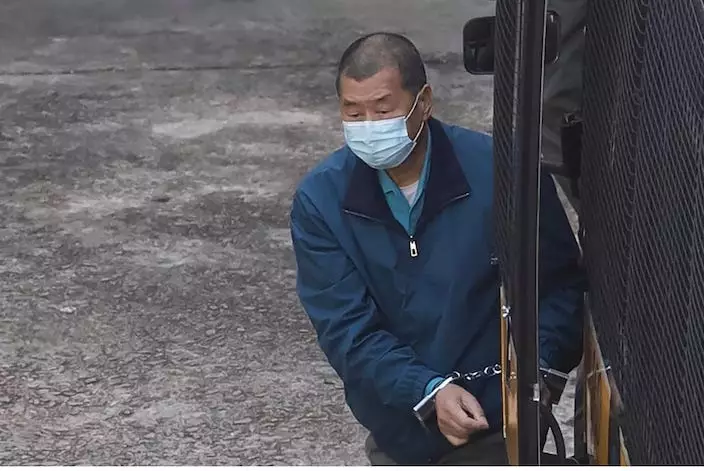
Trump must consider Beijing’s explicit “three no’s” policy on the Lai case: all matters will be handled according to the law, with no foreign government or politician permitted to interfere. “Even if Trump intervenes personally, the result will be the same.”
Conclusion: A Gesture Without Substance
Trump’s suggestion that he will raise Lai’s case is, in the eyes of observers, little more than political theater. At this stage of the trade dispute, the United States is feeling more pressure than China and is more eager to reach a deal. It is unlikely that Trump would jeopardize broader negotiations for the sake of a “discarded pawn” like Jimmy Lai.
What Say You?
** 博客文章文責自負,不代表本公司立場 **
Trump’s recent behavior is increasingly unhinged, and can be summed up in a few words: domineering, deranged, and utterly irrational. It’s no surprise that the latest polls show his support has plummeted to 39%, a sharp drop of 6 percentage points since February. This collapse in popularity has triggered a major rift among overseas "yellow-base" KOLs (Key Opinion Leaders). Some, like To Kit, Elmer Yuen, and Simon Lau, stubbornly continue to back Trump, drawing fierce criticism from former D100 commentator Lai Chak-fun ("Q Jai"), who lambasted them for their blind support. Lai argues that Trump’s tariff war has been a total disappointment-obvious to all but those he calls the ignorant "blind Trump fanatics" among the KOLs, whose behavior he describes as utterly disgraceful.
Meanwhile, the well-known radio host Albert Cheng, once dubbed the "Hong Kong Chief Executive Before 10am," who now lives in Canada, posted an appeal urging voters to support the Liberal Party in the current election. He called for unity against the "great enemy"-namely, Trump’s administration and its unreasonable oppression. Friends believe the split among "yellow-base" KOLs is a positive development, as the heated debates reveal the true colors of those who fawn over America and trample on China.
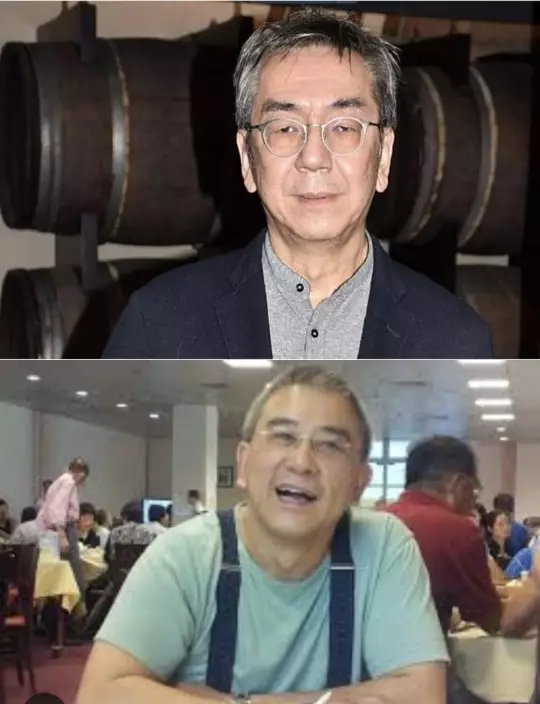
Overseas “Yellow-base” KOLs split on Trump. “Blind Trump Fanatics” draw fierce criticism.
To Kit Tops "Trump Fanatic" List
Overseas writer To Kit was singled out by Q Jai as the leading "Trump fanatic" KOL. Just two days ago, To Kit posted on social media, claiming "Trump has been waiting for a call from Xi Jinping, but it never came -- China ‘wins’. But the latest news tells us that Trump declared that Xi actually called him first, sending finance officials... Clearly, China is knocking the door for negotiation." To Kit took Trump’s words at face value, accusing the Chinese side of lying, despite the blatant reality that Trump constantly contradicts himself, even denying things he’s said publicly. Who’s the real liar? Most people have already made up their minds, yet To Kit insists it’s China.
Elmer Yuen’s "Negotiation Tactic" Defense
Lai Chak-fun also named "wanted criminal" Elmer Yuen in his list of "Trump fanatics." Yuen recently ranted on YouTube about the US-China tariff war, arguing that critics who say Trump lost by lowering tariffs are wrong- that it’s just a negotiation tactic, walking the tightrope of push and pull, to force the other side to compromise. In other words, Yuen still believes Trump has the upper hand. Yuen’s unwavering support for Trump is consistent with his long-standing "sycophantic pro-America" stance. During the trial of the Jimmy Lai case, it was revealed that Yuen had wanted to produce a video during the "Hong Kong black riot" period, urging then-President Trump to send US troops to "protect Hong Kong." The idea was so extreme that even Jimmy Lai dared not broadcast the video.
Lai Chak-fun: Trump’s Bluff and KOLs’ Spin
Lai Chak-fun wrote that Trump’s evasive answers about whether Xi Jinping had actually called him were nothing but empty bluster to save face. After being forced to back down, Trump was left scrambling for any shred of dignity he could find: grasping at straws, hoping Xi would throw him a lifeline and call soon to get him out of this embarrassing situation.
He went on: "I wonder how Trump fanatic KOLs like To Kit, Simon Lau Sai Leung, Sang Pu (Eric Poon), Elmer Yuen, Simon Shen, Yu Jie, and Cao Changqing will spin this for their master. Watching these sycophantic lackeys twist themselves into knots is truly entertaining."
This scathing critique resonated with many. One comment read: "They need to suck up to Trump for traffic. No traffic, no money, so of course they’ll whitewash Trump as much as possible." Another said, "They’re not really Trump fans -- whenever someone comes out against China, they’ll just jump on the bandwagon." Both hit the nail on the head.
Albert Cheng’s Call for Unity Against Trump
Albert Cheng, now living in Canada, didn’t directly attack the "Trump fanatics," but made his anti-Trump stance clear. He accused Trump of trying to annex Canada as the 51st US state, disregarding Canadian sovereignty and dignity, and putting the nation’s survival at risk. He called for national unity to oppose Trump’s administration and its unreasonable oppression, urging voters to support the Liberal Party, which dares to stand up to Trump.
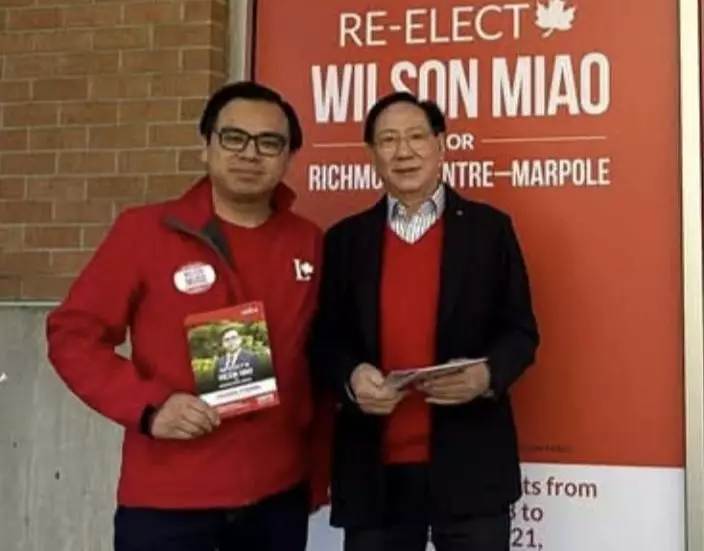
Former Hong Kong popular radio host Albert Cheng, now living in Canada, urges Canadian voters to support the Liberal Party and unite against the Trump oppression.
A Positive Split?
Some friends see the split among "yellow-base" KOLs over Trump as a good sign, mirroring the deep divisions Trump has caused within the US, and even in Taiwan. The phenomenon is actually positive: the less popular Trump becomes, the less influence these "Trump fans" wield. Yet, out of pride, they can’t back down and are sinking together with Trump.