As Chinese professionals seek to improve their skills in emerging and high-demand fields such as new energy and green technology, a vocational competition in the southern province of Hainan is providing a key platform.
The third Hainan Free Trade Port Vocational Skills Competition attracted around 1,200 participants competed in 70 skill-based contests.
This year, 20 new competition categories, including intelligent connected car assembly and maintenance, digital twin application technology, and wastewater treatment, were added, highlighting the growing importance of digital, green and low-carbon technology skills.
Some contestants competed in fields beyond their experience, seeking to become more well-rounded professionals.
"I am not a professional in this field, but I can apply for this project. This may pose some challenges. I believe that this experience will be beneficial for enhancing my skills in chemistry experiments and other areas in the future," said contestant Wang Yiting.
Recent data shows that there is a shortage of nearly one million professionals in the after-sales service sector for new energy vehicles in China.
Learning new skills, fostering high-level talent, and developing a training model for versatile professionals have become essential paths to address talent shortfall.
"The development of new energy, particularly in intelligent connected vehicles, is a growing trend. For teachers, it is important not only to enhance their own expertise in their respective fields but also to stay informed about industry advancements in order to better prepare students for the future," said Chen Liang, a teacher at the Vehicle Engineering Department of the Hainan Technician College.
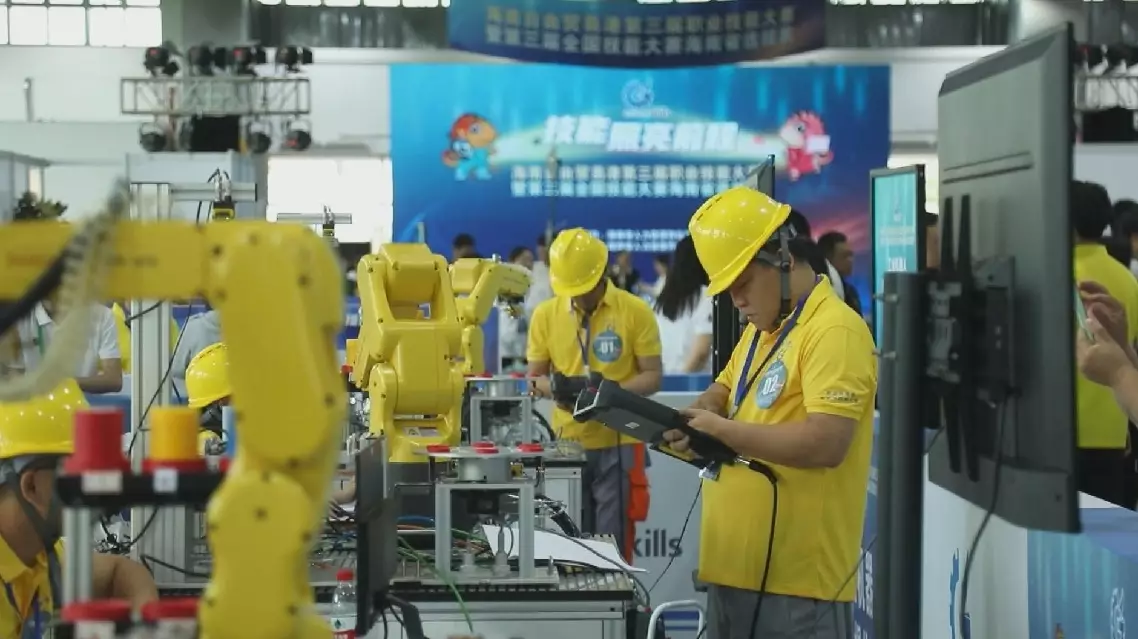
Vocational competition held in south China to highlight key skills for emerging fields
China is willing to provide humanitarian assistance to Cambodia to help resettle displaced people in border areas, Chinese Foreign Minister Wang Yi said on Sunday in Yuxi, southwest China's Yunnan Province.
Wang, also a member of the Political Bureau of the Communist Party of China Central Committee, made the remarks during a meeting with Prak Sokhonn, Cambodian Deputy Prime Minister and Minister of Foreign Affairs and International Cooperation.
Following the signing of a joint statement agreeing to a ceasefire, the Cambodian and Thai foreign ministers are leading delegations meeting in Yunnan from Dec. 28 to 29 at Wang's invitation.
China has been closely following the tense situation on the Cambodia-Thailand border and remains committed to facilitating peace through talks, Wang said, adding that China congratulates both sides on reaching a ceasefire agreement.
The ceasefire marks the beginning of peacebuilding, Wang said, calling on the two sides to proceed in a phased and measured approach to promote a comprehensive and lasting ceasefire, restore normal interactions, rebuild mutual trust, achieve turnaround in bilateral relations, and uphold peace and stability in the region.
He said that both countries can make good use of this face-to-face opportunity for diplomatic and military representatives to engage in dialogue and communication in a flexible manner, enhance mutual understanding, and build mutual trust. He also expressed hope that all sides would jointly send a message of peace from Yunnan, reach a consensus on peace, and demonstrate prospects for peace.
China supports ASEAN in playing its due role and stands ready to provide assistance to the ASEAN observation mission in monitoring the ceasefire, Wang said.
He added that China also hopes Cambodia will continue to enhance protection for Chinese citizens and projects in the country.
Cambodia highly values China's positive role in mediating the conflict, said Prak Sokhonn, citing the informal tea gathering among the foreign ministers of Cambodia, China and Thailand in Anning, Yunnan Province, as well as shuttle diplomacy conducted by China's special envoy.
Thanks to the joint efforts of China and other parties, Cambodia and Thailand were able to convene a meeting of the Joint Boundary Commission, and their militaries signed a ceasefire agreement, he said.
Sokhonn said Cambodia is ready to work with Thailand to fully implement the ceasefire agreement, make full use of existing dialogue mechanisms, and steadily build mutual trust between the two countries and their armed forces.
These steps, he noted, are vital to restoring bilateral exchanges, normalizing relations, and resolving the boundary issue at an early date.
Cambodia hopes for the early arrival of peace and expects the trilateral meeting to help rebuild lasting stability, he said.
The two sides also exchanged views on China-Cambodia relations, agreeing that under the strategic guidance of the leaders of the two countries, positive progress has been made in building an all-weather Cambodia-China community with a shared future in the new era.
The Cambodian side expressed gratitude for China's support and assistance to its development, describing China as its most reliable and trusted partner. It reaffirmed its adherence to the one-China principle, its opposition to Taiwan secessionism, and its support for China's reunification cause.
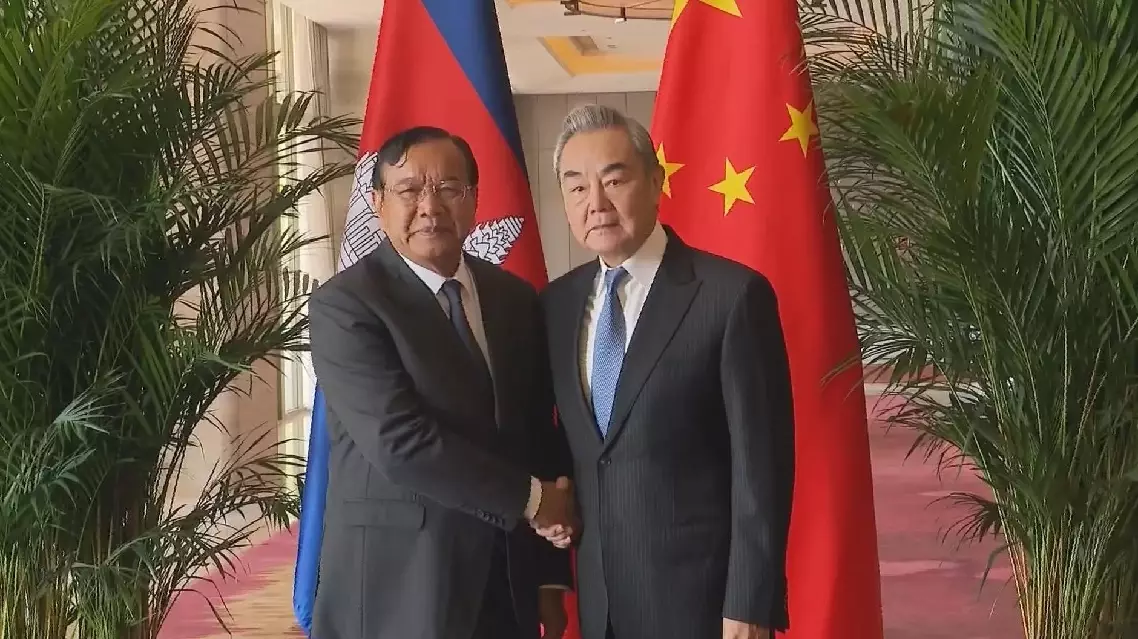
China will deliver humanitarian aid to Cambodia for displaced people along border: Chinese FM