Skip to Content Facebook Feature Image

Ex-US Consul Blasts Trump's 'Monarchic' Style and Wavering Policies against China

Blog

Ex-US Consul Blasts Trump's 'Monarchic' Style and Wavering Policies against China
Blog

Blog

Ex-US Consul Blasts Trump's 'Monarchic' Style and Wavering Policies against China

2025-05-27 18:39 Last Updated At:18:39

I mentioned earlier that there are quite a number of ex-US diplomats and national security office-bearers ditching public service for the consulting world. They bring a pragmatic approach, focusing on real-world results for US firms operating in mainland China and Hong Kong. Instead of getting bogged down in ideology, they prioritize practical cooperation and mutual benefit, and that’s precisely why Beijing sees them as trustworthy partners. Take Kurt Tong, for instance – three years as US Consul General in Hong Kong, now a partner at The Asia Group. He's been active exchanging views with mainland institutions, recently swung by the Shanghai Academy of Social Sciences for a chinwag on US–China relations.
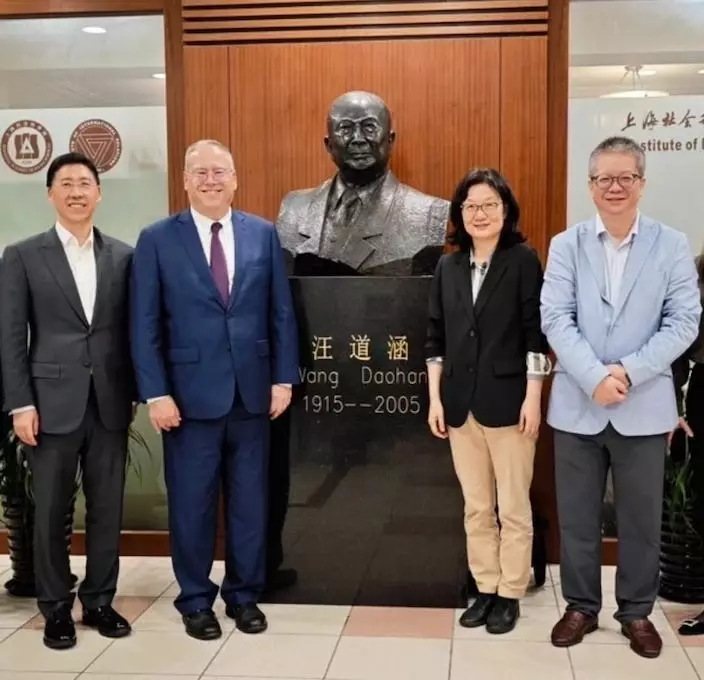
Ex-US Consul General to Hong Kong, Kurt Tong (second from left), at the Shanghai Academy of Social Sciences, slagging off the Trump administration's "monarchic" decision-making. He reckons the president's ego is running foreign policy, making US–China strategy a rollercoaster.

Ex-US Consul General to Hong Kong, Kurt Tong (second from left), at the Shanghai Academy of Social Sciences, slagging off the Trump administration's "monarchic" decision-making. He reckons the president's ego is running foreign policy, making US–China strategy a rollercoaster.

Now free from government constraint, he's laying into Trump pretty hard, saying that  the administration was basically running like a "monarchy." All Trump, all the time. This top-down, centralized approach just cranks up the volatility and uncertainty when it comes to the US-China strategy.

The fact Tong's willing to take a swipe at Trump's strongman act shows he couldn't stomach it anymore. A friend of mine in the political circle who knows the US inside out, tells me Tong's not the only one. Loads of ex- and current diplomats are quietly seething about Trump's antics. It's depressig and it's doing serious damage to US diplomacy.

Besides Hong Kong, Tong was also the US Ambassador to APEC, so he knows his stuff when it comes to US Asia-Pacific and China policy. At that Shanghai event, he didn't pull any punches. He said the Trump administration's decision-making was straight-up "monarchic," all driven by the president's ego, with an "attack-style" vibe. This kind of setup makes it impossible for the US to have a consistent, stable foreign policy, so forget about predictable strategies.

Tong reckons the US political circus is seriously messing with US-China policy. There's no real coordination to bring together all the different voices on China, which just makes US policy even more erratic and unpredictable.

You'd think Congress would keep Trump's trade policy in check, but Tong says the Republicans are too busy being Trump's biggest bootlickers. That means they won't be putting the brakes on his trade agenda anytime soon. Oversight? Interference? Forget about it.
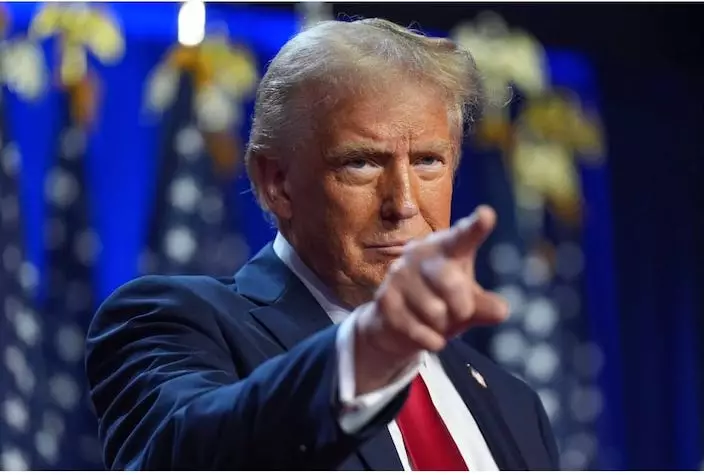
Tong also pointed out that the Republicans in Congress are Trump's biggest cheerleaders, so there's no one to keep this "monarch" in check.

Tong also pointed out that the Republicans in Congress are Trump's biggest cheerleaders, so there's no one to keep this "monarch" in check.

Tong's Trump takedown boils down to three things:

Trump turned "democracy" into a "monarchy," like a two-century throwback. His word is law, no questions asked.

Because there are no checks and balances, and he's all about that "attack-style," policy is a mess – no system, no consistency, and stability is out of the window.

All this has a major knock-on effect on US–China relations, leading to more crazy swings and uncertainty.

My political insider pal also pointed out that Trump's been on a bit of a purge lately. Loads of experienced diplomats and analysts got the boot from the State Department, and the White House National Security Council's been gutted. With fewer people who know what they're doing, you've got clueless political appointees calling the shots, making foreign policy even more of a disaster. The pros who are still around are fed up, morale's in the toilet, and they're all looking for the exit.

Unsurprisingly, the US Consulate in Hong Kong hasn't been spared. They've been told to slash staff to comply with the Department of Government Efficiency (DoGE) orders, so their operations in Hong Kong are going to take a big hit. Word on the street is that the current Consul General, Gregory May, is about to move on, with his replacement possibly showing up in September. With the US–China trade war raging and Hong Kong officials getting sanctioned, relations are in the dumpster, and the consulate's hardly talking to anyone in politics or business these days. Whoever's in charge isn't going to make much of a difference.

In the end, it's a good thing when ex-diplomats like Tong ditch the politics and help US companies make money in mainland China and Hong Kong. Ideology's out, profit's in.

Lai Ting-yiu


What Say You?

** 博客文章文責自負,不代表本公司立場 **
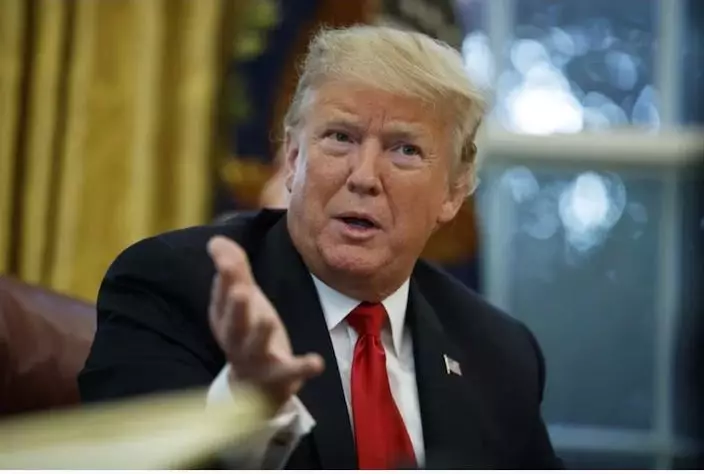
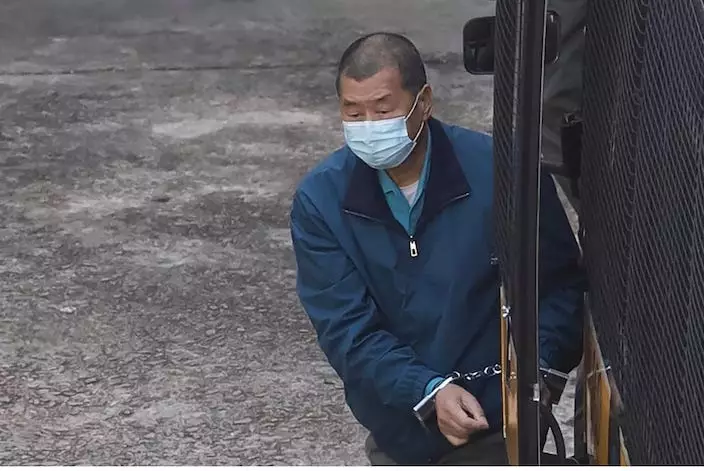
As the United States and China begin high-level contact over tariffs, though not yet formal negotiations, in an online interview Trump, when asked, said that he would raise the case of Jimmy Lai, the jailed Hong Kong media tycoon, in trade discussions with China. For Lai, now behind bars, the news may offer a glimmer of hope: a reminder that his onetime champion has not forgotten him. Yet, according to a longtime observer of Jimmy Lai’s case, Trump’s remarks are unlikely to affect the outcome.  Four reasons:

A Casual Remark, Not a Policy Pledge

First, Trump’s comment was delivered with a marked lack of urgency, echoing his tone in a previous interview with the same conservative host, Hugh Hewitt. The statement sounded offhand, almost as if he were saying, “There’s no harm in mentioning it,” rather than signaling a serious negotiating position. Last October, during the presidential election campaign, Trump was asked on Hewitt’s radio program if he would press President Xi Jinping to release Jimmy Lai should he return to office. His reply, “I would one hundred percent do that”, was tossed off with little conviction.

Recently, Donald Trump told an online interviewer he would raise Jimmy Lai’s case in US-China trade talks. A close observer on the Lai case cited four reasons why Trump is unlikely to use Lai as a bargaining chip.

Recently, Donald Trump told an online interviewer he would raise Jimmy Lai’s case in US-China trade talks. A close observer on the Lai case cited four reasons why Trump is unlikely to use Lai as a bargaining chip.

A Record of Shifting Positions

Second, Trump is known for changing his stance with little warning. He has often contradicted himself, sometimes denying he ever made certain promises. If he later concludes that raising Jimmy Lai’s case is not advantageous, he could simply drop the matter, acting as if it had never come up. In Trump’s view, Lai is a spent pawn; if the issue no longer serves his interests, he will abandon it without hesitation.

A Minor Issue in a Complex Negotiation

Third, the US-China trade agenda is dominated by issues with sweeping economic and financial consequences. The fate of Jimmy Lai, for all its symbolic weight, is insignificant in this context. The case is so marginal that it would hardly register in the calculus of either side. It is difficult to imagine American negotiators expending political capital on such a peripheral matter.

Beijing’s Unyielding Position

Finally, and most importantly, Beijing’s position on the Lai case is unambiguous. As noted in a November commentary by Zhuo Wei in the state-run Ta Kung Pao, China adheres to a “three no’s” principle: no external interference in the judicial process, no concessions under foreign pressure, and no room for negotiation or deals. The core message is strict adherence to the law. Political intervention, even from foreign officials or presidents, is not tolerated. Any such attempt would be considered illegal and could result in prosecution.

In short, the case is being handled strictly according to Hong Kong laws, and Beijing has made clear that there is no room for negotiation. As the commentary put it, “there is no space for any bargaining.” Even if Trump were to intervene personally, the result would be the same: the central government will fully support the Hong Kong judiciary in handling the case impartially and according to the law.

Trump must consider Beijing’s explicit “three no’s” policy on the Lai case: all matters will be handled according to the law, with no foreign government or politician permitted to interfere. “Even if Trump intervenes personally, the result will be the same.”

Trump must consider Beijing’s explicit “three no’s” policy on the Lai case: all matters will be handled according to the law, with no foreign government or politician permitted to interfere. “Even if Trump intervenes personally, the result will be the same.”

Conclusion: A Gesture Without Substance

Trump’s suggestion that he will raise Lai’s case is, in the eyes of observers, little more than political theater. At this stage of the trade dispute, the United States is feeling more pressure than China and is more eager to reach a deal. It is unlikely that Trump would jeopardize broader negotiations for the sake of a “discarded pawn” like Jimmy Lai.

Recommended Articles