Skip to Content Facebook Feature Image

The Mask Hypocrisy: Where Are Hong Kong's Legal Eagles Now?

Blog

The Mask Hypocrisy: Where Are Hong Kong's Legal Eagles Now?
Blog

Blog

The Mask Hypocrisy: Where Are Hong Kong's Legal Eagles Now?

2025-06-10 13:47 Last Updated At:13:47

Trump's trade war has hit walls everywhere, shattering his strategy. Now, with fires literally erupting in his own backyard, the deportation of undocumented immigrants in Los Angeles has triggered massive riots, with protesters and police clashing in the streets. Fearing things might spiral completely out of control, Trump swiftly deployed the National Guard and urgently banned troublemakers from wearing masks – his moves both swift and ruthless.
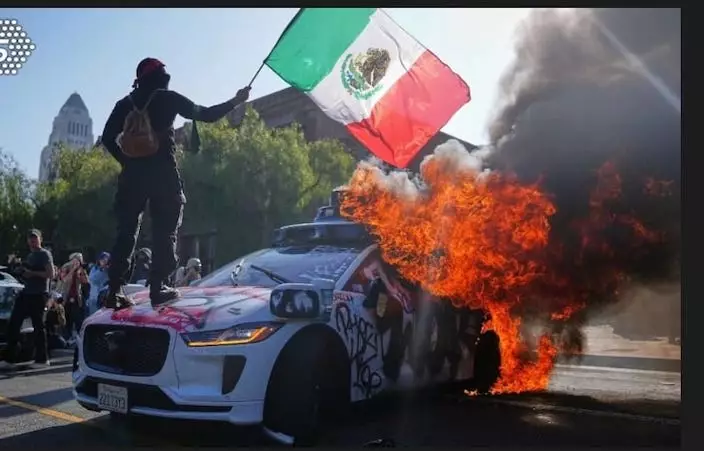
Trump, feeling the pain when the needle pricks his flesh, unleashed heavy-handed tactics to suppress Los Angeles riots to prevent his backyard fires from spiraling out of control – one harsh measure being his order banning people participating in protest activities from wearing masks.

Trump, feeling the pain when the needle pricks his flesh, unleashed heavy-handed tactics to suppress Los Angeles riots to prevent his backyard fires from spiraling out of control – one harsh measure being his order banning people participating in protest activities from wearing masks.

It's funny how quickly things change when the tables turn. Legal professionals watching Trump's uncompromising crackdown can't help but recall Hong Kong's 2019 protests when the Hong Kong government urgently enacted the Anti-Mask Law. Back then, Alan Leong and Johannes Chan immediately jumped out to fiercely condemn it, calling the law draconian and claiming it violated citizens' freedom and privacy. Their righteousness was blazing, their moral outrage palpable. Now that Trump's approach is several times more severe, they should logically stand up to strongly condemn him – yet they're completely absent, revealing their true colors.

Trump's Heavy-Handed Response

It's interesting how perspectives shift when situations reverse.  During Hong Kong's street chaos, American officials and politicians called it a "beautiful sight to behold" and fabricated claims that police were suppressing peaceful protesters while fanning the flames behind the scenes. But now that riots have erupted in Los Angeles, Trump – suddenly facing his own crisis – is unleashing heavy-handed measures in rapid succession, with tactics disproportionate to the scale of unrest.

The scale of his response is frankly disproportionate to the unrest itself.

When the Shoe's on the Other Foot

First, he rapidly deployed 2,000 National Guard troops to Los Angeles for riot control – a move that completely broke convention. As president, he decided to deploy military forces without receiving a request from California's governor, something unprecedented in decades. Defense Secretary Pete Hegseth have even stated that 500 Marines have been put on "prepared to deploy" status (while 700 Marines from Twentynine Palms already heading to the city.) The message is clear: this administration means business.

Third, Trump issued an order effectively banning people from wearing masks during protests. His explanation was typically blunt: "Also, from now on, MASKS WILL NOT BE ALLOWED to be worn at protests. What do these people have to hide, and why???" The implication being that anyone covering their face during protests must be up to no good.

Trump says protesters will not be allowed to wear masks.

The Hong Kong Parallel

Sound familiar? A legal professional friend of mine, seeing this news, immediately recalled October 2019, when street violence kept escalating and black-clad protesters wore masks while assaulting police officers and vandalizing property. Chief Executive Carrie Lam, watching the situation deteriorate, invoked the Emergency Regulations Ordinance to implement a mask ban.

A group of pan-democratic legislators immediately jumped out in fierce opposition. Civic Party Chairman Alan Leong penned angry op-eds claiming the ordinance violated international human rights law and aimed to intimidate peaceful protesters. Meanwhile, Johannes Chan – then Dean of HKU's Faculty of Law – represented 24 pan-democratic legislators in challenging the legislation through judicial review. In court, he argued passionately that the government wrongly assumed citizens wore masks for illegal purposes, when people at peaceful assemblies might simply want to protect their identities.

The Hong Kong High Court eventually ruled the mask ban unconstitutional, saying it "goes further than necessary" in restricting fundamental rights. Chan and Leong's legal victory was complete – or so it seemed.

The Deafening Silence

But here's where things get interesting. Those same legal minds who gnashed their teeth over Hong Kong's Anti-Mask Law, extensively discussing freedom, human rights, and democracy, are now completely silent about Trump's far more heavy-handed approach.

Where's Alan Leong's fiery New York Times op-ed condemning Trump's "draconian" measures? Where's Johannes Chan's principled legal challenge to protect Los Angeles protesters' rights to anonymity? The silence is deafening – and telling.
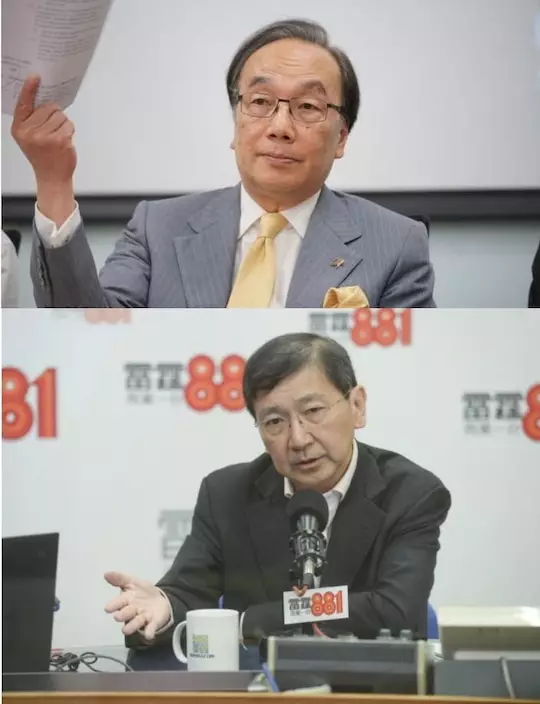
Alan Leong and Johannes Chan once fiercely criticized the Hong Kong government's Anti-Mask Law as violating human rights and freedom, now remain completely silent and invisible regarding Trump's current ban.

Alan Leong and Johannes Chan once fiercely criticized the Hong Kong government's Anti-Mask Law as violating human rights and freedom, now remain completely silent and invisible regarding Trump's current ban.

You'd think these champions of human rights would be first in line to condemn Trump's deployment of military forces against civilians, his bypass of state authority, and his blanket ban on masked protesters. After all, if Hong Kong's measured response to actual rioting was "authoritarian overreach," what does that make Trump's response to relatively minor unrest?

The truth is, these legal eagles were never really about principles – they were about politics. Now that it's Trump doing the heavy lifting, suddenly their moral compasses have gone quiet.

Lai Ting-yiu


What Say You?

** The blog article is the sole responsibility of the author and does not represent the position of our company. **

Think back to Hong Kong's turbulent years. Jimmy Lai had three brothers-in-arms, comrades he bankrolled through thick and thin – Cardinal Joseph Zen, Martin Lee, and Anson Chan. But their bonds weren't just ideological. Money changed hands, and plenty of it. Anson Chan pocketed HK$3.5 million from Lai's war chest. Cardinal Zen took in far more – at least HK$26 million in secret donations that the Hong Kong Diocese never knew about and never investigated. Where did all that cash go? That's the million-dollar question. Or rather, the 26-million-dollar question that remains unanswered.

Cardinal Zen met Pope Leo XIV in Rome, reportedly pushing for Jimmy Lai's release – but Vatican intervention looks unlikely.

Cardinal Zen met Pope Leo XIV in Rome, reportedly pushing for Jimmy Lai's release – but Vatican intervention looks unlikely.

Word broke earlier that Cardinal Zen just made a pilgrimage to the Vatican for a sit-down with the newly minted Pope Leo XIV. The private meeting lasted about an hour. On the agenda: the conviction of "Catholic" Jimmy Lai. Sources say Zen pressed the pontiff hard to "save Lai." What did the Pope say? Nobody's talking. But you can bet the Vatican knows all about the questionable financial ties between Zen and Lai – a relationship the Cardinal has never properly explained to his own Diocese. Did personal interests play a role? The doubts are real.

A Vatican Gambit

Cardinal Zen's "612 Humanitarian Relief Fund" case is still grinding through the courts, and authorities had confiscated his passport. But when the Vatican called its recent "Special Consistory" – bringing cardinals from around the world to Rome – the court granted him temporary travel privileges. During the gathering, Pope Leo XIV carved out time for a private one-on-one with Zen after a breakfast session. The topics? Whether the China-Vatican agreement should be renewed, and the fate of Jimmy Lai, now convicted under Hong Kong's National Security Law. But whether the Pope took any position on Lai remains under wraps.

Zen views Jimmy Lai as both a close friend and a comrade-in-arms, so naturally he's pushing the Vatican to intervene. But here's the Vatican's dilemma: it's not just about China-Vatican relations. It's about the unresolved financial relationship between Zen and Lai – a relationship that has seriously damaged the Cardinal's credibility.

The Secret Pipeline

October 2011 brought a massive leak. Jimmy Lai's secret donations to political parties, politicians, and organizations spilled into public view – and Joseph Zen, then Bishop of Hong Kong, was on that list. Between 2006 and 2010, he received HK$20 million from Lai over four years. From 2012 to 2014, another HK$6 million landed in his hands. The total: a staggering HK$26 million.

When the news broke, Zen went silent. Only after relentless media pressure did he offer an explanation, claiming the money went to support underground churches in the Chinese Mainland and other charitable organizations. With a casual smile, he described himself as a "spendthrift," saying most of the money had already been spent with only a few hundred thousand remaining – and even expressed hope that Lai would keep the donations coming.

Talk is cheap. He provided no concrete evidence to back up his claims. The Hong Kong Diocese knew nothing about his receipt of this massive sum from Lai – the entire "money pipeline" operated in secret. To this day, he has never given the Diocese a complete accounting.

Because this financial channel remained so deeply hidden, suspicions naturally arose that personal interests were involved. But given Cardinal Zen's position, the Diocese refrained from investigating him. The true destination of the funds? Still shrouded in doubt.

HK$26 million from Jimmy Lai to Cardinal Zen – Diocese in the dark, money's whereabouts still a mystery. The trio behind Hong Kong's unrest!

HK$26 million from Jimmy Lai to Cardinal Zen – Diocese in the dark, money's whereabouts still a mystery. The trio behind Hong Kong's unrest!

Vatican Cold Shoulder

Cardinal Zen's questionable relationship with Jimmy Lai, combined with his overly hawkish stance toward China, put him in the Vatican's bad books after Hong Kong's National Security Law took effect in late June 2020. Around that time, Zen traveled uninvited to the Vatican, demanding a meeting with then-Pope Francis to discuss Hong Kong's bishop selection and issues facing underground churches in the Mainland. The Pope gave him zero face. Francis refused to see him. After cooling his heels in Rome for four days with nothing to show for it, Zen returned to Hong Kong empty-handed.

Later, Zen and Lai joined forces on Jimmy Lai's "Live Chat" livestream program to blast the Vatican, accusing it of staying silent on underground churches, Tibet, and Hong Kong human rights issues. This clearly shows how the "Zen-Lai duo" consistently conspired to incite underground church activities in the Mainland, stir up religious conflicts, and undermine China-Vatican relations.

Cardinal Zen's latest Vatican trip for a private papal audience, where he lobbied to "save Lai" and reiterated his opposition to renewing the China-Vatican agreement, proves one thing: at 94 years old, the cardinal's anti-China, pro-chaos heart hasn't changed one bit.

Long Odds

The new Pope's willingness to meet him represents a slight thaw from his predecessor's icy attitude. But the chances of Vatican intervention to "save Lai"? Extremely low. The unresolved questions about Zen's financial relationship with Jimmy Lai have significantly diminished his influence with the Vatican.

From a legal perspective, his cardinal status currently shields him from serious consequences. But risks remain. Perhaps it's time for him to follow Anson Chan's example and retire from such activities while he still can.

Lai Ting-yiu

Recommended Articles