Skip to Content Facebook Feature Image

From Street Fighters to History's Dustbin: The Fall of Jimmy Lai’s Beneficiaries

Blog

From Street Fighters to History's Dustbin: The Fall of Jimmy Lai’s Beneficiaries
Blog

Blog

From Street Fighters to History's Dustbin: The Fall of Jimmy Lai’s Beneficiaries

2025-06-27 15:17 Last Updated At:15:17

News broke today that the League of Social Democrats (LSD) is set to announce its closure before July 1. This veteran radical political party once enjoyed a moment in the spotlight, with its founding "three troublemakers" – Wong Yuk-man, Albert Chan (Big Chunk), and Leung Kwok-hung (Long Hair) – all making it into the Legislative Council and turning the chamber into what can only be described as a political circus.

A seasoned political insider recently walked me through this fascinating bit of Hong Kong's political history, and frankly, it's quite the tale. Two things really stood out: first, Jimmy Lai was secretly bankrolling the LSD from behind the scenes, directly funding Long Hair in what looks like a pretty dodgy arrangement. Second, Wong Yuk-man's emergence as some sort of radical "guru" involved systematically attacking the Democratic Party, stealing their supporters, and pushing them away from moderation toward a confrontational dead end.
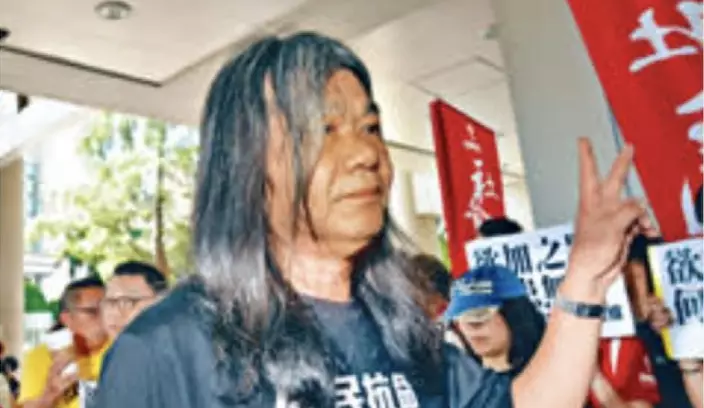
The LSD is calling it quits on July 1st – both the party and "Long Hair" were secretly bankrolled by Jimmy Lai to the tune of millions.

The LSD is calling it quits on July 1st – both the party and "Long Hair" were secretly bankrolled by Jimmy Lai to the tune of millions.

The Golden Years That Weren't So Golden

When the LSD burst onto the scene in 2006, it immediately positioned itself as the tough guy willing to take on the establishment. The political veteran explained how by 2008, when founding chairman Wong Yuk-man entered the Legislative Council, these "three troublemakers" were causing chaos daily, and the LSD's popularity was going through the roof. Two years later, they were pushing their "Five Constituencies Referendum" campaign, reaching what seemed like unprecedented heights.

But here's where things get interesting. Right at this peak moment, Next Digital boss Jimmy Lai started opening the financial floodgates, secretly pumping money into the LSD. According to documents that surfaced online, during the "Five Constituencies Referendum" period, he quietly donated HK$1 million to the LSD, which was received by vice-chairman To Kwan-hang while chairman Wong Yuk-man was completely left in the dark. The fallout: Yuk-man, who'd already had a falling out with Jimmy Lai, stormed off in anger and set up "People Power" as his own separate outfit.

The Puppet Master's Game Plan

Jimmy Lai's funding of the LSD wasn't some charitable gesture – this was about buying political influence. He wanted to use their appeal among radical crowds to ramp up attacks on the SAR government, with Beijing clearly in the crosshairs. So after Yuk-man's dramatic exit, Lai's financial support for the LSD never stopped, with chunks of cash going directly into Long Hair's personal account.

Here's the kicker: Long Hair was a sitting Legislative Council member at the time. After pocketing Jimmy Lai's donations, he failed to declare them to the Legislative Council, which eventually led to his arrest on suspicion of misconduct in public office. When his trial rolled around in June 2017, the prosecution spilled all sorts of secrets about how Jimmy Lai had been secretly funding him.

The numbers are pretty staggering. Between 2012 and 2014, Jimmy Lai paid out a total of HK$2.05 million to the LSD and Long Hair. In 2012, Lai wrote a HK$9.5 million cheque that went through various company accounts to his associate Mark Simon, who then distributed the cash to four pan-democratic parties. The HK$1 million that went to the LSD was further split up, with portions landing directly in Long Hair's personal account.

Divide and Conquer: Yuk-man's War on the Democrats

The political veteran painted a vivid picture of how Yuk-man systematically went after the Democratic Party starting in 2010. When he established the LSD in 2008, he'd already positioned himself as this "guru" figure for emerging radical forces, clearly eyeing leadership of the entire democratic camp.

His "Five Constituencies Resignation" scheme was clever politics – get five legislators to resign together, then use the by-elections as a de facto referendum. He managed to drag the Civic Party into this mess, but Democratic Party heavyweight Szeto Wah wasn't having any of it. Jimmy Lai, who was apparently the driving force behind the whole operation, even organized a dinner at his house to pressure Uncle Wah and others like Martin Lee to get the Democratic Party on board. Uncle Wah stood firm and refused.

From that point on, Yuk-man launched what can only be described as a sustained assault on the Democratic Party. Even after he and Albert Chan formed "People Power," he kept chipping away at Democratic Party territory, launching vicious attacks on veteran party candidates and successfully peeling away younger, more radical members.

The Endgame Nobody Saw Coming

Caught between Yuk-man's attacks and other radical pressure groups, and with Uncle Wah's steadying influence gone after his death, the Democratic Party's leadership found itself in Jimmy Lai and Martin Lee's "pro-America faction." The party's moderate line finally cracked, and after "Occupy Central" and subsequent protests, it went completely radical, ultimately walking itself off a political cliff.
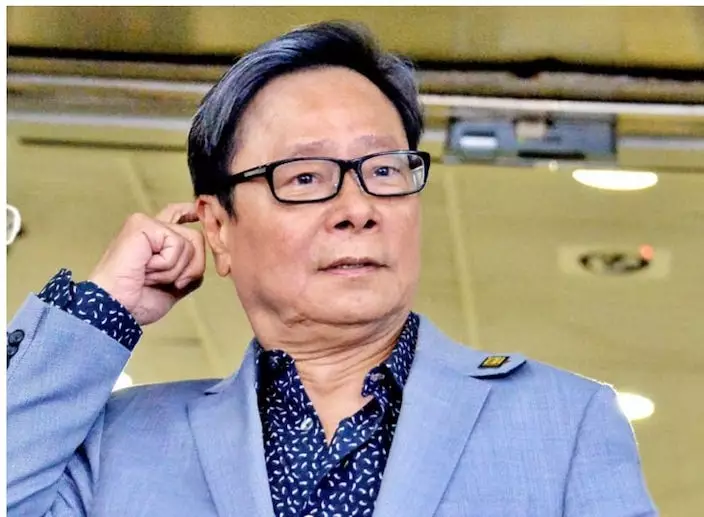
LSD founder Wong Yuk-man systematically attacked the Democratic Party, stealing their supporters and pushing them toward radical politics that ultimately destroyed them.

LSD founder Wong Yuk-man systematically attacked the Democratic Party, stealing their supporters and pushing them toward radical politics that ultimately destroyed them.

Today, the LSD quietly collapses, marking yet another sign that Hong Kong has fundamentally "changed into a different world". Both the party and its behind-the-scenes "financial backers" have met their inevitable downfall – a reminder that in politics, as in life, what goes around tends to come around.

Lai Ting-yiu


What Say You?

** The blog article is the sole responsibility of the author and does not represent the position of our company. **

Think back to Hong Kong's turbulent years. Jimmy Lai had three brothers-in-arms, comrades he bankrolled through thick and thin – Cardinal Joseph Zen, Martin Lee, and Anson Chan. But their bonds weren't just ideological. Money changed hands, and plenty of it. Anson Chan pocketed HK$3.5 million from Lai's war chest. Cardinal Zen took in far more – at least HK$26 million in secret donations that the Hong Kong Diocese never knew about and never investigated. Where did all that cash go? That's the million-dollar question. Or rather, the 26-million-dollar question that remains unanswered.

Cardinal Zen met Pope Leo XIV in Rome, reportedly pushing for Jimmy Lai's release – but Vatican intervention looks unlikely.

Cardinal Zen met Pope Leo XIV in Rome, reportedly pushing for Jimmy Lai's release – but Vatican intervention looks unlikely.

Word broke earlier that Cardinal Zen just made a pilgrimage to the Vatican for a sit-down with the newly minted Pope Leo XIV. The private meeting lasted about an hour. On the agenda: the conviction of "Catholic" Jimmy Lai. Sources say Zen pressed the pontiff hard to "save Lai." What did the Pope say? Nobody's talking. But you can bet the Vatican knows all about the questionable financial ties between Zen and Lai – a relationship the Cardinal has never properly explained to his own Diocese. Did personal interests play a role? The doubts are real.

A Vatican Gambit

Cardinal Zen's "612 Humanitarian Relief Fund" case is still grinding through the courts, and authorities had confiscated his passport. But when the Vatican called its recent "Special Consistory" – bringing cardinals from around the world to Rome – the court granted him temporary travel privileges. During the gathering, Pope Leo XIV carved out time for a private one-on-one with Zen after a breakfast session. The topics? Whether the China-Vatican agreement should be renewed, and the fate of Jimmy Lai, now convicted under Hong Kong's National Security Law. But whether the Pope took any position on Lai remains under wraps.

Zen views Jimmy Lai as both a close friend and a comrade-in-arms, so naturally he's pushing the Vatican to intervene. But here's the Vatican's dilemma: it's not just about China-Vatican relations. It's about the unresolved financial relationship between Zen and Lai – a relationship that has seriously damaged the Cardinal's credibility.

The Secret Pipeline

October 2011 brought a massive leak. Jimmy Lai's secret donations to political parties, politicians, and organizations spilled into public view – and Joseph Zen, then Bishop of Hong Kong, was on that list. Between 2006 and 2010, he received HK$20 million from Lai over four years. From 2012 to 2014, another HK$6 million landed in his hands. The total: a staggering HK$26 million.

When the news broke, Zen went silent. Only after relentless media pressure did he offer an explanation, claiming the money went to support underground churches in the Chinese Mainland and other charitable organizations. With a casual smile, he described himself as a "spendthrift," saying most of the money had already been spent with only a few hundred thousand remaining – and even expressed hope that Lai would keep the donations coming.

Talk is cheap. He provided no concrete evidence to back up his claims. The Hong Kong Diocese knew nothing about his receipt of this massive sum from Lai – the entire "money pipeline" operated in secret. To this day, he has never given the Diocese a complete accounting.

Because this financial channel remained so deeply hidden, suspicions naturally arose that personal interests were involved. But given Cardinal Zen's position, the Diocese refrained from investigating him. The true destination of the funds? Still shrouded in doubt.

HK$26 million from Jimmy Lai to Cardinal Zen – Diocese in the dark, money's whereabouts still a mystery. The trio behind Hong Kong's unrest!

HK$26 million from Jimmy Lai to Cardinal Zen – Diocese in the dark, money's whereabouts still a mystery. The trio behind Hong Kong's unrest!

Vatican Cold Shoulder

Cardinal Zen's questionable relationship with Jimmy Lai, combined with his overly hawkish stance toward China, put him in the Vatican's bad books after Hong Kong's National Security Law took effect in late June 2020. Around that time, Zen traveled uninvited to the Vatican, demanding a meeting with then-Pope Francis to discuss Hong Kong's bishop selection and issues facing underground churches in the Mainland. The Pope gave him zero face. Francis refused to see him. After cooling his heels in Rome for four days with nothing to show for it, Zen returned to Hong Kong empty-handed.

Later, Zen and Lai joined forces on Jimmy Lai's "Live Chat" livestream program to blast the Vatican, accusing it of staying silent on underground churches, Tibet, and Hong Kong human rights issues. This clearly shows how the "Zen-Lai duo" consistently conspired to incite underground church activities in the Mainland, stir up religious conflicts, and undermine China-Vatican relations.

Cardinal Zen's latest Vatican trip for a private papal audience, where he lobbied to "save Lai" and reiterated his opposition to renewing the China-Vatican agreement, proves one thing: at 94 years old, the cardinal's anti-China, pro-chaos heart hasn't changed one bit.

Long Odds

The new Pope's willingness to meet him represents a slight thaw from his predecessor's icy attitude. But the chances of Vatican intervention to "save Lai"? Extremely low. The unresolved questions about Zen's financial relationship with Jimmy Lai have significantly diminished his influence with the Vatican.

From a legal perspective, his cardinal status currently shields him from serious consequences. But risks remain. Perhaps it's time for him to follow Anson Chan's example and retire from such activities while he still can.

Lai Ting-yiu

Recommended Articles