A newly-inaugurated, China-backed cocoa processing industrial complex in Cote d'Ivoire is helping to upgrade the industry in the world's largest producer of cocoa as the key chocolate ingredient.
The country located on the coast of western Africa has lost out over the years in its inability to process the beans locally, instead shipping them to overseas facilities which have the ability to grow their value.
The government is now trying to reverse the trend of exporting raw materials and shift to processing them domestically, in order to create jobs, develop industry and diversify exports.
Cote d'Ivoire inaugurated the new cocoa processing industrial complex in its capital city Abidjan on Thursday. Built on a 21-hectare site in the PK24 industrial park in northern Abidjan, the Transcao project is a product of cooperation between China Light Industry Nanning Design Engineering Co., Ltd. (CNDC) and the Cote d'Ivoire Coffee-Cocoa Council, with a total investment of 130 billion CFA francs (approximately 231.7 million U.S. dollars).
At the handover ceremony, Kobenan Kouassi Adjoumani, minister of state and minister of agriculture and rural development of Cote d'Ivoire, said that the construction of this industrial complex signifies the country's considerable efforts to become the world's leading cocoa processor.
The ultimate goal is to further this transformation to produce finished cocoa products, such as chocolate, beverages and cosmetics, that meet international standards and suit the tastes of local populations, said the minister.
The country's cocoa producers, who have struggled in recent times with climate change and other challenges, said they believe the new plant can lead to significant growth in the cocoa industry at home.
"We, the producers, are really happy and we thank China for sending its engineers here to build this industrial jewel. This will now encourage us to work more, because Côte d'Ivoire will not go back," said Gbohou Ignace, a cocoa producer from Duekoue, western Cote d'Ivoire.
Meanwhile, the plant is expected to provide more jobs and improve the skill sets of many locals within a few year by the introduction of more processing plants in the country and technical know-how from Chinese experts.
"During the peak phase of construction, we have roughly 1,100 people working here. And the ratio between local people and Chinese people or foreign workers is roughly 7:3. General speaking, our relationship with the local people has been always good. And we are expecting to transfer all the knowledge they have, obviously they have learned from us and also we have learned from them, to our next project," said Wen Shangwen, an employee of China Light Industry Nanning Design Engineering.
Despite the fact that the unsuitable weather conditions over the past couple of seasons had a negative impact on production figures, hurting farmers income and government revenue in Côte d'Ivoire, which contributes over 40 percent of the world's total cocoa output, there are high hopes for the future of this important industry in the country, with better weather expected and more processing facilities coming online.
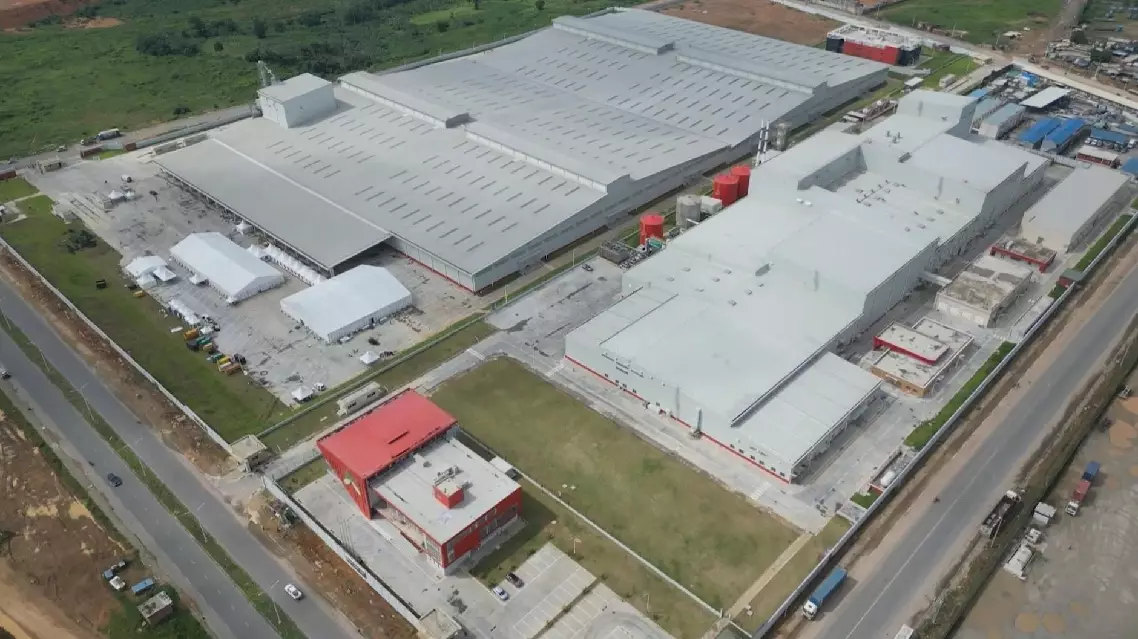
China-backed cocoa complex expected to boost processing capabilities in Cote d'Ivoire