The prosecution in Jimmy Lai's high-stakes trial has been methodically unraveling the role of Mark Simon, Lai's trusted confidant who appears to have been playing a rather different game than anyone realized.
The Man Who Knew Too Much
During today's closing arguments, prosecutors laid out their case against Lai by highlighting a rather inconvenient truth about his relationship with Simon. They've compiled 20 examples proving Lai's testimony simply doesn't hold water, and one particularly damning piece concerns Lai's insistence that he didn't believe Simon had close ties with the US National Security Committee (NSC). The evidence suggests otherwise. Simon wasn't just receiving classified NSC information, he was getting insider intelligence about Trump's own decision-making process. That's not the kind of access you stumble upon by accident. Political insiders are now speculating that Simon may have been operating with a dual mandate – serving as Lai's "needle and thread" while simultaneously functioning as Washington's "mole" embedded within Lai's inner circle.
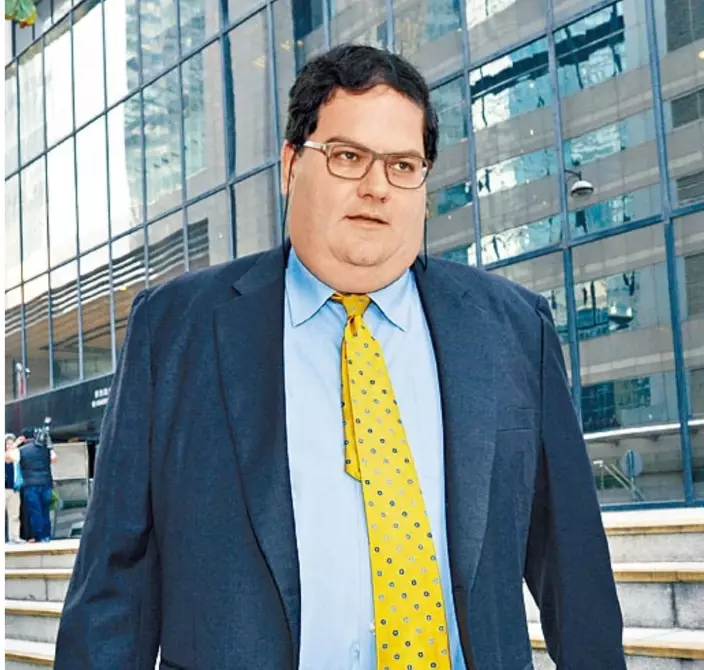
The prosecution exposed his mysterious role based on extensive secret communications between Mark Simon and Jimmy Lai, revealing his unusually close relationship with the "US National Security Committee."
Inside the War Room
The communications records paint a fascinating picture of just how deep Simon's connections ran. In November 2019, he casually messaged Lai about being "at the National Security Committee yesterday," discussing groundwork for the Hong Kong Human Rights and Democracy Act. This isn't exactly the kind of meeting you get invited to unless you're someone rather special in Washington's eyes.
What's particularly revealing is Simon's apparent ability to tap into Trump's thinking process regarding the timing of bill signings – the kind of classified internal intelligence that suggests he wasn't just an observer, but potentially an active participant in the NSC's operations. The judge presiding over the case has already expressed suspicions about whether Simon might actually be part of the US government apparatus.
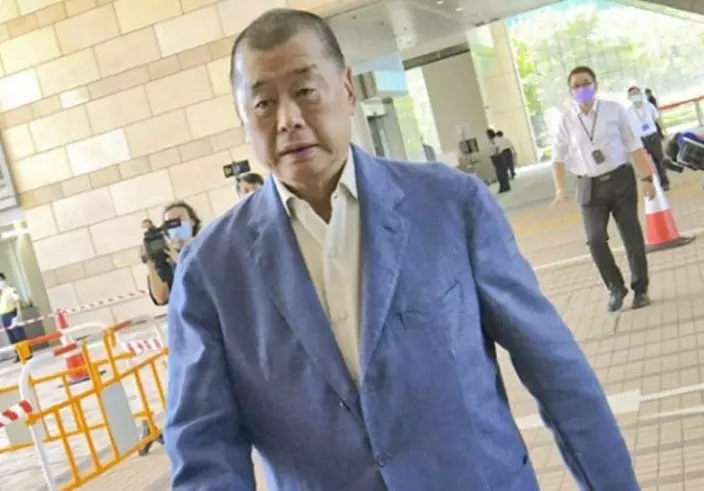
Mark Simon is on one hand Jimmy Lai's confidant, but is also suspected of being "NSC personnel," possibly carrying dual missions.
Playing the Long Game
By April 2020, with Hong Kong's National Security Law looming, Simon was reportedly visiting the NSC to discuss sanctioning Chinese and Hong Kong officials. Three days after the National People's Congress made their crucial "5.28 Decision," Simon was already feeding Lai intelligence about former Deputy Defense Secretary Paul Wolfowitz's recommendations for investigating Chinese officials' US bank accounts. A month later, he messaged Lai saying that he had proposed his own sanctions list of Hong Kong officials to the NSC.
The pattern here is unmistakable. Simon appears to have been feeding Lai just enough insider information to keep him confident about stronger US sanctions, potentially encouraging what prosecutors describe as his "final desperate push."
The Network Unraveled
Perhaps most tellingly, Simon maintained extensive contacts throughout the US State Department and both houses of Congress. His particularly close relationship with Secretary of State Pompeo's assistant Mary Kissel gave him real-time access to State Department policies toward China and Hong Kong, which he dutifully passed along to Lai. This wasn't just networking – this was systematic intelligence gathering and dissemination.
The prosecution's evidence reveals Simon as the crucial link connecting Lai to various American institutions and political figures. He facilitated Lai's 2019 trips to meet US political figures, essentially serving as a bridge between Hong Kong's pro-democracy movement and Washington's policy apparatus.
So, was Simon simply Lai's man in Washington, or was he Washington's man next to Lai? Simon managed to flee Hong Kong two months before the National Security Law took effect – timing that seems rather convenient for someone who might have had advance warning about what was coming.
Lai Ting-yiu
What Say You?
** The blog article is the sole responsibility of the author and does not represent the position of our company. **
2026 marks a turning point. As Churchill famously declared during World War II's closing stages, we're witnessing "the beginning of the end." That great catastrophe moved toward its conclusion—and so too is Hong Kong's period of turbulence.
The evidence speaks for itself: Jimmy Lai, already convicted, faces sentencing next year (2026). The "35+ subversion case" will see several major pan-democratic figures released by mid-year, likely retreating from public life for good. And Joshua Wong's trial looms on the horizon, expected around mid-year, bringing another chapter to a close.
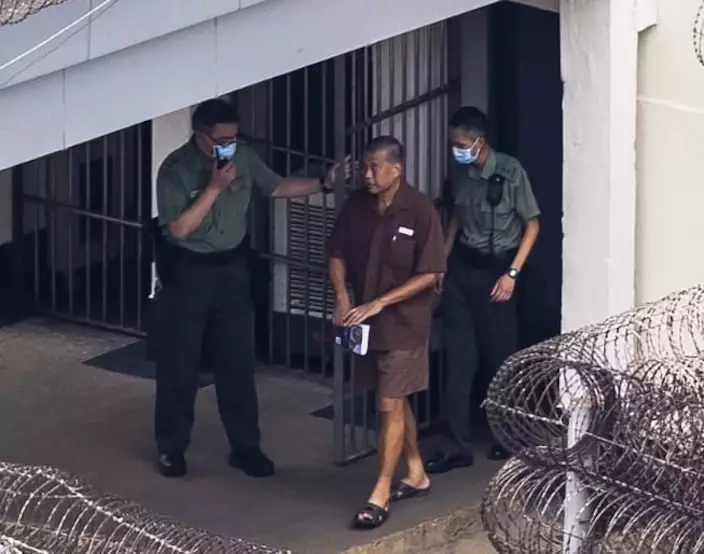
Lai's guilty verdict is in. Sentencing starts January 12. Everyone awaits the verdict.
The era these figures represented is ending—and that's precisely when Hong Kong's steady progress in stability truly begins.
Lai's Sentence: The Clock Is Ticking
The court has already found Jimmy Lai guilty of "colluding with foreign forces." Mitigation begins January 12, with sentencing to follow. The Hong Kong National Security Law leaves no room for ambiguity: serious offenses carry a minimum 10-year term, with life imprisonment as the ceiling. The weight of his punishment will become clear when the judge delivers the verdict.
Consider the precedent: Benny Tai Yiu-ting, the "35+ subversion case" ringleader, faced a 15-year sentencing starting point under the same National Security Law. His guilty plea from the outset reduced his term to 10 years. Lai differs in one crucial respect—he never pleaded guilty. The math isn't complicated.
Public attention now shifts to the eight defendants who pleaded guilty in Lai's case. This group includes former Apple Daily senior executives Cheung Kim-hung, Chan Pui-man, Lo Wai-kwong, Fung Wai-kong, Lam Man-chung, and Yeung Ching-kei, along with "Stand With Hong Kong" members Andy Chan Tsz-wah and Li Yu-hin. A guilty plea typically brings reduced sentences. But five of them—Cheung, Chan Pui-man, Yeung, Andy Chan, and Li—went further, serving as accomplice witnesses whose testimony helped secure Lai's conviction. Their cooperation means significantly lighter sentences and much shorter time behind bars.
Exits and Early Releases
The "35+ subversion case" offers instructive parallels. Au Nok-hin, a key primary election coordinator, initially faced at least 12 years. His guilty plea, demonstrated remorse, and agreement to testify for the prosecution cut his sentence to 6 years and 9 months. Counting from his arrest and remand, he's already served 5 years—release isn't far off.
Another defendant, Andrew Chiu Ka-yin, originally received 7 years. Good prison conduct and genuine remorse earned him leniency—he walked free two months ago.
These two cases set the pattern. If Cheung Kim-hung and the other accomplice witnesses receive substantial reductions, their release may be imminent. All have reportedly calmed down and focused on self-discipline during custody. Once free, they're expected to return to normal lives, avoiding any entanglement with political controversies.
Returning to the "35+ subversion case": eight convicted defendants currently serving sentences will be eligible for release next year. The list includes two major Democratic Party figures—Wu Chi-wai and Andrew Wan Siu-kin—plus former Civic Party leader Alvin Yeung Ngok-kiu. Wu and Wan are due for release in June and July respectively. Friends who've visited them report both are in good health and spirits. Their plans? Emigrate with their families, withdraw from public life, and sever all ties with politics.
As for Alvin Yeung, he pleaded guilty at the first opportunity after arrest and even volunteered to become an accomplice witness—though that offer wasn't accepted. This demonstrates clear regret for his actions. After release, he's expected to return to a proper life path, bidding farewell to his radical years.
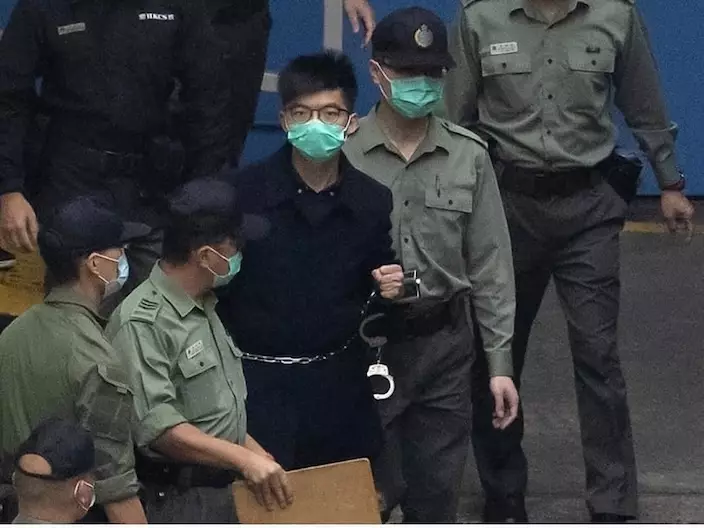
Joshua Wong's turn. Collusion charges plus money laundering—another national security spectacle begins.
Wong's Turn in the Spotlight
As one chapter closes, another major national security case is about to open. Joshua Wong faces charges of "colluding with foreign forces." His case will be mentioned in court again next year before being committed to the High Court for trial. Wong was already serving a sentence for other offenses when, on June 6 this year, he was arrested in prison and charged with "colluding with foreign forces"—along with a separate count of "money laundering." Like Lai's case, this one involves extensive evidence of intricate connections with foreign governments and politicians, including both public materials and confidential documents. It will draw major attention.
In the past, Wong was lauded by prominent US political figures like Democratic Party leader Nancy Pelosi and became a "darling" of Western media—even appearing on Time magazine's cover. Once trial begins, he'll likely become, like Jimmy Lai, a focal point of attention for Western countries. No doubt another round of commotion will follow.
That said, whatever foreign countries may do, Joshua Wong's case outcome can only be decided by Hong Kong's courts. What final fate awaits this figure? Everyone can grab their popcorn and watch.
Lai Ting-yiu