Skip to Content Facebook Feature Image

HKUMed hails ‘world-first’ AI tool that picks best sperm with 96% accuracy, offering new hope for couples struggling with infertility

HK

HKUMed hails ‘world-first’ AI tool that picks best sperm with 96% accuracy, offering new hope for couples struggling with infertility
HK

HK

HKUMed hails ‘world-first’ AI tool that picks best sperm with 96% accuracy, offering new hope for couples struggling with infertility

2025-08-25 18:22 Last Updated At:18:32

A research team from the Department of Obstetrics and Gynaecology at the University of Hong Kong's LKS Faculty of Medicine (HKUMed) has developed the world's first artificial intelligence (Al) model that can accurately identify human sperm with fertilisation potential. This breakthrough could reshape diagnosis and assisted reproductive treatments worldwide.

The Al model evaluates sperm morphology based on its ability to bind with the zona pellucida (ZP), which is the outer coat of the egg. By automating a process that has traditionally depended on manual and subjective analysis, the model has demonstrated a clinical validation accuracy rate exceeding 96%. This innovative approach outperforms traditional methods in terms of speed and reliability, reduces human error, and significantly enhances the precision of male fertility assessment-ultimately increasing the success rates of assisted reproductive procedures. The research findings were published in the international journal Human Reproduction Open [link to the publication] and won the Silver Award at the 50th Geneva International Invention Fair in 2025.

Infertility is a significant global health concern, affecting about one in six couples of reproductive age worldwide, with male factors accounting for 20–70% of cases. According to the World Health Organisation (WHO), infertility is projected to become the third most common disease globally, following cancer and cardiovascular diseases. While assisted reproduction treatments (ARTs) remain the most effective treatments for infertility, their success rates are limited by the accuracy of existing diagnostic tools.
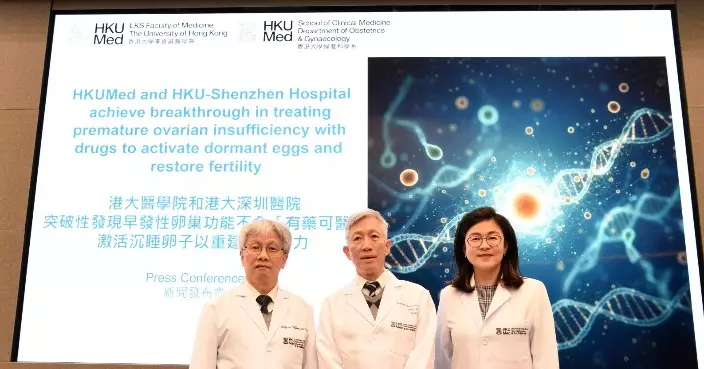
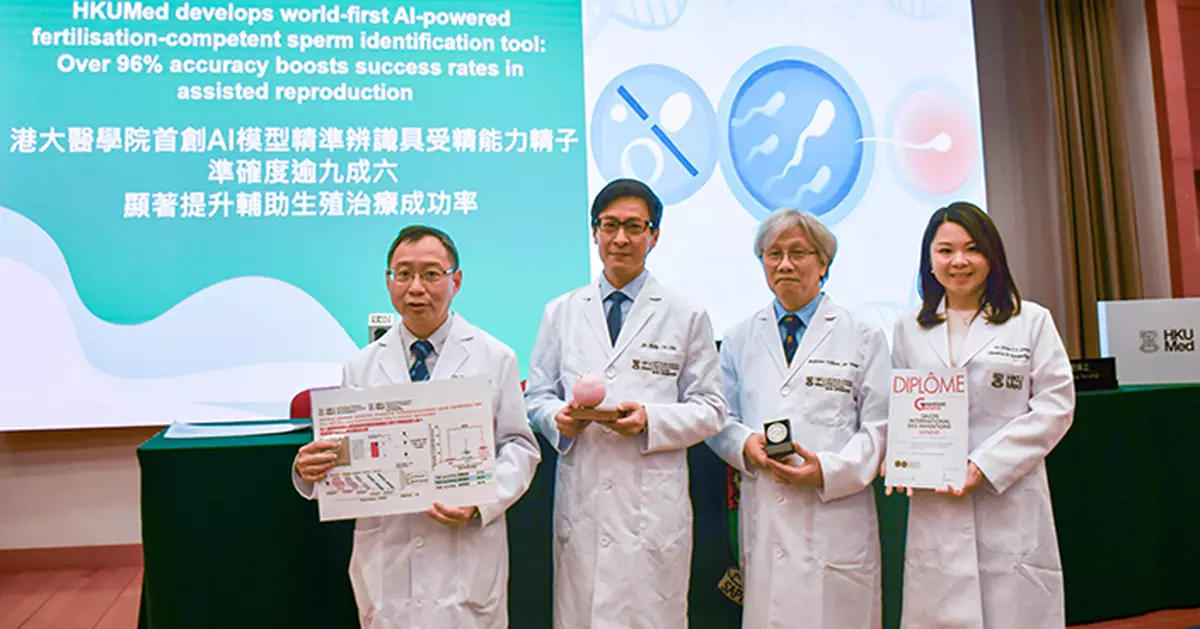
The AI model invented by HKUMed’s Department of Obstetrics and Gynaecology in the School of Clinical Medicine has clinical value in evaluating male fertility. Conventional assessment methods rely heavily on subjective visual judgment and have inherent limitations, whereas the AI model precisely analyses subtle traits in sperm, enabling a more accurate prediction of fertilisation potential. The research team members include (from left) Dr Raymond Li Hang-wun, Professor Philip Chiu Chi-ngong, Professor William Yeung Shu-biu and Dr Erica Leung Tsz-ying.

The AI model invented by HKUMed’s Department of Obstetrics and Gynaecology in the School of Clinical Medicine has clinical value in evaluating male fertility. Conventional assessment methods rely heavily on subjective visual judgment and have inherent limitations, whereas the AI model precisely analyses subtle traits in sperm, enabling a more accurate prediction of fertilisation potential. The research team members include (from left) Dr Raymond Li Hang-wun, Professor Philip Chiu Chi-ngong, Professor William Yeung Shu-biu and Dr Erica Leung Tsz-ying.

Semen analysis is a standard clinical assessment for male fertility potential before ART. Traditionally performed manually under a microscope, this analysis assesses sperm morphology in accordance with WHO guidelines. However, Professor William Yeung Shu-biu, from the Department of Obstetrics & Gynaecology, School of Clinical Medicine, HKUMed, explained: 'This method is not only labour-intensive and time-consuming, but also highly dependent on the subjective judgment of laboratory technicians. This leads to significant variations between individuals and across laboratories, making it difficult to standardise sperm quality criteria and undermining the accuracy of male fertility evaluations.'

A typical male ejaculate contains 100 to 200 million motile sperm per millilitre, but only about 7% of these sperm have fertilisation potential. During natural conception, the selection mechanisms within the female reproductive tract eliminate inferior sperm, ensuring that only fertilisation-competent sperm can initiate fertilisation. However, ART laboratories currently lack an equally efficient sperm selection method and instead rely primarily on parameters from semen analysis such as sperm concentration, motility and morphology to guide fertilisation methods in ART, like in vitro fertilisation (IVF) and intracytoplasmic sperm injection (ICSI).

Professor Yeung explained: 'These traditional semen parameters have limitations in predicting the true fertilisation potential of male sperm. Even with normal semen analysis results, 5% to 25% of men still experience low fertilisation rates (less than 30%) or complete fertilisation failure during IVF. The failure in ART not only prolongs the time it takes for couples to conceive but also increases psychological stress and the financial burden.'
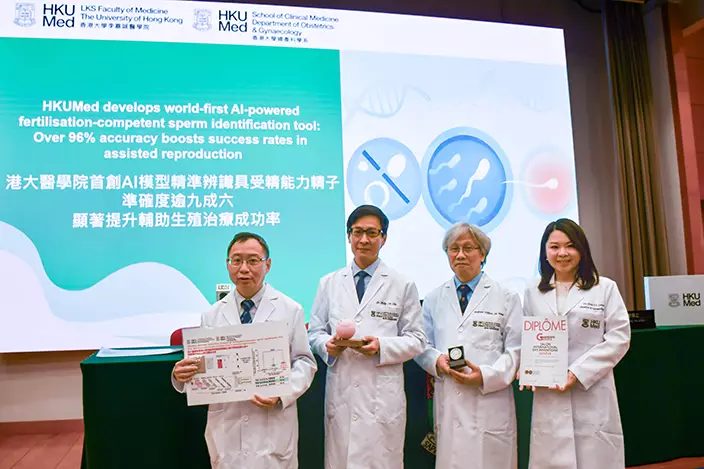
The AI model invented by HKUMed’s Department of Obstetrics and Gynaecology in the School of Clinical Medicine has clinical value in evaluating male fertility. Conventional assessment methods rely heavily on subjective visual judgment and have inherent limitations, whereas the AI model precisely analyses subtle traits in sperm, enabling a more accurate prediction of fertilisation potential. The research team members include (from left) Dr Raymond Li Hang-wun, Professor Philip Chiu Chi-ngong, Professor William Yeung Shu-biu and Dr Erica Leung Tsz-ying.

The AI model invented by HKUMed’s Department of Obstetrics and Gynaecology in the School of Clinical Medicine has clinical value in evaluating male fertility. Conventional assessment methods rely heavily on subjective visual judgment and have inherent limitations, whereas the AI model precisely analyses subtle traits in sperm, enabling a more accurate prediction of fertilisation potential. The research team members include (from left) Dr Raymond Li Hang-wun, Professor Philip Chiu Chi-ngong, Professor William Yeung Shu-biu and Dr Erica Leung Tsz-ying.

The binding of sperm to the ZP is the crucial first step in fertilisation. This layer selectively binds to sperm with normal morphology, intact chromosomes and fertilisation capability — a natural screening mechanism ensuring that only high-quality sperm fertilise the egg. Professor Philip Chiu Chi-ngong, Associate Professor in the same department and co-leader of the study, noted, 'Based on this physiological process, our team developed a highly automated Al model that analyses morphological features to accurately determine the percentage of human sperm capable of binding to the ZP, providing a highly reliable assessment of male fertility.'

The Al model developed by the HKU team is based on this selective binding mechanism and evaluates sperm quality from the egg's perspective, with a clinical threshold established at 4.9%. Men with less than 4.9% of sperm showing binding capability are considered at higher risk of fertilisation problems. ‘The Al model offers early warning of fertilisation issues and helps identify patients with impaired fertilisation in IVF,' Professor Chiu added. ‘It serves as a novel diagnostic tool for detecting fertility issues that conventional semen analysis may overlook, allowing clinicians to tailor more effective treatment plans and improve pregnancy outcomes.'
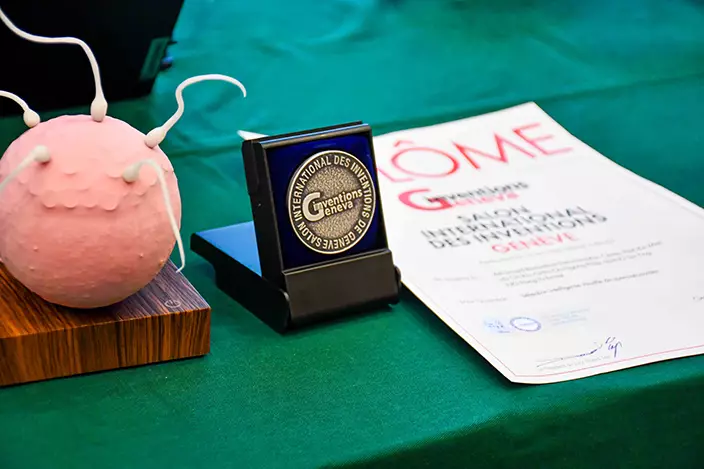
HKUMed has developed the world-first AI-powered fertilisation-competent sperm identification tool, which accurately determines the percentage of human sperm capable of binding to the ZP, providing a highly reliable assessment of male fertility. The innovation won a Silver Award at the 50th Geneva International Invention Fair in 2025.

HKUMed has developed the world-first AI-powered fertilisation-competent sperm identification tool, which accurately determines the percentage of human sperm capable of binding to the ZP, providing a highly reliable assessment of male fertility. The innovation won a Silver Award at the 50th Geneva International Invention Fair in 2025.

Using advanced deep-learning techniques, HKUMed researchers trained the Al model on more than 1,000 sperm images, achieving an accuracy rate over 96%. From 2022 to 2024, the team further validated the model by examining over 40,000 sperm images involving 117 men diagnosed with infertility or unexplained infertility. The results confirmed a strong correlation between the proportion of sperm capable of binding to the ZP and the success rate of ART procedures.

Professor Chiu highlighted the clinical value of Al in evaluating male fertility: 'Conventional assessment methods rely heavily on subjective visual judgment, which has inherent limitations. In contrast, our Al model precisely analyses subtle traits in sperm, enabling a more accurate prediction of fertilisation potential.'

For couples struggling with infertility, repeated attempts at ART are often required, inevitably leading to significant stress, disappointment and financial strain. HKUMed team is committed to seeking medical breakthroughs. This innovative technology reflects scientific progress and provides support for couples in need, helping them realise their reproductive dreams more quickly.

Professor Yeung added, 'The advent of Al allows us to assess sperm fertilisation capacity in a standardised, reproducible manner, improving clinical decision-making and enabling personalised treatment plans. This innovation has the potential to improve overall infertility management, reduce fertilisation failure rates, and shorten the time to pregnancy. We are currently conducting large-scale clinical trials to further validate the application of the Al model and hope to benefit more patients.'

Under the auspices of the National Health Commission (NHC), the inaugural ‘Interdisciplinary and Composite Talents in Medicine, Disease Prevention and Control, and Management Training Programme', organised by the School of Public Health, LKS Faculty of Medicine of the University of Hong Kong (HKUMed), concluded successfully after three weeks of intensive training. This initiative was made possible through a generous donation from the Institute of Philanthropy Medical and Health Scholarship-cum-Fellowship for Top Talent in the Mainland.

The inaugural ‘Interdisciplinary and Composite Talents in Medicine, Disease Prevention and Control, and Management Training Programme’, organised by the School of Public Health, HKUMed, concluded successfully after three weeks of intensive training

The inaugural ‘Interdisciplinary and Composite Talents in Medicine, Disease Prevention and Control, and Management Training Programme’, organised by the School of Public Health, HKUMed, concluded successfully after three weeks of intensive training

The inaugural training programme brought together 24 participants from the NHC, the National Administration of Traditional Chinese Medicine, the National Disease Control and Prevention Administration, and other directly affiliated and related organisations. The programme featured 52 experts from various departments and disciplines at HKU, as well as international organisations and non-governmental organisations, who participated in both in-person and online teaching sessions. The participants engaged in in-depth discussions in three key areas: Hong Kong's healthcare system and global health governance, medical regulation and public health talent development, and emerging medical technologies and international collaboration trends. It provided participants with comprehensive expertise while facilitating the exchange of innovative ideas and cross-disciplinary knowledge in healthcare leadership.

The School was honoured to welcome Mr Leung Chun-ying, Vice Chairman of the National Committee of the Chinese People's Political Consultative Conference (CPPCC), former Chief Executive of the Hong Kong Special Administrative Region of the People's Republic of China (HKSAR), and Chairman of the GX Foundation, for an Exchange Session at HKU. Mr Leung shared the GX Foundation's mission, objectives, and achievements in delivering international humanitarian aid across eight Belt and Road countries. He emphasised, ‘As Chinese people, we now have the capacity to extend our reach globally with the spirit of connectivity and shared prosperity, working together to build a global community of health for all.' His vision deeply inspired all participants. Mr Lester Huang, Chairman of the Institute of Philanthropy, also attended the event, engaging with participants and sharing his perspectives on philanthropy and leadership, further reinforcing the programme's mission to cultivate well-rounded professionals equipped to address global health challenges.

Mr Leung Chun-ying, Vice Chairman of the National Committee of the Chinese People's Political Consultative Conference, former Chief Executive of the HKSAR, and Chairman of the GX Foundation, participated in the Exchange Session at HKU

Mr Leung Chun-ying, Vice Chairman of the National Committee of the Chinese People's Political Consultative Conference, former Chief Executive of the HKSAR, and Chairman of the GX Foundation, participated in the Exchange Session at HKU

Professor Lo Chung-mau, Secretary for Health of the Government of the HKSAR, officiated at the opening ceremony and delivered the welcome remarks. Led by Professor Vivian Lin Kwang-wen, Honorary Professor in the School of Public Health of HKUMed and former Director of Health Systems for the World Health Organization (WHO) in the Western Pacific Regional Office, renowned health and medical experts were brought together from around the world to provide participants with comprehensive knowledge and expand their horizons. Distinguished guest speakers were Dr Margaret Chan, Founding Dean of the Vanke School of Public Health of Tsinghua University and Emeritus Director-General of the WHO; Professor Sophia Chan Siu-chee, Senior Advisor of the HKU President's Office, Professor and Director of the HKU Primary Health Care Academy, Professor in the School of Public Health of HKUMed, and former Secretary for Food and Health of the Government of the HKSAR; Professor Kenneth Cheung Man-chee, Hospital Chief Executive of the HKU-Shenzhen Hospital; Professor Gong Peng, Vice-President and Pro-Vice-Chancellor (Academic Development) of HKU; Dr Tony Ko, former Chief Executive of the Hospital Authority of the Government of the HKSAR; Dr Ronald Lam, Director of Health of the Government of the HKSAR; Professor Philip Li Kam-tao, President of the Hong Kong Academy of Medicine; Dr Donald Li Kwok-tung, Chairman of the Elderly Commission, Labour and Welfare Bureau of the Government of the HKSAR; Professor Patrick Nip Tak-kuen, Adjunct Professor of the Department of Politics and Public Administration at HKU and former Secretary for the Civil Service of the Government of the HKSAR; and Dr Pang Fei-chau, Commissioner for Primary Healthcare, Primary Healthcare Commission of the Health Bureau of the Government of the HKSAR.

Professor Lo Chung-mau, Secretary for Health of the Government of the HKSAR, officiated at the opening ceremony of the programme and delivered the welcome remarks

Professor Lo Chung-mau, Secretary for Health of the Government of the HKSAR, officiated at the opening ceremony of the programme and delivered the welcome remarks

Participants gained a comprehensive understanding of the unique features and strengths of Hong Kong's healthcare system through in-depth analysis by esteemed experts. Beyond theoretical learning, they actively participated in thematic lectures, case-based discussions, and field visits to a diverse range of healthcare institutions, such as Castle Peak Hospital, the HKBU Chinese Medicine Hospital Office, Gleneagles Hospital, GX Foundation, H.K.S.K.H. St. Luke's Settlement Neighbourhood Elderly Centre, the HKUMed Community Pharmacy, Hong Kong St. John Ambulance, and the Kwai Tsing District Health Centre. These immersive experiences allowed the participants to gain a better understanding of Hong Kong's healthcare system and translate theoretical knowledge into practical applications. Through this enriching learning and hands-on exposure, the participants reinforced their professional knowledge and enhanced their practical skills and service capabilities, laying a solid foundation for their future development and application in the healthcare field.

To celebrate HKU's longstanding academic tradition, a Farewell and Thanksgiving Dinner was held at St. John's College. The following day, a certificate presentation ceremony was held at The Hong Kong Jockey Club, where remarks were delivered by Ms Li Wei, Deputy Director-General of the Office of Hong Kong, Macao and Taiwan of the NHC; Dr Gabriel Leung, Director of the Institute of Philanthropy; and Professor Lau Chak-sing, Vice-President & Pro-Vice-Chancellor (Health) and Dean of Medicine at the University of Hong Kong. Certificates of completion were presented to all participants by Professor Lau; Mr Fang Jianning, Deputy Director-General (Acting Chief) of the Health Human Resources Development Center of the NHC; and Mr Dylan Lu, Chief Mainland Representative of the Institute of Philanthropy, bringing the programme to a meaningful conclusion.

To celebrate HKU’s longstanding academic tradition, a Farewell and Thanksgiving Dinner was held at St. John’s College

To celebrate HKU’s longstanding academic tradition, a Farewell and Thanksgiving Dinner was held at St. John’s College

The School of Public Health at HKUMed is confident that this training programme marks just the beginning of a fruitful collaboration. Future efforts will focus on deepening the partnership with the NHC through the establishment of a dedicated professional exchange platform. By sharing valuable insights and expertise, this initiative aims to foster renewed momentum in advancing the nation's public health initiatives.

A certificate presentation ceremony was held at The Hong Kong Jockey Club. VIPs in the front row (from left) are Mr Dylan Lu, Chief Mainland Representative of the Institute of Philanthropy; Dr Gabriel Leung, Director of the Institute of Philanthropy; Ms Li Wei, Deputy Director-General of the Office of Hong Kong, Macao and Taiwan of the National Health Commission (NHC); Mr Fang Jianning, Deputy Director-General (Acting Chief) of the Health Human Resources Development Center of the NHC; and Professor Lau Chak-sing, Vice-President and Pro-Vice-Chancellor (Health) and Dean of Medicine, HKU. Standing are the 24 participants in the inaugural training programme

A certificate presentation ceremony was held at The Hong Kong Jockey Club. VIPs in the front row (from left) are Mr Dylan Lu, Chief Mainland Representative of the Institute of Philanthropy; Dr Gabriel Leung, Director of the Institute of Philanthropy; Ms Li Wei, Deputy Director-General of the Office of Hong Kong, Macao and Taiwan of the National Health Commission (NHC); Mr Fang Jianning, Deputy Director-General (Acting Chief) of the Health Human Resources Development Center of the NHC; and Professor Lau Chak-sing, Vice-President and Pro-Vice-Chancellor (Health) and Dean of Medicine, HKU. Standing are the 24 participants in the inaugural training programme

Other Distinguished Guest Speakers of the Training Programme

Overseas Universities

• Dr Gerald Bloom, Research Fellow, Institute of Development Studies from the University of Sussex in the UK;

• Professor Harvey Fineberg, Emeritus Professor of Health Policy and Management from the Harvard T. H. Chan School of Public Health in the US;

• Professor Liang Zhanming, Associate Dean of Research Education, College of Business, Law and Governance at James Cook University in Australia; and

• Professor Martin McKee, Professor of European Public Health, London School of Hygiene & Tropical Medicine in the UK.

International Organisations

• Dr Cristian Baeza, Executive Directors of the International Center for Health Systems Strengthening and the Center for Healthy Development;

• Dr Genevieve Howse, Coordinator Legislation and Governance at WHO Western Pacific;

• Dr Liviu Vedrasco, WHO Representative to Kyrgyzstan;

• Dr Xu Huan, Technical Officer of the WHO's Health Workforce Department; and

• Dr Xu Ke, Senior WHO Health Financing and Expenditure Analyst.

Non-governmental Organisations

• Dr Fan Ning, Founder of Health In Action and former President of Médecins Sans Frontières Hong Kong;

• Dr Alex Ng, President of Tencent Healthcare; and

• Dr Wang Hong, Senior Policy Advisor of Health Economics, Financing, and System Strengthening of the Gates Foundation.

HKU

• Professor Vivian Lou Wei-qun, Director of the Sau Po Centre on Ageing and Professor of the Department of Social Work and Social Administration

HKUMed

• Professor Kyongtae Tyler Bae, Chairperson and Clinical Professor of the Department of Diagnostic Radiology, School of Clinical Medicine;

• Professor Carl Hildebrand, Assistant Professor of the Centre for Medical Ethics and Law;

• Professor Rina Hui Yee-man, Director and Clinical Professor at the Centre of Cancer Medicine, School of Clinical Medicine;

• Professor Kenny Kwan Yat-hong, Assistant Dean (MBBS Admissions) of HKUMed and Clinical Associate Professor of the Department of Orthopaedics and Traumatology, School of Clinical Medicine;

• Professor Clara Lau Bik-san, Professor in the Department of Pharmacology and Pharmacy and the School of Chinese Medicine;

• Professor Gary Lau Kui-kai, Assistant Dean (Education Innovations) of HKUMed and Clinical Associate Professor of the Department of Medicine, School of Clinical Medicine;

• Professor Pamela Lee Pui-wah, Assistant Dean (Clinical Curriculum) of HKUMed and Clinical Associate Professor of the Department of Paediatrics and Adolescent Medicine, School of Clinical Medicine;

• Professor Gilberto Leung Ka-kit, Senior Advisor (Teaching & Learning) of HKUMed, Director of the School of Clinical Medicine, and Clinical Professor of the Department of Surgery;

• Professor Leung Wai-keung, Chief Director of the Clinical Trials Centre and Clinical Professor in the Department of Medicine of the School of Clinical Medicine;

• Professor Lin Chia-chin, Director of the School of Nursing;

• Professor Liu Pengtao, Managing Director of the InnoHK Centre for Translational Stem Cell Biology and Professor in the School of Biomedical Sciences;

• Professor Simon Lui Sai-yu, Clinical Associate Professor of the Department of Psychiatry at the School of Clinical Medicine;

• Professor George Tipoe, Senior Advisor of the Bau Institute of Medical & Health Sciences Education and Associate Professor of the School of Biological Sciences;

• Professor Doris Yu Sau-fung, Associate Director of the Sau Po Centre on Ageing and Professor of the School of Nursing; and

• Professor Zhang Qingpeng, Associate Professor of the HKU Musketeers Foundation Institute of Data Science.

School of Public Health, HKUMed

• Professor David Bishai, Director and Clinical Professor;

• Honorary Professor Keiji Fukuda, Former Assistant Director-General of the WHO;

• Professor Dennis Ip Kai-ming, Clinical Associate Professor and Head of the Division of Community Medicine and Public Health Practice;

• Professor Lam Tai-hing, Emeritus Professor and Honorary Clinical Professor;

• Professor Wendy Lam Wing-tak, Associate Professor, Head of the Division of Behavioural Sciences, MPH Programme Director and Director of the University of Hong Kong Jockey Club Institute of Cancer Care;

• Professor Michael Y Ni, Clinical Associate Professor;

• Professor Željko Pedišić, Associate Professor;

• Professor Leo Poon Lit-man, Daniel C K Yu Professor in Virology, Chair Professor of Public Health Virology, Head of the Division of Public Health Laboratory Sciences and Associate Dean (Human Capital) of HKUMed;

• Dr Nason Tan Day-seng, Senior Lecturer and former Regional Operations Support Unit Director at Médecins Sans Frontières Hong Kong;

• Professor Tian Linwei, Associate Professor; and

• Professor Joseph Wu Tsz-kei, Sir Robert Kotewall Professor in Public Health.

Recommended Articles