The Security Council failed to adopt a resolution on Friday that would have continued to provide sanctions relief for Iran under the 2015 Iran nuclear deal.
The draft resolution, put forward by the Republic of Korea in its capacity as Security Council president for September, received four votes in favor, nine votes against, and two abstentions, falling short of the nine positive votes required for adoption.
If adopted, the draft resolution would have prevented a "snapback" of UN sanctions against Iran, a mechanism contained in the Iran nuclear deal and Security Council Resolution 2231 that endorsed the deal, formally known as the Joint Comprehensive Plan of Action (JCPOA).
Britain, France and Germany -- the three European countries of the JCPOA, known as the E3 -- claimed they triggered the snapback mechanism on August 28 by notifying the Security Council of Tehran's "non-performance."
Under Resolution 2231, the UN sanctions in place before the adoption of Resolution 2231 would resume 30 days after the notification, unless the Security Council adopts a resolution to decide otherwise.
However, the legality of the E3 move has been questioned as it has skipped the Dispute Resolution Mechanism (DRM) provided for in the JCPOA and Resolution 2231.
Under the JCPOA and Resolution 2231, the DRM has 35 days to resolve the disagreement. A snapback can be triggered only after the DRM fails to resolve the issue.
China's Permanent Representative to the United Nations Fu Cong said in an explanatory statement that China opposes certain countries pushing the UN Security Council to trigger the snapback mechanism, stressing that such a move is not only unfair and unreasonable, but would also seriously undermine political and diplomatic efforts to resolve the Iranian nuclear issue, aggravate tensions and divisions, and even lead to unpredictable catastrophic consequences.
"The root cause of the current deadlock on the Iranian nuclear issue is the unilateral withdrawal of the U.S. from the JCPOA, its obstruction of the JCPOA's normal implementation, its restoration and constant escalation of unilateral sanctions against Iran, its adoption of 'maximum pressure' measures which deprived Iran of the economic dividends promised by the agreement, and forced Iran to reduce the fulfillment of its commitments. The U.S. also disregarded its own credibility, recklessly launched a military strike on Iran's nuclear facilities, and sabotaged the negotiation process it had itself initiated," said Fu.
Fu stressed that a political and diplomatic settlement is the only effective way forward and represents the broad consensus of the international community.
To this end, he put forward four proposition - First, attach importance to Iran's active efforts and stop sanctions and pressure; second, uphold dialogue and negotiation while abandoning threats of force; third, focus on political settlement, create favorable conditions and advance new agreement talks; and fourth, adhere to objectivity and fairness while balancing non-proliferation with the peaceful use of nuclear energy.
"All parties should fully respect Iran's right to the peaceful use of nuclear energy as a state party to the Treaty on the Non-Proliferation of Nuclear Weapons. On the basis of mutual respect and equal dialogue, efforts should be made to find the broadest common ground that accommodates the legitimate concerns of all parties and reach a solution that meets the expectations of the international community, to place Iran's nuclear activities entirely under the safeguards and supervision of the International Atomic Energy Agency (IAEA)," said Fu.
He stressed that China is committed to its constructive role in promoting the political settlement of the Iranian nuclear issue and maintaining peace and stability in the Middle East.
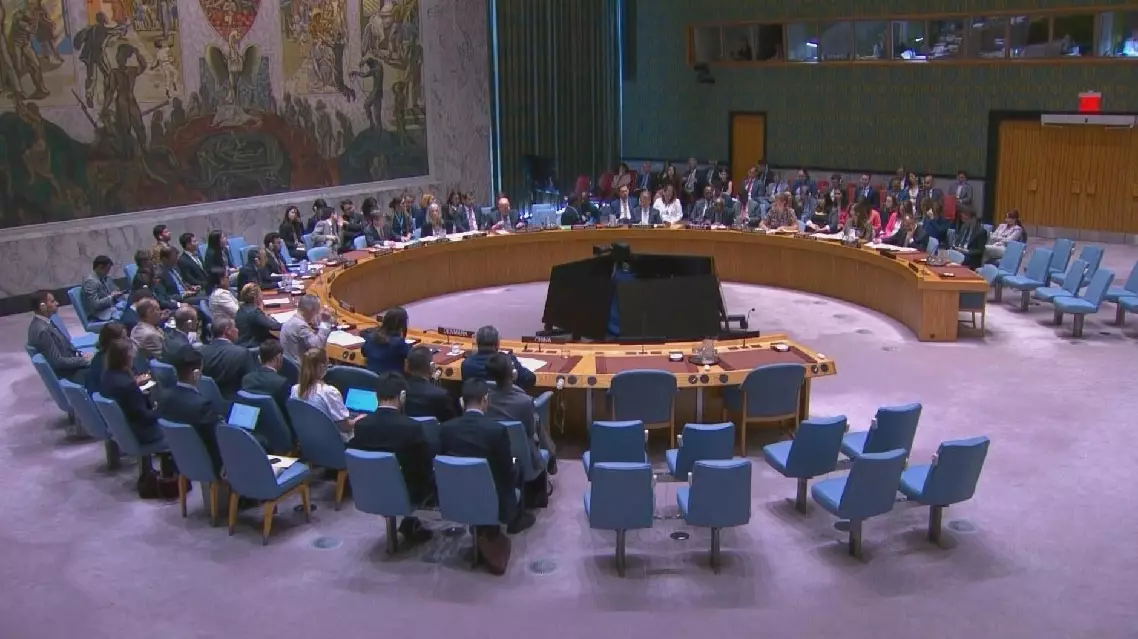
UN Security Council fails to adopt resolution on continued Iran sanctions relief
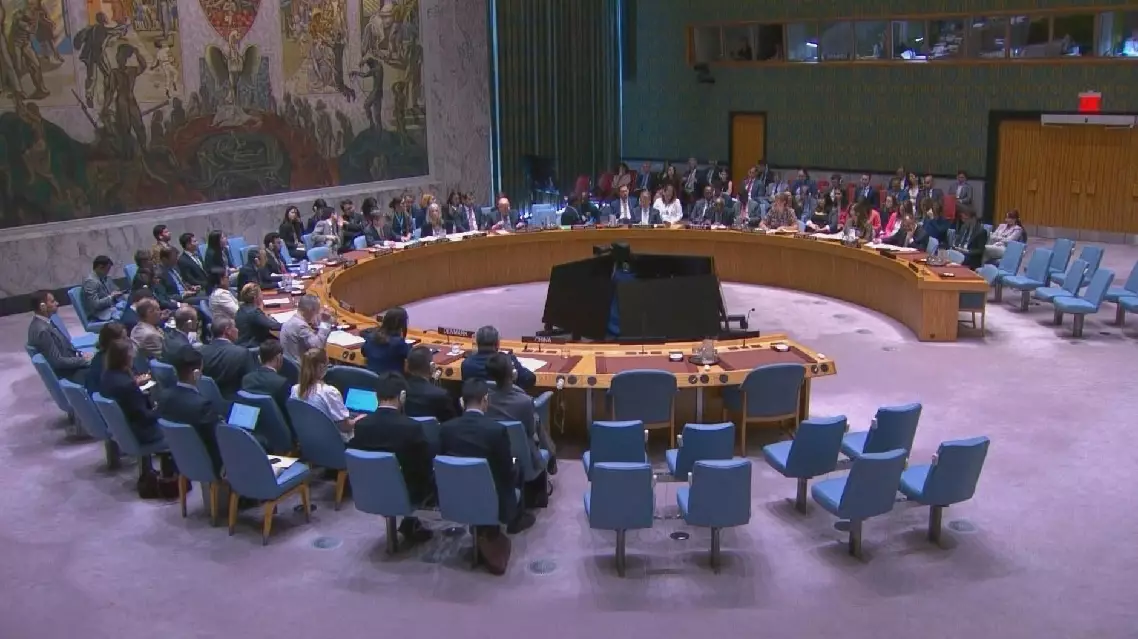
UN Security Council fails to adopt resolution on continued Iran sanctions relief
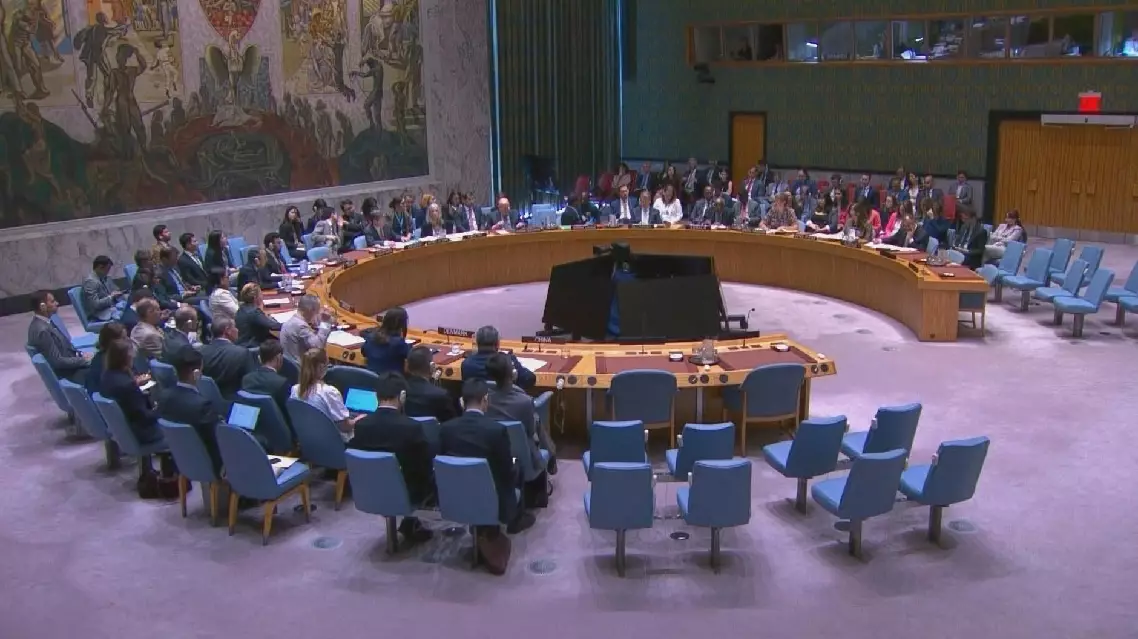
UN Security Council fails to adopt resolution on continued Iran sanctions relief