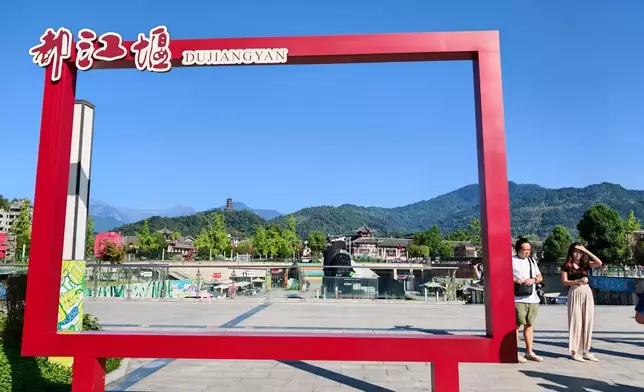
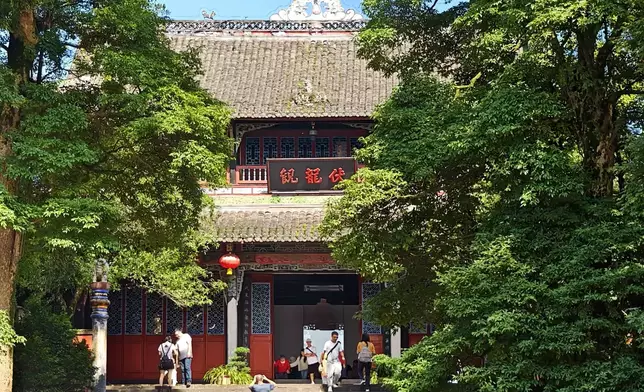
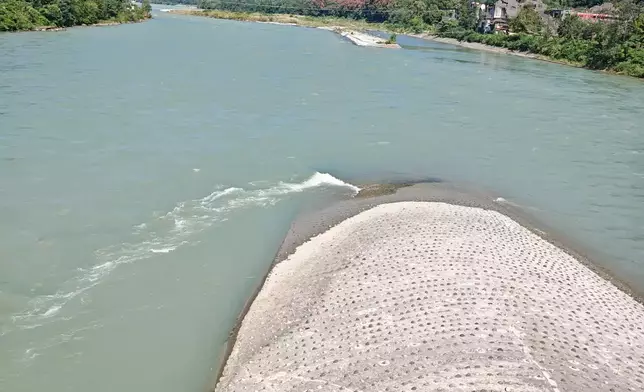
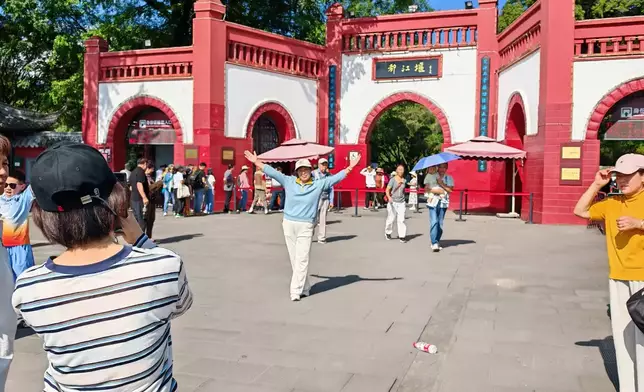
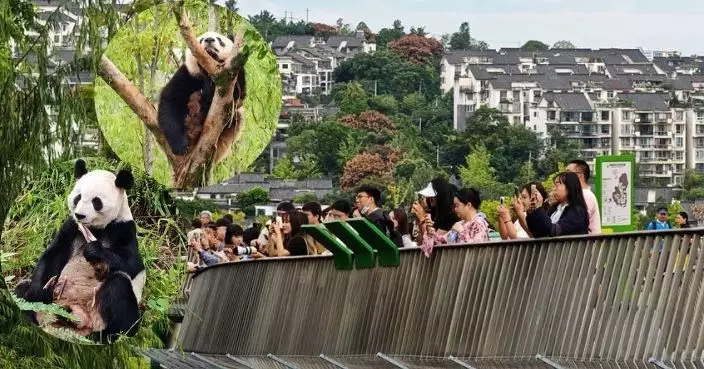
The “Hong Kong Media Sichuan-Chongqing Tour: Tale of Two Thriving Cities” continued with a visit to Dujiangyan, Sichuan, where the delegation explored the iconic “Selfie Panda,” the glowing Tianfu Source Corridor Bridge, and the historic Dujiangyan Irrigation System.
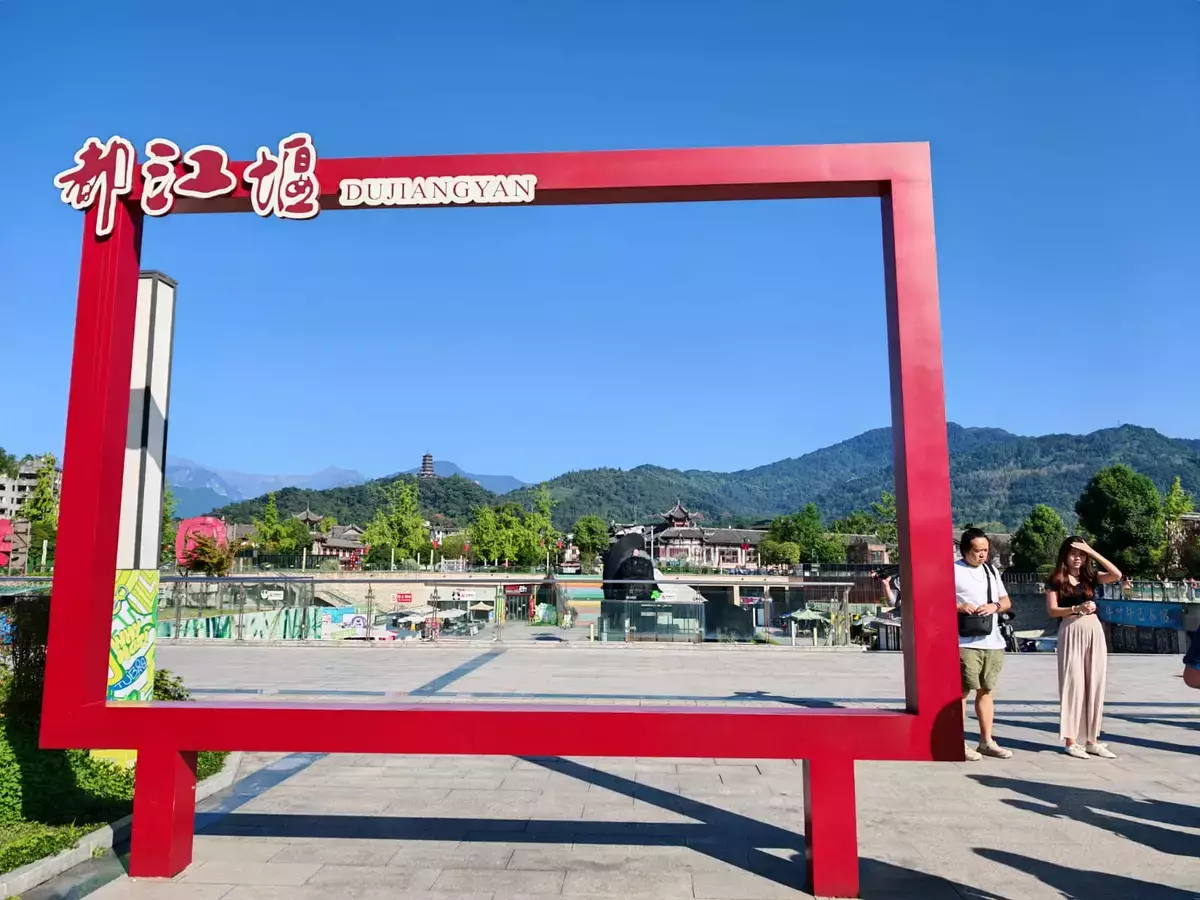
Dujiangyan Irrigation System. By Bastillepost.
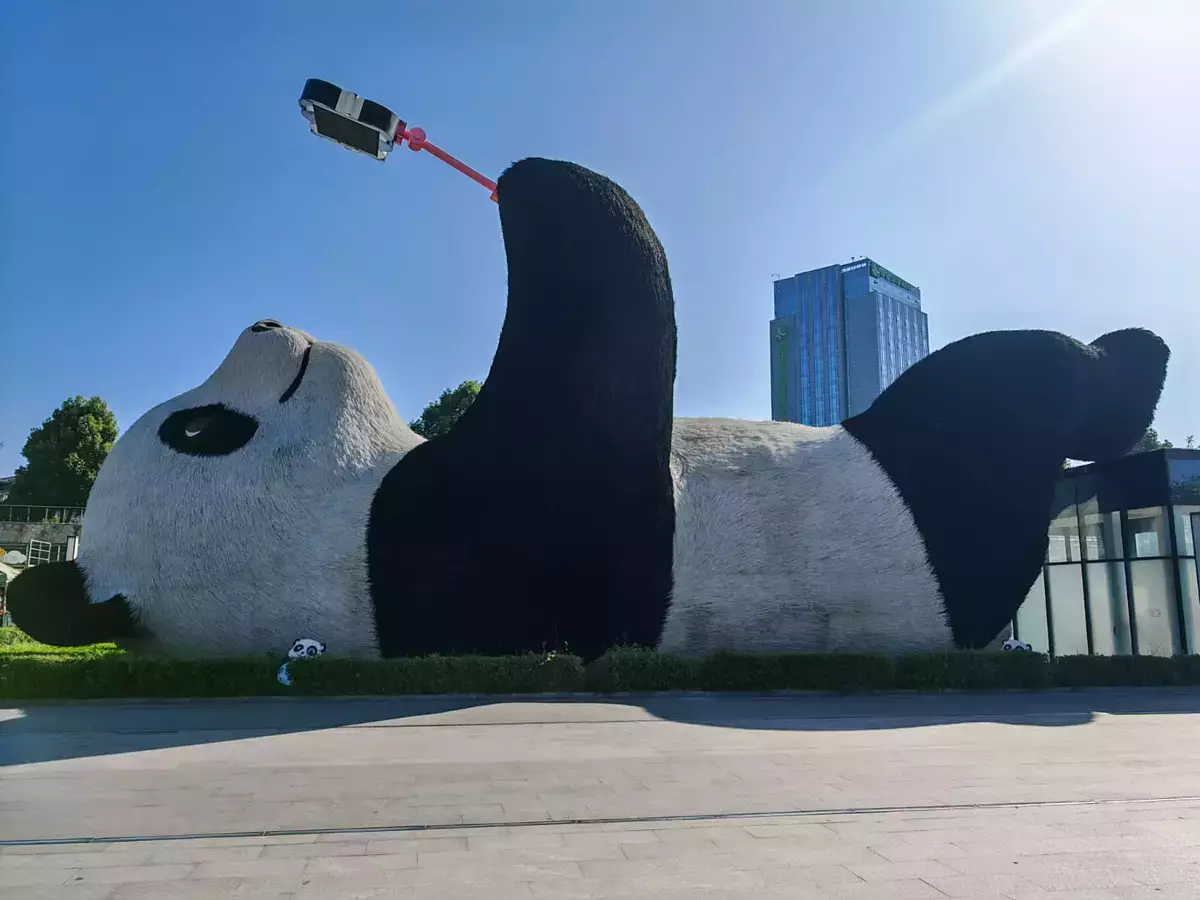
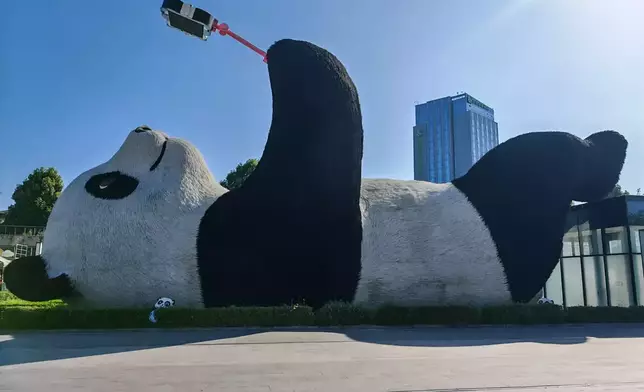
"Selfie-Panda", by Bastillepost.
The “Selfie Panda,” a massive public art installation at Yangtianwo Square, was designed by Dutch artist Florentijn Hofman, creator of the “Rubber Duck.” Unveiled in 2021, this 26-meter-long, 130-ton panda with a modern, playful design is a new city landmark. Beyond viewing, it invites public interaction, encouraging visitors to engage with the artwork.
Click to Gallery
Dujiangyan Irrigation System. By Bastillepost.
"Selfie-Panda", by Bastillepost.
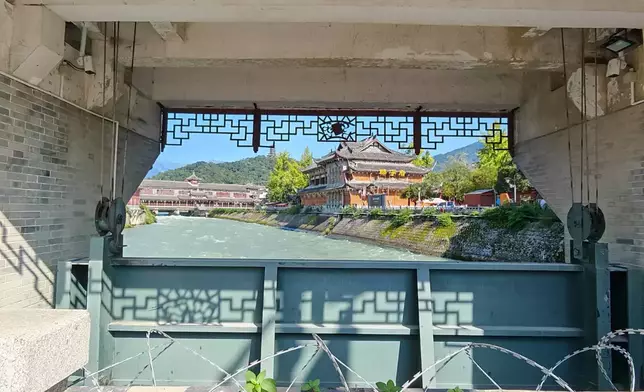
Dujiangyan Tianfu Source Corridor Bridge. Photo by Bastillepost.
Dujiangyan Tianfu Source Corridor Bridge. Photo by Bastillepost.
Dujiangyan Tianfu Source Corridor Bridge. Photo by Bastillepost.
Dujiangyan Tianfu Source Corridor Bridge. Photo by Bastillepost.
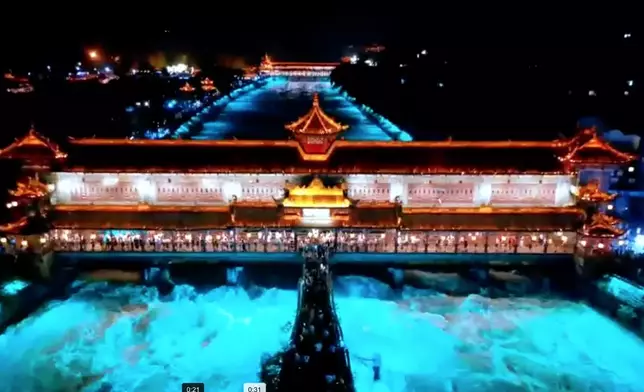
Dujiangyan Tianfu Source Corridor Bridge displays the "Blue Tears" at night. Online Image.
Dujiangyan Irrigation System. Photo byBastillepost.
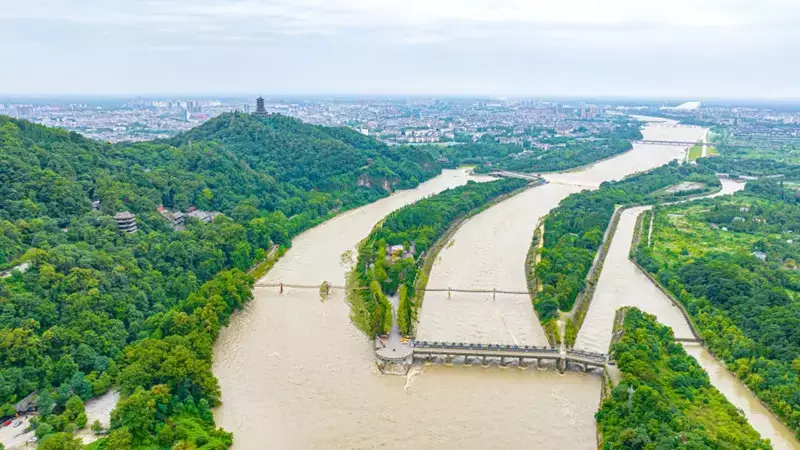
Dujiangyan Fish Mouth (Yuzui). Photo by Xinhua News.
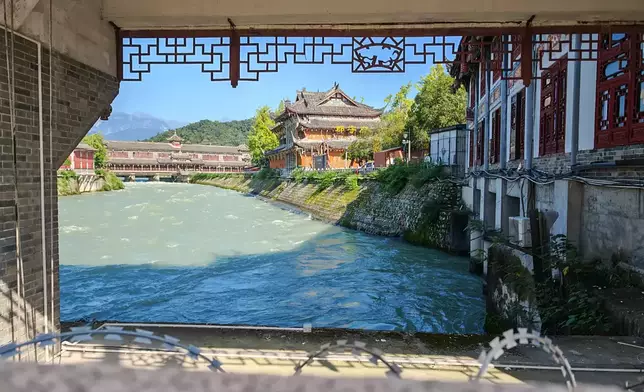
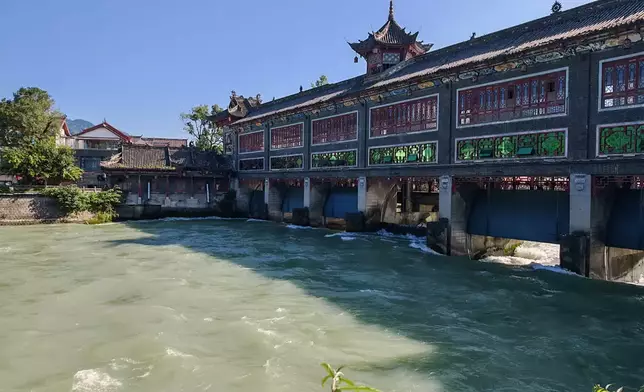
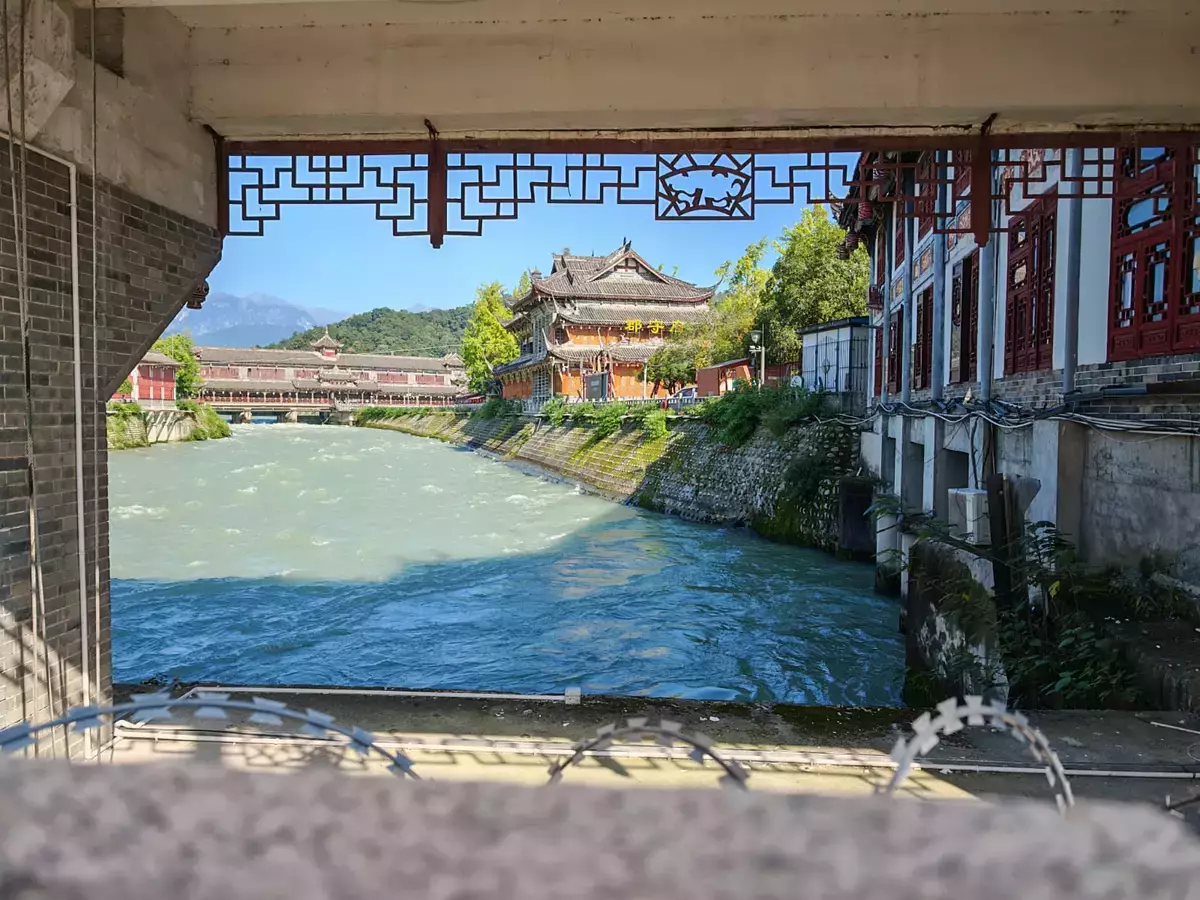
Dujiangyan’s most famous nighttime landmark is the Tianfu Source Corridor Bridge. At night, the Minjiang River’s waters, flowing from the Baopingkou channel, shimmer with blue light under illumination, dubbed “Blue Tears” by visitors. This ancient-style bridge blends millennia-old water management heritage, traditional Sichuan architecture, and modern tourism experiences.
Dujiangyan Tianfu Source Corridor Bridge. Photo by Bastillepost.
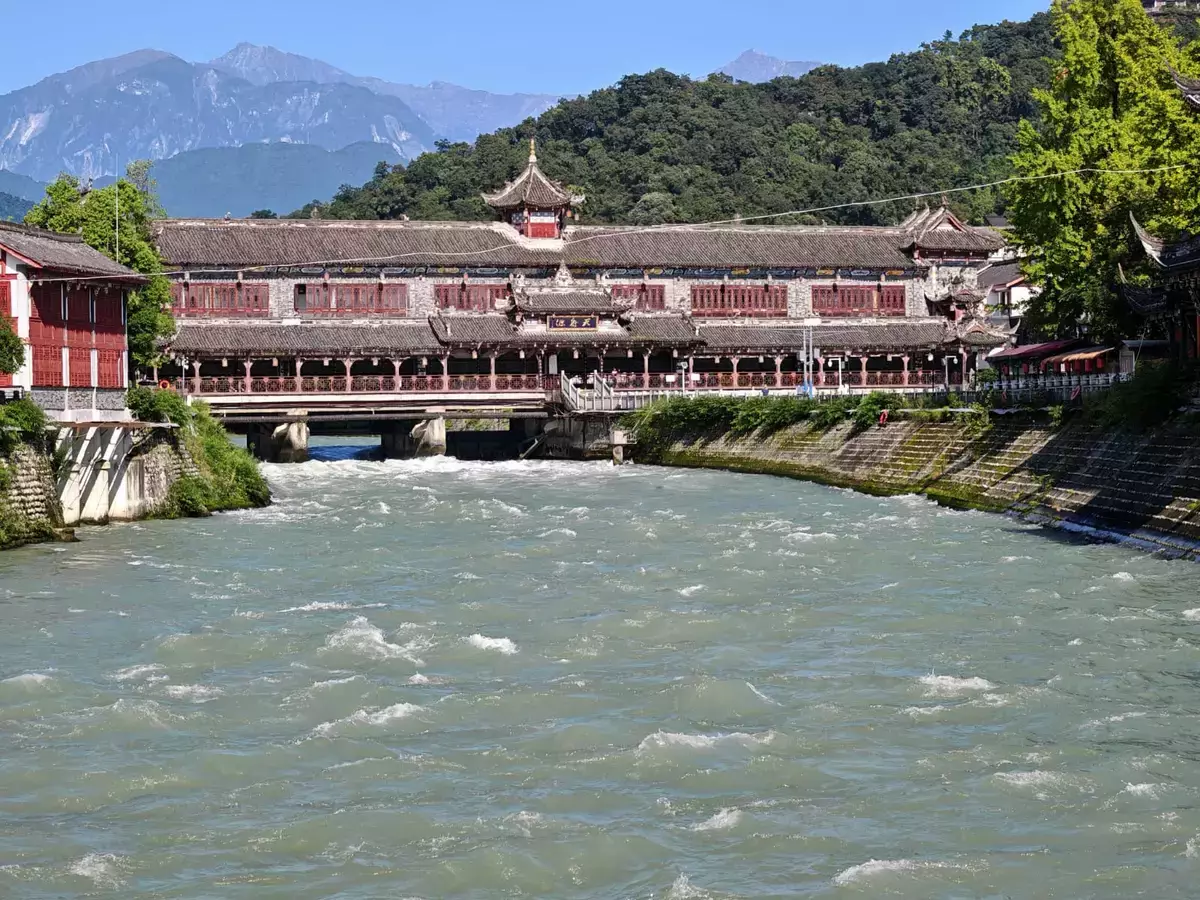
Dujiangyan Tianfu Source Corridor Bridge. Photo by Bastillepost.
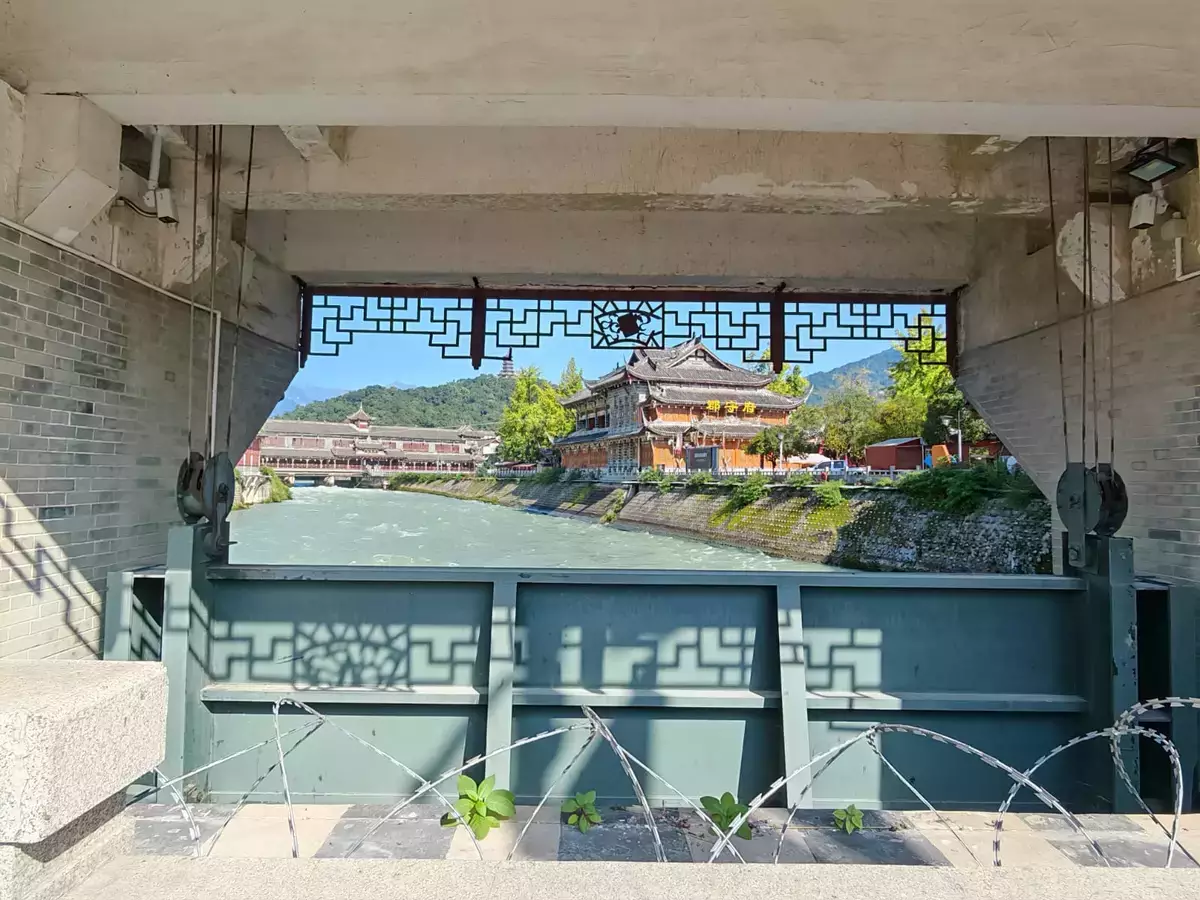
Dujiangyan Tianfu Source Corridor Bridge. Photo by Bastillepost.
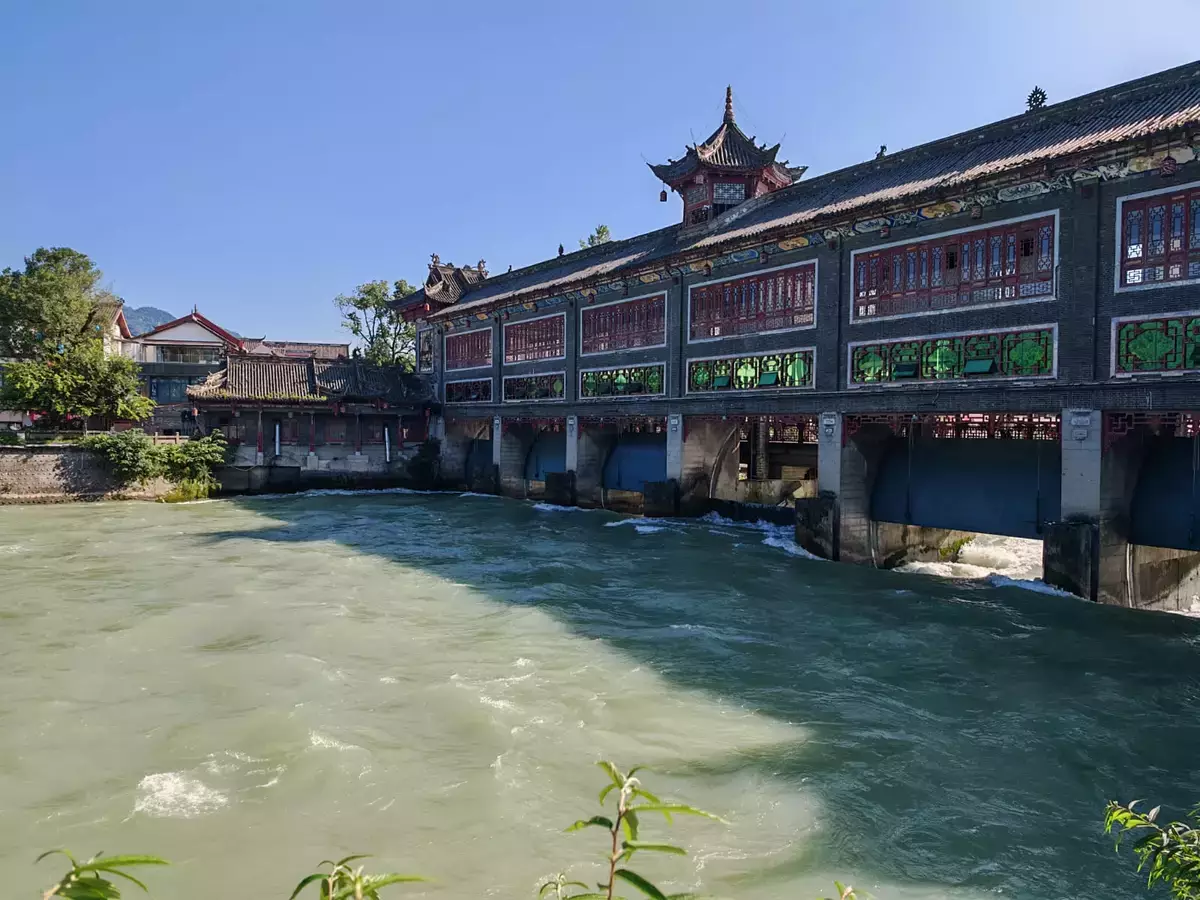
Dujiangyan Tianfu Source Corridor Bridge. Photo by Bastillepost.
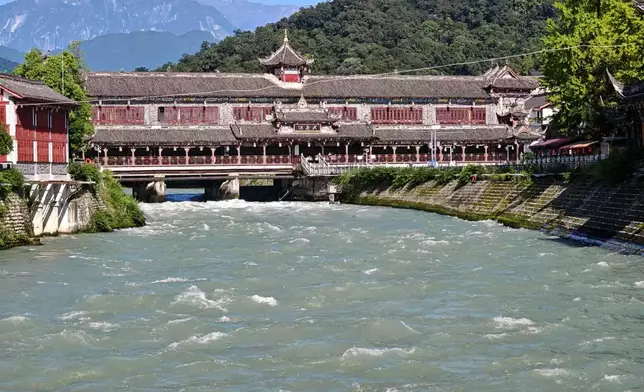
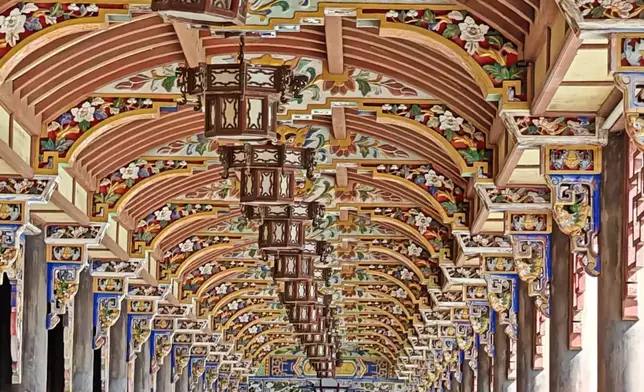
Further upstream along the Minjiang’s inner channel lies the South Bridge, a majestic corridor bridge spanning the river near Baopingkou. Known as the “First Bridge of Tianfu Source” and “Waterborne Painted Pavilion,” it’s a hallmark of the Dujiangyan Irrigation Scenic Area. Built in the Qing Dynasty’s Guangxu era, it retains Ming-Qing Sichuan folk architectural traits. Its vibrant paintings and sculptures on beams, lintels, and ceilings depict folk legends, landscapes, and flora-fauna motifs, vivid and lifelike.
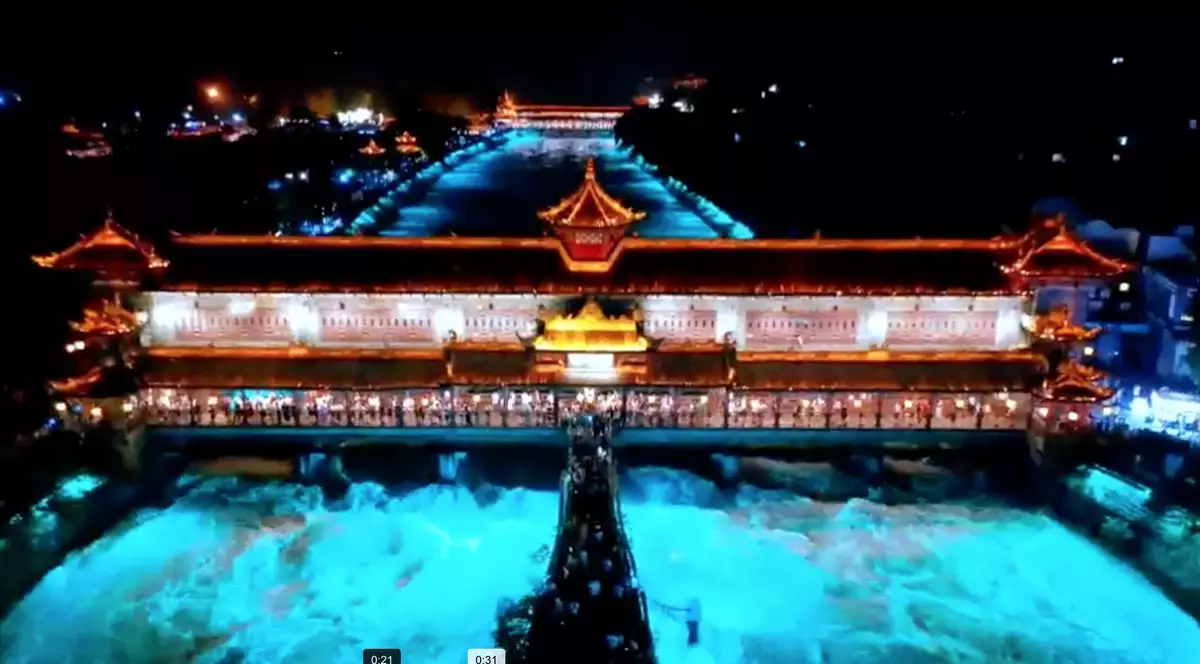
Dujiangyan Tianfu Source Corridor Bridge displays the "Blue Tears" at night. Online Image.
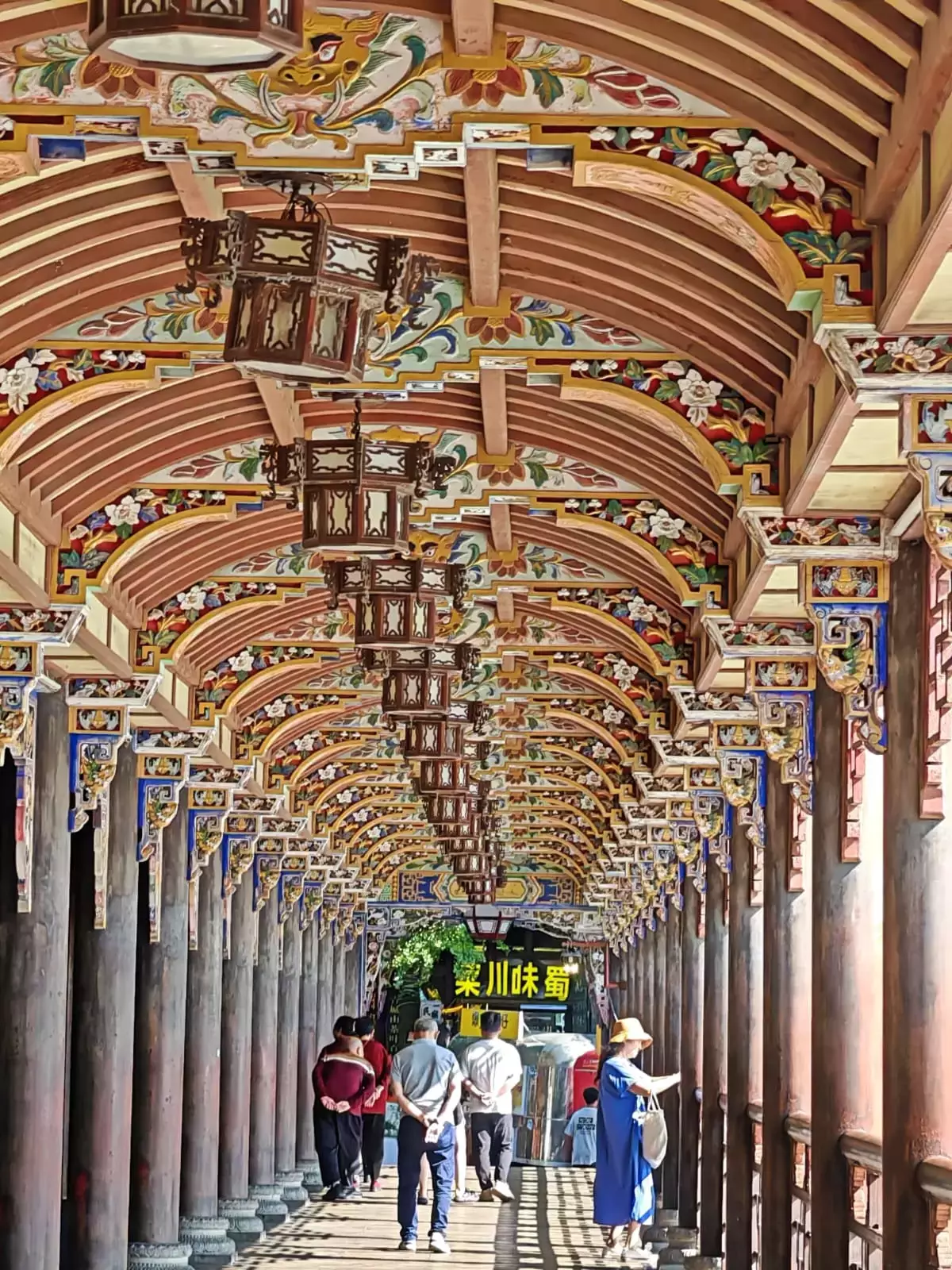
By Bastillepost.
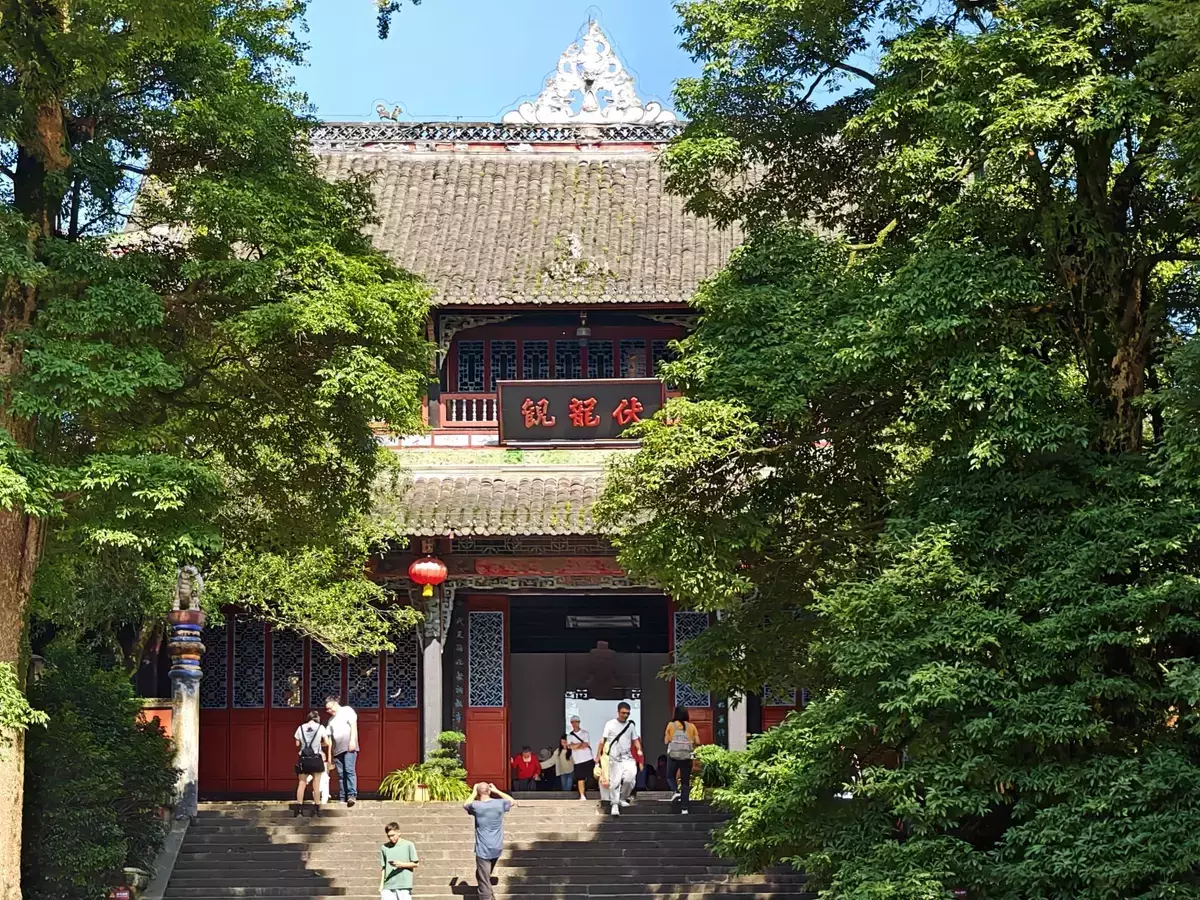
By Bastillepost.
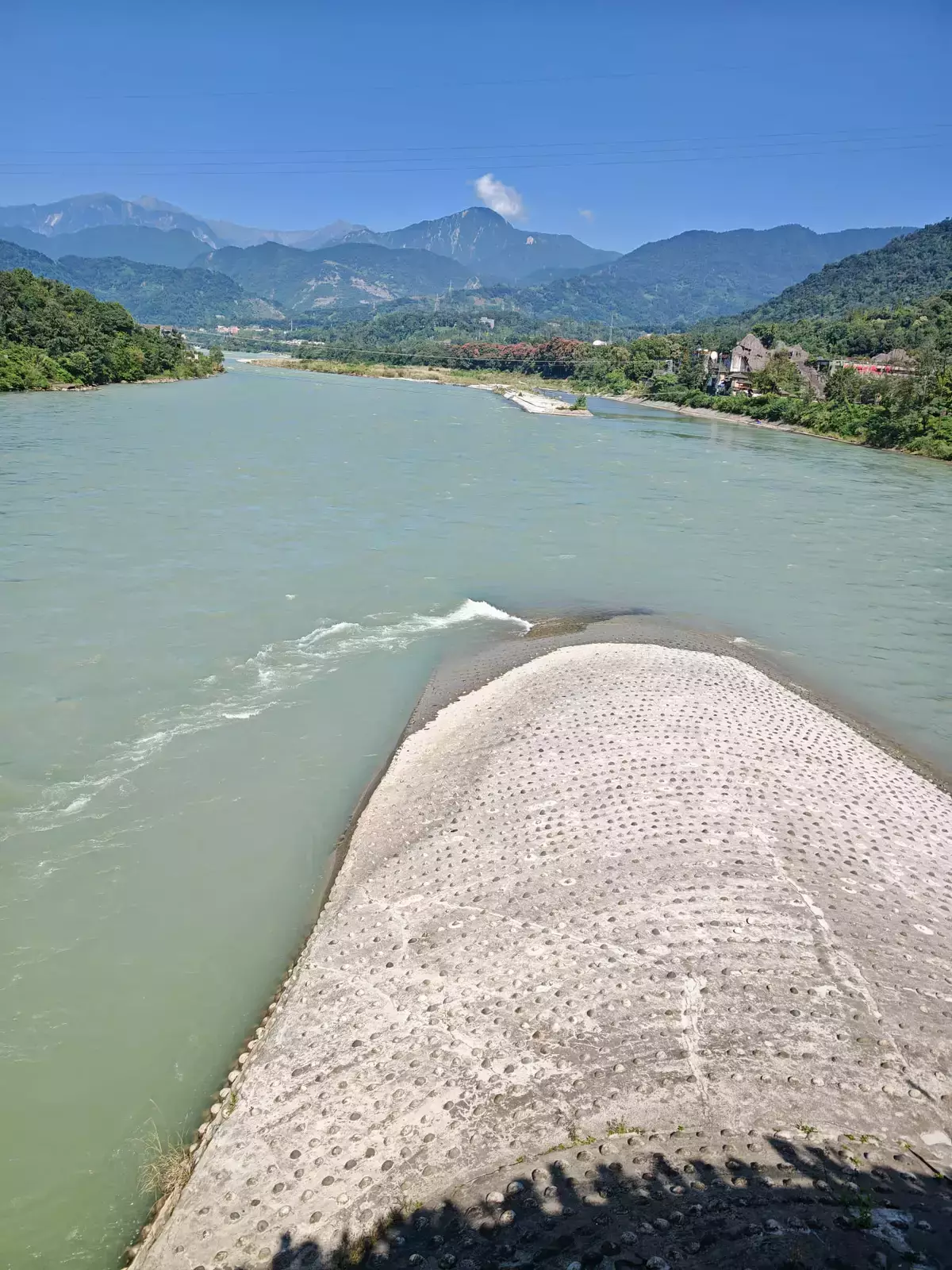
By Bastillepost.
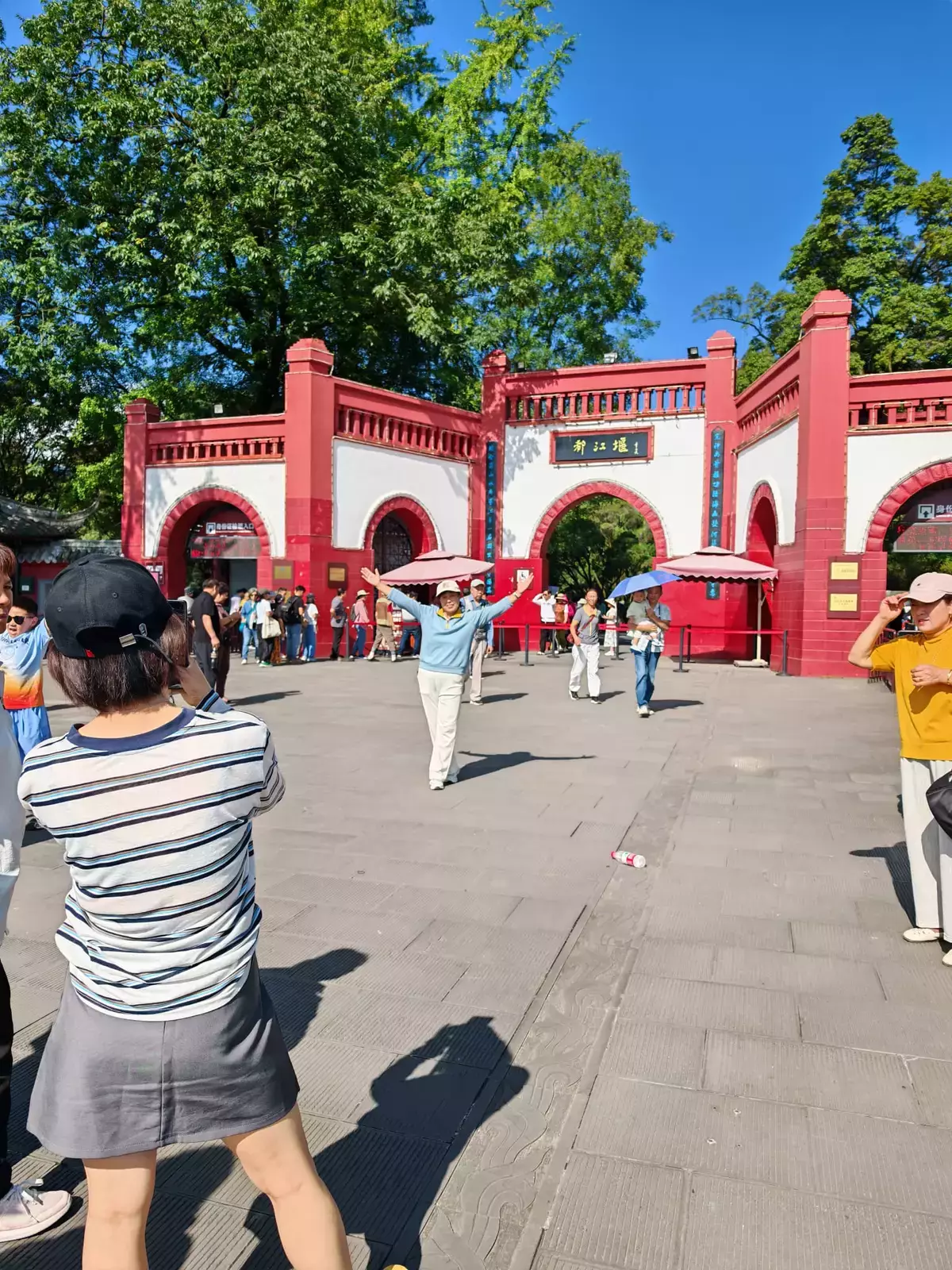
By Bastillepost.
Dujiangyan Irrigation System. Photo byBastillepost.
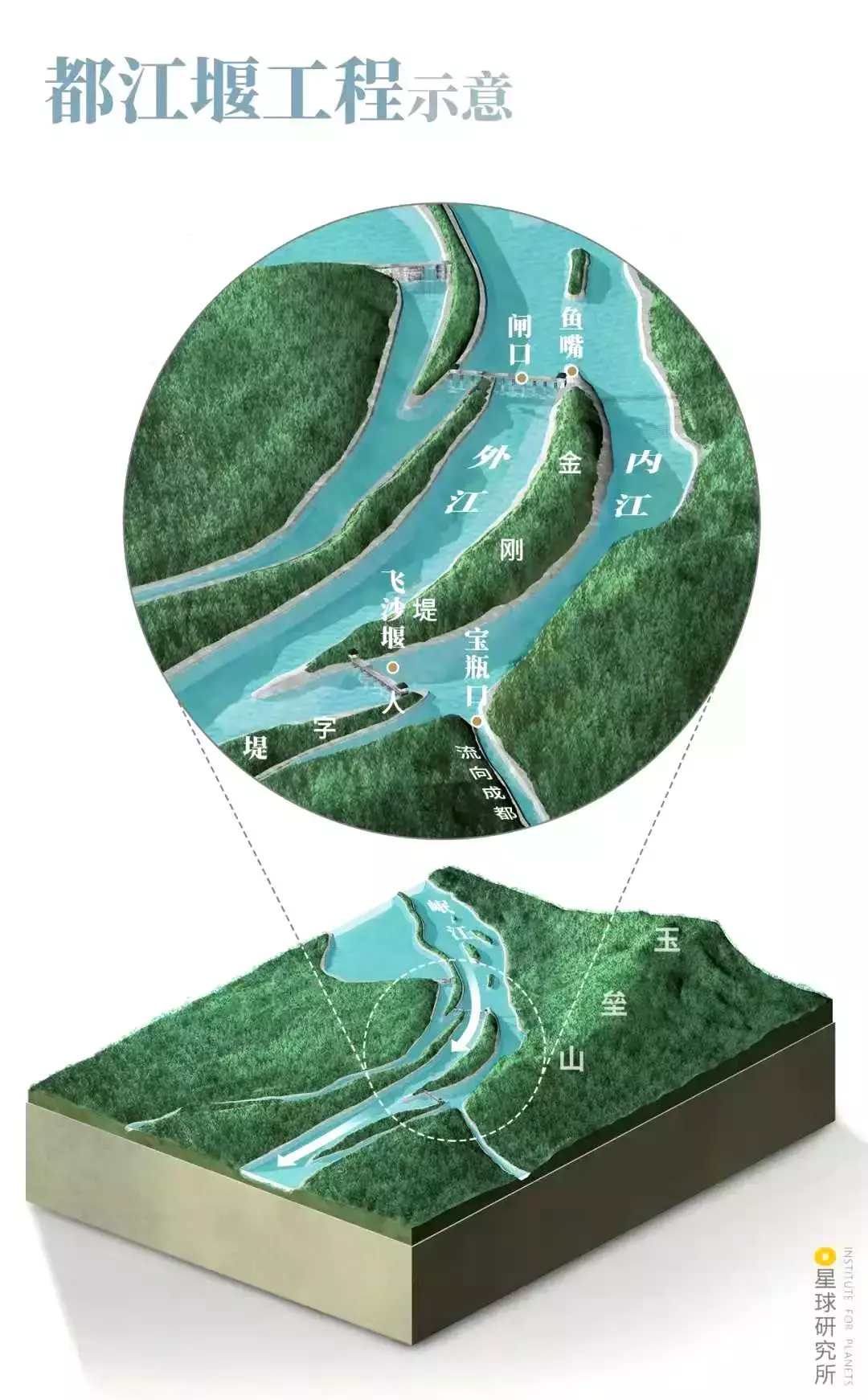
The South Bridge offers a prime spot to experience Dujiangyan’s water culture, with views of the river surging from Baopingkou, embodying the ingenuity of Li Bing and his son’s water management philosophy: “Harness nature’s momentum, adapt to the times.”
The delegation visited the Dujiangyan Irrigation System, a marvel over 2,200 years old, built in 256 BCE. Designed to work with nature rather than against it, this eco-friendly engineering feat transforms harm into benefit, harmonizing people, land, and water. It remains the world’s only surviving grand ecological project, irrigating 11.65 million acres across eight cities and 41 counties in Sichuan, nurturing the ancient Shu civilization and enriching the cultural heritage of the middle-upper Yangtze River region.
Dujiangyan Fish Mouth (Yuzui). Photo by Xinhua News.
The system comprises the canal headworks and irrigation network, with the headworks featuring three core components: the Yuzui Fish-Mouth Dividing Dike, Feisha Weir Spillway, and Baopingkou Water Inlet. These work in concert, each indispensable, ensuring the system’s functionality.
On September 26, the “Hong Kong Media Sichuan-Chongqing Tour: Tale of Two Thriving Cities” concluded in Chongqing, with the delegation visiting Changan Automobile’s Global R&D Center and the Chongqing International Logistics Hub Park to gain firsthand insights into the municipality’s manufacturing prowess and pivotal logistics role.

Changan Automobile is one of China's "Big Four" automotive groups.

Changan Automobile is one of China's "Big Four" automotive groups.
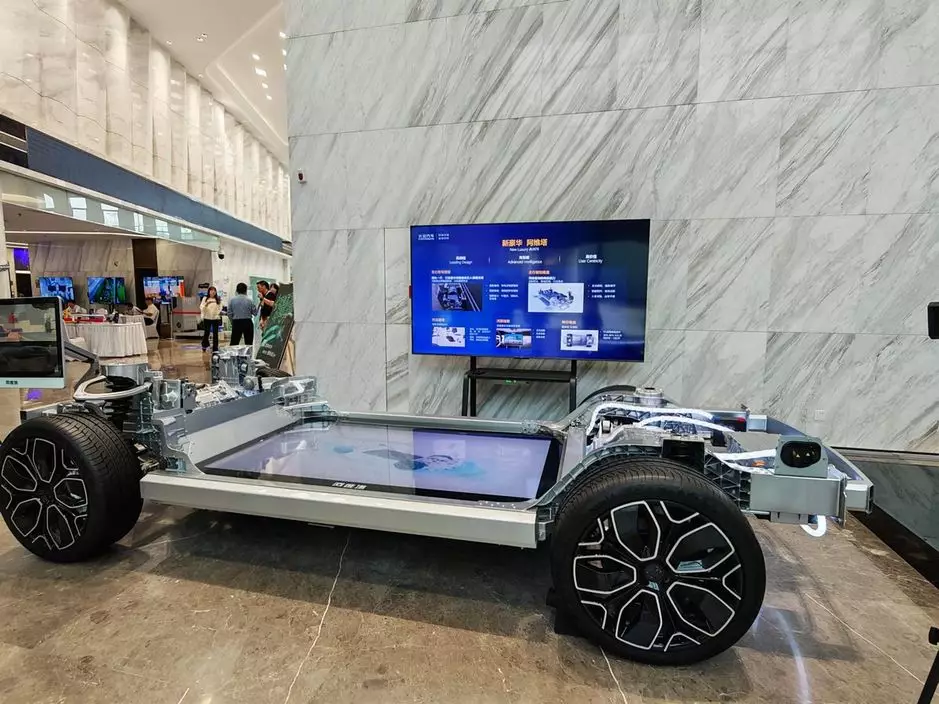
Changan Automobile is one of China's "Big Four" automotive groups.

Changan Automobile is one of China's "Big Four" automotive groups.
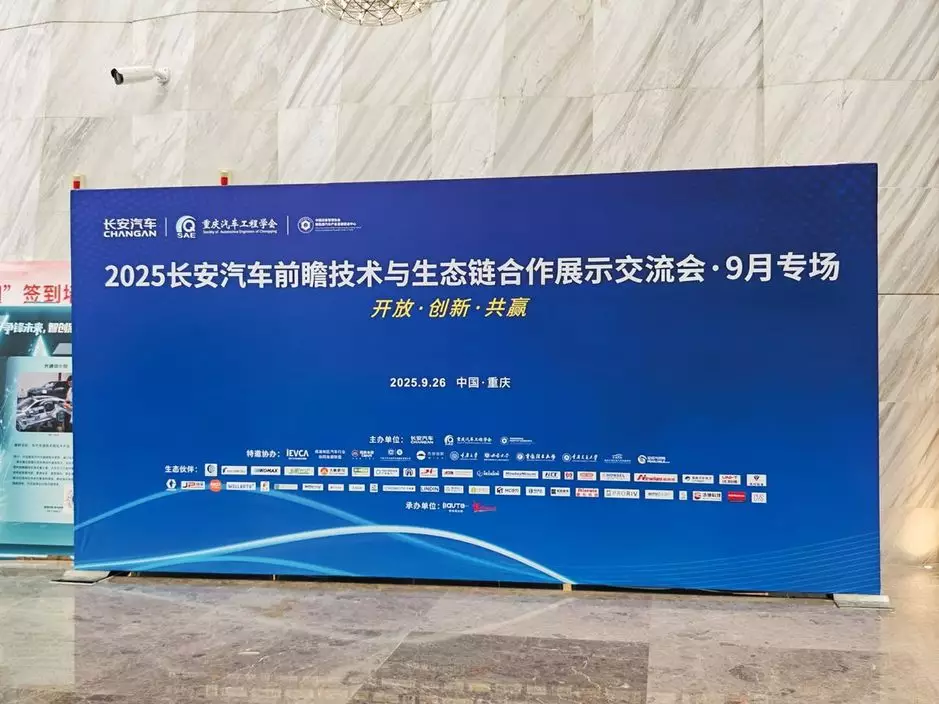
Changan's Oshan brand held a special event.

Changan Origin E07 .
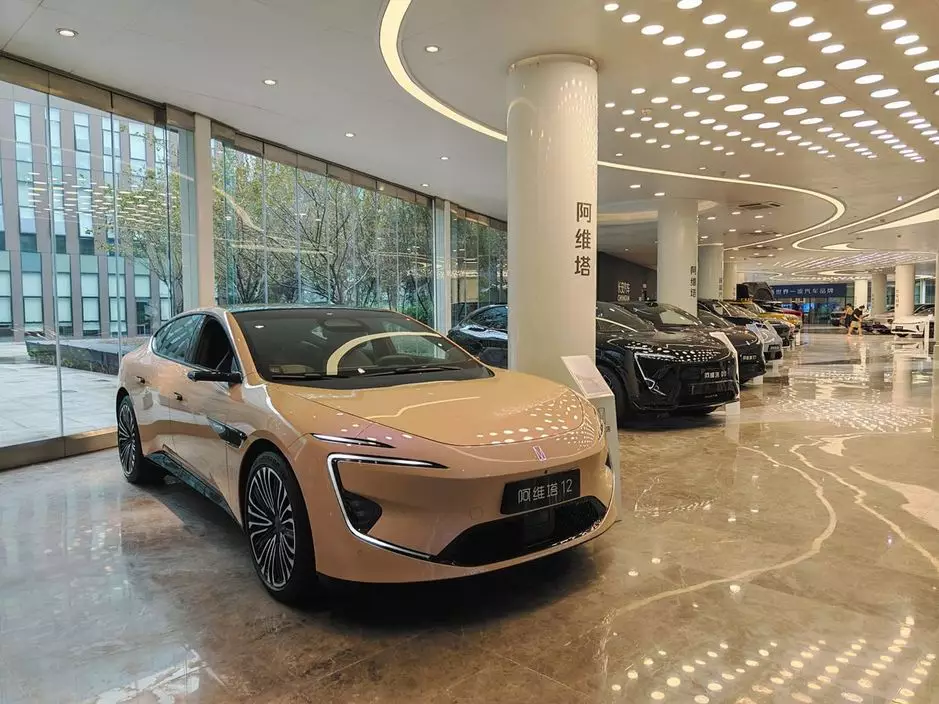
AVATR is one of the three major brands under Changan Automobile.
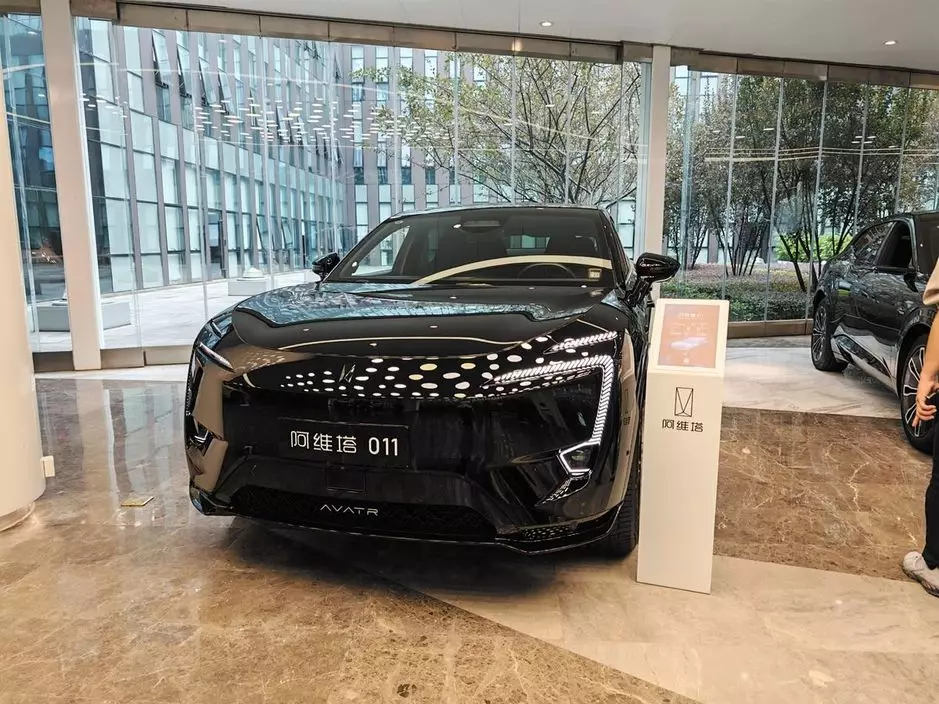
AVATR is one of the three major brands under Changan Automobile.
The group toured Changan Automobile’s Global R&D Center. Changan, one of China’s top four automotive groups, boasts 163 years of history and 41 years of car-making expertise, with 14 global manufacturing bases and 39 factories.
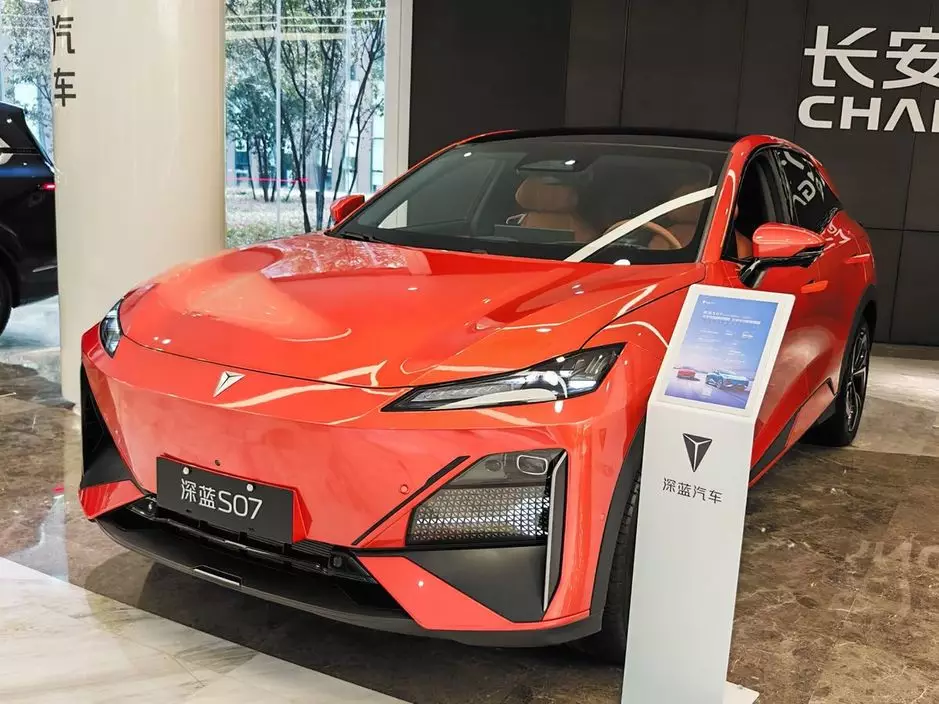
Deepal Auto is one of the three major brands under Changan Automobile.
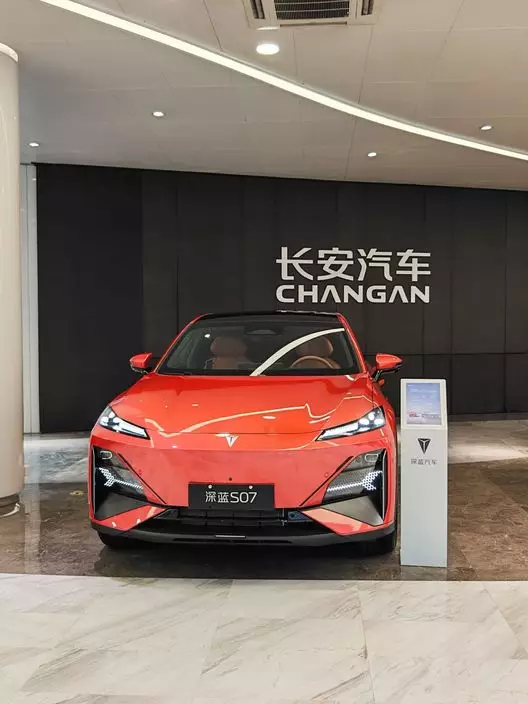
Deepal Auto is one of the three major brands under Changan Automobile.
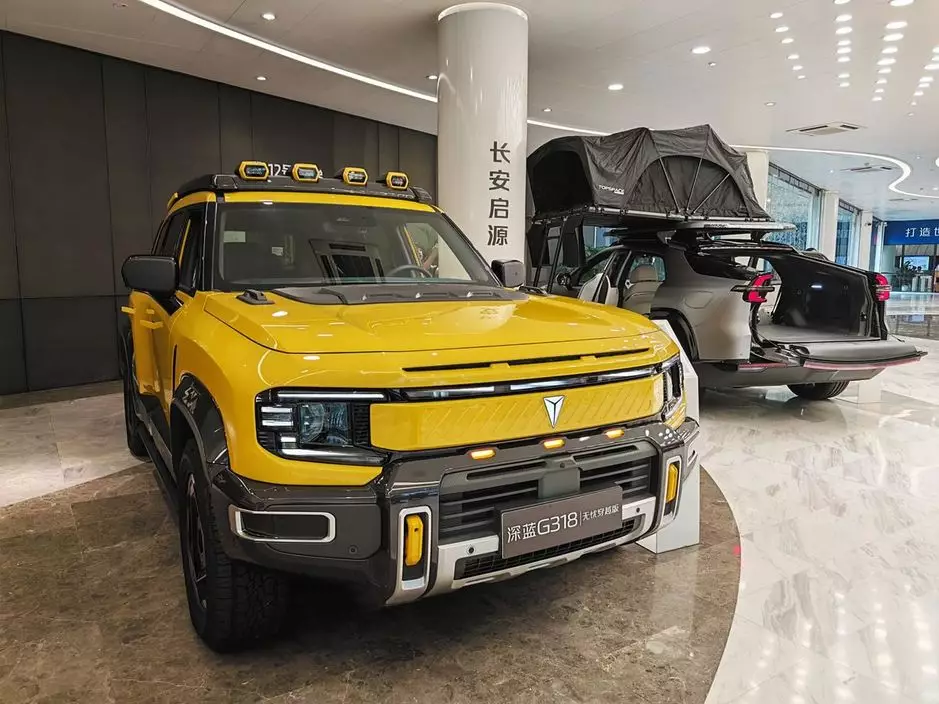
Deepal Auto is one of the three major brands under Changan Automobile.
Embracing the era of “smart new vehicles,” Changan is transforming cars from mere “transportation machines” to “smart new species” with evolving “intelligence” and “emotional quotient.” These vehicles offer drivers a seamless, intelligent travel experience across all scenarios.
The delegation also visited the Inland International Logistics Hub Exhibition Center, a showcase of Chongqing’s efforts to fulfill President Xi Jinping’s vision of building an inland international logistics hub and open highland. Through a model of “corridors driving logistics, logistics boosting trade, and trade fostering industries,” Chongqing has achieved significant results. Located in the Golden Bay Smart Valley of the Chongqing International Logistics Hub Park, the center spans 2.7 hectares with a total building area of 8,620 square meters. Its exhibition area covers 3,132 square meters, including a 2,082-square-meter core display space, a 770-square-meter product showcase, and a 280-square-meter flight theater, with additional facilities like meeting rooms, reception halls, and rest areas.
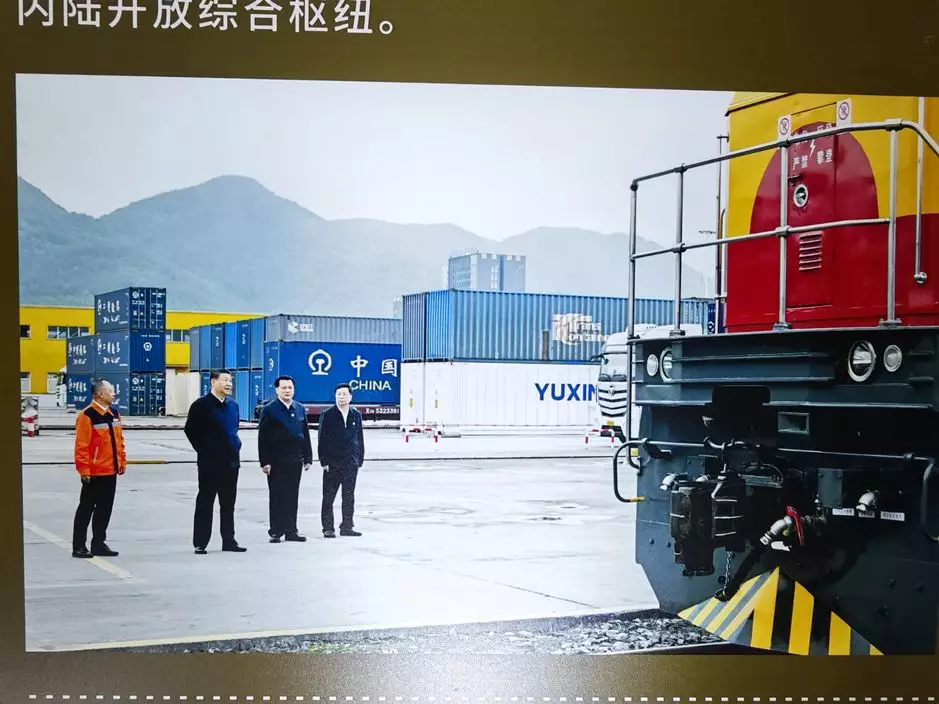
The General Secretary of the Chinese Communist Party inspected Chongqing in 2024.
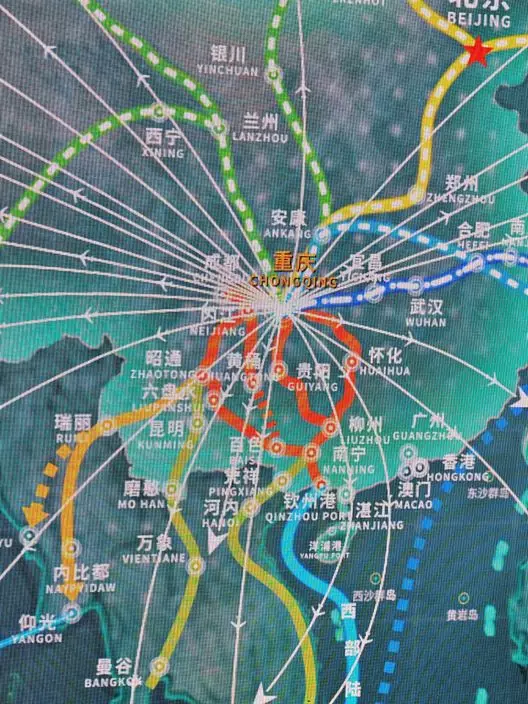
Exhibition Center for Chongqing's Inland International Logistics Hub.
The core exhibition, spanning 2,100 square meters, features eight sections: Opening History, Hub City, Hub Corridors, Hub Stations, Hub Ports, Hub Economy, Hub Environment, and Open Outlook. These highlight Chongqing’s transformation from an inland region to an open hub, with logistics and urban development synergizing to support its hub city status.
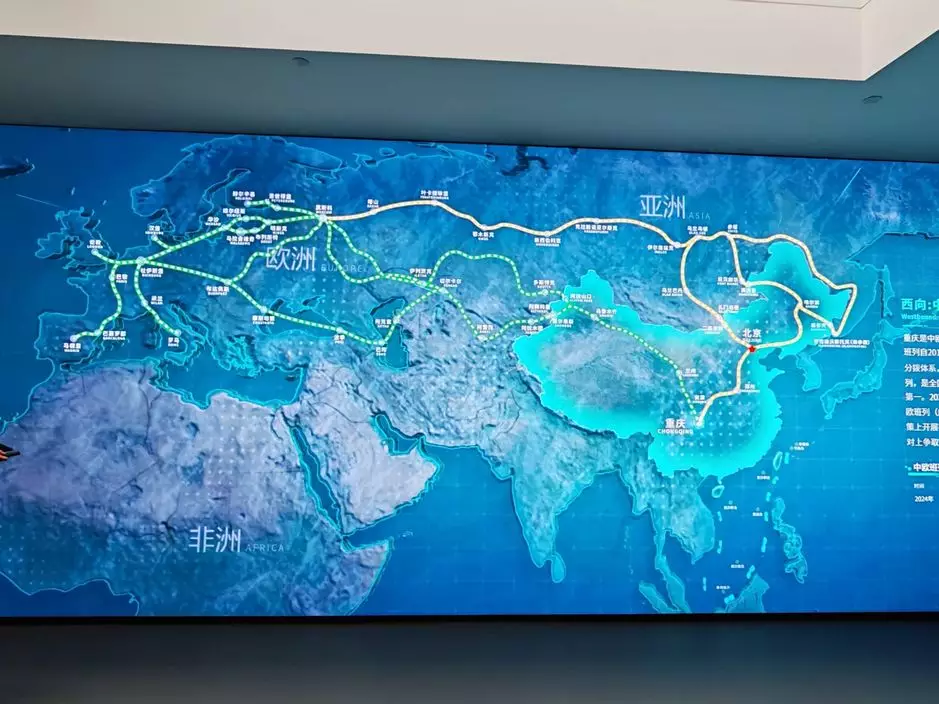
Chongqing is an inland international logistics hub center.
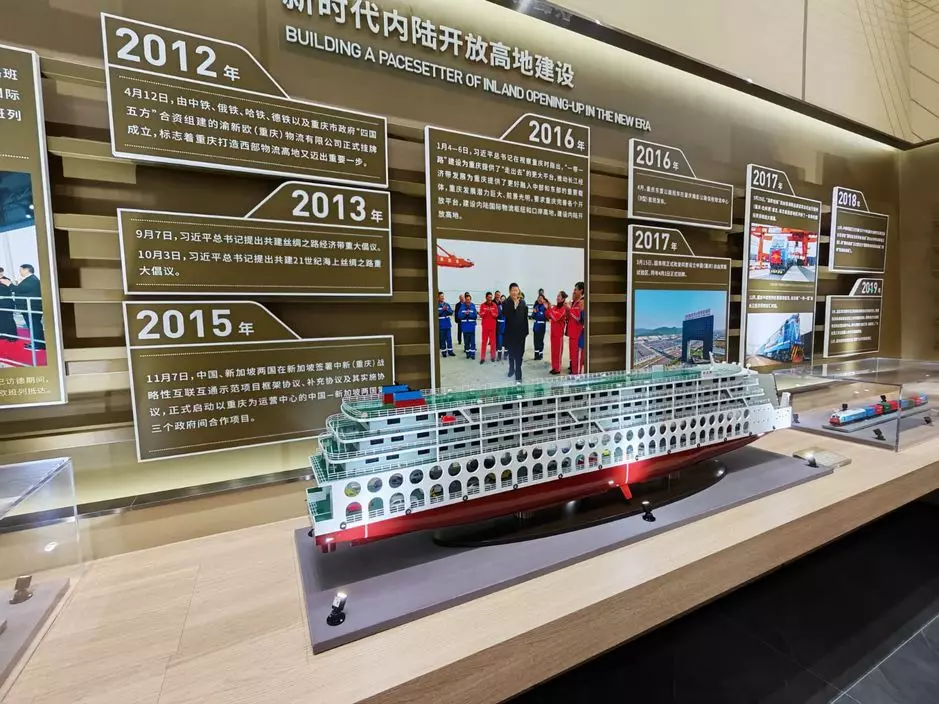
Building a new-era open inland highland.
The Chongqing Railway Container Center Station, one of 18 key stations designated by China Railway, is Chongqing’s sole top-tier railway logistics base and its largest container handling station. Since its establishment, it has leveraged its inland logistics hub role to enhance global connectivity, serving as a key origin for international routes like the Western Land-Sea New Corridor intermodal trains, China-Europe (Yuxinou) trains, Chongqing-Manchuria-Russia trains, and Chongqing-Ningbo trains.
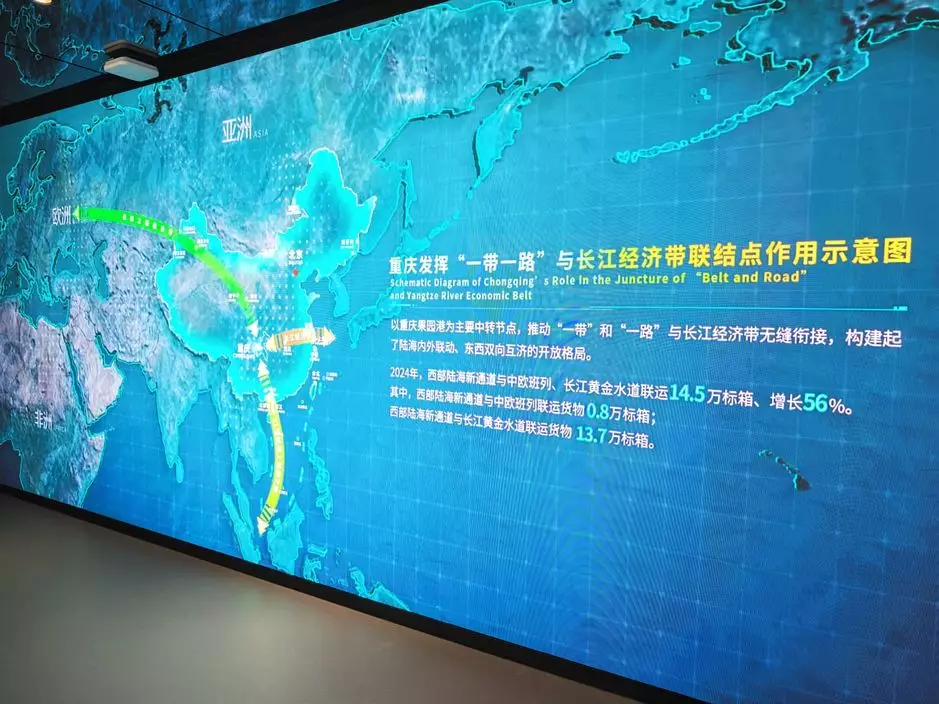
Schematic diagram of Chongqing's role as a link between the Belt and Road Initiative and the Yangtze River Economic Belt.
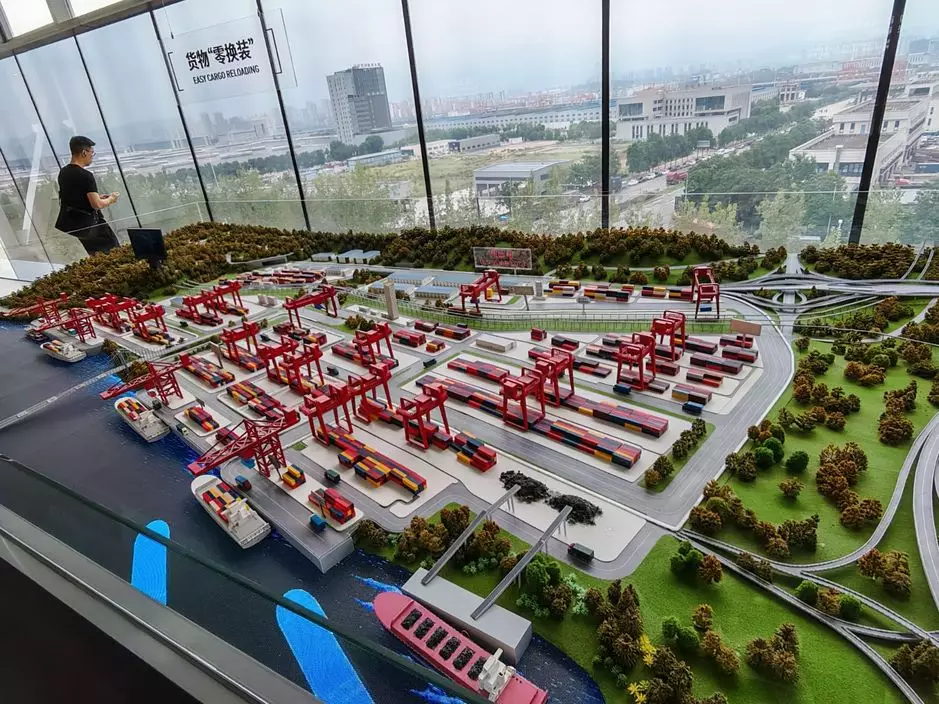
Chongqing Municipality is committed to developing a logistics hub center
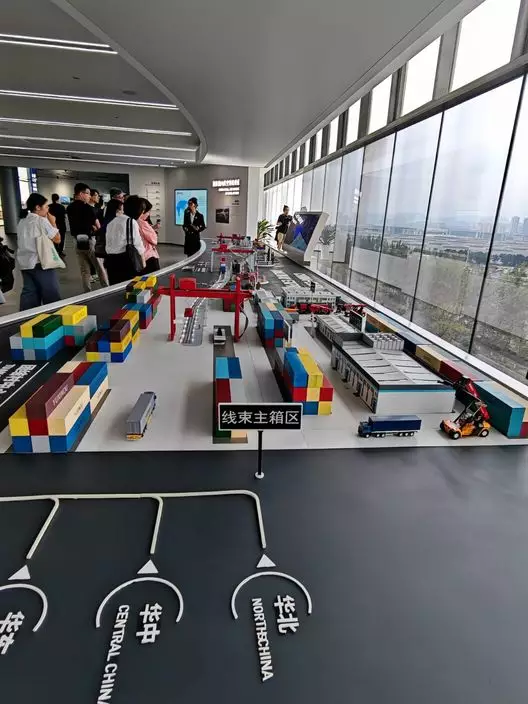
A docent explains the situation at the Chongqing Railway Container Center Station.
With advanced design, superior rail conditions, cutting-edge handling equipment, robust information systems, and comprehensive facilities, the station’s handling volume grew from 198,000 TEUs in 2010 to 702,000 TEUs in 2023, with a 15% annual growth rate. Rail freight accounts for about 70% of total shipments. The station offers core services like container transport, storage, transshipment, distribution, and warehousing, plus extended services such as container repairs, reefer charging, sea container returns, and road delivery, ensuring robust support for container train operations. Its 80,000-square-meter customs supervision area has 2,000 40-foot container slots, capable of storing boxes for 40 international trains like China-Europe routes, equipped with customs and inspection facilities, verification platforms, full digital management, and 24/7 monitoring.

Chongqing is committed to building an important strategic pivot for the new era of large-scale development.