A source close to Hamas said on Wednesday the group may conditionally accept the 20-point Gaza ceasefire plan proposed by U.S. President Donald Trump, provided certain "substantial amendments" are made.
The conditions include clarifying some clauses, setting a clear timetable for Israeli troop withdrawal, and ensuring guarantees related to Hamas, said the source.
The source said Hamas demands clarity on a complete cessation of hostilities, with international guarantees to prevent renewed attacks, as well as a clear timetable for Israeli withdrawal from Gaza, stressing that disarming the resistance is considered an "existential issue" for the movement.
The source also noted that Gaza's reconstruction should be managed by a Palestinian body rather than an international council.
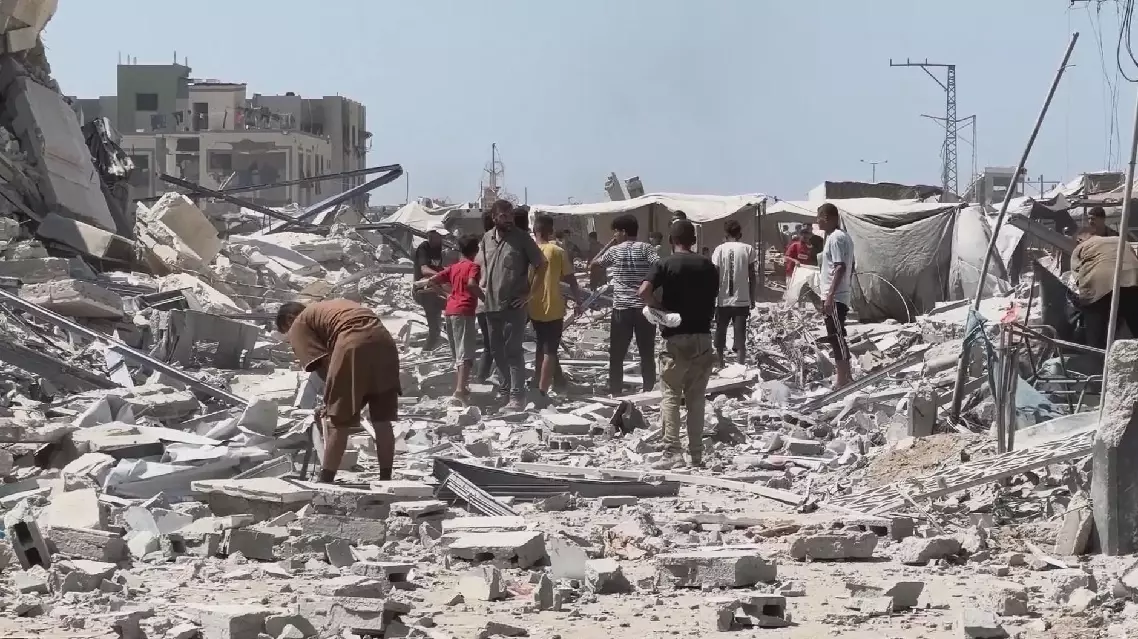
Hamas signals conditional acceptance of U.S. ceasefire plan: source
China's expanding ties with the Global South have pushed trade growth far beyond the global average despite the tariff pressure from the U.S., according to experts.
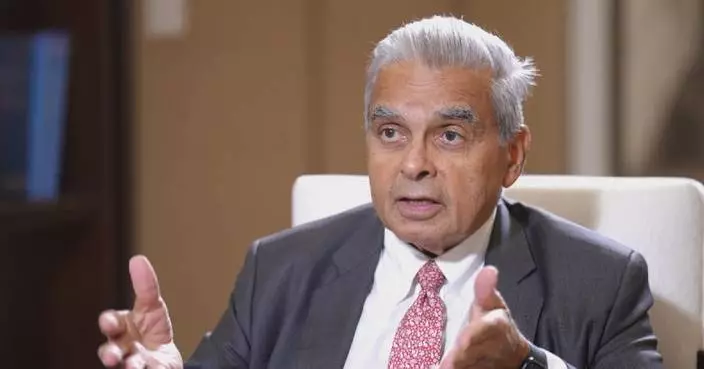
"Whilst the Trump tariffs ultimately led to a significant drop-off in Chinese exports to the United States and vice versa, the trading relationships across much of the rest of the world continue to grow, and China's trading relationships across the Belt and Road Initiative countries, as well as with the Global South, more broadly speaking, has grown at rates far greater than global trade growth as a whole. And we see that evidenced by the latest data. When we break that down, we see that has been underpinned by the developments in high-technology products in particular, whether it's EVs, whether it's even in semiconductors, as well as photovoltaic panels, etc.," said Dr. Warwick Powell, an adjunct professor at the Queensland University of Technology, in a TV interview with China Global Television Network (CGTN) on Thursday.
"And you've got to look at the places where the growth is taking place. Africa, I think, is a very interesting case in point, because the kinds of things that China has been exporting and expanding in terms of its exports are all about African economic development -- its machinery, its energy systems, its technology, and this really goes to delivering on China's broader strategic ambition as an emerging great power to be an enabling great power, supporting the development of its partners around the world," he added.
Qian Jun, executive dean of International School of Finance at Fudan University, attributed the trade growth to Chinese firms' endeavor to tap into key regions like ASEAN, Latin America, the Middle East and Africa.
"The main increase of export comes from, as we have discussed, these new areas: The ASEAN economy -- southeast Asia remains the most important trading partner -- and also Latin America, the Middle East, and these [other such] new regions. So, the exporters of the Chinese companies are also very good at adjusting their destinies, their strategies, how to market their goods and services, so that the reliance on the U.S., for example, has gone down a lot," Qian said.
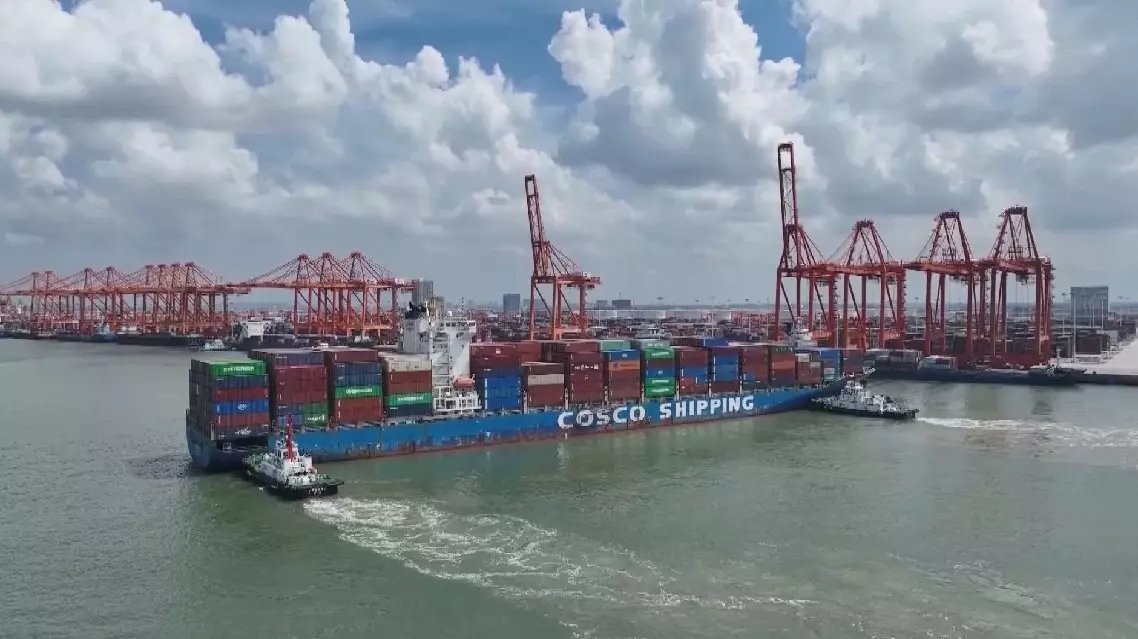
China's trade momentum increasingly powered by Global South: experts