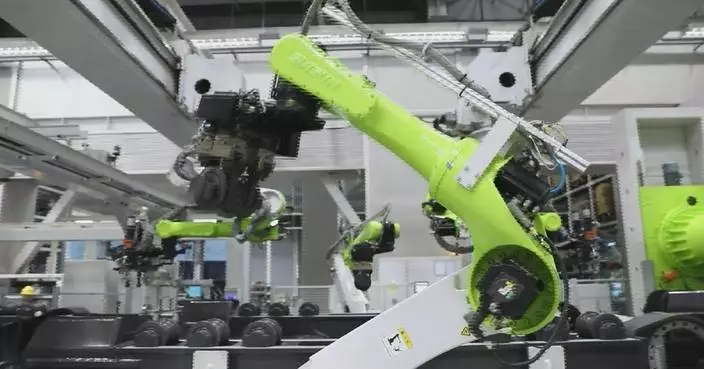
Chinese researchers have developed a new unified control system that allows legged robots to better sense and respond to physical contact and forces in their environment, a significant step toward more graceful and capable robots for complex tasks.
The breakthrough, made by researchers at Beijing Institute for General Artificial Intelligence, enables robots to perform contact-rich manipulation tasks at success rates 39.5 percent higher than position-control policies.
Their paper, titled "Learning a Unified Policy for Position and Force Control in Legged Loco-Manipulation," won the Best Paper Award at the Conference on Robot Learning 2025, marking the first time the award has been granted to a group of Chinese researchers.
Learned without reliance on force sensors, the model enables a wide range of manipulation behaviors under varying combinations of force and position inputs, including position tracking, force application, force tracking, and compliant robot behaviors, according to the paper.
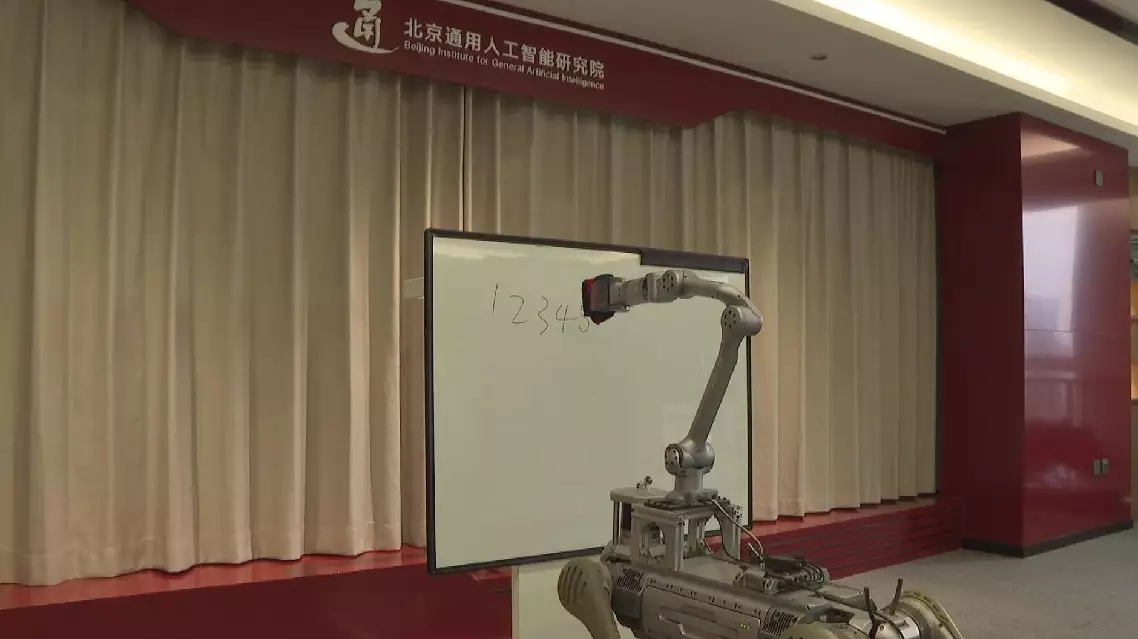
The researchers have conducted extensive experiments on a quadrupedal mobile manipulation platform and a humanoid robot, validating the versatility and robustness of the proposed model across diverse scenarios, such as whiteboard cleaning, and cabinet door opening and closing, which are often beyond the capabilities of vision-language-action (VLA) models.
"The mainstream VLA models take in camera image inputs and then predict trajectories. When a robot tries to clean a whiteboard following this kind of a trajectory, the eraser may exert sufficient pressure on the whiteboard, leaving some parts uncleaned," explained Jia Baoxiong, an author of the paper.
"In a force and position hybrid control model, we do our best to add a force variable, so that on the basis of precise positions, the robot can press the eraser tightly against the whiteboard to clean it. In other words, we have not only added a force variable to the conventional VLA model, but also realized simultaneous control of both force and position," Jia said.
Chinese researchers propose groundbreaking model to fuse vision and touch in robots
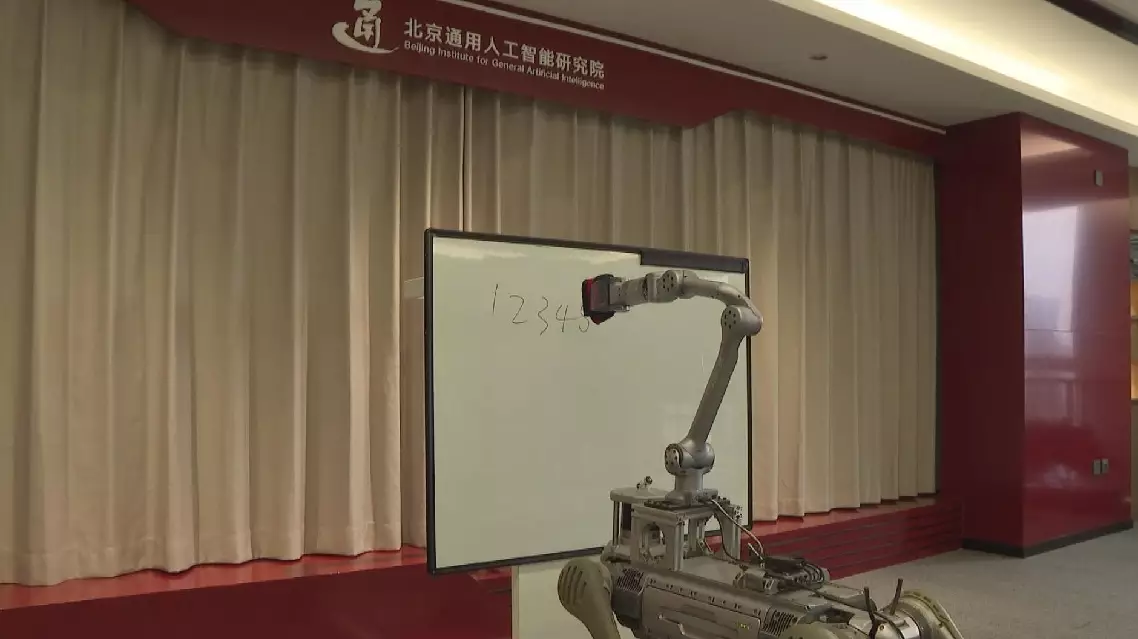
Chinese researchers propose groundbreaking model to fuse vision and touch in robots
China's expanding ties with the Global South have pushed trade growth far beyond the global average despite the tariff pressure from the U.S., according to experts.
"Whilst the Trump tariffs ultimately led to a significant drop-off in Chinese exports to the United States and vice versa, the trading relationships across much of the rest of the world continue to grow, and China's trading relationships across the Belt and Road Initiative countries, as well as with the Global South, more broadly speaking, has grown at rates far greater than global trade growth as a whole. And we see that evidenced by the latest data. When we break that down, we see that has been underpinned by the developments in high-technology products in particular, whether it's EVs, whether it's even in semiconductors, as well as photovoltaic panels, etc.," said Dr. Warwick Powell, an adjunct professor at the Queensland University of Technology, in a TV interview with China Global Television Network (CGTN) on Thursday.
"And you've got to look at the places where the growth is taking place. Africa, I think, is a very interesting case in point, because the kinds of things that China has been exporting and expanding in terms of its exports are all about African economic development -- its machinery, its energy systems, its technology, and this really goes to delivering on China's broader strategic ambition as an emerging great power to be an enabling great power, supporting the development of its partners around the world," he added.
Qian Jun, executive dean of International School of Finance at Fudan University, attributed the trade growth to Chinese firms' endeavor to tap into key regions like ASEAN, Latin America, the Middle East and Africa.
"The main increase of export comes from, as we have discussed, these new areas: The ASEAN economy -- southeast Asia remains the most important trading partner -- and also Latin America, the Middle East, and these [other such] new regions. So, the exporters of the Chinese companies are also very good at adjusting their destinies, their strategies, how to market their goods and services, so that the reliance on the U.S., for example, has gone down a lot," Qian said.
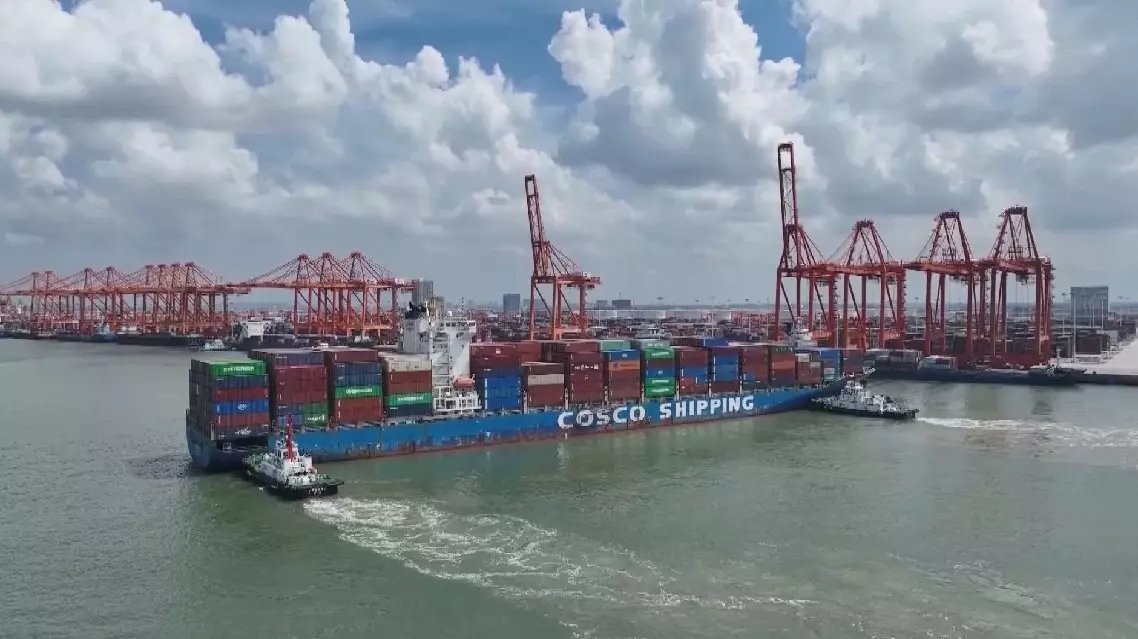
China's trade momentum increasingly powered by Global South: experts