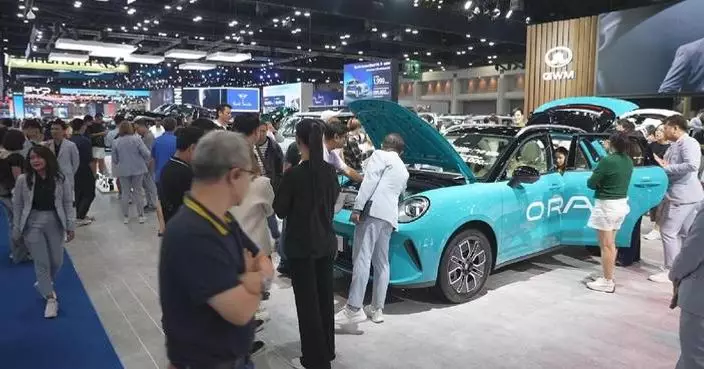
Global businesses have flocked to the China International Import Expo (CIIE) for product debuts, seeing it as a showcase of innovation and a gateway to deeper engagement with China's massive domestic market.
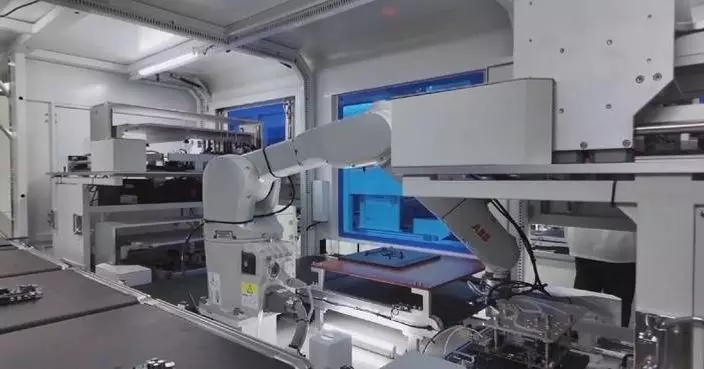
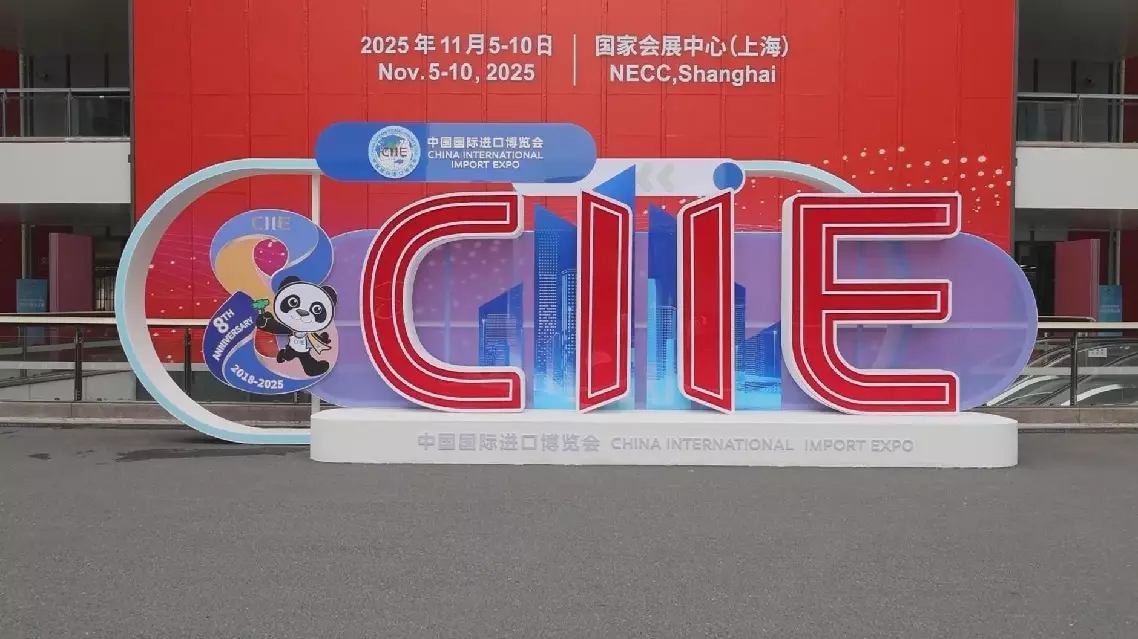
Running from Nov 5 to 10 in the east China megacity of Shanghai, this year's CIIE featured debuts of 461 products, technologies, and services from global companies.
A key advantage of the CIIE, according to global business executives, is that it provides a chance for them to test their prototypes directly with Chinese consumers.
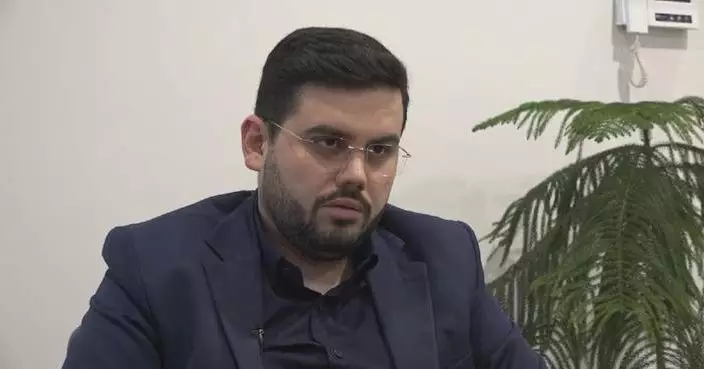
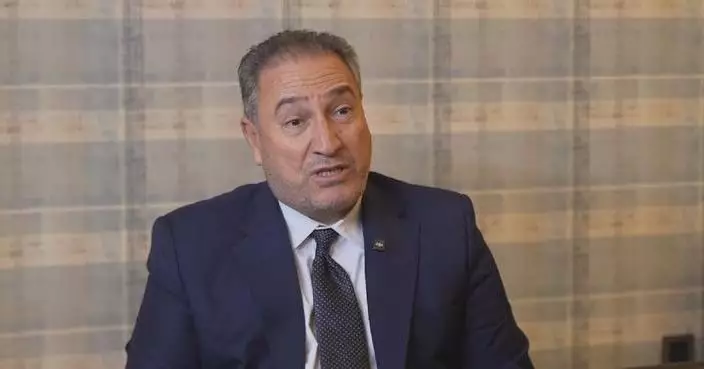
"So CIIE is like a laboratory. We have thousands of people come here every year, right? And we're able to show some innovation, and we're also able to get direct feedback from them. It was three years ago when we showed this product here as a prototype, and we got such good, positive feedback that we were able to launch a real product from this concept within one year," said Frank Hammes, Global CEO of the Swiss air purification company IQAir.
"We have brought over 40 new products and solutions here this year. In recent years, through CIIE, we have launched many new products, which are very well received in the market. For example, our quantum platform introduced in 2023 has already been successfully implemented in China," said Xu Minda, Vice President, Strategy and Chief Marketing Officer at GE Healthcare.
By directly collecting feedback from Chinese consumers, companies can be better inspired to upgrade and innovate.
"Chinese customers, personally speaking, are the most demanding in the world. For high-tech innovators, that's a blessing. The higher and more special the customers' demands are, the more innovative technologies we can develop. It is a great opportunity for us," said Yu Feng, President of Honeywell China, an automation and control solutions provider.
"The Chinese market is not only a sales market, but also a source of inspiration for innovation. Chinese consumers are quite demanding. We hope to use the CIIE platform to showcase our products, gather feedback, and eventually carry out research, development, and manufacturing in China," said Cai Menghong, President of Herbalife China, a nutrition manufacturer.
As one of China's representative expos, this CIIE has attracted 4,108 overseas exhibitors from 155 countries, regions and international organizations as well as representatives from Chinese agencies and government authorities this year. The grand gathering provides a chance for businesses to reach out.
"For us, it's really a great opportunity to meet government representatives, industry experts, but also peers, we can exchange. And also for us it's a super good opportunity to showcase all of our products. And usually these shows, they only have one focus, but here we can show it all," said Martin Fischer, President and CEO of ZEISS Greater China.
"[CIIE] really creates an environment where companies like ours can bring new technology to China. What's important today is that we announced that we have a partnership with an ice company here, local in China. We're really looking forward to localization with that product, but also many more as we continue to grow in China," said Rebecca Seidel, Senior Vice President of U.S. based pharma-tech company Medtronic and President of the company's Cardiac Ablation Solutions Operating Unit.
"We value the spillover benefits of CIIE. Today, we signed a cooperation agreement with the Academy for Clinical Innovation and Translation of Shanghai. We hope to leverage the high-level strategic talent and patient resources in leading cities such as Beijing and Shanghai to enhance clinical research in China," said Wang Li, Senior Vice President of Eli Lilly, another pharma giant in the U.S.
Global businesses see CIIE as gateway to engagement with Chinese market
Chinese Foreign Minister Wang Yi said on Tuesday that mediation efforts of the Pakistani side regarding the Middle East tensions are in the common interests of all parties.
Wang, also a member of the Political Bureau of the Communist Party of China Central Committee, made the remarks in his talks with Pakistani Deputy Prime Minister and Foreign Minister Mohammad Ishaq Dar in Beijing.
During their talks, the two sides exchanged views on current international issues and regional conflicts.
Wang welcomed the visit of the Pakistani side to Beijing for discussion on easing tensions in the Middle East, just after its holding of a quadrilateral foreign ministers' meeting in Islamabad.
He said China supports and looks forward to Pakistan playing a unique and important role in easing the situation and resuming peace talks. This process is no easy task, and Pakistan's mediation efforts are in line with the common interests of all parties, Wang added.
He noted China is willing to make joint efforts with Pakistan to end the hostilities as soon as possible, create opportunities for peace and open the window for peace talks.
On bilateral ties, Wang said this year marks the 75th anniversary of the establishment of diplomatic relations between China and Pakistan, calling on both sides to implement the important consensus reached by the leaders of the two countries and constantly advance the building of a China-Pakistan community with a shared future.
For his part, Dar said the Pakistan-China friendship is precious and deeply rooted in people's hearts, adding that Pakistan is willing to work with China to promote the continuous development of the all-weather strategic cooperative partnership between the two countries.
Dar thanked China for supporting Pakistan's mediation of the situation in Iran, adding that the current conflict has disrupted international energy supplies and caused heavy damage to developing countries.
Noting that solutions can only be found through negotiation, Dar said Pakistan is willing to strengthen communication and coordination with China to push all parties to start peace talks as soon as possible and restore regional peace.
The two sides also put forward a five-point initiative for restoring peace and stability in the Gulf and the Middle East region:
I. Immediate cessation of hostilities: China and Pakistan call for immediate cessation of hostilities and utmost efforts to prevent the conflict from spreading. Humanitarian assistance must be allowed to all war-affected areas.
II. Start of peace talks as soon as possible. Sovereignty, territorial integrity, national independence and security of Iran and the Gulf states should be safeguarded. Dialogue and diplomacy is the only viable option to resolve conflicts. China and Pakistan support the relevant parties in initiating talks, with all parties committing to peaceful resolution of disputes, and refraining from the use or the threat of use of force during peace talks.
III. Security of nonmilitary targets. The principle of protecting civilians in military conflict should be observed. China and Pakistan call on parties to the conflict to immediately stop attacks on civilians and nonmilitary targets, and fully adhere to International Humanitarian Law, and stop attacking important infrastructure, including energy, desalination and power facilities, and peaceful nuclear infrastructure, such as nuclear power plants.
IV. Security of shipping lanes. The Strait of Hormuz, together with its adjacent waters, is an important global shipping route for goods and energy. China and Pakistan call on the parties to protect the security of ships and crew members stranded in the Strait of Hormuz, allow the early and safe passage of civilian and commercial ships, and restore normal passage through the Strait as soon as possible.
V. Primacy of the United Nations Charter. China and Pakistan call for efforts to practice true multilateralism, to jointly strengthen the primacy of the United Nations, and to support the conclusion of an agreement for establishing a comprehensive peace framework and realizing lasting peace based on the purposes and principles of the UN Charter and international law.
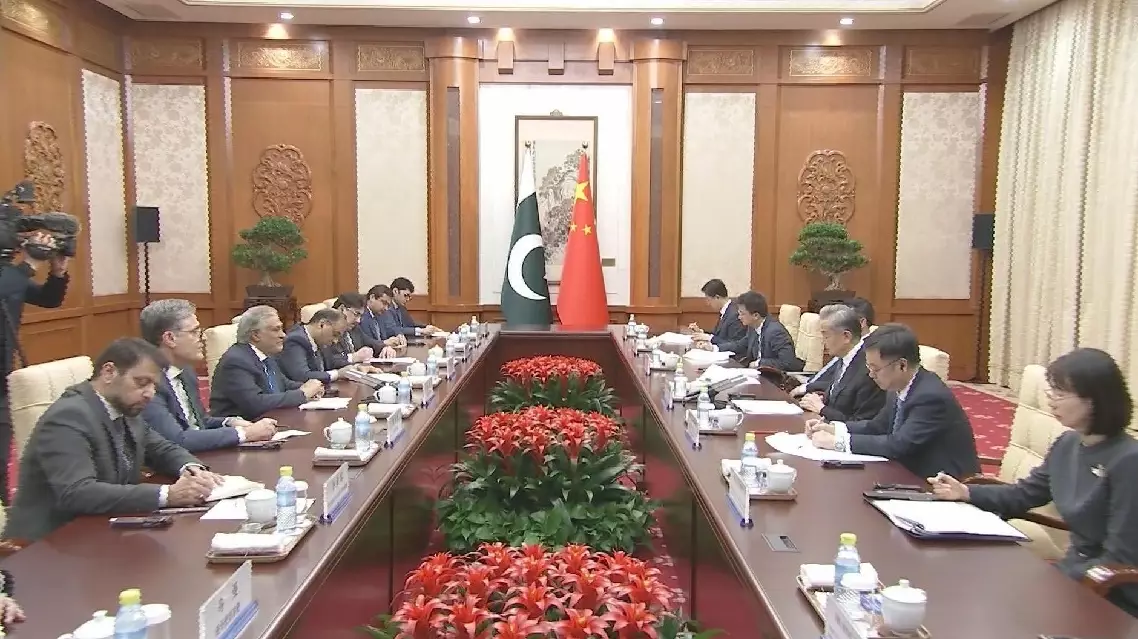
Pakistan's mediation efforts in common interests of all parties: Chinese FM
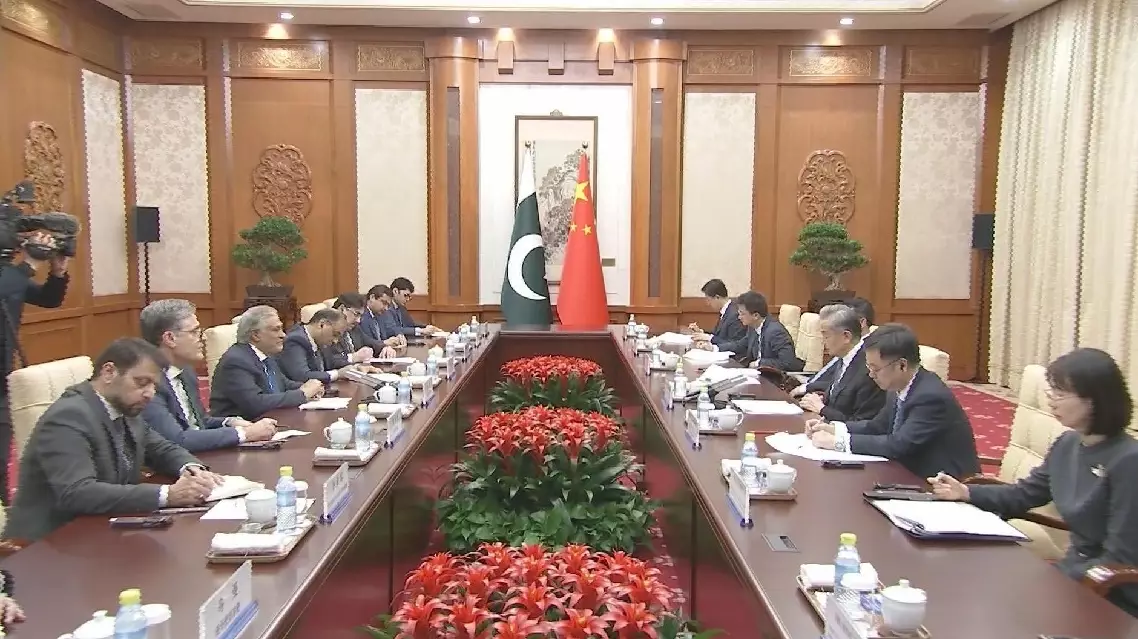
Pakistan's mediation efforts in common interests of all parties: Chinese FM