A growing number of voices from across Japanese political and academic circles have sharply criticized recent comments by Prime Minister Sanae Takaichi, warning that her statements could jeopardize regional stability and damage Japan's own interests.
Takaichi has said that the Chinese central government's "use of force on Taiwan" could constitute a "survival-threatening situation" for Japan and implied the possibility of Japan's armed intervention in the Taiwan Strait. Despite multiple representations from China, the Japanese government has refused to retract the remarks.
Ozawa Ichiro, a lawmaker from the Constitutional Democratic Party -- the largest opposition party -- said Takaichi's aggressive rhetoric could trigger a series of negative consequences, including deterioration of China-Japan relations, worsening public sentiment, reduced bilateral trade, and restrictions on people-to-people exchanges.
Tanaka Hitoshi, former deputy minister for foreign affairs, cautioned that matters such as Japan's involvement in the Taiwan Strait situation or revising the country's "three non-nuclear principles" are issues tied to the nation's survival and must not be spoken of lightly. He warned that if Takaichi continues with such reckless behavior, Japan could be led into an irreparable crisis.
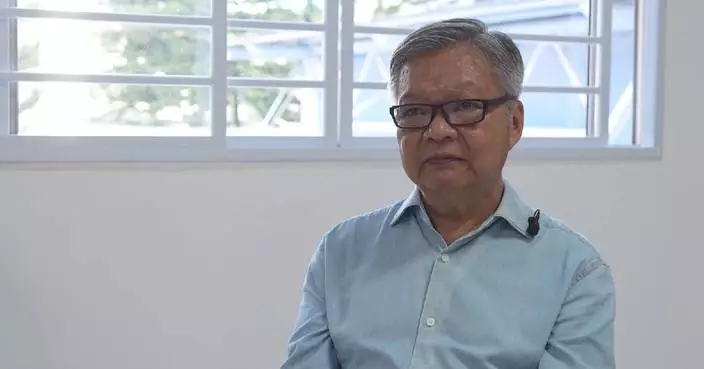
"All Japanese experts I know, especially those who understand Japan-China relations well, believe that Takaichi's remarks this time have very serious problems. Takaichi should immediately retract her erroneous comments," said Takamura Noriyuki, vice president of Japan-China Relations Society.
Recalling the 1972 normalization of diplomatic ties between China and Japan, Takamura stressed the importance of honoring the commitments set out by then Chinese Premier Zhou Enlai and then Japanese Prime Minister Kakuei Tanaka.
"It is clearly written that Japan acknowledges 'one China.' 'One China' refers to the Government of the People's Republic of China -- this was explicitly agreed in the document. As for Taiwan, the document states that Taiwan is an inseparable part of the territory of the People's Republic of China -- this is China's position, and the Japanese government respects it. It is clearly recorded in the document on the normalization of China-Japan relations. Therefore, this is the most fundamental basis of Japan-China relations. It is extremely important for both sides to abide by and uphold this foundation," he said.
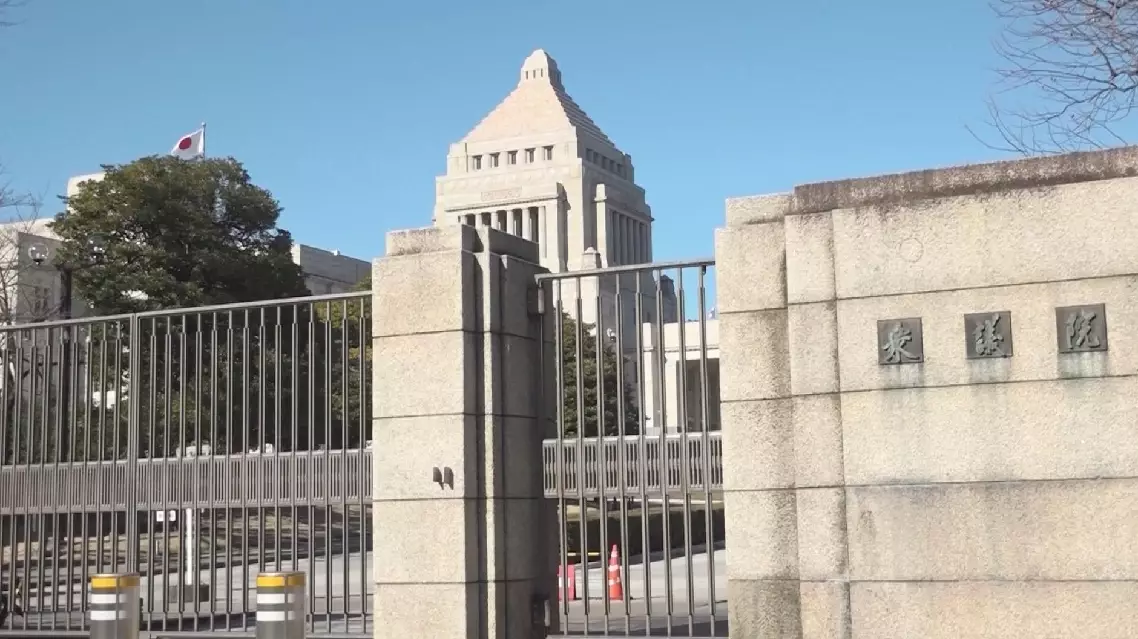
Japanese public figures criticize Takaichi's remarks as harmful to regional stability
Ghanaian President John Dramani Mahama has underscored the need for the international community to properly recognize the historical injustices committed against Africa and support efforts to advance reparations for Africans and people of African descent.
Mahama made the remarks in an interview with the China Media Group (CMG) which was aired Friday and recorded during the Ghanaian President's trip to Beijing in October.
Earlier this year, Mahama had issued a call for collective action in securing justice for Africans and individuals of African descent through reparations at the 38th Ordinary Session of the African Union.
Located in West Africa along the northern shore of the Gulf of Guinea and bordered by the Atlantic Ocean to the south, Ghana boasts a more than 500-km coastline and abundant agricultural, fishery, forestry and mineral resources. Yet its history, like much of the African continent, has been deeply scarred by centuries of foreign aggression.
From the 15th century onward, Western colonial powers invaded coastal areas of what is now Ghana, plundering resources and conducting the slave trade, casting a long colonial shadow over the African continent which hung for centuries.
In 1955, the successful convening of the Bandung Conference -- which gathered representatives of Asian and African states in Indonesia -- ignited a new wave of national liberation movements these continents, accelerating the collapse of the global colonial system.
Ghana's independence in 1957 lit the first torch of freedom in sub-Saharan Africa and was hailed as the dawn of Africa's awakening.
Africa's first tragedy, the transatlantic slave trade, constituted an extremely grave atrocity, Mahama said.
During that period, an estimated 12 to 15 million Africans were forcibly taken from the continent and sent to the Caribbean, the Americas and Europe. They contributed to the building of modern Western civilization, yet received no compensation for their labor, whether working on sugar plantations or constructing railways, roads and bridges, he noted.
Mahama outlined his wish that the United Nations takes action to recognize the slave trade as "the greatest crime against humanity" and takes steps to ensure reparations are paid back to the descendants of those who suffered.
"We believe that first and foremost, it should be recognized as the greatest crime against humanity. We must condemn the activity of slavery of the people who were shipped to what I call the 'New World', that's the Western world. It's estimated that as many as 2 million did not arrive at the destination because they were either too sick or they died on board, and they were just tossed over into the ocean. That was genocide. And so it's an issue that the first step is for us to accept. And so Ghana wants to move a motion in the UN next year asking the world to recognize the slave trade as the greatest crime against humanity. And so we'll continue to push on the African [Union] Champion on Reparations when I spoke even at the UN, I raised the issue of reparations and so I do think that that is to do with slavery," he said.
Mahama also stressed the impact of colonialism, which further entrenched injustice and led to global inequality as African nations were ruthlessly exploited.
"With regards to colonialism, the Berlin Conference (1884–1885) partitioned Africa and the European nations took colonies in Africa, ran those colonies, exploited their natural resources and transferred those natural resources, oil palm, gold, minerals, cocoa and other products, to develop their countries. And it's only from the late 1950s that countries like Ghana got independent. And so that was an injustice. Colonialism was an injustice against African countries," he said.
Ghanaian president urges reparative justice for Africa, citing slavery, colonial exploitation