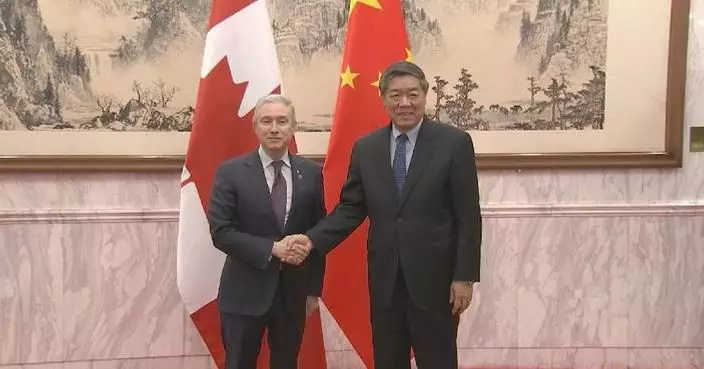
Shanghai is stepping up efforts to increase spending by international visitors as it seeks to boost consumption and accelerate its transformation into a global consumption center -- a trend visible in the recent increase of tourists from other countries entering China through the city's ports around the Spring Festival period.
The city will enhance facilitation for inbound tourism, departure tax refunds and cross-border payments to further boost inbound consumption, according to the municipal government work report delivered at the annual session of the local legislature.
Shanghai, a major destination for international travelers, registered 9.36 million inbound visits last year, up nearly 40 percent year on year and a new annual record.
The travel boom can be attributed to the relaxed visa and travel facilitation policies. Data from the National Immigration Administration shows that in 2025, China expanded its unilateral visa-free entry to citizens of 48 countries, while the number of countries offering reciprocal visa exemptions rose to 29.
Tax refund activity has also seen a surge. Data from the Shanghai Municipal Tax Service shows that in 2025, departure tax refund applications filed by international visitors quadrupled from the previous year, while total sales and refund amounts both grew by 80 percent. The number of registered tax refund stores in the city exceeded 1,800, reflecting the city's effort to facilitate inbound spending.
Across global social media platforms, terms like "Becoming Chinese" and "China Shopping" have gained traction, reflecting growing interest in immersive, hands-on experiences in China.
On Nanjing Road Pedestrian Street, some of them lined up to buy trendy Chinese collectibles, while others browsed the flagship store of drone maker DJI in the Xintiandi commercial area, selecting high-tech products made in China. Such scenes have become increasingly common in Shanghai's international tourism landscape.
Beyond the city's main shopping districts, many international tourists are also seeking experience-based activities that highlight China's traditional culture and history.
The Spring Festival holiday, running from Feb 15 to 23, is expected to become another opportunity for international tourists to visit, with Shanghai emerging as one of the most prominent entry points
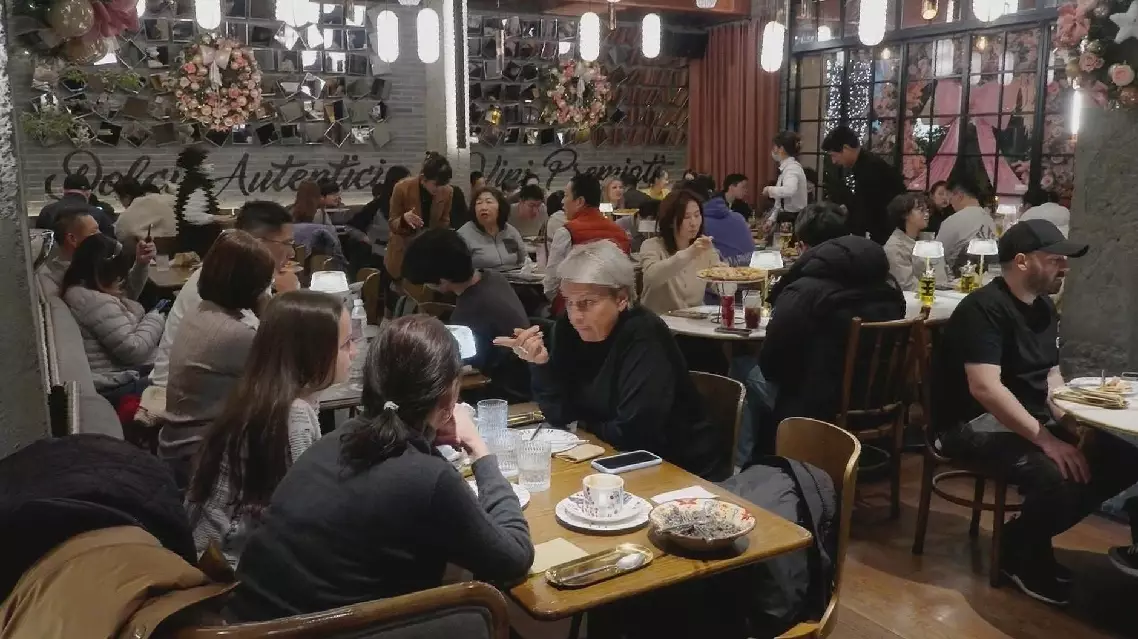
International tourists flock to China for Chinese New Year celebrations
China's real estate policies over the next five years in the country’s new economic plan, are set to place more emphasis on ensuring people's wellbeing, while emphasizing improved living quality in the quest for high-quality development of the real estate market, effectively meeting residents' demand for more comfortable housing conditions, according to Wu Jing, director of the real estate research center at Tsinghua University .
On Friday, China officially unveiled the outline of the 15th Five-Year (2026-2030) Plan for national economic and social development, which includes a focus on the real estate sector.
The outline calls for efforts to accelerate the development of a new model for real estate development and to improve the housing system, featuring multiple suppliers and various channels of support that encourage both rentals and purchases, to achieve a higher level of housing security.
Wu pointed out that the efforts signal that ensuring people’s well-being is a key development direction.
Meanwhile, the outline elaborates on the need to optimize the supply of affordable housing and puts forward more detailed requirements regarding the target groups, management processes and sources of affordable housing, and reforms to the housing provident fund system.
Wu said the core objective is to ensure people's housing needs are met.
"The outline specifies a more refined housing security system, proposing requirements such as improving the entire process of affordable housing management, exploring the orderly conversion and coordinated use of affordable housing for both rental and purchase purposes, and deepening the reform of the housing provident fund system. It also requires the housing security system to place greater emphasis on families with multiple children. All of these reflect that the coverage of the housing security system is expanding, its precision is improving, and it will be better integrated with population policies," he said.
In addition to ensuring people’s well-being, the outline of the 15th Five-Year Plan makes arrangements for promoting the stable and healthy development of the real estate market.
It urges efforts to improve basic systems for housing development, financing, and sales, and advance the sale of existing homes.
Meanwhile, it stresses local governments should be granted greater autonomy, making regulation more precise and effective, and more closely aligned with local needs.
Furthermore, it calls for building safe, comfortable, green and intelligent homes, and establishing a full life-cycle safety management system for housing.
"Most notably, the construction of basic systems has entered a substantial stage of advancement. Specific requirements are put forward, and measures are deployed to promote the sale of existing homes in a powerful and orderly manner. These are fundamental solutions to prevent risks and constitute the core institutional cornerstone for building a new model of real estate development," said Wu.
To effectively implement the policies outlined, pilot programs can be carried out in certain cities or projects and then gradually expanded, laying a solid foundation for the stable and healthy development of the real estate market, said Wu.
China to prioritize people's wellbeing, increase housing conditions in 2026-2030 Five-Year Plan