The United States will find itself at a significant disadvantage as the conflict with Iran threatens to develop into a long and protracted war, according to a U.S. professor, who warned the rest of the world could pay the price as Iran now enters survival mode.
John Mearsheimer, a political scientist and intentional relations expert who is a professor at the University of Chicago, made the stark warning as the crisis sparked by U.S.-Israeli strikes on Iran stretched into its 13th day on Thursday.
Joint military strikes launched by the U.S. and Israel on Iran on Feb 28 have triggered a sharp escalation across the Middle East as Iran has retaliated, setting off waves of missile exchanges which have resulted in mounting casualties and far-reaching political and security repercussions.
U.S. President Donald Trump claimed on Monday that the U.S. military operation against Iran is "very far ahead of schedule," but observers note that while the United States and Israel have achieved some tactical gains on the battlefield, the escalation in fighting has dashed U.S. hopes for a quick victory.
More than a dozen nations across the Middle East have been affected so far while the shockwaves are being felt across the globe with huge disruption brought by airspace closures and threats to shipping along the Strait of Hormuz, a vital passageway that carries about one-quarter of global seaborne oil trade, along with significant volumes of liquefied natural gas and fertilizers.
In an exclusive interview with the China Global Television Network (CGTN), Professor Mearsheimer warned the war may be heading for a stalemate which could spell trouble for the Trump administration.
He predicted that if Iran can continue to endure the current barrage of airstrikes, the country could even gain the upper hand with its strategic advantage of exerting economic pressure through the chaos caused on the Strait of Hormuz.
"We're now talking about a protracted war. We're now talking about a long war. And in this long war, the United States is going to be at a significant disadvantage. It's very important to understand that once Iran withstands the initial attacks and the war gets drawn out, Iran is in a much stronger position than the United States and Israel, because all Iran has to do to win this war is to survive, and at the same time, continue to inflict punishment on Israel, the United States and its allies in the Arab world, and to continue to shut down the Strait of Hormuz and cause great pain not only in the Middle East, but around the world," said Mearsheimer.
He also warned that the U.S. could find itself in a similar quagmire in Iran as it did in Vietnam and Afghanistan if the conflict drags on.
"The fact that the United States was unable to win a quick and decisive victory tells you that the United States is in trouble as this war settles into a protracted war. This is like the Vietnam war. The United States, as I said, always won the battles, but the United States lost the war. And the same thing, by the way, was true in Afghanistan," he said.
More than 1,300 civilians have been killed and over 9,600 civilian sites destroyed in Iran since the U.S.-Israeli strikes began, Amir Saeid Iravani, Iran's ambassador and permanent representative to the United Nations, said on Tuesday.
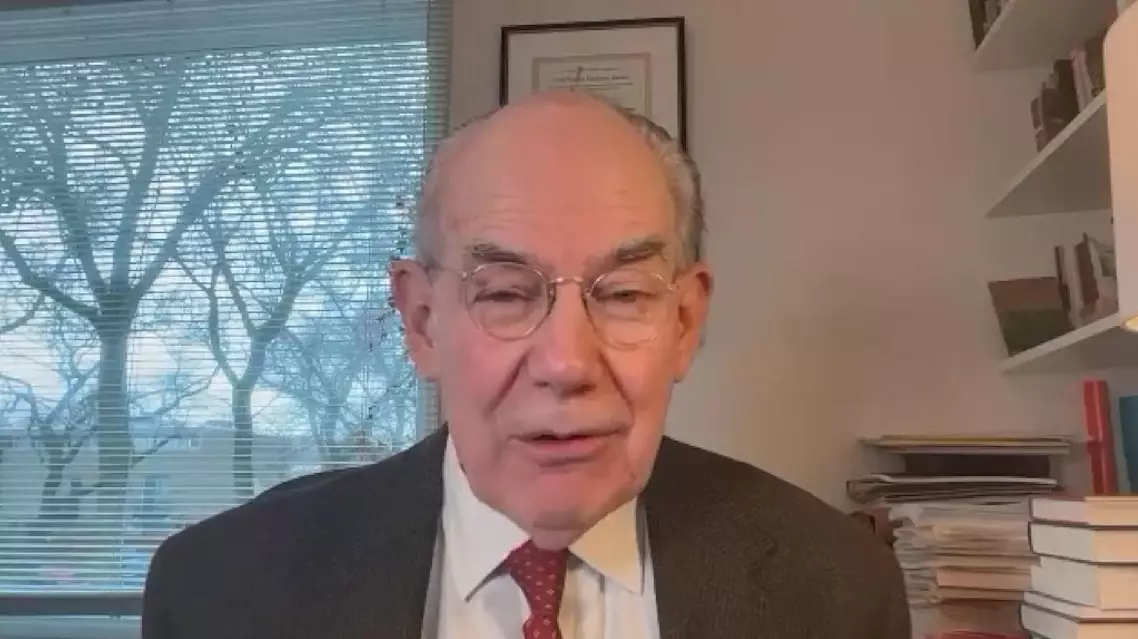
US "in trouble" if Iran conflict settles into long, protracted war: US professor