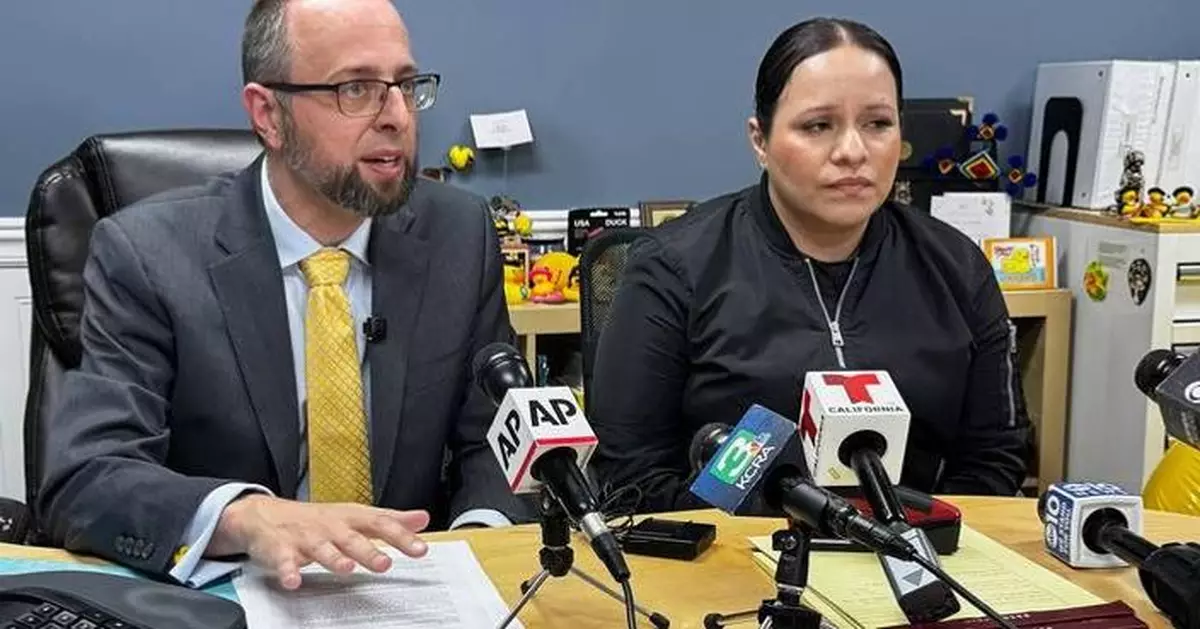
The attorney for a man shot by U.S. Immigration and Customs Enforcement agents during an arrest in central California said Thursday that his client was recovering after three surgeries for multiple gunshot wounds and that he denies being a gang member.
Attorney Patrick Kolasinski said federal prosecutors have told him that Carlos Ivan Mendoza Hernandez is not under arrest, raising questions about why he was the target of an enforcement action. No one under that name from El Salvador is in ICE detention, according to the agency’s online detainee locator. The U.S. Department of Homeland Security has not responded to inquiries about Kolasinki's statements.
Tuesday’s encounter was among a string of shootings during the Trump administration’s aggressive push to detain and deport immigrants in the country illegally, about which questions have been raised with federal immigration officials.
DHS has said ICE agents fired defensive shots at Mendoza when he tried to drive into them after he was pulled over on Tuesday. Officials said they were conducting an enforcement stop targeting Mendoza, 36, in Patterson, a city about 75 miles (120 kilometers) southeast of San Francisco. They described him as a suspected gang member wanted in El Salvador for questioning in connection to a murder.
Kolasinski told reporters that Mendoza was having difficulty speaking because he was shot in the jaw, but that he said he was never a member of a gang. Kolasinski said previously that his client has been stopped for minor traffic infractions but has no criminal record in the U.S. and is not the subject of an arrest warrant in El Salvador, where he was acquitted of murder.
Kolasinski said that the FBI was leading the investigation of the shooting and that ICE was not currently involved in Mendoza's case. The Department of Justice referred inquiries to the FBI, which said it couldn't comment on an active investigation.
Kolasinski said that agents fired on Mendoza while the car was stopped and he drove away to flee the gunfire. “He fled in a panic because he was being fired on," Kolasinski said. “He was not trying to hurt anyone ... he was just scared he was going to die.”
According to a Oct. 25, 2019 court document from a judge in El Salvador, Mendoza, who was 29 at the time, was acquitted after being accused of murder and ordered immediately released. The document lists 10 others who were convicted of various crimes from aggravated robbery to murder, and mentions at least one of them was a member of the 18th Street Gang. But there is no mention of Mendoza belonging to a gang or being accused of carrying out gang activity in the document.
In the California ICE shooting, dashcam footage obtained by KCRA-TV shows three officers standing around a vehicle stopped on the side of a road. One of the officers appears to be touching the driver-side window when the car begins to back up and turn, hitting a vehicle behind it. At least two of the agents have weapons drawn, pointing at the car. The driver then pulls forward toward where the men are standing and turns sharply, driving over the roadway median.
The video has no sound and it's unclear when the shots were fired or if words were said.
Mendoza’s fiancée was able to speak with him Wednesday before a surgery and again Thursday morning, Kolasinski said.
Kolasinski said Mendoza, a dual citizen of El Salvador and Mexico, came to the U.S. in 2019 but he said he did not know his legal status nor how he arrived to the country.
The attorney said his client works as a laborer to repair fire damage. He has a 2-year-old daughter and is engaged to a U.S. citizen, he said.
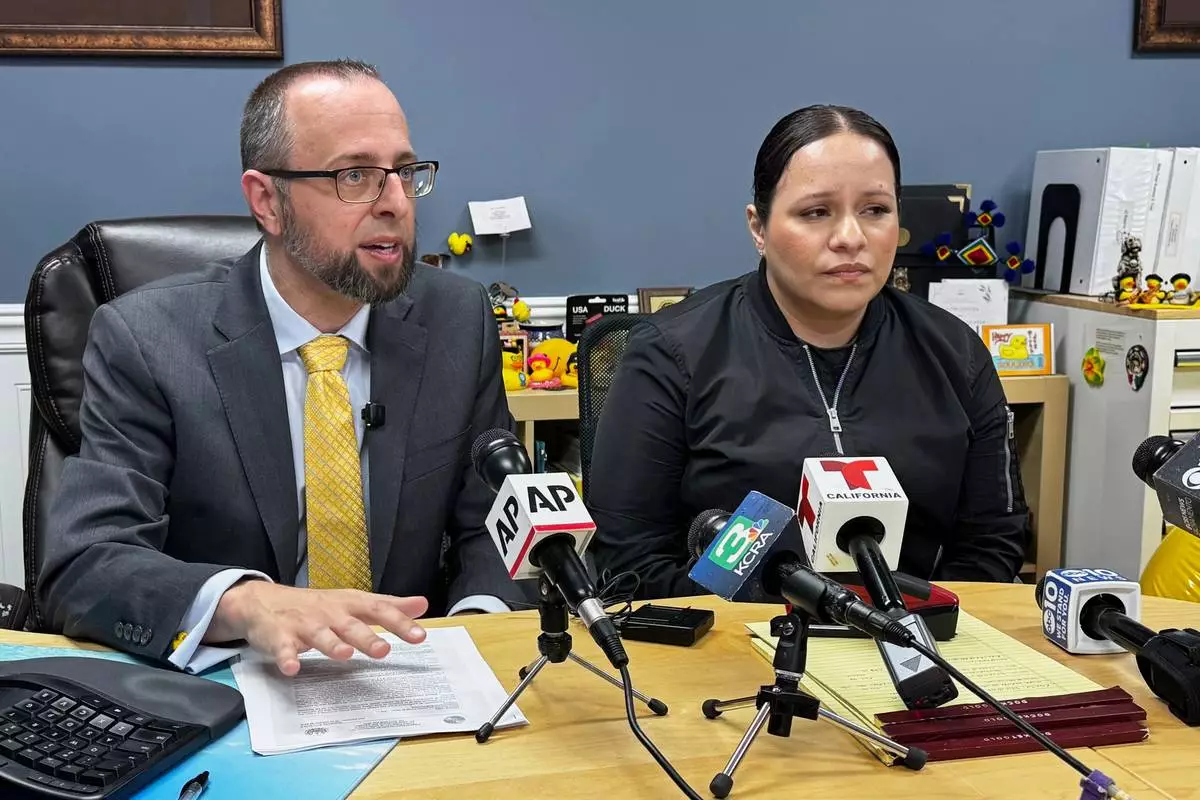
Patrick Kolasinski, attorney for Carlos Ivan Mendoza Hernandez, speaks at a news conference accompanied by his client's girlfriend, Cindy, in Modesto, Calif., Wednesday, April 8, 2026. (AP Photo/Terry Chea)
The Justice Department is investigating the NFL for potential anticompetitive practices, according to a government official.
The official, who was not authorized to discuss an ongoing investigation by name and spoke on condition of anonymity Thursday, said the investigation is “about affordability for consumers and creating an even playing field for providers.”
The investigation was first reported by The Wall Street Journal.
The NFL has not received a notification that the league is being investigated, according to two other people with knowledge of the situation. Those people spoke on condition of anonymity because they are not authorized to speak on possible legal matters.
The investigation comes amid increasing federal scrutiny of the amount of money fans are paying to watch sports on television. The Federal Communications Commission, for example, is seeking public comments on the ongoing shift of live sports from broadcast channels to streaming services.
The NFL said in a statement Thursday that over 87% of its games are available on broadcast television, including all that are played in a team's local market.
“The NFL’s media distribution model is the most fan and broadcaster-friendly in the entire sports and entertainment industry. The 2025 season was our most viewed since 1989 and reflects the strength of the NFL distribution model and its wide availability to all fans,” the league said in its statement.
Utah Sen. Mike Lee, chair of the Senate judiciary subcommittee on antitrust, competition policy, and consumer rights, wrote a letter to the Justice Department and the Federal Trade Commission on March 3 urging them to review whether the NFL’s distribution methods are in line with the Sports Broadcasting Act, which grants limited antitrust immunity to allow teams to collectively license game broadcasts to national networks.
“The modern distribution environment differs substantially from the conditions that precipitated this exemption. Instead of a small number of free broadcast networks, the NFL now licenses games simultaneously to subscription streaming platforms, premium cable networks, and technology companies operating under different business models,” the Republican senator wrote. “To the extent collectively licensed game packages are placed behind subscription paywalls, these arrangements may no longer align with the statutory concept of sponsored telecasting or the consumer-access rationale underlying the antitrust exemption.”
Lee said in his letter that football fans spent almost $1,000 on cable and streaming subscriptions. Forbes estimated the cost of watching every NFL game via streaming last season at $765.
The NFL aired games last season on CBS, NBC, ABC/ESPN/ESPN+, Fox, NFL Network, Amazon Prime Video, Netflix and YouTube TV.
The league averages nearly $11 billion per season in revenue from its media deals. That could increase since the sale of Paramount to Skydance Media allows the league to renegotiate its deal with CBS.
The rights deals go through 2033 with most outlets and 2034 with ESPN. The league has an opt-out clause after the 2029 season, which it is likely to exercise since 83 of the top 100 broadcasts last year were NFL games, according to Nielsen.
The Sports Broadcasting Act exemption passed in 1961 applies only to broadcast television. Courts have ruled in the past that it does not apply to other media, including cable, satellite and streaming.
The law includes a rule allowing blackouts of local games, which still applies to out-of-market packages sold by the league. The NFL ended local TV blackouts, which applied to games within 75 miles of a team’s market if they did not sell out 72 hours before kickoff, after the 2014 season.
Last year, the House Judiciary Committee requested briefings from the NFL, NBA, NHL and MLB on whether antitrust exemptions should still be granted for coordinating their broadcast television rights.
All four of the major North American professional sports leagues have deals with streaming platforms.
In 2024, a jury in U.S. District Court in Los Angeles ruled the NFL violated antitrust laws in distributing out-of-market Sunday afternoon games on a premium subscription service and awarded $4.7 billion in damages.
A federal judge overturned the verdict in the class-action lawsuit because the testimony of two witnesses for the subscribers had flawed methodologies and should have been excluded.
The lawsuit covered 2.4 million residential subscribers and 48,000 businesses in the United States who paid for the “Sunday Ticket” package on DirecTV of out-of-market games from the 2011 through 2022 seasons.
Because damages can be tripled under federal antitrust laws, the NFL could have been liable for $14,121,779,833.92.
AP NFL: https://apnews.com/hub/nfl
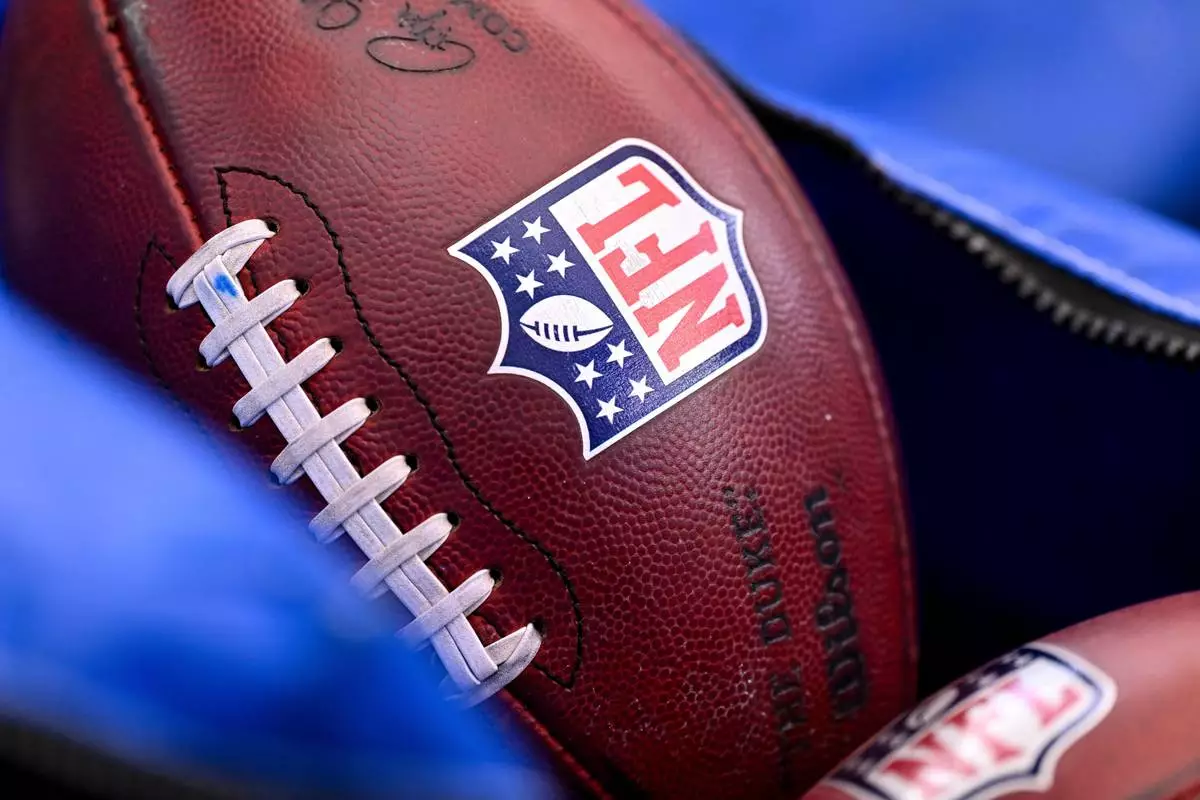
FILE - A detail view of the NFL shield on a football prior to an NFL football game between the Houston Texans and the Indianapolis Colts on Jan. 4, 2026, in Houston. (AP Photo/Maria Lysaker, File)
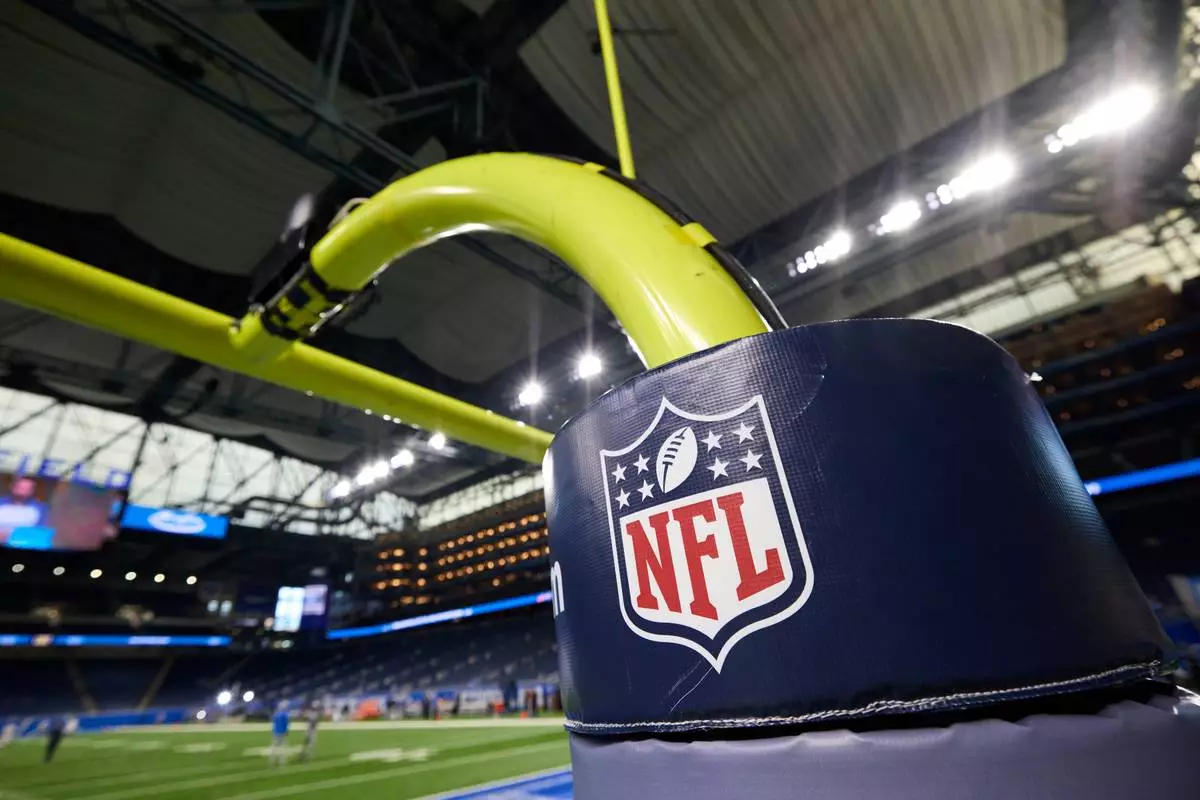
FILE - In this Aug. 13, 2021, file photo, an NFL logo is displayed on a goal post pad during an NFL preseason football game between the Buffalo Bills and Detroit Lions in Detroit. (AP Photo/Rick Osentoski, File)