Skip to Content Facebook Feature Image

When Foreigners Taste Chongqing's Fiery Hot Pot, It Becomes So Much More Than Just a "Chinamaxxing" Ritual

Blog

When Foreigners Taste Chongqing's Fiery Hot Pot, It Becomes So Much More Than Just a "Chinamaxxing" Ritual
Blog

Blog

When Foreigners Taste Chongqing's Fiery Hot Pot, It Becomes So Much More Than Just a "Chinamaxxing" Ritual

2026-08-30 10:30

If Chinamaxxing is, at its core, a kind of "ritual" for those drawn to the novelty of Chinese culture, then eating hot pot is an experience of genuine "participation." It requires no translators and no tour guides—just a pot of simmering broth, a table of fresh ingredients, and a group of people willing to gather around and share the meal. For many young foreigners visiting China for the first time, hot pot is far more than a mere meal; it is an introductory lesson in Chinese-style socializing. Add Chongqing's fiery red broth into the mix, and it becomes an adrenaline-pumping challenge that pushes human limits.

The "Bunker" Thrill of British Tourists

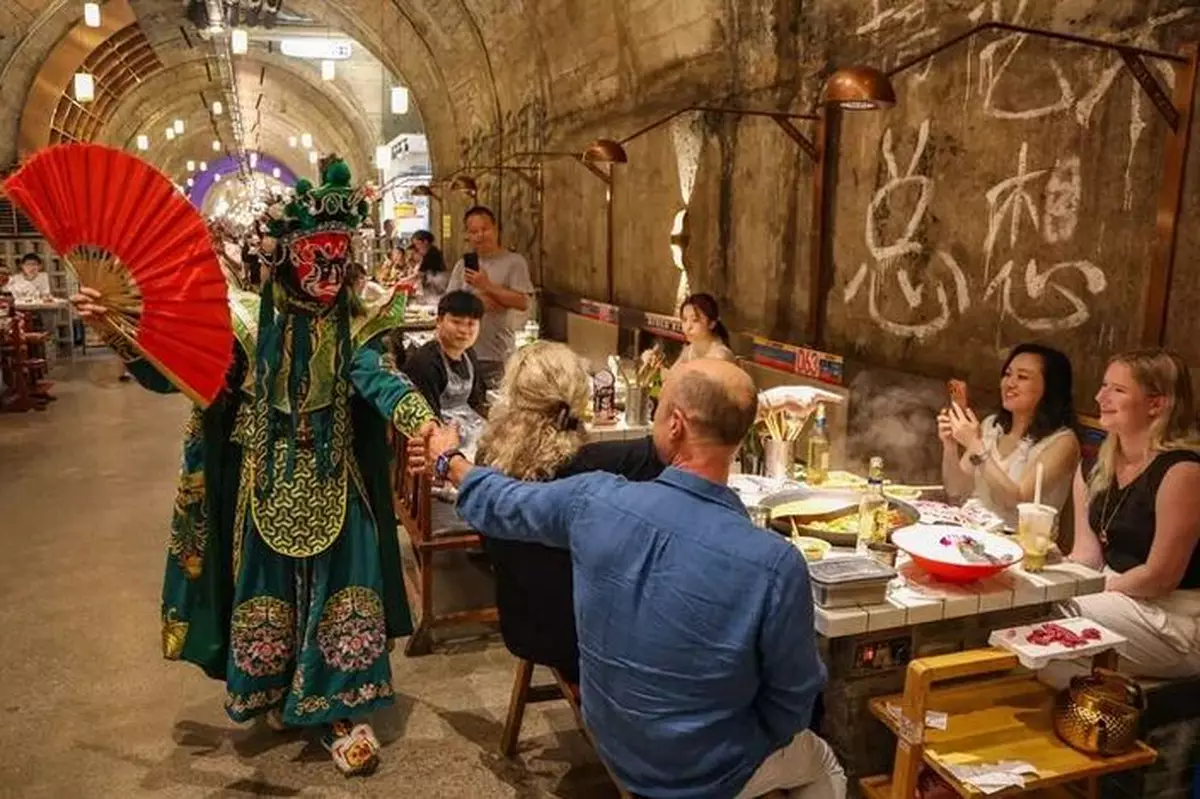
In the heat of midsummer 2026, temperatures in Chongqing hovered near 40°C, yet foreign tourists still crowded the streets. Wearing sunglasses and backpacks, they navigated the city's alleyways. In the Liangjiang New Area, a hot pot restaurant built inside a former air-raid shelter became a viral landmark for overseas visitors—offering a cool escape from the sweltering heat outside.
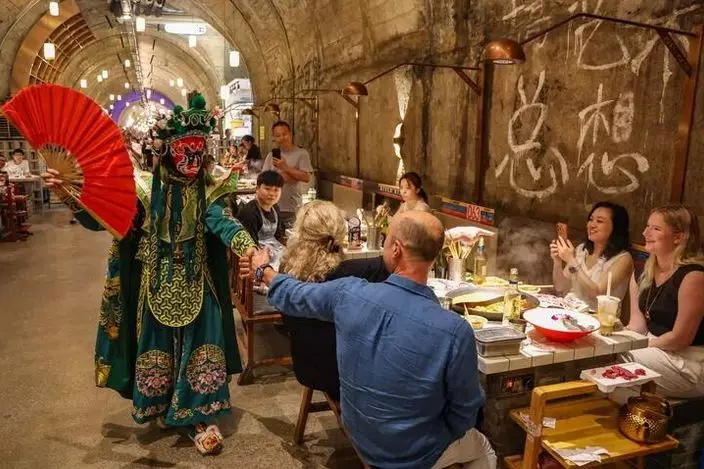
A bomb-shelter hot pot restaurant in Chongqing. (Source: Sina Finance)

A bomb-shelter hot pot restaurant in Chongqing. (Source: Sina Finance)

Inside, pots of red-oil broth bubbled fiercely. As tripe and sliced meats were plunged into the broth, clouds of fragrant, spicy steam rose into the air. In August 2026, Xinhua News reported on a British tourist named Cameron, who carefully mimicked local diners by dipping a piece of tripe into the boiling soup using the traditional "seven dips up, eight dips down" technique before coating it in sesame oil and popping it into his mouth. Within seconds, the intense heat had him gasping for breath and reaching for an iced drink. Yet, before his forehead had even stopped sweating, his chopsticks were reaching back into the pot.

"Hot pot hot, room cool!" he joked with a laugh, wiping sweat from his brow as his traveling companion captured the moment on video.

Cameron’s reaction is hardly unique. For Westerners accustomed to individual plated meals, the communal nature of hot pot presents a distinct form of culture shock: everyone dips into the very same pot using their own chopsticks. While this level of intimacy breaks standard Western dining etiquette, it is precisely this barrier-free way of eating that encourages young foreigners to let down their guard and slip naturally into the rhythms of Chinese hospitality.

Shoo Loong Kan in Dubai: Globalizing the Shared Table

The social appeal of hot pot has long crossed international borders. In Dubai, UAE, a Shoo Loong Kan hot pot restaurant opened inside a shopping mall in Dubai International City. The interior decor materials were imported directly from China, featuring traditional tiled roofs constructed right inside the complex to showcase classic Chinese architectural style.

According to People’s Daily Online, Clint, a beverage distributor who has lived in Dubai for over 40 years, brought his entire family to dine. Clint, who frequently travels to China on business and has developed a penchant for Sichuan hot pot, remarked: "Chinese food is an integral part of Chinese culture, and sharing a meal is the best way for friends to build deeper connections. I thoroughly enjoy having hot pot and singing karaoke with my Chinese friends." His four-year-old daughter added that her personal favorites were the freshly sliced beef and grouper fillets.

For Shiraze, a customer of Iranian descent, it was her very first hot pot experience. "I had no idea what to expect and was worried I might not get used to it," she admitted. "To my surprise, as soon as I stepped inside, the decor and dining atmosphere won me over. I was dining with a few business partners, and I loved the feeling of gathering around a steaming pot, chatting while cooking our food. With such a wide variety of sauces and ingredients, everyone gets exactly what they want."

Pan Guoyu, an investor in the Dubai location, noted that while the restaurant is situated in a predominantly Chinese neighborhood, 40% of its clientele now comes from all over the world. "We’ve noticed that international guests come here for two reasons: first, hot pot gives them a sense of ritual because they can control the heat and tailor flavors to their own liking; second, it allows them to immerse themselves in Chinese culture." To enhance the experience, the restaurant hosts traditional Sichuan opera face-changing acts, noodle-pulling demonstrations, and guzheng performances, while also offering traditional Chinese attire for guests to try on for photos. Private dining rooms bear historic names like "Brewing Wine with Green Plums," "Three Visits to the Thatched Hut," and "Oath of the Peach Garden." Whenever foreign guests ask about the meanings, staff members gladly share the underlying legends.
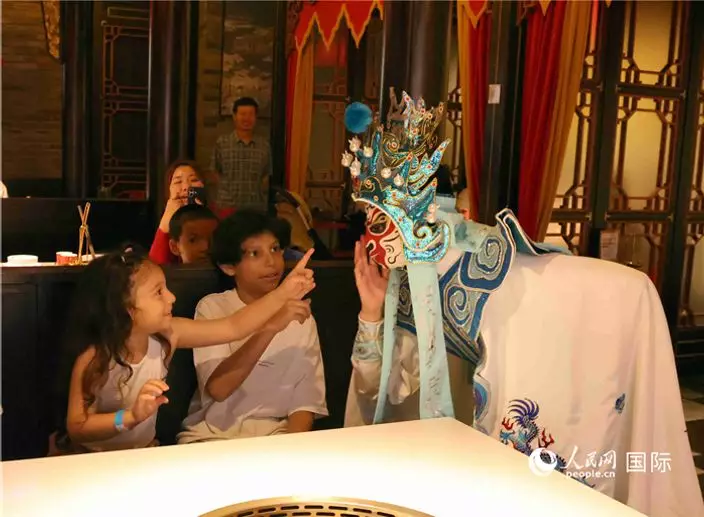
A Sichuan opera face-changing performance inside Shoo Loong Kan's Dubai store. (Source: People's Daily Overseas Edition)

A Sichuan opera face-changing performance inside Shoo Loong Kan's Dubai store. (Source: People's Daily Overseas Edition)

 An American Student's "Tripe Epiphany"

For many foreigners, hot pot is not only a test for the palate, but an expansion of how they view food ingredients. An American student living in China took to social media to share his personal "tripe discovery."

He confessed that when he first arrived in China, he felt hesitant about trying beef tripe. However, after taking a leap of faith, his perspective completely shifted: "When it's perfectly cooked, it's almost sparkling, as some would say, and truly melts in your mouth with a satisfying bite. It's not weird; it's wonderfully delicious."

He summed up the social joy of hot pot this way: "Imagine a large pot of simmering broth, often divided into different flavors, placed right in the center of your table. Around it, an array of fresh ingredients awaits: thinly sliced meats, various vegetables, noodles, tofu, and of course, different organ meats like beef tripe. The magic happens when you personally cook your chosen items in the boiling broth for just the right amount of time. It's interactive, social, and incredibly fun, making every meal a memorable event."
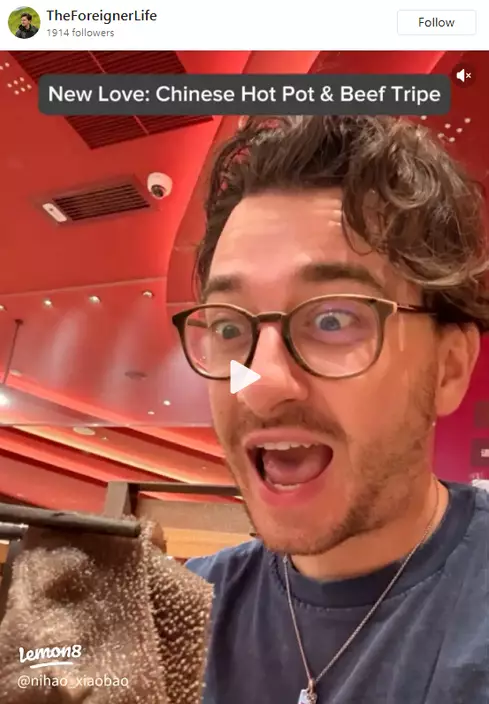
An American living in China documents his experience trying hot pot and beef tripe. (Source: Lemon8)

An American living in China documents his experience trying hot pot and beef tripe. (Source: Lemon8)

One Pot of Broth, A Hundred Conversations

The ultimate charm of hot pot lies in its ability to bypass cultural explanations entirely. It needs no translation and no guides—only a boiling pot of broth and a table wide enough for everyone to sit together. As young foreigners pick up chopsticks, practice the "seven dips up, eight dips down" technique, and reach back for more even while sweating from the spice, they are actively participating in a shared way of life. That single pot of bubbling broth serves as the most vivid conversation starter of all.


Chinamaxxing

** 博客文章文責自負,不代表本公司立場 **

If high-speed rail showcases China’s speed and mobile payments highlight its convenience, New Chinese Tea represents a softer, far more nuanced form of cultural outreach. Free of preachy rhetoric, it captivates through flavor and design alone—quietly reshaping the consumption habits of young people worldwide.

Global Viral Sensations: The Worldwide Craze for a Cup of Tea

In January 2026, Nayuki’s Tea opened its first West Coast location in Silicon Valley. On opening day, massive lines formed outside, stretching from the entrance down the main street. Customers faced wait times of over three hours, and sales topped US$94,000 in the first three days alone.

Located next to Apple’s headquarters, Nayuki’s Cupertino store sparked an instant frenzy, with queues stretching down the street and wait times exceeding three hours. (Source: Phoenix Network)

Located next to Apple’s headquarters, Nayuki’s Cupertino store sparked an instant frenzy, with queues stretching down the street and wait times exceeding three hours. (Source: Phoenix Network)

An Apple engineer waiting in line remarked, "My Chinese colleagues recommended Nayuki to me. I was surprised to see it so close to the office, so I had to come check it out." Another local resident, who had been waiting for two hours, laughed and shared, "I saw this huge line while passing by and got curious. I want to try the 'Little Green Bottle' series." (A line of tea drinks centered on health-conscious, light fruit and vegetable blends.)

Customers enjoying the "Little Green Bottle" series inside the Nayuki store. (Source: Phoenix Network)

Customers enjoying the "Little Green Bottle" series inside the Nayuki store. (Source: Phoenix Network)

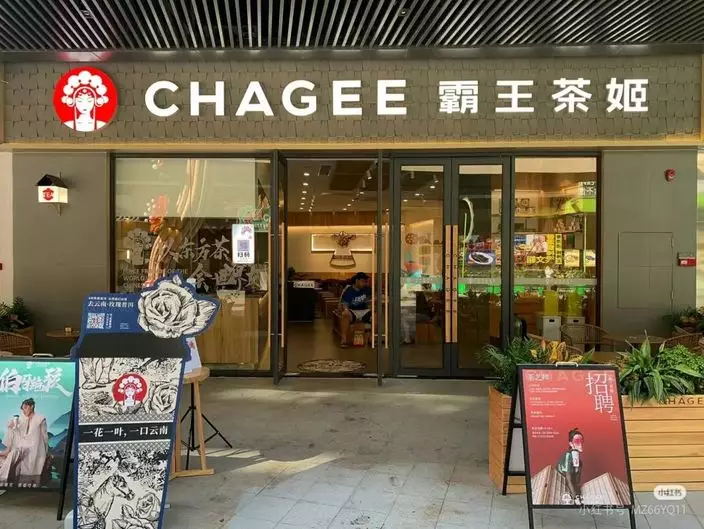
This is far from an isolated event. In Times Square, New York, HEYTEA sold over 3,500 cups on its opening day. In Seoul's Gangnam district, CHAGEE’s flagship store triggered a similar frenzy, with order wait times exceeding three hours during peak periods. In Thailand, local netizens noted that whenever they are near Siam Square, they always drop by the Jasmine Milk Tea store.

According to the 2026 Top 50 Chinese Catering and New Tea Brands Expanding Overseas report by the China Chain Store & Franchise Association, Mixue Ice Cream & Tea now boasts over 4,000 international locations. Meanwhile, official financial reports from CHAGEE show that its overseas footprint reached 345 stores by late 2025—with Malaysia leading the market, surpassing 200 stores in October 2025. Other brands, including HEYTEA, ChaPanda, Nayuki, Teasoon, and Jasmine Milk Tea, have also established multiple outlets across global markets.

A Singaporean’s "First Sip": From Customer to Brand Ambassador

In November 2024, Singaporean resident Qiu Huina walked into a CHAGEE store on Orchard Road and ordered a "Jasmine Green Milk Tea" (Boya Juexian).

"With the very first sip, I turned to my husband and said, 'Now I get why people stand in line for this. You can actually taste real, authentic tea,'" Qiu recalled.

A CHAGEE store in Singapore. (Source: People's Daily Overseas Edition)

A CHAGEE store in Singapore. (Source: People's Daily Overseas Edition)

Her previous experiences with bubble tea had mostly been overly sweet and syrupy. Made with real tea leaves and fresh milk, this refreshing cup completely shattered her preconceptions. That single drink changed not just her taste buds, but her entire career trajectory: she later joined CHAGEE’s Asia-Pacific operations team, becoming an international ambassador for Chinese tea brands.

Qiu’s experience highlights a crucial trend: for new tea brands to win over global consumers, authentic flavors extracted from high-quality, natural tea leaves are indispensable. This contrasts sharply with traditional milk teas dominated by artificial syrups and non-dairy creamers, giving Chinese tea brands a distinctive edge in international markets.

Cultural Narrative: The Deeper Power of a Cup of Tea

The competitive advantage of New Chinese Tea lies not only in the product itself, but also in the rich cultural narratives embedded within it.

CHAGEE names its products after historic legends. "Boya Juexian," for instance, pays homage to the classical Chinese story of Yu Boya and Zhong Ziqi—a timeless story of deep friendship. While international customers initially fell in love with its crisp taste, discovering the story behind the drink gave sharing a cup with friends an entirely new meaning, inspiring many to explore Chinese tea culture.

According to Xinhua News, a tea shop named “Chahua” (Tea Talk) in Belgrade, Serbia—run by a Chinese owner—has frequently gone viral on social media. From Chinese-style shaved ice served in vessels with traditional patterns to cups adorned with ink-wash calligraphy, panda-themed desserts, and specialty ingredients like red dates and goji berries, every detail exudes authentic Chinese charm.

The owner, Zhang Ruoqi, notes that Europe's understanding of Chinese culture and tea is evolving from superficial interest to deeper appreciation. She aims to blend tea culture with traditional Chinese aesthetics and ceramics, creating a tangible, accessible space to experience Chinese culture firsthand.

Aleksic, a local customer, first visited “Chahua: during a movie night event. After watching Farewell My Concubine, he developed a keen interest in Peking Opera and gradually fell in love with Chinese tea culture amidst the aroma of tea. "Here, you can watch films highlighting different historical eras and themes of Chinese culture, while savoring seasonal Chinese tea drinks. This combination of visual, taste, and cultural experiences is truly unique in Serbia," he remarked.

Commercial Logic: Selling at Higher Prices with Stronger Demand

Beyond cultural appeal, the global expansion of new tea brands is driven by sound commercial strategy.

In China, price wars have pushed competition to extremes. HEYTEA dropped the price of certain drinks below 7 RMB, bringing dine-in prices back to 2015 levels, while CHAGEE's net profit margin dipped from 18% to 12%. Third-party analytics indicate that CHAGEE’s rate of new store openings fell by 64% year-on-year in Q3. However, official reports confirm that 300 new stores were added globally in the same quarter, marking a 25.9% overall increase year-on-year. Driven by intense domestic competition, expanding abroad has become a primary growth strategy.

Overseas markets offer a relief from local price floors, allowing brands to set prices based on local supply and demand. HEYTEA’s average price in the US is nearly 40 RMB higher than in China, while Mixue’s US$1.99 lemonade sells for three to four times its domestic price. Higher price tags have not dampened customer enthusiasm; instead, they prove that overseas markets offer a lucrative commercial reality: selling at higher prices with even stronger demand.

The global battle for New Chinese Tea is about far more than securing market share—it is a cultural resonance built around the true "flavor of China."

Recommended Articles