Al-Sabeen Maternity and Childhood Hospital in the southern part of Yemen's Houthi-held capital Sanaa was damaged following renewed Saudi airstrikes on the city on Saturday.
The attack occurred at noon, during the hospital's busiest hours, as Sanaa was struck by 26 airstrikes. The vicinity of the hospital was also repeatedly bombed, with several departments inside the facility damaged.
Although the hospital was not directly targeted, strikes aimed at the surrounding area shattered some windows and damaged parts of the medical equipment at the hospital. Patients and medical staff inside were frightened and briefly plunged into chaos.
"What happened today (Oct 3) was truly a disaster. The children in the hospital were terrified, and everyone was extremely frightened. The explosion terrified the women and children here and shattered the windows," said Mohammed Al-Mahjari, an eyewitness.
After the airstrikes, the Houthi-run health ministry held a press conference at the hospital, urging the international community to pay attention to the situation in Yemen and refrain from attacking hospitals and nearby areas, in order to prote local medical facilities.
Earlier on Saturday, the Houthis said they had launched ballistic missiles and drones at an Aramco facility in the Saudi capital Riyadh in retaliation for what they described as intensified Saudi strikes on Yemen. Houthi military spokesman Yahya Sarea said that 60 air and missile strikes had hit Yemen over the previous 24 hours.
On late Saturday, the Houthi-run al-Masirah TV reported renewed Saudi airstrikes on Sanaa, as loud explosions rocked the city.
Yemen's conflict began in late 2014, when the Houthis seized the capital Sanaa and much of northern Yemen, prompting a Saudi-led coalition to intervene in March 2015 in support of the internationally recognized Yemeni government.
Since then, the conflict has led to the destruction or looting of more than 55 percent of health facilities in the country, with some medical institutions completely shutting down, said a health ministry spokesperson.

Hospital in Yemen's Sanaa damaged in Saudi airstrikes

Hospital in Yemen's Sanaa damaged in Saudi airstrikes
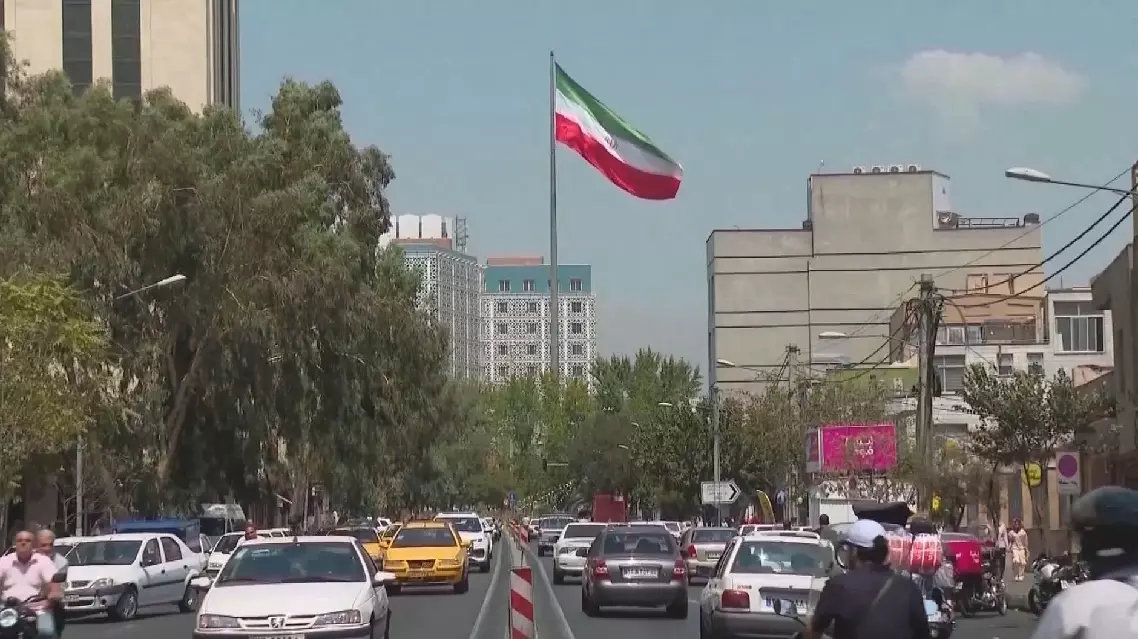
A Pakistani scholar has stressed the importance of dialogue in resolving the conflict between the United States and Iran, as the two sides remain deadlocked over access to the Strait of Hormuz and Iran's nuclear program.
In recent months, Pakistan has emerged as a key mediator between Washington and Tehran, pushing diplomacy as a path to ending the conflict.
In a recent interview with China Global Television Network (CGTN), Rabia Akhtar, dean of the Faculty of Social Sciences at the University of Lahore, affirmed Pakistan's role as a mediator but stressed that whether an agreement is reached and implemented ultimately rests with the two countries.
"Pakistan's role is valuable because keeping a channel open gives the parties somewhere to take those agreements. A mediator can clarify a proposal, explore a sequence of reciprocal steps, and help each side understand what the other might accept. But a mediator cannot make the commitments on their behalf. Ultimately, Washington and Tehran have to decide that an agreement serves their interests and that they are prepared to implement it," she said.
Throughout the conflict, she noted, leaders have publicly deployed strong rhetoric against the other side. Akhtar called on both parties to withdraw from such practices, as they make reaching an agreement all the more difficult.
"There's also the domestic political problem. If you have told your public that anything short of the other side's surrender will be a defeat, you have made your own diplomacy much harder. Leaders need room to explain that a negotiated outcome can protect national interest. And quiet diplomacy helps because it allows options to be explored before every proposal becomes a public test of resolve," she said.
As the need for dialogue over conflict grows, Akhtar highlighted the potential role of China's Global Security Initiative (GSI), which focuses on addressing the world's growing security challenges through cooperation, dialogue, and shared responsibility, and offers a framework for managing crises.
"So for me, the GSI's emphasis on dialogue is relevant to what happens between crises as well as during them. So we need communication that survives political disagreements and commitments, that gives both sides a reason to exercise restraint. We cannot simply wait for trust to appear before we start talking. We have to use dialogue to establish whether commitments can be tested and whether restraint can be reciprocated," the scholar said.
Dialogue essential to resolving US-Iran deadlock: Pakistani scholar