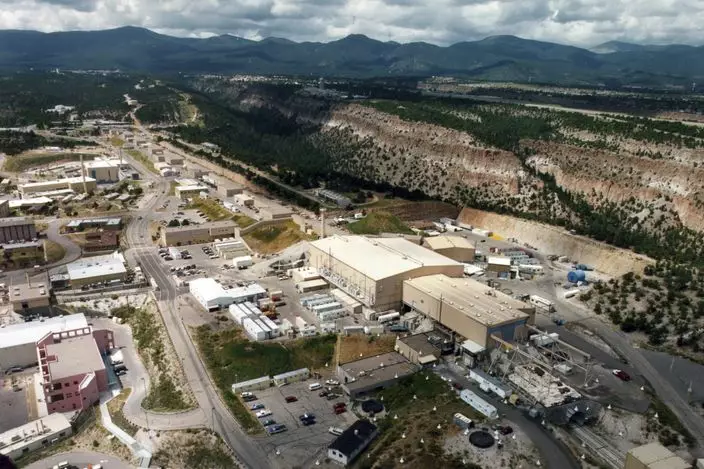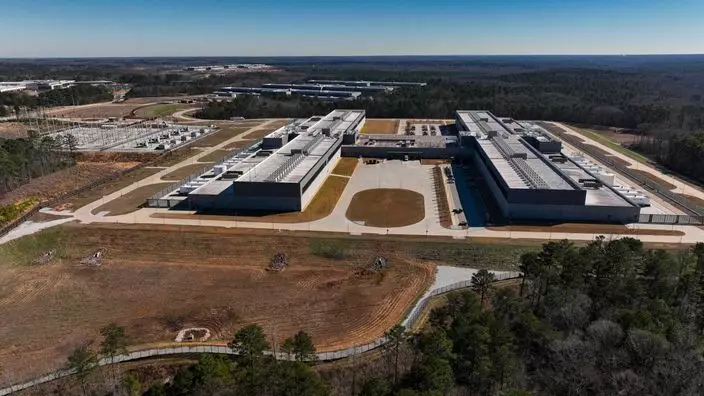

The Takaichi government plans to build permanent defense research bases at Japanese universities by fiscal 2031. The move chips away at the Japanese academic world's postwar bottom line: "never engage in military research".
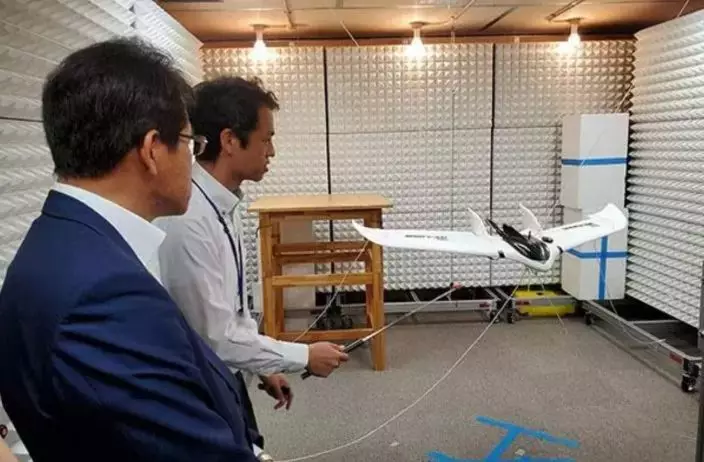
Japan defense lab tests equipment; seeks university research help.
The Plan Unveiled
On paper, Tokyo's political establishment has long flown the banners of the pacifist constitution and an exclusively defense-oriented policy. But in recent years, its moves in the security field have grown steadily more aggressive.
On November 10, 2026, the Nikkei broke the story in a report on specialized defense research institutes. The Japanese government plans to set up permanent defense research bases inside national, public and private universities and national research and development corporations, meaning government-funded research institutions, by fiscal 2031. The bases will target cutting-edge fields such as artificial intelligence (AI) and space technology, with the aim of turning research results into the development of defense equipment.
Research results can in principle be published openly, the report added. Where exactly the bases will be located, how many will be set up, and who will run them are all still under review.
This is no isolated idea. It is a key piece of Tokyo's latest overhaul of defense policy. On the same day, November 10, the ruling Liberal Democratic Party and the Japanese Innovation Party began working-level talks within the ruling camp on revising the Three Strategic Documents, aiming for formal approval at a Cabinet meeting in mid-to-late December this year.
The Three Strategic Documents are three core guidelines led by the National Security Strategy, effectively the master blueprint for Japan's diplomatic and military course. The government is now weighing whether to write the plan for university research bases directly into one of them: the Defense Buildup Program.
Salami Slicing the Taboo
To grasp the weight of this move, you first have to open the postwar ledger of Japan's academic world. As a defeated nation in World War II, Japan's scientific community took a hard look at the wartime lesson of scholars who helped the military develop weapons. The Science Council of Japan, which speaks for the country's scientists, declared as early as 1950 that it would "never engage in scientific research for the purpose of war". It reaffirmed in 1967 that it would not conduct research for military purposes. Then in 2017 it issued yet another statement confirming that it stood by that position, and it demanded that universities set up censorship systems.
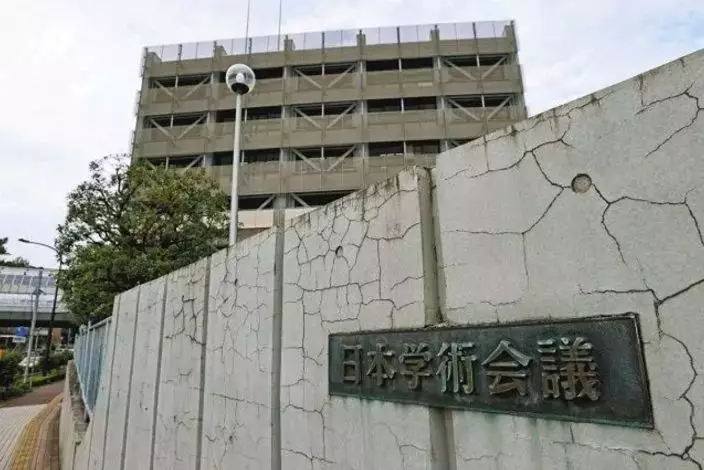
Japan science council repeatedly opposes war-purpose research.
But that line of defense has already given way. A Yomiuri Shimbun editorial points out that the body banned defense research right up until 2022. In recent years, though, academia's attitude toward the boundary of dual-use technology has subtly shifted, and the firewall has loosened.
Long before the bottom line formally loosened, big money had quietly pried open a gap. In fiscal 2015, the then Abe Shinzo administration rolled out the "Security Technology Research Promotion System" through the Acquisition, Technology & Logistics Agency. Flying the flag of dual-use, it openly invited advanced basic research in the defense field. It dangled competitive research funding to draw proposals from universities and companies, then paid out the winners through commissions or subsidies.
This is salami tactics, one thin slice at a time. Each cut looks small. By the time you look up, the sausage is almost gone.
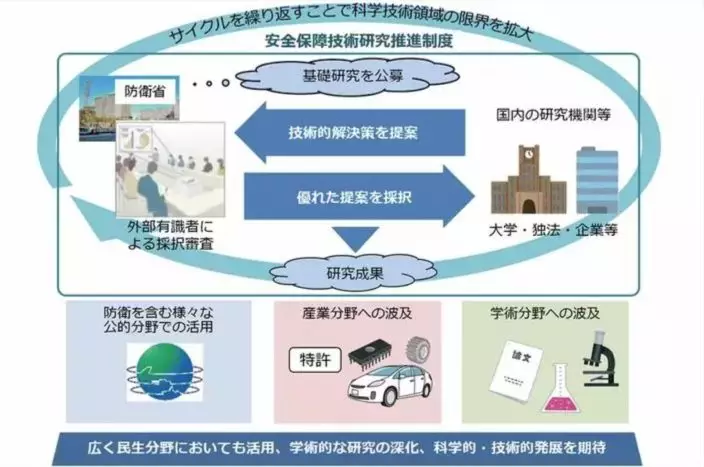
Japan defense ministry solicits university and corporate research proposals.
Figures released by the Ministry of Defense on October 20 this year show just how wide that gap has been torn. For fiscal 2026, the program drew 560 research applications, a surge of roughly 65 percent from 340 the year before. That is a record since the system was created. Applications from universities and other research institutions jumped from 123 the previous year to 291 this year.
In the end, 47 projects won funding this year. For the first time, the list includes projects from 11 universities, among them Nagoya University, Osaka University and Keio University.
The signal behind these numbers could not be clearer. The "absolutely not" once written in black and white has become one application form after another on the Ministry of Defense's funding list.
More telling still is the upgrade in what this plan actually is. Past open calls were one-off project grants. When the project ended, the team disbanded. The permanent base the Takaichi government plans to set up by fiscal 2031 means something else entirely: dedicated long-term staff, laboratory equipment and a fixed funding stream.
Moving from soliciting projects to establishing bases is, in essence, a shift from borrowing the brains of universities to stationing the military on campus for the long haul.
Double Standards and Backlash
The starkest contrast is the yawning gap between Tokyo's vigilance abroad and its loosening at home. In recent years, Japanese politicians and media have repeatedly talked up the risk of technology leaking out through China's military-civil fusion strategy. The Ministry of Education, Culture, Sports, Science and Technology (MEXT) even disclosed a survey in the Diet showing that in fiscal year 2019 more than 50 Japanese universities had exchange agreements with Chinese research institutions. The finding put Japanese society on high alert.
Yet in the Defense White Paper published on August 4, 2026, Tokyo stated in black and white that it would cultivate the defense industry to cope with new forms of warfare. It also pledged to make greater use of the advanced research capabilities of universities and national research and development corporations. When others turn civilian research to military ends, Tokyo denounces it in righteous tones. When its own turn comes, all it takes is a fresh coat of paint labeled defense, and the same behavior suddenly looks fully justified.
This step-by-step advance has also triggered sharply divergent reactions inside Japan. In an October 26 editorial, The Asahi Shimbun said bluntly that universities are getting too close to the military and warned of the danger.
The Yomiuri Shimbun bucked that view in its November 15 editorial. It argued that Japan has fallen behind in drones and AI and should further strengthen cooperation with universities.
Anxiety is also brewing among the public and academia. The Global Times reported on November 12 that Hibi Yoshitaka, a professor of humanities at Nagoya University, lamented on social media that the situation now coming to light would have been utterly unimaginable not long ago. The newspaper also noted that among the comments on his post, some Japanese netizens said outright that this was a typical sign of militarism in bud.
There is an irony here. The very university where this professor teaches, Nagoya University, is one of the 11 universities mentioned earlier whose research topics were adopted by the Ministry of Defense for the first time this year. On one campus, some scholars are deeply worried while research projects are already winning the ministry's approval. It is a telling snapshot of Japan's new reality.
Following the Money
Tokyo is in a hurry, and the reason is money. Back in June, the ruling Liberal Democratic Party and the Japanese Innovation Party submitted recommendations to the prime minister, demanding stronger research and development to keep pace with the new ways of fighting that AI and drones are bringing.
The money tells its own story. In the Ministry of Defense's budget request outline for fiscal 2027, total defense spending has already hit about 8.9 trillion yen, roughly HK$450 billion. By the ministry's own measure, that is yet another record high.
For now, the permanent university base sits in the outline as an request item with no specific amount filled in. Only when the government's formal budget proposal lands in late December will outsiders see the true scale of this special allocation.
The wordplay is telling. The Nikkei headline pointed to a dedicated defense research institute, while the body text settled for the more restrained term base. The gap between the two leaves plenty of room to wonder.
Where the institute will ultimately sit, and how far its results will be made public, remain open questions. The answers await the list with the figures written on it, due in late December.
But the trajectory is already unmistakable. From the declaration that once vowed 'absolutely not', to the 560 topics on the application forms, to the permanent base about to be written into Japan's security documents, academia's peace line is being hollowed out step by step. And with each step, the picture gets clearer.
Deep Throat
** 博客文章文責自負,不代表本公司立場 **