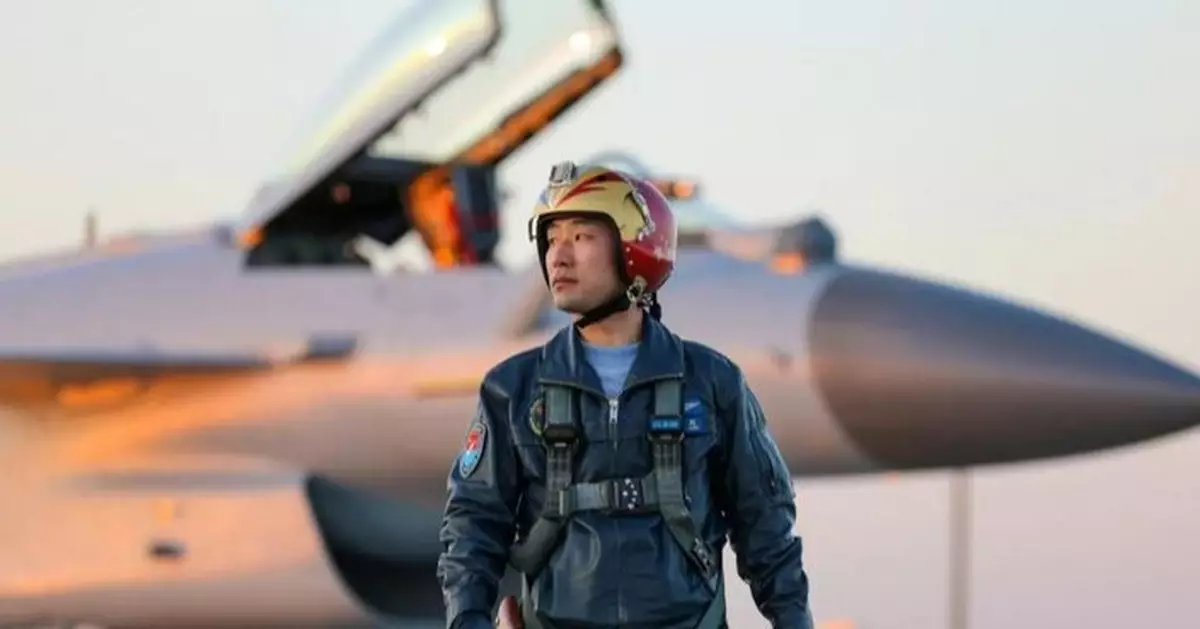

On the honor roll of Chinese Air Force fighter pilots, the Golden Helmet holds a special place. It is a title pilots covet more than rank, and it is also a real gold-colored helmet they can strap on and take into the sky.
A Prize Worth More
Click to Gallery
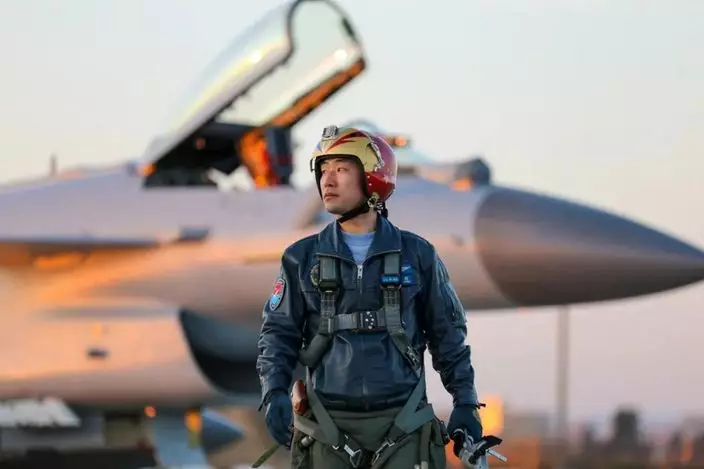
PLA pilots wear Golden Helmet, top-gunner honor.
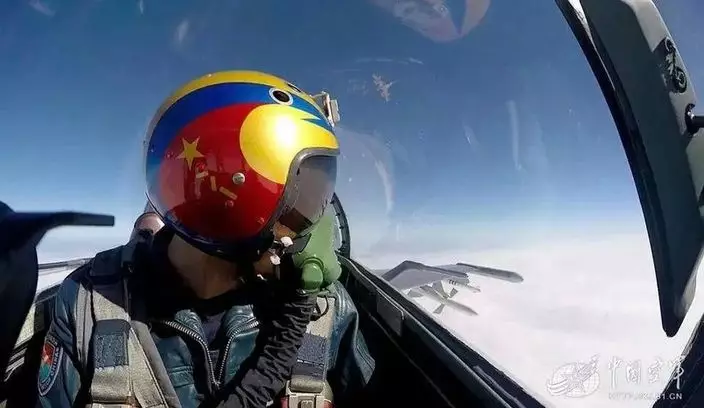
Golden Helmet bouts drop altitude limits, pilots decide tactics.
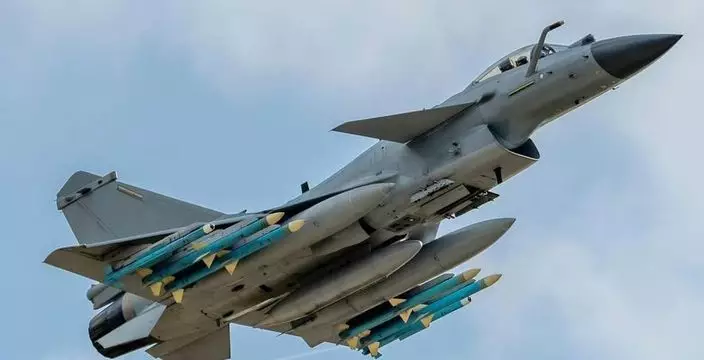
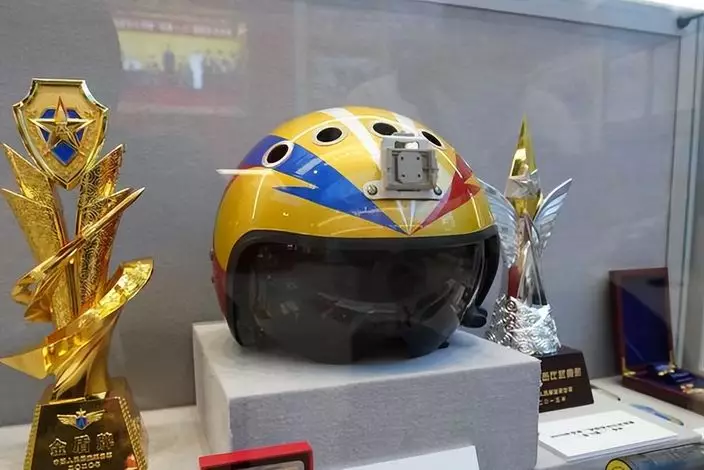
Winning one means surviving a second cut from among the best pilots in the entire force.
PLA pilots wear Golden Helmet, top-gunner honor.
The Golden Helmet is no standalone contest. The Chinese Air Force builds its combat-oriented training around four brands: the Red Sword system confrontation, the Blue Shield air and missile defense drills, the Golden Dart penetration and assault tests, and the Golden Helmet free air combat.
Red Sword is the largest joint exercise of the four, testing how multiple services blend into one system. Blue Shield is aimed at ground-based air defense units, honing integrated air and missile defense. Golden Dart grades penetration, assault, and target shooting.
Red Sword judges the team, Blue Shield the ground, Golden Dart delivery and accuracy. Only the Golden Helmet pits single jets and formations against each other in direct confrontation, with victory settled on the spot and no room for judges' scoring.
Tougher Rules, Fewer Winners
The contest began in 2011. About 100 of the service's top pilots entered the first edition, but only 10 went home wearing the helmet. That put the award rate below one in 10.
The rules were already unforgiving. Limits on altitude differences were scrapped, and pilots could engage freely once their aircraft were more than 300 meters apart. There were no rehearsals or prescribed routines; pilots drew up their own tactics.
The design had a simple goal: make the confrontation feel as close as possible to the chaos of real air combat.
Golden Helmet bouts drop altitude limits, pilots decide tactics.
The format only got tougher. Public records show that the fourth edition, in 2014, grew from 128 pilots to 170, while the number of Golden Helmets shrank from nine to five, pushing the award rate below one in 30. Only about 200 pilots made the assessment, and every one had been screened through multiple rounds by the air forces of the various theater commands.
In 2015, the Golden Helmet shifted from same-type matchups to duels between different aircraft types. In 2017, it added four-aircraft close-range combat, cut command intervention and lifted some limits on external stores and jamming. The rules also required newcomers to make up at least 50% of the field, with the order of appearance and opponents chosen by random draw without advance notice.
The PLA Air Force has not published a complete list of winners for every edition. But the direction is clear: opponents shifted from similar aircraft types to different ones, solo aircraft gave way to four-aircraft formations, command intervention was squeezed, and newcomers had to take the field.
The mandatory newcomer quota is itself a test of training results. That makes the Golden Helmet more than a competition. It is also a spot check by higher authorities on how the air forces of the various theater commands are training.
The J-10C's Three-Peat Upset
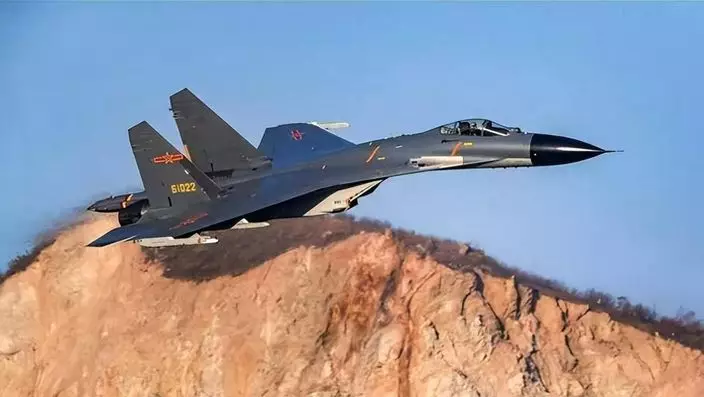
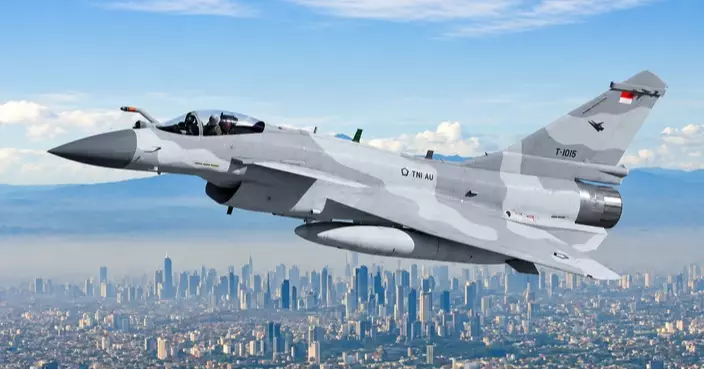
What makes the Golden Helmet worth watching is the chance for an underdog to win. That is the promise of dissimilar-aircraft combat. From 2019 to 2021, the J-10C beat two heavyweights, the J-16 and the Su-35, in three straight editions of the competition.
Once CCTV's military channel disclosed the record, it shattered a long-held assumption: that heavy fighters always rule the sky.
Public analysis credits the J-10C's edge to two things. First, avionics and weapons. The fighter carries a homegrown active electronically scanned array radar and can field PL-15 air-to-air missiles, giving it the tools to spot and shoot first at beyond-visual range. The Su-35's R-77-1 missile is outranged, and its onboard radar architecture is a generation behind.
Second, aerodynamics and tactics. Against the J-16, with its larger radar aperture and heavier missile load, the J-10C's answer is to drag the fight into close range as fast as possible. Its canard-plus-delta layout delivers sharp instantaneous turns and quick nose pointing, making it easier to seize a firing solution first in a one-circle dogfight. Paired with helmet-mounted sights and off-boresight missile launches, that agility can cancel out the heavy fighter's sustained-turn advantage.
None of this means the J-10C holds a decisive edge over heavy fighters. J-16 units have won Golden Helmets too, and the two sides trade victories. One public report tells of a J-10C pilot who, with fuel and ammunition warnings both sounding, fought from medium range all the way into close combat and finished the kill with his cannon. That looks less like one aircraft type crushing another and more like a pilot squeezing every last drop of performance from his jet.
And in a contest like the Golden Helmet, which offers no system support, the J-10C still struggles against stealth fighters like the J-20. When the J-20 first entered the competition, it won four fights out of four.
As for claims that a J-10C shot down a J-20, those mostly surface in system-level exercises backed by early-warning and electronic-warfare aircraft. They rely on A-launches-B-guides tactics. They say nothing about single-aircraft combat.
Names the Sky Remembers
The Golden Helmet pays out in what you can touch. Winners take home an actual gold helmet they can strap on and fly with, and their jet gets a red eagle-head emblem on the fuselage. That mark tells anyone who sees it: the pilot of this aircraft has won a Golden Helmet.
That makes the honor visible. Unlike a ranking buried in a commendation document, this one climbs into the sky with the pilot.
The contest has left behind names people remember. Jiang Jiaji was the first Air Force pilot to win the Golden Helmet three times, taking back-to-back titles in 2011 and 2012 and winning it a third time in 2015.
Then there is Shi Luquan. In 2026, the 45-year-old special-class pilot entered his fourth competition as a backup. After three narrow defeats, he stepped in at the critical moment when the lead pilot was pulled by a task adjustment, and he finally claimed the helmet.
Wu Ningbo graduated from flight school in 2022. Less than a year after converting to the J-10C, he teamed up with his mentor He Jianfei to win the Golden Helmet. That made him the youngest Golden Helmet pilot in the Air Force.
Wang Li, a commander in a J-20 unit, has one Golden Helmet and two Golden Darts to his name. Yet after a single defeat in one exercise, he hung a sign in the aircrew building reading "Record of the 20-Minute Annihilation Shame." Asked when he would take it down, he said it could never come down.
Read side by side, these stories show why pilots care about the Golden Helmet. The award matters less than the chance to have your peers test you in person.
Since 2011, the Chinese Air Force's Golden Helmet exercise has moved from same-type aircraft confrontation to duels between different types, and from single-aircraft contests to formation and system-of-systems confrontation. The focus of assessment has shifted too, from individual skill to system integration capability. What it proves is not just whether the PLA's fighter pilots can fly. It is whether they can fight.
Training and tactics will erase part of the generational gap in equipment. But that gap will reappear in real system-of-systems confrontation. The true contest is always in the blue sky, not on the helmet.
The Art of Stopping War
** 博客文章文責自負,不代表本公司立場 **