Legal experts have consistently emphasized that in evaluating the merits of any issue, a balanced perspective free from preconceived biases is essential. However, in responding to the verdict of the online “Stand News” court case, the U.S. and U.K. governments, along with foreign media outlets such as The Wall Street Journal, have taken a one-sided position and bombarded Hong Kong severely. In a piece published on Thursday (5 September), former Director of Public Prosecutions (DPP) of Hong Kong, Ian Grenville Cross, sheds light on how the Western powers play double standards by strongly criticizing Hong Kong while ignoring what is happening in other countries. It’s all because of their political agenda, he says.
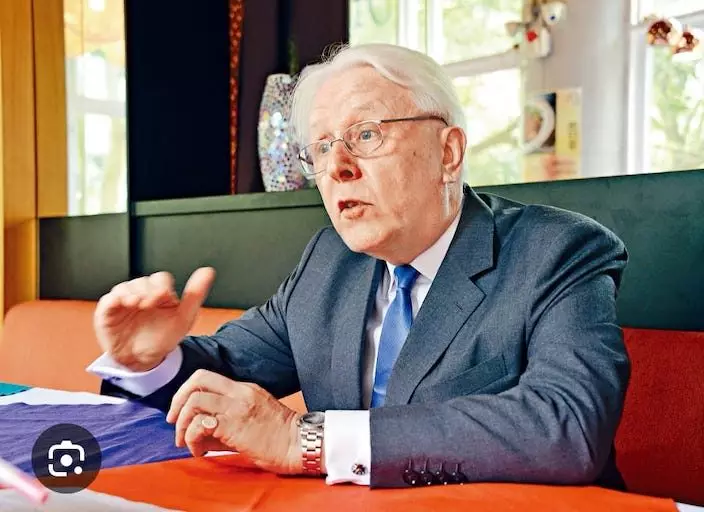
Cross delves into the historical and contemporary applications of sedition laws, highlighting the inconsistency displayed by the U.S. and the U.K. governments. Both did not hesitate to voice criticism on Hong Kong’s handling of the "Stand News" case, while remaining silent on the frequent use of similar laws in countries like India and Malaysia.
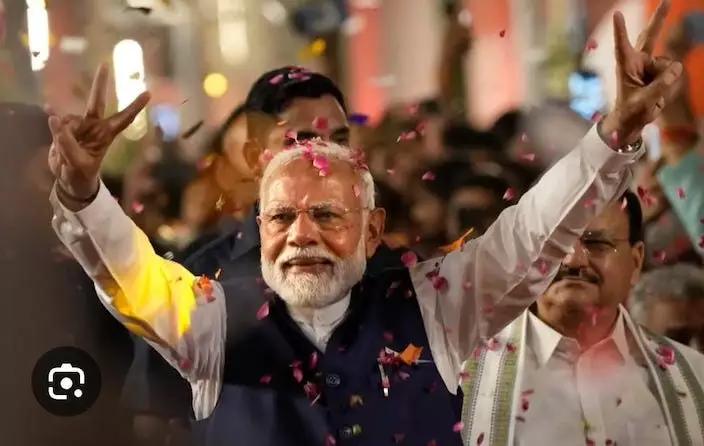
Using India as an example, Cross notes that since Prime Minister Narendra Modi assumed office, the number of sedition cases has surged by nearly 30%. Since 2014, Indian authorities have brought over 500 sedition cases to court, with 149 individuals charged for making remarks deemed disrespectful to Modi. Despite this apparent weaponization of sedition laws in India, the British government, European Union, and Western politicians have never said a word.
Cross further explains that India's sedition laws are a colonial legacy introduced by the British in 1870 to suppress dissent against the government, and these laws have survived India's independence and remained intact today.
Similarly, Cross points to Malaysia, where former Prime Minister Muhyiddin Yassin, now the opposition leader, was recently charged with incitement under sedition laws for his criticism of the former king. If convicted, Muhyiddin could face a three-year prison sentence. Yet, Western governments and media have largely downplayed this incident.
The sedition laws in Hong Kong also originate from the British. The British Hong Kong government enacted the Sedition Ordinance in 1938, criminalizing expressions of hatred toward the British monarchy. This law was later incorporated into Hong Kong’s Crimes Ordinance in 1971. Cross highlights the irony of former Hong Kong Governor Chris Patten’s criticism of Hong Kong’s recent sedition cases, noting that Patten never addressed the colonial roots of these laws during his tenure.
Sedition laws are not exclusive to its colonies, the U.K. also enforces stringent national security and public order regulations in their home land. For instance, under the National Security Act passed last year, a media organization will be found in violation of the law if information it disclosed deemed "materially helpful" to foreign intelligence agencies. Severe penalties will be imposed.
Moreover, a recent investigation by British online media uncovered the existence of a secretive entity known as the "Defence and Security Media Advisory Committee," composed of representatives from the government’s security and intelligence agencies, military, and some senior media figures. In the case that certain information is considered detrimental to UK’s national security, the Committee will issue a “D Notice” to the media and ask the media refrain from publishing the information. Although compliance with the "D Notices" is not legally obligatory, that media outlets would risk prosecution under the Official Secrets Act if they defy these notices.
These revelations show us that true face of the West. Despite the U.K. government's loud criticism of Hong Kong for allegedly suppressing press freedom, it exerts even greater control over its own media., albeit in a more covert manner.
Lai Ting Yiu
What Say You?
** 博客文章文責自負,不代表本公司立場 **
Pavel Durov, founder of Telegram—the world's largest social media and communication platform—was recently arrested in France. The arrest was reportedly about the lack of moderation of the messaging app, its failure to cooperate with law enforcement and take steps to curb criminal uses of the platform. However, a deeper reason appears to be the platform's "unregulated" political influence, which could potentially be exploited for interference. A legal expert has noted that the arrest has torn down the façade of the hypocritic notion of "freedom of information and speech" championed by the governments in the West all the time. They fire harsh criticism on Hong Kong no matter what the situation, but are quick to turn around and impose severe restrictions when faced with an uncontrollable internet reality that threatens public order and security.
He highlighted that during the riots sparked off by anti-extradition protests in Hong Kong five years ago, Telegram had become a command centre, organizing and coordinating violent activities. Tens of thousands of radicals joined groups on the platform, leading to widespread horrible violence and chaos. Despite the time, authorities hesitated to impose strict controls, fearing accusations of suppressing internet freedom. Now we can see that the French and British governments have taken decisive action against Telegram. The Hong Kong government should take note and not be overly concerned about criticisms from these countries.

Originally a Russian citizen, Durov later obtained citizenship in France and the United Arab Emirates. Since its launch in 2013, Telegram has gained popularity in various countries due to its strong encryption, high level of anonymity, and the ability to join without registering a personal phone number. These features, combined with the platform's capacity to host groups of up to 100,000 users—far exceeding that of WhatsApp—have made it a widely used communication tool. As of July this year, Telegram's global user base had reached an astonishing 950 million.
Unlike platforms such as Google, Facebook, and X (formerly Twitter), which generally comply with government requests for user data when legally compelled, Telegram has gained a reputation for defiance, often refusing to cooperate with authorities and remaining beyond control.
Despite their frequent assertions of "defending freedom," the governments of France, the UK, and the US are highly vigilant against "external forces" using social media to interfere in politics and do not tolerate online activities that disrupt public order. Legal experts argue that while the French authorities claim that Telegram "facilitates crime," their real concern is that the platform could be used as a tool for political interference.
The British government has also accused Telegram of being the driving force behind recent anti-immigration riots, with far-right groups exploiting this "lawless space" to incite the public. The new Prime Minister, Keir Starmer, has made it clear that online offenders will not be spared, including platform management and owners, suggesting that the British government may also have played a role in the crackdown on Durov.
Hong Kong experienced the challenges posed by Telegram even earlier than the French and British governments. Legal experts recalled a shocking court case from two years ago, in which the defendant managed a Telegram group with 100,000 members. From October 2019 to June 2020, this group disseminated over 20,000 messages, some of which incited attacks on police stations, police quarters, MTR stations, the airport, and pro-establishment businesses. Many participants in the violent protests followed instructions relayed through Telegram.
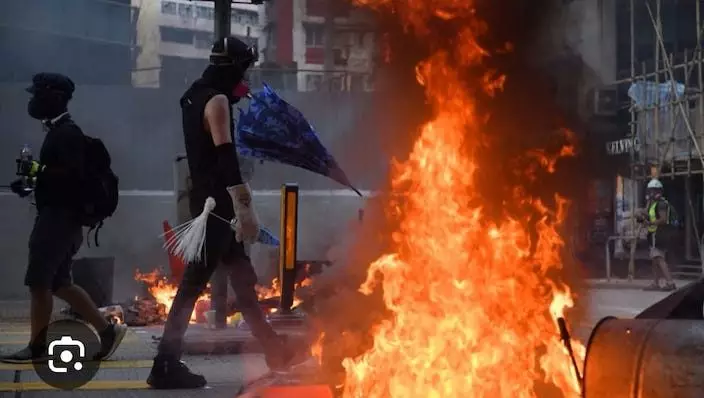
One particularly egregious case involved Telegram channels not only inciting arson but also instructing users on how to release chlorine gas at police stations and MTR stations, leading to mass casualties. Additionally, doxing channels were built on the platform, targeting members of the disciplined services and pro-establishment figures. Thousands of messages were posted on those channels that had attracted over 30,000 members.
At the peak of the violence, Telegram hosted various groups, the largest of which had up to 40,000 members, creating a powerful mobilization force and exacerbating the riots. While the authorities issued temporary injunctions to prohibit the spread of violent messages on Telegram and even deleted a channel spreading hate speech in March 2020, they stopped short of blocking the platform entirely, to avoid accusations of stifling freedom of information.
As legal experts have pointed out, Durov's recent arrest demonstrates that Western governments, despite their rhetoric on freedom, will act decisively when their security interests are at stake. The Hong Kong authorities should learn from this incident: whether dealing with Telegram or other social media platforms, they should not hesitate to take firm action when necessary.
Lai Ting Yiu