Uganda's national bird, the grey-crowned crane, is facing a grave threat of extinction due to the combined pressures of climate change and human activity, putting this iconic species at significant risk unless urgent action is taken, conservationists warn.
Standing over a meter tall, the graceful grey-crowned crane is a striking presence in many of Africa's wetlands. However, in Uganda, where its population remains relatively strong, securing food and suitable breeding grounds has become increasingly difficult.
Extreme weather patterns, including rising temperatures across East Africa, are drying up wetlands and disrupting the broader ecosystem, leaving the cranes with fewer food sources.
"We've had a lot of weather variations and drastic weather changes in the country. The seasons have changed and all this affects both the birds and the insects," said Judith Mirembe, chairperson of Uganda Women Birders.
Over the past three decades, Uganda's wetlands have shrunk dramatically, declining from about 15 percent of the country to just 8 percent today. Some conservationists warn that if current trends continue unchecked, this figure could drop to as low as 1 percent by 2040.
While climate change is a major factor, the growing demand for farmland and urban expansion is further reducing the cranes' chances of successful breeding.
"When you destroy wetlands, some of them have laid eggs and you're destroying the eggs as well, so how can you talk about growing the population of the crane when we are not allowing the eggs to hatch. Some people when they land on the eggs, they go and make omelet,” said Bashir Hangi, communication and public relations manager of the Uganda Wildlife Authority.
Despite being Uganda’s national bird, the grey-crowned crane is still targeted by hunters, and some communities exploit it for traditional medicine. In response to these growing threats, the Uganda Wildlife Authority is working with the International Crane Foundation to protect the remaining populations.
"For example, this year we are in Insingiro [District] because there are quite a number of them there in the wetlands of Masha, and we are raising awareness about that. And communities have since started appreciating the local leaders. You know, some people look at it like any other bird so they don't care. When it comes to wildlife, people just kill. I mean, it (wildlife) doesn't need to do anything to them. So we are saying, look, this bird is very important for us," said Hangi.
With their numbers dropping from approximately 35,000 three decades ago to around 22,000 today, conservationists urge stronger protections and greater awareness to prevent further decline.
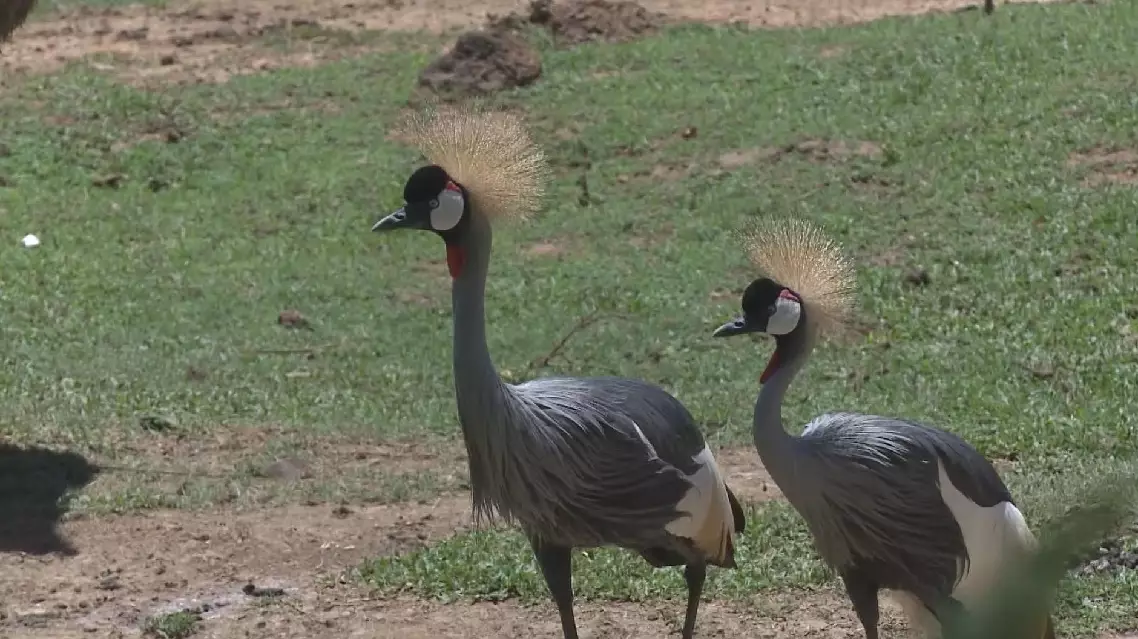
Uganda's national bird, grey-crowned crane, faces growing threat of extinction

From cutting-edge technology exhibitions to retail stores thousands of kilometers away from Europe and Southeast Asia, China-made robot vacuum cleaners are increasingly becoming a popular choice among consumers worldwide.
At electronics retailers in Berlin, Germany, Chinese brands such as Roborock and Dreame occupy prominent positions in dedicated robot vacuum sections, offering a wide range of products priced between 200 and 2,000 euros.
Many local consumers said that when purchasing smart home appliances including robot vacuum cleaners, they tend to give priority to Chinese-made products.
"It's a good price and good quality. It's also the innovation. I have a feeling that the European brands are not innovating enough," said one customer.
"I think they're always on top of the other technologies. They are getting them out faster. A lot of us are switching to the Chinese technology," another consumer said.
Germany is one of the most important overseas markets for China's floor-cleaning robots.
According to data from market research firm GfK, from January to November 2025, more than six out of 10 robot vacuum cleaners sold in Western Europe were Chinese brands.
Industry data also point to a strong global momentum.
According to the International Data Corporation (IDC), global shipments of smart robot vacuum cleaners reached 17.424 million units in the first three quarters of 2025, representing a year-on-year increase of 18.7 percent.
Chinese brands including Roborock, Ecovacs, Dreame, Xiaomi and Narwal ranked among the world's top five in terms of shipment volume, with a combined share of nearly 70 percent of the global market.
At a robot vacuum cleaner manufacturing plant in Huizhou, south China's Guangdong Province, workers were seen stepping up production of newly launched models that recently debuted at the Consumer Electronics Show in the United States, which concluded Friday in Las Vegas, Nevada.
The factory adjusted its production lines as early as December 2025 and stocked inventory in advance for overseas markets to ensure that new products could be delivered to global consumers at the earliest possible time.
"In 2025, Roborock's global shipments exceeded 7.2 million units. Since 2024, overseas revenue has accounted for more than 50 percent of our total revenue. Our products have now been sold to more than 170 countries and regions, serving more than 20 million households worldwide," said Quan Gang, president of Roborock.
At another robot vacuum cleaner manufacturing facility in Dongguan, Guangdong, rising overseas orders have prompted the company to upgrade its production lines with intelligent technologies to further boost capacity. The factory is currently operating at full load to meet a growing demand.
"For 2026, we have already obtained overseas orders worth at least 300 million to 400 million yuan (around 43 million to 57.3 million U.S. dollars). In addition, we've engaged in strategic cooperation with European home appliance group Cebos Group, and our total confirmed orders have exceeded 600 million yuan (around 86 million U.S. dollars)," said Zhang Junbin, founder and CEO of Narwal Robotics.
Chinese robot vacuum brands gain strong global traction