Since his return to power, Donald Trump has pushed every boundary of political discourse—first by styling himself a “king,” now by elevating himself to something far more extraordinary: a divinely appointed savior. What began as bombastic rhetoric has morphed into an unmistakable campaign of self-deification, complete with cult-like overtones that threaten America’s democratic foundations.
From King to God-Emperor
Trump’s monarchic posturing—calling himself “king” and invoking royal authority—was always alarming. Yet Western media have now documented a further escalation: he asserts not merely temporal power but divine sanction. US and UK outlets note that Trump no longer stops at imperial imagery; he claims to be God’s emissary on Earth, the literal incarnation of a messianic figure tasked with “vanquishing demons and evil spirits.” In his view, every policy, every decree, every tweet is sanctified.
Divine Branding in the Media
Signs of this messianic pivot are everywhere. When a federal court halted his “Liberation Day” tariffs, Trump posted on Truth Social an ominous image of himself walking dark city streets under the caption “He’s on a mission from God” and the tagline “Nothing can stop what is coming.” He’s even adopted slogans like “Trump is right about everything.” Beyond his own platform, he amplifies far-right outlets that portray him as heaven-sent, complete with apocalyptic warnings of a “great storm” to purge America of its enemies.
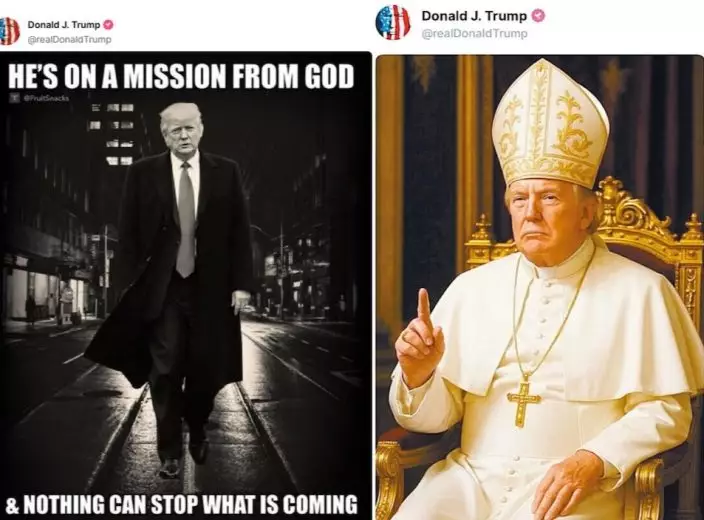
Trump has recently "deified" himself, positioning himself as the "divinely chosen savior." He posted images on social media claiming to bear "a mission appointed by God" and dressed himself as the Pope, governing through "deification techniques."
Politico traced this narrative back to July 2024, when Trump survived an assassination attempt. He framed his survival as divine intervention—“God had a reason for letting me live”—and wove it into his inaugural rhetoric: “I was save by God to Make America Great Again.” What started as survivor’s relief has hardened into a full-blown theology of Trump.
This isn’t mere theatre. In February 2025, Trump quietly established the White House Faith Office, led by a powerful evangelical megachurch pastor – a move to consolidate support from Christian communities in Midwest and the South, and a movement explicitly dedicated to Christian dominion over government.
The Cult of Trumpism
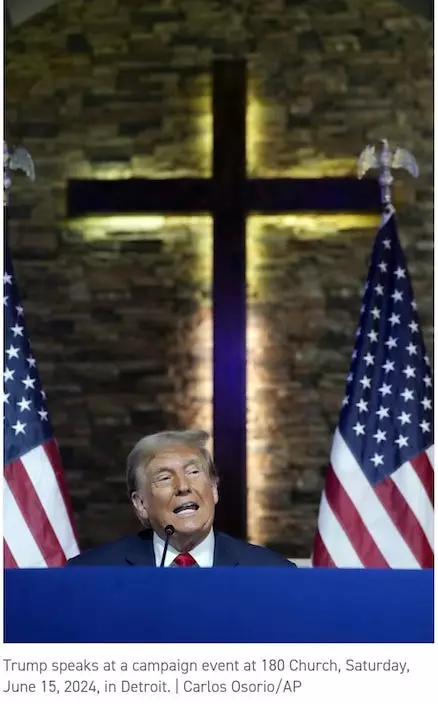
By presenting himself as "Christ reborn" to vanquish demons and evil spirits, his other objective is to consolidate support from America's conservative Christian forces.
What we’re witnessing is the architecture of a political cult. Trump’s rhetoric demands uncritical adulation: he is omnipotent, God-chosen. His deification campaign serves a clear political purpose: lock in conservative Christian votes, marginalise dissent, and render his authority unassailable. But while the most fervent believers will buy into this divine narrative, the broader electorate faces a stark choice: uphold secular democracy or submit to a leader who claims sacred immunity. In any case, it’s pathetic.
Lai Ting-yiu
What Say You?
** 博客文章文責自負,不代表本公司立場 **
Despite intense geopolitical tensions and a challenging global environment, Hong Kong’s stock market is experiencing a remarkable resurgence. Since the start of 2025, 27 new stocks have been listed, raising nearly HK$80 billion, catapulting Hong Kong to the world’s second-largest IPO market by volume. Over 150 companies are currently queued for IPOs, signaling unstoppable momentum. This surge starkly contradicts Stephen Roach’s earlier claim that Hong Kong’s market was “finished” due to loss of autonomy and long-term stagnation.
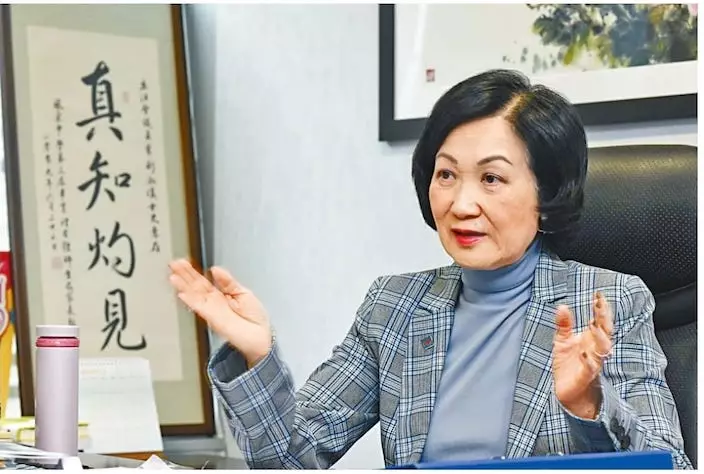
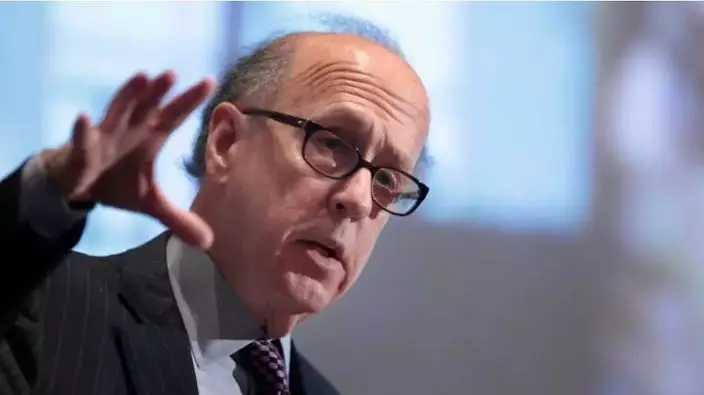
Reginal Ip decisively won the debate against Stephen Roach, whose “Hong Kong Prophet” label has been unmasked and now he is silent like an ostrich.
Regina Ip’s Data-Driven Rebuttal
Last year, Roach, self-styled as the “Hong Kong Prophet,” declared the city’s stock market dead in the Financial Times. Regina Ip, a prominent Hong Kong political figure, responded forcefully, accusing Roach of making sweeping, baseless generalizations without solid data. She highlighted Hong Kong’s consistent IPO fundraising leadership over the past decade, including seven years as the global leader and a strong second place as recently as 2020. Ip explained that recent market softness was largely due to US interest rate hikes attracting capital away, not structural decline.
Ip further criticized Roach’s shortsightedness, labeling him a typical stockbroker who praises markets only when profitable and disparages them otherwise. Despite multiple rounds of debate, Roach refused to concede, but the facts have since vindicated Ip’s position.
IPO Market Growth and Fundraising Trend
In 2024, Hong Kong saw 63 IPOs raising HK$82.9 billion—an 80% increase from the previous year—securing the city’s place as the world’s fourth-largest IPO market despite a global fundraising decline of 10%. The momentum has only intensified in 2025, with expectations of 70 to 80 IPOs and fundraising potentially reaching HK$160 billion, placing Hong Kong firmly among the top three globally.
The recent IPO boom in Hong Kong is largely a response to the Trump administration’s aggressive policies targeting China, which have compelled numerous Chinese companies to withdraw from US markets and seek safer alternatives. Trump’s “America First” approach has injected significant uncertainty into the prospects of Chinese firms listed in the US, prompting a strategic retreat.
In this context, a substantial number of Chinese concept stocks have returned to Hong Kong, which has proactively overhauled its regulatory framework to better accommodate these companies. This transformation has positioned Hong Kong as a more attractive and stable venue for listings, especially amid escalating US-China geopolitical tensions.
Geopolitical Impact and Strategic Shifts in Listings
A clear example of this shift is the fashion e-commerce giant Shein, which has abandoned its earlier IPO plans in London in favor of pursuing a listing in Hong Kong. This move underscores the city’s growing appeal as a strategic financial hub for Chinese companies.
Simultaneously, Western capital inflows into Hong Kong have increased noticeably, drawn by the city’s improved market infrastructure and its geopolitical role as a safer, more stable alternative to US exchanges for Chinese firms navigating the current international landscape.
In contrast, Singapore’s IPO market remains subdued, with only one IPO raising a mere USD 4.5m so far this year. At least 14 companies have announced plans to delist from the Singapore Exchange, prompting urgent government consultations to simplify IPO procedures and revive the market. This comparative weakness further underscores Hong Kong’s robust performance and strategic appeal.
Conclusion: Facts Have Spoken, Roach Silenced
Regina Ip’s data-backed challenge to Stephen Roach’s bearish forecasts has been decisively borne out by market realities. Hong Kong’s stock market is not “finished” but thriving, disproving Roach’s gloomy predictions. Meanwhile, Roach has retreated from public debate, effectively “playing the ostrich” as Ip triumphs. The “Hong Kong Prophet” title Roach claimed has been thoroughly unmasked and discredited by the facts.
Hong Kong’s IPO market surged in 2024 and 2025, reclaiming its place among th world’s top IPO hubs, defying bearish forecasts.
Lai Ting-yiu