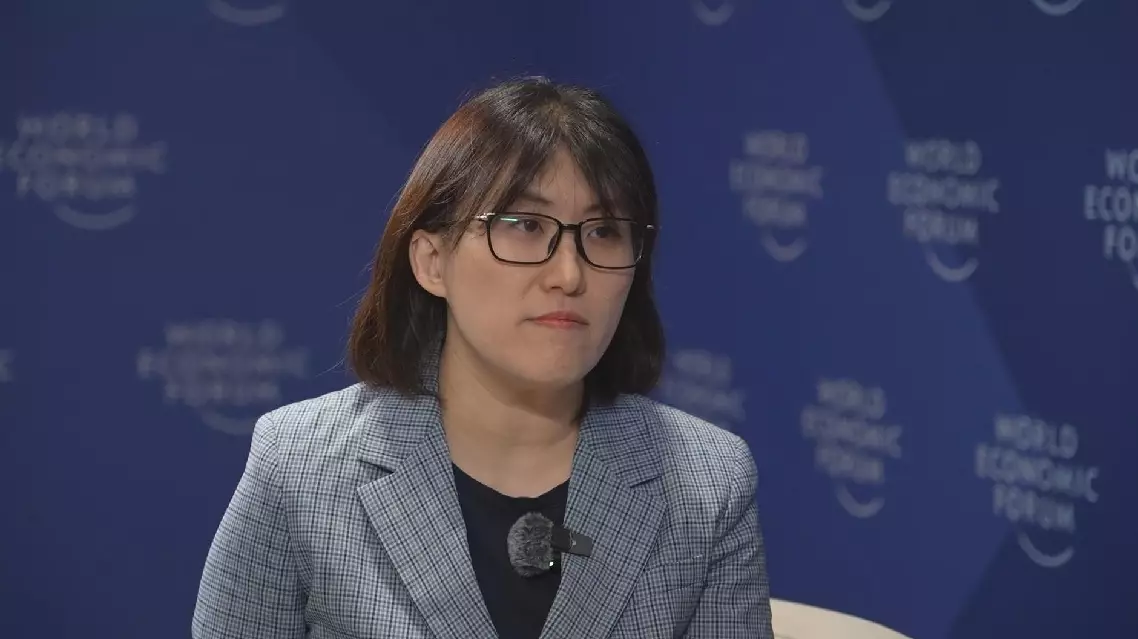
China is not only a growth engine for the Asia-Pacific (APAC) region but also a source of best practices that are shaping markets beyond its borders, according to Anne Tse, CEO of PepsiCo's APAC Foods division.
Tse made the remarks on the sidelines of the 2025 Summer Davos Forum, held in Tianjin from June 24 to 26.
A regular participant in the Summer Davos Forum and now the Asia-Pacific leader for PepsiCo, she highlighted China's growing role as both a growth engine and an exporter of innovation.
"If you look at APAC as a region, right? It is having increasing importance and representation on the global stage. Every year, the world adds about four trillion real GDP to itself, and Asia Pacific represents a third of this, right? And last but not least is the innovative ecosystem that is happening in our part of the world. And specifically, if we look at China -- very strong in all these three aspects: high growth, very scalable, dynamic nature, the innovativeness," she said.
As a global giant with products used by one billion people across more than 200 countries and regions every day, PepsiCo has a close bond with China, Tse said. She emphasized the company's longstanding commitment to the Chinese market, highlighting its significant local footprint.
"If you look at our China presence, it has been actually one of the first multinationals that came to China. We entered the market in 1981. And since then, we've been actually persistently and consistently having a very long-term and committed view in serving the Chinese consumers. Today, it's actually quite an extensive footprint. We have one of the largest global R and D centers outside of North America, and that's in China. We have 10 fruit manufacturing facilities in Greater China. We have 60 beverage bottling plants, and then we have 70 farms -- a little-known fact that 70 farms across the country are providing a lot of the agro products that we use in our manufacturing system. And about 95 percent of our ingredients are sourced locally; very, very rich and deeply rooted presence," she said.
Tse described China as a key market for PepsiCo, noting its role not only in driving growth but also in contributing innovation and talent to the broader region and beyond.
"China is a very important anchor market for us. I feel more proud of, especially over the last couple of years, is that the China market has proven itself to not only be a growth engine, but also an exporter of innovative ideas and of talent to the rest of Asia Pacific, and even to the rest of the world within the PepsiCo system. This is not only an income market that is actually a growth engine, but it's an income market that is a net exporter of innovative ideas," said Tse.
She highlighted PepsiCo's efforts to drive innovation and sustainability, pointing to the company's progress in green technology and its ability to export both solutions and talent beyond China. One example is PepsiCo's facility in Wuhan, which turns potato peels into sustainable fuel.
"When it comes to innovation and technology, it is not only just on the production side or on the product side-- we also have a lot of experimentation on green tech. And an example is that we are turning waste into energy. We have a biogas facility where we actually use biogas as a very important form of energy. And with that facility being well deployed in China, we are exporting it to Thailand as well. So, a lot of technology expectations, and certainly, we are also exporting our talent. These are actually very good capabilities that the rest of the world can benefit from," she said.
China drives APAC growth by exporting best practices: PepsiCo