Skip to Content Facebook Feature Image

Trump's "Big and Beautiful" Gamble: How America Risks Falling Further Behind Asia's Electric Revolution

Blog

Trump's "Big and Beautiful" Gamble: How America Risks Falling Further Behind Asia's Electric Revolution
Blog

Blog

Trump's "Big and Beautiful" Gamble: How America Risks Falling Further Behind Asia's Electric Revolution

2025-07-03 10:38 Last Updated At:10:38

After more than 24 hours of political theater in the Senate, Trump's so-called "Big and Beautiful" bill finally squeaked through on Tuesday with Vice President JD Vance casting the deciding vote in a nail-biting 50-50 tie. Three Republican senators jumped ship, but it wasn't enough to sink what many are calling a legislative gamble that could backfire spectacularly.
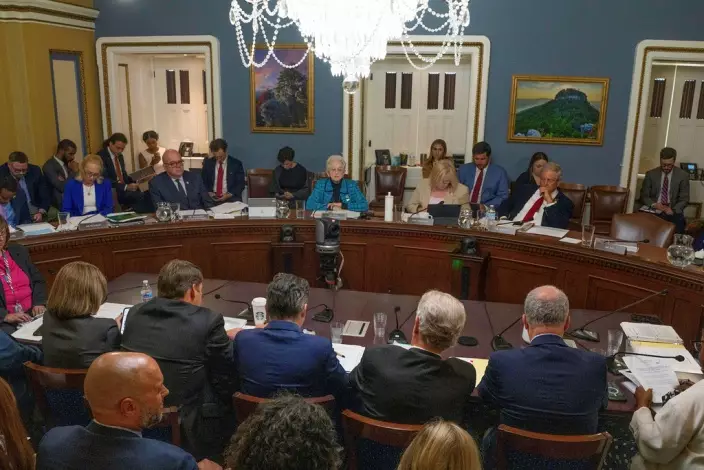
The "Big and Beautiful" bill squeaked through the Senate after JD Vance cast the tie-breaking vote. AP Photo
The "Big and Beautiful" bill squeaked through the Senate after JD Vance cast the tie-breaking vote. AP Photo

The bill's premise sounds simple enough: extend the corporate and individual tax cuts from Trump's first rodeo in office. But to pay for it, they're axing subsidies for wind, solar, and other renewable energy projects. It's a move that has industry analysts scratching their heads and wondering if Washington has completely lost the plot on where the global economy is heading.

More Images
The "Big and Beautiful" bill squeaked through the Senate after JD Vance cast the tie-breaking vote. AP Photo

The "Big and Beautiful" bill squeaked through the Senate after JD Vance cast the tie-breaking vote. AP Photo

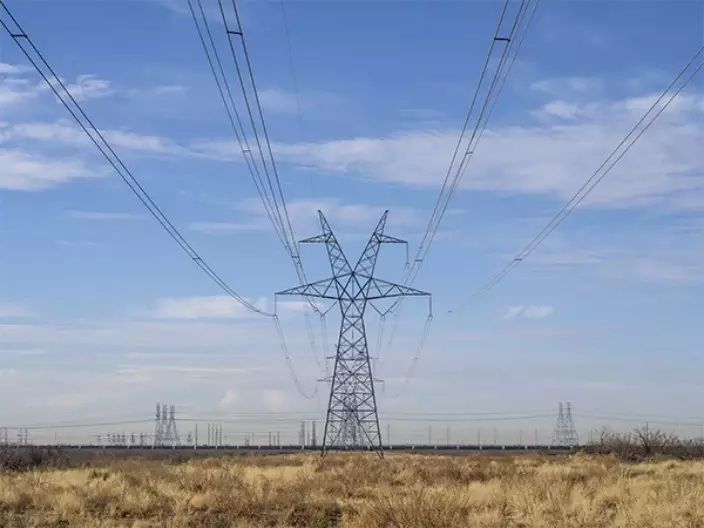
Scrapping renewable subsidies could leave America even further behind Asia's electrification surge.
Scrapping renewable subsidies could leave America even further behind Asia's electrification surge.

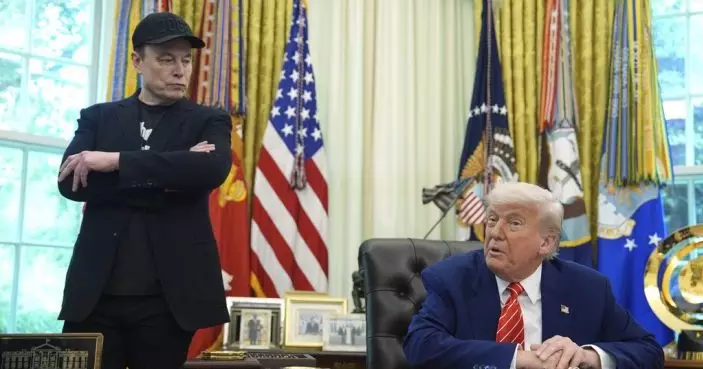
Musk's Twitter meltdown over the bill sparked a public spat with Trump. AP File Photo
Musk's Twitter meltdown over the bill sparked a public spat with Trump. AP File Photo

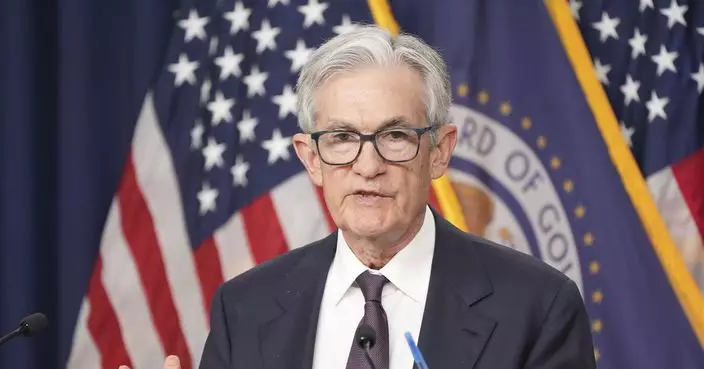
Trump points fingers at Fed Chair Powell as debt crisis deepens.

Trump points fingers at Fed Chair Powell as debt crisis deepens.

While America Debates, Asia Powers Ahead

Here's where things get a bit embarrassing for American policymakers. Bloomberg's number-crunching reveals that since 2000, US electrification has basically been treading water while Asian countries have been racing ahead like they're in some kind of clean energy Olympics.

The math is pretty stark when you look at it. China's electricity share of final energy consumption is pushing 30%, according to research from the Rocky Mountain Institute using International Energy Agency data. Meanwhile, the US and EU are stuck at around 22% – roughly the same place they were two decades ago. That's not exactly the kind of "America First" leadership Trump likes to talk about.

Scrapping renewable subsidies could leave America even further behind Asia's electrification surge.

Scrapping renewable subsidies could leave America even further behind Asia's electrification surge.

What makes this even more telling is the economic logic behind it all. Most Asian countries are net importers of fossil fuels, so going electric isn't just good for the planet – it's good for their wallets and energy security. America, sitting pretty as the world's top oil and gas producer, doesn't feel that same pinch. But that short-term thinking might just be setting the US up for a long-term strategic disaster.

Asian countries like Vietnam, Bangladesh, and Indonesia are ramping up their power equipment manufacturing at breakneck speed, driven by surging electricity demand. They're not just talking about energy transition – they're actually doing it, while America seems more interested in political point-scoring than practical progress.

Musk vs. Trump: When Billionaires Collide

Nothing quite captures the chaos of modern American politics like watching two of the country's most prominent figures duke it out on social media over energy policy. Elon Musk, never one to mince words, went absolutely ballistic over the "Big and Beautiful" bill, warning it would be a "massive strategic error" that would "destroy millions of jobs in America and cause immense strategic harm to our country".

Musk's Twitter meltdown over the bill sparked a public spat with Trump. AP File Photo

Musk's Twitter meltdown over the bill sparked a public spat with Trump. AP File Photo

The Tesla boss didn't stop there – he fired off dozens of tweets and even threatened to start his own political party called the "American Party" if the bill passed. That's when Trump decided to remind everyone who's boss, suggesting he might "take a look" at deporting Musk and telling him not to play this game with him. "If DOGE looks at Musk, we're going to save a fortune," he told reporters.

The whole spat reveals something deeper about America's energy future. Musk's fury isn't just about protecting Tesla's bottom line – though the bill's proposal to scrap tax exemptions for electric vehicle buyers certainly doesn't help his business. It's about watching America potentially sabotage its own chances in the industries that will define the next century.

Debt Mountain Gets Bigger, Blame Game Gets Louder

Here's the bit that should really worry anyone paying attention to America's fiscal future: this bill is going to make the debt crisis significantly worse, not better. We're talking about a country where annual interest payments on federal debt already exceed military spending and are roughly equal to what gets spent on Medicare each year.

The Congressional Budget Office isn't pulling any punches – they're projecting that debt interest payments will increase by an average of $55 billion annually over the next decade, possibly more. Meanwhile, the bill is expected to squeeze the poorest American families by nearly 4% while boosting incomes for the wealthiest by over 2%. That's not exactly the populist economics Trump campaigned on.

But rather than own up to the fiscal math, Trump's doing what he does best – pointing fingers. This time, it's Federal Reserve Chair Jerome Powell who's getting the heat, with Trump demanding interest rates be slashed to 1% to save "trillions in interest costs." He even sent Powell a handwritten letter spelling out exactly what he wants, which is either charmingly old-school or slightly unhinged, depending on your perspective.

Trump points fingers at Fed Chair Powell as debt crisis deepens.

Trump points fingers at Fed Chair Powell as debt crisis deepens.

The reality is that Trump's looking for someone else to clean up the mess his policies are creating. His tariff wars are already squeezing consumers and stoking inflation, and now this bill threatens to pile more debt onto an already groaning system. Blaming the Fed is classic political theater, but it doesn't change the underlying arithmetic.

What we're witnessing isn't just bad policy – it's America potentially sleepwalking into strategic irrelevance while other parts of the world sprint toward the future. The "Big and Beautiful" bill might deliver short-term political wins, but the long-term costs could be anything but beautiful.


Deep Throat

** The blog article is the sole responsibility of the author and does not represent the position of our company. **

Trump wasted not one second after US forces grabbed Venezuelan President Nicolás Maduro. He made it clear that he was eyeing the country's oil riches. But here's the catch: America's biggest oil companies aren't biting. Industry analysts confirm what the companies won't say publicly—even if these firms wanted back in, Venezuela's crumbling infrastructure and chaos on the ground mean Trump's fantasy of quick oil profits is far from easy to come true.

Trump promises Big Oil will pour billions into Venezuela. The oil giants say they never got the memo. AP Photo

Trump promises Big Oil will pour billions into Venezuela. The oil giants say they never got the memo. AP Photo

Minutes after the military operation wrapped, Trump stood at a press conference making promises. Major American oil companies would pour into Venezuela, he declared, investing billions to fix the country's shattered oil infrastructure "and start making money for the country". Meanwhile, he reiterated that the US embargo on all Venezuelan oil remains in full effect.

Those sanctions have crushed Venezuelan exports into paralysis. Documents from Venezuela's state oil company and sources close to the situation confirm storage tanks and floating facilities filled up fast over recent weeks. Multiple oil fields now face forced production cuts.

White House Courts Reluctant Executives

Reuters revealed the Trump administration plans meetings this week with executives from major US oil companies. The agenda: pushing these firms to restore and grow oil production in Venezuela following the military action. The White House sees this as a critical step toward getting American oil giants back into the country to tap the world's largest proven oil reserves.

But Trump's eagerness hasn't translated into corporate enthusiasm. Several major US oil companies are taking a wait-and-see approach, watching Venezuela closely. ExxonMobil, ConocoPhillips, and Chevron all denied any prior communication with the White House about Venezuela. This directly contradicts Trump's claim over the weekend that he had already met with "all" US oil firms both before and after Maduro's capture.

Venezuela sits on roughly 17% of the world's proven oil reserves—first place globally. Yet US sanctions and other pressures have gutted its production capacity. Current output runs around 1 million barrels daily, barely 0.8% of global crude production.

World's largest oil reserves, strangled by US sanctions. Trump's quick-profit scheme hits a hard reality. AP Photo

World's largest oil reserves, strangled by US sanctions. Trump's quick-profit scheme hits a hard reality. AP Photo

Only One Company Stays Put

Chevron remains the sole major US oil company still operating Venezuelan fields. The firm has worked in Venezuela for over a century, producing heavy crude that feeds refineries along the Gulf Coast and beyond. A company spokesperson said on the 3rd that the current priority centers on "ensuring employee safety, well-being, and asset integrity," adding they "will continue to operate in accordance with laws and regulations."

ExxonMobil and ConocoPhillips previously invested in Venezuela. In the 1970s, the Venezuelan government nationalized the oil industry, reopened to foreign investment by century's end, then demanded in 2007 that Western companies developing oil fields form joint ventures with Venezuelan firms under Venezuelan control. ExxonMobil and ConocoPhillips pulled out. Neither company has responded to Trump's latest remarks about US capital entering Venezuela.

One oil industry executive told Reuters that companies fear discussing potential Venezuelan business at White House-organized meetings due to antitrust concerns.

Benefits Flow to First Mover

Francisco Monaldi, director of the Latin America Energy Program at Rice University's Baker Institute for Public Policy, expects Chevron would likely benefit first if Venezuela opens oil projects to the US. Other oil companies, he notes, will watch Venezuela's political situation closely and observe the operating environment and contract compliance before making moves.

Mark Christian, business director at an Oklahoma energy consulting firm, lays out the baseline: US companies will only return to Venezuela if they're certain of investment returns and receive at least minimal security guarantees. Lifting sanctions on Venezuela stands as a prerequisite for US companies re-entering that market.

Reality Check on Oil Profits

Even with sanctions lifted, the Trump administration won't find making money from invasion-acquired oil that easy.

 Industry insiders admit large-scale restoration of Venezuelan oil production demands years of time and billions in investment, while confronting major obstacles: dilapidated infrastructure, uncertain political prospects, legal risks, and long-term US policy uncertainty.

Peter McNally, global head of industry analysis at Third Bridge, said, "There are still many questions that need to be answered about the state of the Venezuelan oil industry, but it is clear that it will take tens of billions of dollars to turn that industry around." He then added that it could take at least a decade of Western oil majors committing to the country.

Ed Hirs, an energy expert at the University of Houston, pointed to a pattern: US military invasions of other countries in recent years haven't delivered substantial returns to American companies. The history of Iraq and Libya may repeat itself in Venezuela.

Recommended Articles