Trump has just signed an executive order on Monday (July 7) locally, sending letters to 14 countries extending the so-called "reciprocal tariffs" 90-day grace period, postponing the original July 9 deadline to August 1. With Trump's tariff threats looming over global commerce, a bold Canadian academic is making waves by suggesting the unthinkable: kick the United States out of the World Trade Organization entirely. It's a radical idea that's got people talking; frankly, it might not be as crazy as it sounds.
The Case for Calling America's Bluff
Professor Kristen Hopewell from the University of British Columbia (UBC) isn't mincing words. Writing in Politico Europe just as Trump was threatening to slap 50% tariffs on EU goods, she's arguing that the US has essentially become a "rogue state on trade" that's making a mockery of the entire global trading system.
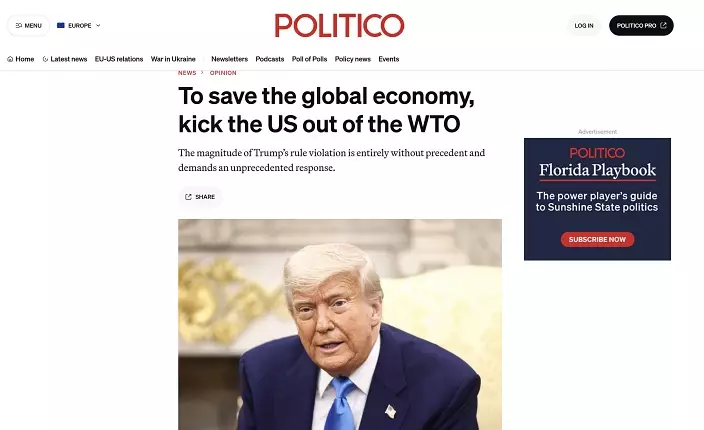
Professor Kristen Hopewell from the University of British Columbia, Canada, published an article calling on member countries to kick the US out of the WTO to save the global economy.
The timing couldn't be more dramatic. Trump’s grace period to August 1 is nothing more than classic Trump theater, really. But Hopewell's point stands: this isn't just about one president's trade tantrums anymore. It's about whether the international trading system can survive when its most powerful member basically ignores all the rules.
The article notes that as early as Trump's first term, he vigorously promoted unilateral and trade protectionist policies, and his criticism of international organizations including the WTO and WHO has never ceased. As an organization that arbitrates trade disputes, the WTO has long been bound and constrained by the US.
Her argument is pretty straightforward when you think about it. The US has already paralyzed the WTO's appeals mechanism by blocking appointments to the Appellate Body. They've been trampling on international trade rules left and right. Remember the Smoot-Hawley Tarriff Act? So, no wonder why countries and scholars are bringing up the question: why should they get to keep enjoying all the benefits of WTO membership while acting like a bull in a china shop?
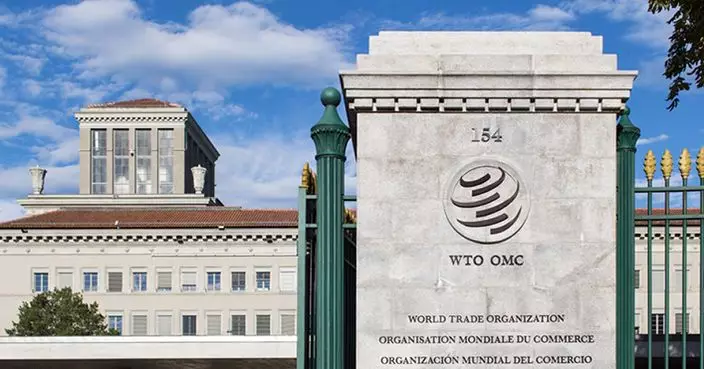
According to Article 10 of the Marrakesh Agreement regarding amendment provisions, if two-thirds of members vote to amend the agreement, the US can be expelled.
How You Actually Kick Someone Out of the WTO
Lets take another closer look from the legal perspective. The WTO doesn't exactly have a "you're expelled" button, but Hopewell points out there's a workaround through Article X of the Marrakesh Agreement. Basically, if two-thirds of WTO members vote to amend the agreement, they could theoretically boot the US out. If America refuses to accept the amendment, it would take a three-quarters majority.
It's never been done before, but then again, we've never had a situation quite like this either. We're talking about a complete abandonment of the post-war trading order that America itself helped create.
WTO members must unite to clearly reject Trump's trade aggression and indicate that this is intolerable, and the only way to maintain the system is to expel or suspend the US's WTO membership.
The Economic Reality Check
Now, you might think losing the US would kill the WTO, but Hopewell makes a compelling counterargument. American trade only accounts for about one-tenth of global trade, and the system could actually function better without a member that's constantly breaking the rules and encouraging others to do the same.
Think about it this way: if Trump can impose massive tariffs with impunity, why should anyone else follow WTO rules? The real danger isn't just America's protectionism - it's the contagion effect where other countries start thinking they can break the rules too.
Without WTO membership, the US would lose access to preferential tariffs, face unlimited punitive measures from other countries, and lose the intellectual property protections that underpin much of its high-tech dominance. That's some serious economic leverage right there.
The Bigger Picture: A World Without America?
Hopewell's proposal isn't just about punishment - it's about calling Trump's bluff. The president has repeatedly threatened to withdraw from the WTO anyway, so why not beat him to the punch? Strip away the membership benefits, make America an "international pariah" on trade, and suddenly those tariff threats might not look so appealing to American businesses.
The scholar argues that supporters of multilateral trade need to fight back and defend the system rather than just hoping Trump will eventually come around. With the WTO's dispute resolution mechanism already crippled by US obstruction, maybe it's time for the rest of the world to move forward without America.
It's a bold gambit, and there's no guarantee it would work. But as global trade teeters on the edge of a cliff, perhaps extraordinary times really do call for extraordinary measures.
Deep Throat
** 博客文章文責自負,不代表本公司立場 **
After more than 24 hours of political theater in the Senate, Trump's so-called "Big and Beautiful" bill finally squeaked through on Tuesday with Vice President JD Vance casting the deciding vote in a nail-biting 50-50 tie. Three Republican senators jumped ship, but it wasn't enough to sink what many are calling a legislative gamble that could backfire spectacularly.
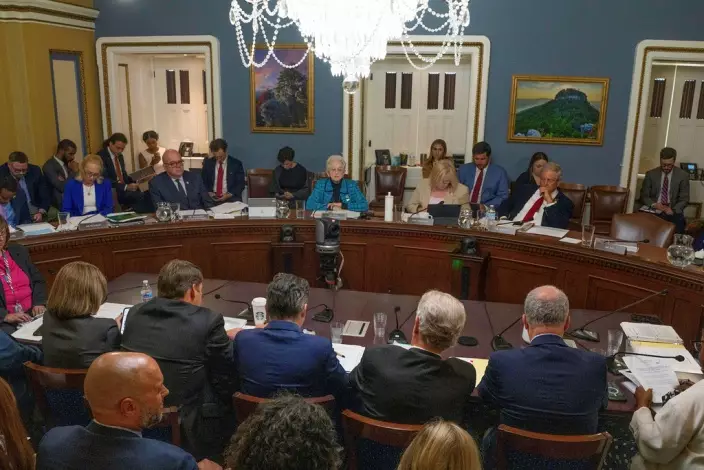
The "Big and Beautiful" bill squeaked through the Senate after JD Vance cast the tie-breaking vote. AP Photo
The bill's premise sounds simple enough: extend the corporate and individual tax cuts from Trump's first rodeo in office. But to pay for it, they're axing subsidies for wind, solar, and other renewable energy projects. It's a move that has industry analysts scratching their heads and wondering if Washington has completely lost the plot on where the global economy is heading.
While America Debates, Asia Powers Ahead
Here's where things get a bit embarrassing for American policymakers. Bloomberg's number-crunching reveals that since 2000, US electrification has basically been treading water while Asian countries have been racing ahead like they're in some kind of clean energy Olympics.
The math is pretty stark when you look at it. China's electricity share of final energy consumption is pushing 30%, according to research from the Rocky Mountain Institute using International Energy Agency data. Meanwhile, the US and EU are stuck at around 22% – roughly the same place they were two decades ago. That's not exactly the kind of "America First" leadership Trump likes to talk about.
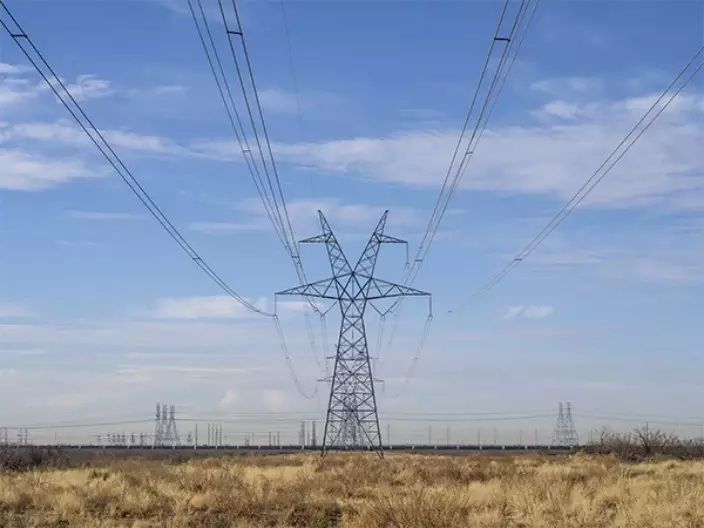
Scrapping renewable subsidies could leave America even further behind Asia's electrification surge.
What makes this even more telling is the economic logic behind it all. Most Asian countries are net importers of fossil fuels, so going electric isn't just good for the planet – it's good for their wallets and energy security. America, sitting pretty as the world's top oil and gas producer, doesn't feel that same pinch. But that short-term thinking might just be setting the US up for a long-term strategic disaster.
Asian countries like Vietnam, Bangladesh, and Indonesia are ramping up their power equipment manufacturing at breakneck speed, driven by surging electricity demand. They're not just talking about energy transition – they're actually doing it, while America seems more interested in political point-scoring than practical progress.
Musk vs. Trump: When Billionaires Collide
Nothing quite captures the chaos of modern American politics like watching two of the country's most prominent figures duke it out on social media over energy policy. Elon Musk, never one to mince words, went absolutely ballistic over the "Big and Beautiful" bill, warning it would be a "massive strategic error" that would "destroy millions of jobs in America and cause immense strategic harm to our country".
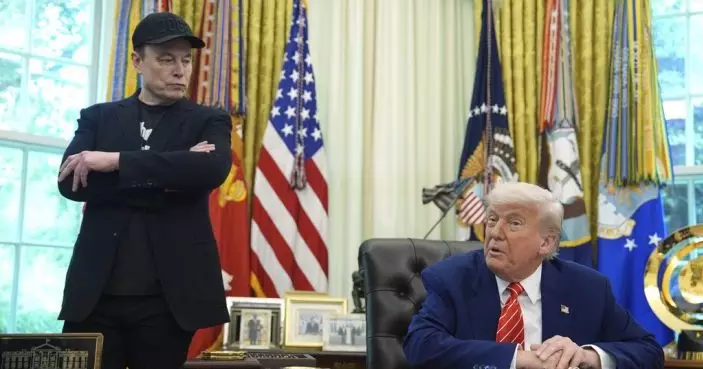
Musk's Twitter meltdown over the bill sparked a public spat with Trump. AP File Photo
The Tesla boss didn't stop there – he fired off dozens of tweets and even threatened to start his own political party called the "American Party" if the bill passed. That's when Trump decided to remind everyone who's boss, suggesting he might "take a look" at deporting Musk and telling him not to play this game with him. "If DOGE looks at Musk, we're going to save a fortune," he told reporters.
The whole spat reveals something deeper about America's energy future. Musk's fury isn't just about protecting Tesla's bottom line – though the bill's proposal to scrap tax exemptions for electric vehicle buyers certainly doesn't help his business. It's about watching America potentially sabotage its own chances in the industries that will define the next century.
Debt Mountain Gets Bigger, Blame Game Gets Louder
Here's the bit that should really worry anyone paying attention to America's fiscal future: this bill is going to make the debt crisis significantly worse, not better. We're talking about a country where annual interest payments on federal debt already exceed military spending and are roughly equal to what gets spent on Medicare each year.
The Congressional Budget Office isn't pulling any punches – they're projecting that debt interest payments will increase by an average of $55 billion annually over the next decade, possibly more. Meanwhile, the bill is expected to squeeze the poorest American families by nearly 4% while boosting incomes for the wealthiest by over 2%. That's not exactly the populist economics Trump campaigned on.
But rather than own up to the fiscal math, Trump's doing what he does best – pointing fingers. This time, it's Federal Reserve Chair Jerome Powell who's getting the heat, with Trump demanding interest rates be slashed to 1% to save "trillions in interest costs." He even sent Powell a handwritten letter spelling out exactly what he wants, which is either charmingly old-school or slightly unhinged, depending on your perspective.
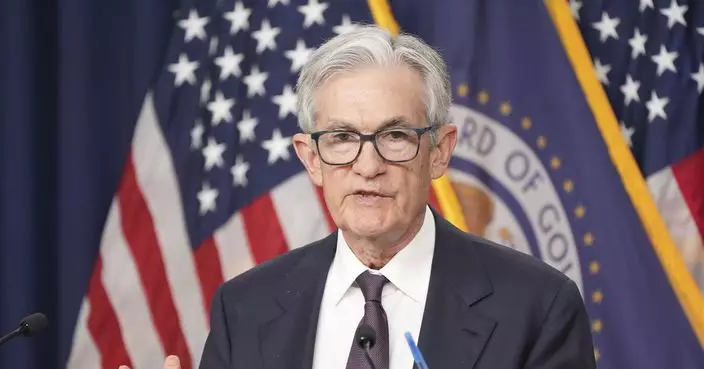
Trump points fingers at Fed Chair Powell as debt crisis deepens.
The reality is that Trump's looking for someone else to clean up the mess his policies are creating. His tariff wars are already squeezing consumers and stoking inflation, and now this bill threatens to pile more debt onto an already groaning system. Blaming the Fed is classic political theater, but it doesn't change the underlying arithmetic.
What we're witnessing isn't just bad policy – it's America potentially sleepwalking into strategic irrelevance while other parts of the world sprint toward the future. The "Big and Beautiful" bill might deliver short-term political wins, but the long-term costs could be anything but beautiful.