

Skip to Content Facebook Feature Image

Trump vs Musk: Is a China Pivot Really on the Cards?

Blog

Trump vs Musk: Is a China Pivot Really on the Cards?
Blog

Blog

Trump vs Musk: Is a China Pivot Really on the Cards?

2025-07-15 21:48 Last Updated At:21:48

It’s official. The political bromance between Donald Trump and Elon Musk is dead and buried. Following a bitter feud over what Trump dubbed a “big and beautiful” tax and spending bill, the two have publicly and messily “divorced.” The fallout has been spectacular, with Trump threatening to deport the South African-born billionaire and Musk hitting back by launching his own “America Party,” aiming to smash the two-party system. This political theatre has, of course, kicked the rumour mill into overdrive, with a report from the South China Morning Post asking the million-dollar question: could Elon Musk actually move his tech empire to China?
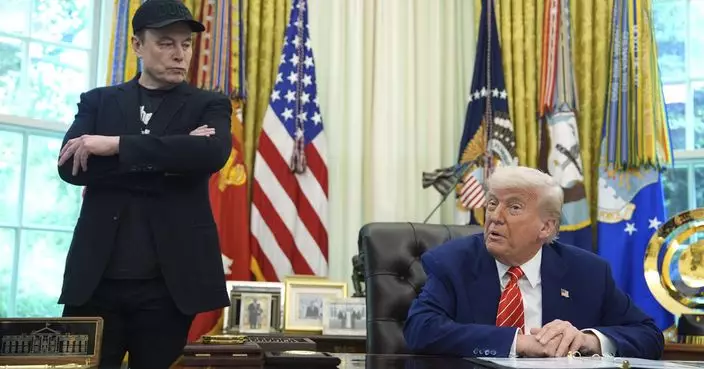
The public fallout between Trump and Musk has everyone asking the big question: could the billionaire really up sticks and move his empire to China? AP File Photo

The public fallout between Trump and Musk has everyone asking the big question: could the billionaire really up sticks and move his empire to China? AP File Photo

China on the Horizon?

According to Denis Simon, a fellow at the Quincy Institute for Responsible Statecraft, the escalating drama could certainly push Musk to look abroad. If the pressure from a Trump administration mounts over regulation, taxes, or subsidies, shifting parts of his research, development, or manufacturing arms isn't out of the question. While Simon notes that national security hurdles and export controls would make a complete relocation to China impossible, a piecemeal migration of manufacturing, knowledge, and symbolic partnerships is very much on the cards.
Of all his ventures, Tesla seems the most likely candidate for a move to China, but shifting its core technology would undoubtedly cause a political firestorm back in Washington. AP File Photo

Of all his ventures, Tesla seems the most likely candidate for a move to China, but shifting its core technology would undoubtedly cause a political firestorm back in Washington. AP File Photo

When you look at the board, moving the electric vehicle giant, Tesla, seems like the most obvious play. China has it all: a world-class EV supply chain, massive policy incentives, and a huge consumer base hungry for electric cars. However, it's not that simple. Handing over the keys to Tesla's entire library of intellectual property would trigger a political earthquake in Washington. That being said, Tesla's presence has already supercharged China’s domestic EV scene, even if its own market share has been squeezed. After commanding over 16% of the Chinese EV market in 2020, fierce competition from local champions like BYD and Xpeng saw Tesla's slice of the pie shrink to just 6% last year.

A Reality Check on a Tech Exodus

But let’s not get ahead of ourselves. Anyone thinking Musk can just parachute into China and take over is mistaken. According to Zhou Yu, a professor at Vassar College, China is now arguably ahead of the United States in electric vehicle technology. She argues that a full-scale R&D transfer would be a tough sell, making an expansion of Musk's existing Chinese operations a more likely scenario. But even then, he'd be entering a highly mature and competitive ecosystem where there's little room left for one man to shake things up significantly.

Beyond the EV business, the idea of moving other ventures is even more far-fetched, especially when it comes to SpaceX. The company is so deeply woven into the fabric of America’s national defense, satellite networks, and space program that it is fundamentally non-transferable. As Simon puts it, if Musk even attempted to shift critical space technology to a geopolitical rival, he’d "risk being seen as a threat to [U.S.] national security." Game over, basically.

Musk's other big ideas, like the brain-computer interface (BCI) company Neuralink and the Hyperloop transport network, face their own hurdles in China. Neuralink, which recently shared progress on its "Telepathy" trials, is pushing the boundaries of science, but its path in China would be fraught with challenges. As for the Hyperloop, Simon bluntly notes that the concept has been more successful as a source of inspiration than a practical project. China is already a global leader in high-speed rail, but a Hyperloop prototype there could still serve as a tech demo.
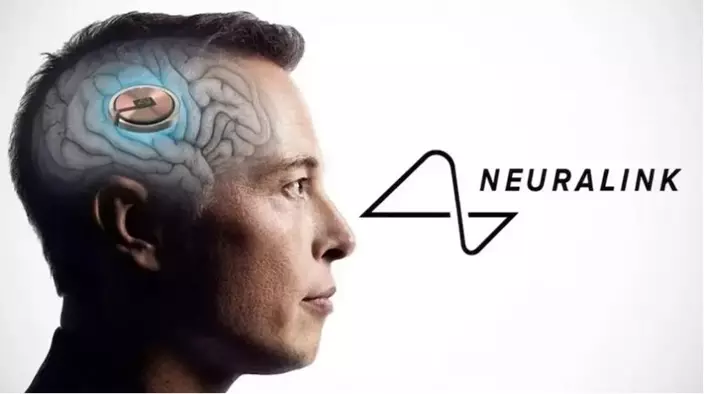
Neuralink, Musk's ambitious brain-computer interface firm.

Neuralink, Musk's ambitious brain-computer interface firm.

The Ultimate Propaganda Win for Beijing

For China to benefit from all this, however, it may not need Musk’s investment or even his allegiance. The sheer spectacle of his marginalization in the U.S. is a propaganda gift for Beijing. It reinforces China's own narrative that it offers a stable, goal-oriented environment for innovation, free from the ideological squabbles and political chaos of the West. This is a powerful message aimed not just at foreign investors, but at the thousands of young Chinese scientists working in America and at other nations looking for a different development path.

This narrative is already taking hold. After Trump and his allies threatened to deport Musk, Chinese social media lit up with messages of welcome. "If he has no country, China welcomes Musk, and Tesla cars will become cheaper," wrote one user. Another added, "Then come to China. China will definitely welcome such rich, creative, and innovative talent."

The whole saga was reignited by Trump's social media attack on the government subsidies Musk's companies have received—a whopping $38 billion in contracts, loans, and tax credits, according to The Washington Post. Trump even threatened a new “Department of Government Efficiency” (DOGE) investigation. While Musk's birth in South Africa and his Canadian citizenship technically make him deportable, the legal and political nightmare it would unleash means it's a threat that will almost certainly remain just that—a threat. But it's precisely this kind of political drama that keeps the speculation mill turning.


Deep Throat

** The blog article is the sole responsibility of the author and does not represent the position of our company. **

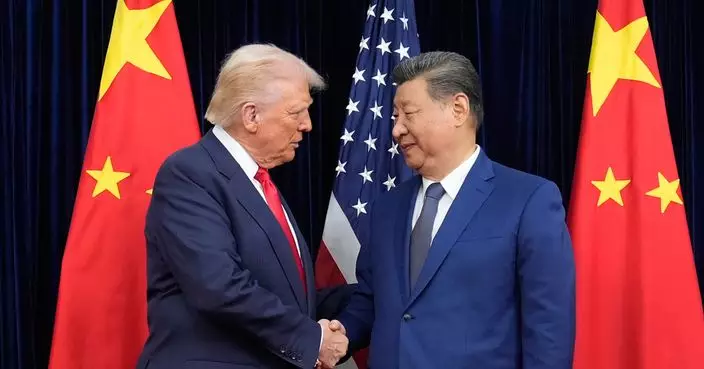
Time is short, and Trump is betting everything on one word: prices. With less than a year to the 2026 US midterms, he tells Politico the outcome will ride on “our country’s success,” and “the key is the issue of prices”—pinning today’s inflation pain on the Biden administration while promising he’s pushing costs down. But even with better-looking headline numbers, Americans still feel squeezed, and Republicans stare at weak polling and the real risk of losing Congress.

Even with better numbers, Americans still feel the squeeze—and that’s the real headline.

Even with better numbers, Americans still feel the squeeze—and that’s the real headline.

He sells the story like a man doing a victory lap. Trump repeatedly hypes his economic “report card,” zeroing in on energy: “Energy prices are down dramatically, gasoline prices are down dramatically… everything is down… down very beautifully.” He also waves around the 4.3% annualised GDP jump in the third quarter and cracks that “the Democrats are going to explode—their heads are about to blow off.”

Trump sells “energy is down” like a cure-all.

Trump sells “energy is down” like a cure-all.

And yes, the White House has numbers it can plaster on every podium. Commerce Department data shows third-quarter GDP growth is the fastest in two years; Labour Department CPI data shows November inflation cools to 2.7% year on year, the lowest since July. The administration is clearly trying to turn those figures into a simple message: Trump is fixing the cost-of-living crunch.

But here’s the catch: data can cool while wallets still burn. A Politico/Public First poll last month finds nearly half of respondents still struggle with basics—daily necessities, utilities, healthcare, housing and transport. A Christmas-season poll from centrist think tank Third Way looks even uglier: 60% say the economy is not growing, 66% think unemployment is rising, and on cost-of-living competence Democrats lead 42% to Republicans’ 31%.

The White House has stats to spin—but voters don’t live in spreadsheets.

The White House has stats to spin—but voters don’t live in spreadsheets.

The “rigid spending” trap
The real problem isn’t just inflation—it’s what Americans can’t stop paying for. A widely shared China–US cost-of-living comparison argues that many “must-pay” items in the US tower over China’s, leaving ordinary families with almost no wiggle room. It claims electricity costs are about 11 times higher in the US (roughly US$110 per person per month versus US$10 in China), with water bills also around 11 times; on housing, it points to property taxes where US$10,000 a year is described as common, plus homeowners’ association fees of about US$100 to US$300 a month—putting property-related costs at roughly five times.
 
Then comes the heavyweight punch: healthcare and insurance. The same analysis says US health insurance premiums average about US$550 a month—more than five times China’s per-capita level—and that’s before out-of-pocket bills that can climb fast. It also claims annual per-capita healthcare spending hits US$13,000, exceeding China’s per-capita GDP; and on car insurance it says Americans’ per-capita spend is 15 times China’s, with drivers facing a burden about three to four times heavier.

Yes, Americans make more on paper—but the bills eat that advantage alive. The analysis says nominal pre-tax US income is more than 10 times China’s, and after-tax take-home is about six to seven times, but services that cost 10 times more can erase that quickly. Because so many US costs are “rigid,” cutting them often means a serious lifestyle cliff—or worse, homelessness—while in China, people often have more discretionary spending they can pause when income drops, giving stronger shock resistance; the result is “edge” US middle-class families watching big money flow in and out with little left, and a job loss or surprise expense can trigger a fast social “downward fall.”

The viral China–US comparison hits a nerve: US “must-pay” bills leave families boxed in.

The viral China–US comparison hits a nerve: US “must-pay” bills leave families boxed in.

Politics feels the squeeze
That anxiety is already turning into votes—and it’s not great news for Republicans. Democrats have notched strong results in recent local elections, winning key posts like New York City mayor, New Jersey governor, and Virginia governor, boosting morale and injecting uncertainty into next year’s midterms. Trump seems to smell the smoke: he’s trying to reframe “affordability,” moving from calling it a Democratic “scam” to blaming Biden for price spikes and insisting he’s the one bringing them back down.
 
He’s also pushing for rule changes to bulldoze his agenda through. On the 27th, Trump again urges Senate Republicans to scrap the filibuster, calling it “an obstacle that holds back the American government,” and claims removal would stop shutdowns and enable “excellent healthcare.” But multiple Republicans—including Senate Majority Leader John Thune—push back, arguing the filibuster is a key institutional safeguard, and the government still faces another shutdown risk in January next year.

In the end, Trump’s toughest job isn’t citing statistics—it’s changing what people feel at the checkout line. Building a bridge between “official data” and live experience, and persuading voters that prices are truly under control, becomes the administration’s biggest midterm test. And it will help decide, directly, whether Republicans keep their grip on Congress.

Recommended Articles