Another chapter in America's increasingly bizarre immigration saga, and this time it's got alligators involved. The detention facility dubbed "Alligator Alcatraz" – a Devil’s Island guarded by alligators, has been making headlines for all the wrong reasons, and frankly, the whole thing reads like something out of a dystopian nightmare.
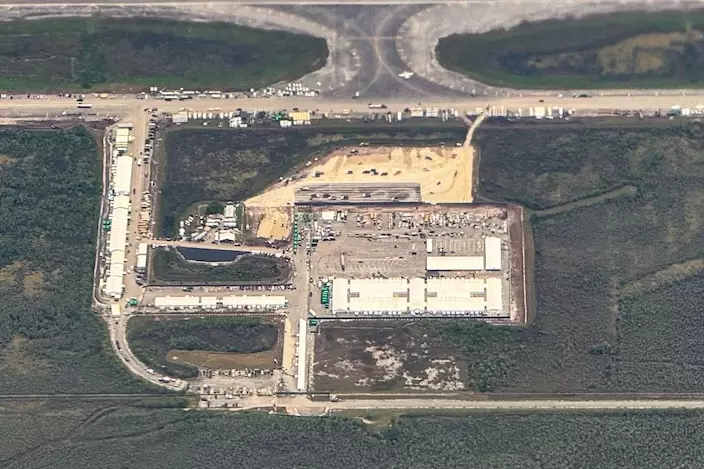
Aerial shot of "Alligator Alcatraz" detention facility in the Florida Everglades.
Let's break this down: we're talking about a facility with 5,000 beds wrapped in over 8,500 meters of barbed wire, where bunk beds are literally caged in wire mesh. The annual operating cost? A staggering $450 million. Poor conditions, massive expenses, and endless controversy – yet the Trump administration thinks one "Devil's Island" isn't enough. Homeland Security Secretary Kristi Noem is already in talks with Republican-controlled states to build more of these prison-style facilities.
The Devil's in the Details
The name itself tells you everything you need to know. "Alligator Alcatraz" draws its inspiration from the notorious Devil's Island near San Francisco – a maximum-security hellhole that operated from the 1930s to 1960s and was famous for its brutal conditions. Trump has repeatedly threatened to reopen that facility since returning to the White House.
This new facility, however, sits in the Florida Everglades at the Dade-Collier Training and Transition Airport, literally surrounded by alligators and pythons. A proper dystopian in the flesh. While the original Alcatraz prison housed hardened criminals, this detention faciity is locking up people whose only "crime" is crossing a border without papers.
The Numbers Don't Lie
Between January 20 and June 15 this year, federal immigration detention numbers jumped from 39,000 to 56,000 – an increase so dramatic it reportedly triggered riots in Los Angeles. The Trump administration keeps insisting these detainees have criminal records, but Immigration and Customs Enforcement's own files show that huge numbers of people detained during this period were only accused of immigration violations – no criminal history whatsoever.
And while the government flat-out denies problems with overcrowding, filth, and pest infestations, they're simultaneously blocking media access and banning visiting lawmakers from bringing phones or cameras. If everything's above board, why all the secrecy?
A Pattern of Discrimination
Let's be honest – America has a long, ugly history when it comes to immigration. From the Chinese Exclusion Act of 1882 to Trump's "Muslim Ban" in 2017, excluding and discriminating against immigrants has become baked into the country's institutional DNA.
The US has even shipped Latin American migrants to prisons in Guantanamo and El Salvador, claiming they're gang members without providing solid evidence. It's a pattern that keeps repeating itself, just with different targets each time.
Political Theater at Its Worst
Immigration has become nothing more than a political football – a tool for partisan point-scoring and blame-shifting. The policy-making logic has devolved into pure tribalism: "if you support it, I oppose it." Meanwhile, migrants and children are suffering mass arrests, human trafficking, and exploitation.
The cynicism is breathtaking. Trump actually visited "Alligator Alcatraz" for a ribbon-cutting ceremony, joking that escapees would "need to know how to outrun alligators". The Department of Homeland Security's social media team thought it was clever to post images of alligators wearing ICE baseball caps, lurking menacingly outside the prison walls.

Screenshot of Homeland Security's social media post featuring alligators in ICE (Immigration and Customs Enforcement) caps – because apparently joking about human suffering is now official policy.
American netizens weren't having it: "Whether you think these immigrants are legal or illegal in America – we're talking about the lives of fellow human beings" and "This country has truly fallen as low as it can go".
The UN Human Rights Committee has already expressed serious concerns about prolonged immigrant detention in the US, criticizing overcrowded facilities where detainees can't access basic necessities like food, water, and medical care – conditions that have led to deaths, including children. US media are calling the new facility "Guantanamo in the swamp," and honestly, that comparison isn't far off.
What we're witnessing here is America's human rights contradictions laid bare. The country that lectures the world about freedom and dignity is building prison camps in swamps, complete with actual predators as natural guards. The irony would be funny if it weren't so tragic.
Deep Throat
** The blog article is the sole responsibility of the author and does not represent the position of our company. **
Trump's attacks on Iran have now stretched into a month, yet tensions show no sign of easing. International fuel supplies face severe disruption as the Strait of Hormuz remains closed, sending oil prices soaring.
Trump has deployed every rhetorical tool at his disposal—even renaming the waterway the 'Trump Strait'. He’s pursued both carrots and sticks to force a quick deal with Iran on reopening. Iran, however, stands firm, signaling deep disagreement between the two sides over ceasefire terms.
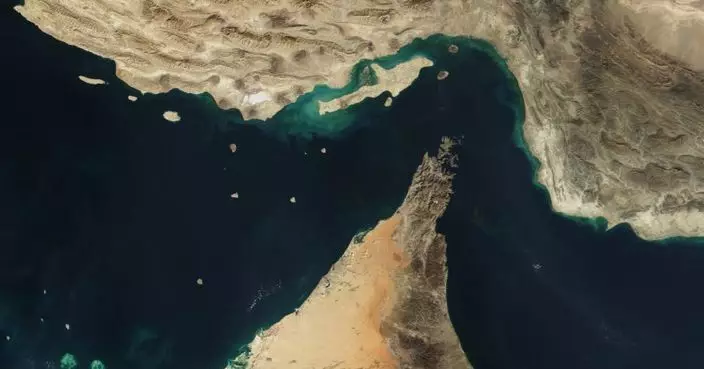
Strait of Hormuz
On March 27, Trump spoke at a summit and called the Strait of Hormuz the ' Strait of Trump,' insisting ' they have to open it up, the Strait of Trump — I mean, Hormuz.' He half-joked about the slip, mocking the fake news would claim he'd misspoken, and quipped that such 'accidents' rarely happen to him.
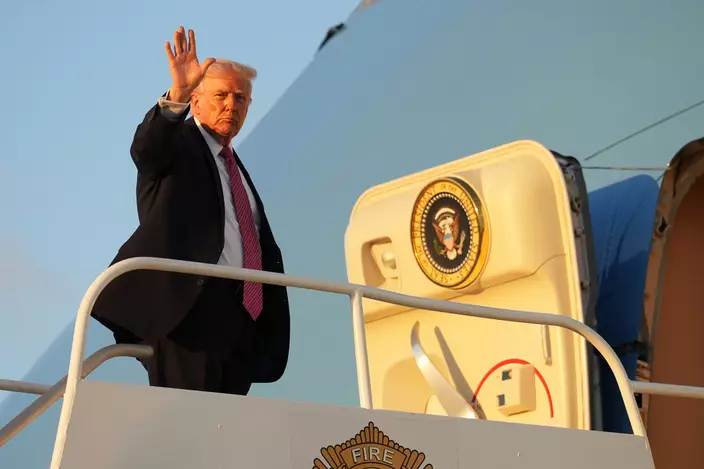
Trump speaks at a summit, calling the Strait of Hormuz the 'Trump Strait'
'Strait of Trump': US president says Iran must open key waterway
Trump claimed Iran had previously denied participating in talks but is now allowing tankers through the Strait of Hormuz to 'apologized for something they said.' He revealed Iran is actively negotiating and desperate for a deal, noting 'and two days later, they admitted it.' According to Trump, Iran initially proposed allowing 8 tankers, then added 2 more.
As the US-Iran conflict drags on, the Strait of Hormuz has been effectively shut for nearly four weeks, driving international oil and gasoline prices sharply higher. On March 26, average US gasoline prices hit roughly $3.98 per gallon—about $1 more than a month before the conflict erupted. Trump had threatened Iran with 'complete destruction' of its power plants unless it fully reopened the Strait within days, but later extended the deadline by 10 days 'as negotiations with Iran continue,' pushing the new deadline to April 6.
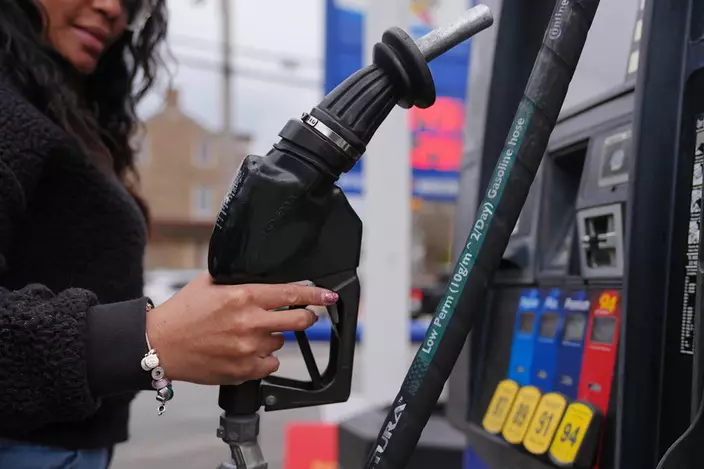
With the US-Iran conflict ongoing, the Strait of Hormuz has been effectively closed for nearly four weeks, driving international oil and gasoline prices sharply higher.
To downplay the impact of rising oil prices, Trump has recently been touting "productive" conversations with Iranian leaders, but this was denied by the Iranian side, stating they are reviewing the ceasefire proposal presented by the US but have not engaged in any negotiations with the United States.
Iranian Foreign Minister Araghchi said on the 25th that the Strait of Hormuz isn't completely closed and countries not involved in military action against Iran can transit with Iranian coordination. But that same day, Trump threatened to open the "Trump Strait." Iran's Mehr News Agency reported that the Islamic Revolutionary Guard Corps issued a statement saying the Strait of Hormuz remains "closed" to vessels and has turned away three container ships.
The statement detailed what happened after Trump falsely claimed the strait was open. Three container ships of different nationalities tried to enter the "Tehran toll booth " that morning. After receiving warnings from the Revolutionary Guard Navy, they were forced to turn back. The Revolutionary Guard emphasized the Strait of Hormuz is currently closed. Any vessels heading to or coming from ports of the United States, Israel, and their supporters are prohibited from passage. Attempts to transit without authorization face "severe measures."
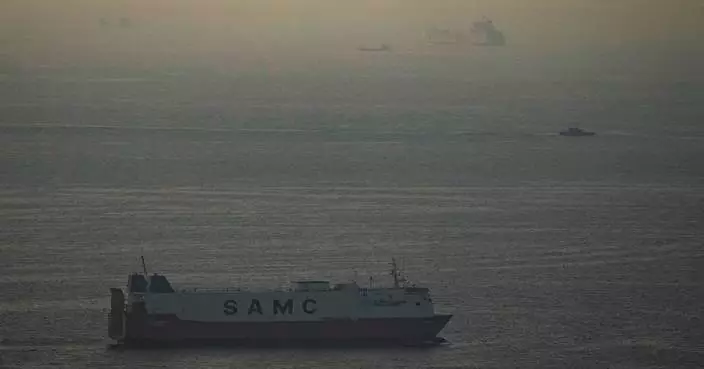
The Revolutionary Guard emphasizes that the Strait of Hormuz remains closed, with all vessels bound for or departing from US, Israeli, and allied ports barred from passage.
According to Reuters, on March 26 Trump claimed in a cabinet meeting that he received a "gift" from Iran. He said that Iran, to demonstrate sincerity in negotiations, had allowed 10 oil tankers to pass through the Strait of Hormuz. Trump used this to validate his earlier claim that Iran is participating in negotiations and to suggest his judgment was correct.
Trump linked the release of tankers to Iran's acknowledgment of negotiations. Analysts see a clear pattern: Trump is trying to stabilize oil price volatility from the past month. He's extending deadlines to hold the line while downplaying market reactions by repeatedly calling dialogue with Iran "productive." Iran, meanwhile, has adopted a "you're anxious, I'm not" posture. It continues denying direct negotiations with the United States and reaffirms through Revolutionary Guard statements that the strait remains closed. It's using the Strait of Hormuz as leverage without signaling any willingness to open it.
On the same day, the United States and Iran released starkly conflicting accounts of strait conditions and negotiation progress. One side signaled that tanker releases and talks were moving forward in tandem; the other took concrete action to block vessel passage and reaffirmed its blockade stance. As global oil prices swung on the back of strait tensions, the divergent messaging made it harder for observers to gauge actual transit conditions and the direction of US-Iran relations.