Emergency Powers Unleashed
On August 11, Trump declared a “public security emergency” and invoked the Insurrection Act, sending the National Guard troops on the streets of Washington D.C. and putting its Metropolitan Police under federal control. Oddly enough, despite data showing Washington’s crime rate has been sliding, Trump insisted it’s “completely out of control” and even tapped DEA chief Terry Cole as interim federal police commissioner—a clear sign he’s flexing federal muscle over local law enforcement.
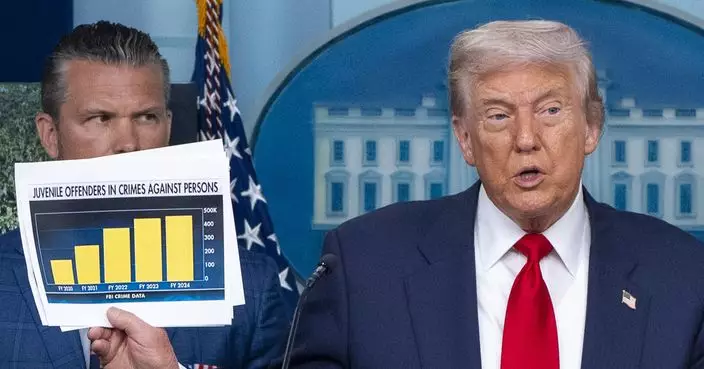
President Donald Trump holds up a chart in front of Defense Secretary Pete Hegseth as he speaks with reporters in the James Brady Press Briefing Room at the White House, Monday, Aug. 11, 2025, in Washington. (AP Photo/Alex Brandon)
Scandal Diversion Claims
Democrats wasted no time calling foul, arguing this is less about safety and more about shifting attention from the Epstein revelations, his tariff spats, and stalled tax legislation. Senate Minority Leader Chuck Schumer took to X to label it a “political strategy,” quipping that if Trump truly cared about D.C., he’d battle for the $1 billion Congress has held up. Former Speaker Nancy Pelosi reminded everyone that Trump famously dragged his feet on deploying the Guard during the January 6 riot—now, she says, he’s redeploying them to gloss over his mishandling of healthcare, education, immigration and more.
Military Meets Policing
This move puts the military squarely in the political spotlight. Defense Secretary Pete Hegseth, himself a Guardsman alumnus, wouldn’t say how long troops will stick around and admitted the Pentagon is lining up “specialized units” from other states just in case reinforcements are needed.
The New York Times quotes insiders calling the armed forces Trump’s “go-to institution,” and Duke professor Peter Feaver warns it’ll look partisan from day one—after all, soldiers aren’t trained for civilian street patrols. A Defense Department official insists they’re tightening rules of engagement to keep M-16s and combat gear off routine shifts, but former Army War College director Carrie Lee sees this as the administration treating the military as a cure-all for its domestic headaches.
Homeless Crackdown Critique
It’s not just crime that’s under the gun—so are Washington’s unhoused. According to the Washington Post, federal agents have been ordering homeless encampments to clear out with no relocation plan in place, leaving many with nowhere to go.
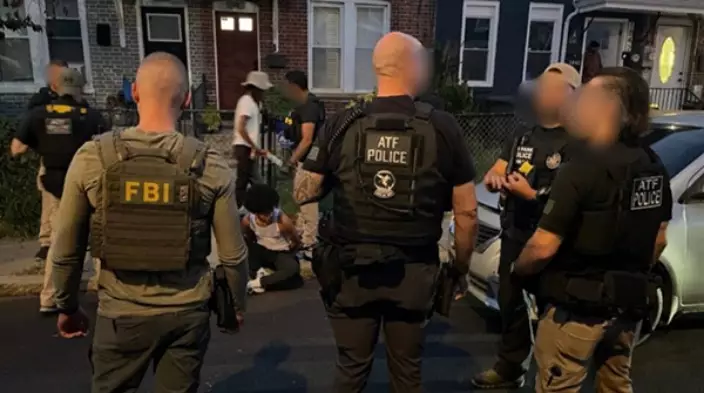
Multiple law enforcement agencies operating at the same time. AP photo
The Bureau of Alcohol Tobacco, Firearms and Explosives (ATF) publishes on social media photos of FBI teams patrolling nightlife districts under new curfews, Drug Enforcement Administration (DEA) agents checking rough-sleeping spots, and Immigration and Customs Enforcement (ICE) officers showing off seized weapons and narcotics.
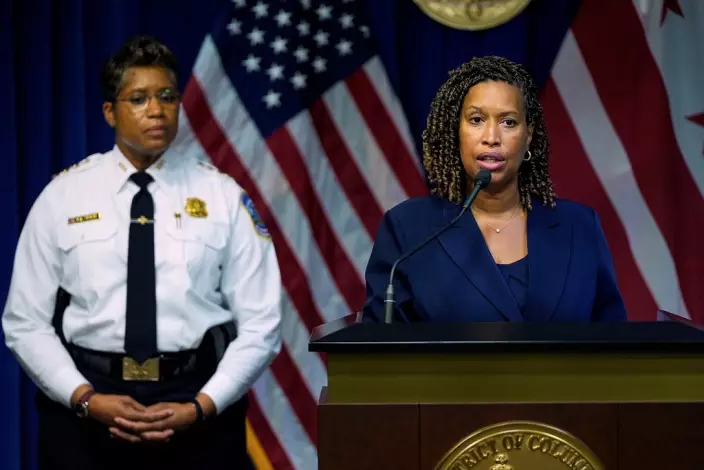
Washington, D.C. Mayor Muriel Bowser. AP photo
At the end of the day, whether this is a gutsy law-and-order gambit or a high-stakes distraction act, one thing’s clear: the lines between politics, policing and the military have never looked blurrier in the nation’s capital.
Deep Throat
** 博客文章文責自負,不代表本公司立場 **
Richard Nixon resigned in disgrace back in 1974. The Watergate scandal made him the poster child for American political corruption. More than half a century later, the man who once insisted "I'm not a crook" has become an unlikely idol for a new generation of conservatives. Call it "Nixonmaxxing": internet slang for taking Nixon fandom to the extreme. He is going viral all over again, recast as a pioneer of "America First." The rebranding echoes President Donald Trump's own style, and some are now calling the long-dead Nixon Trump's "newest ally."
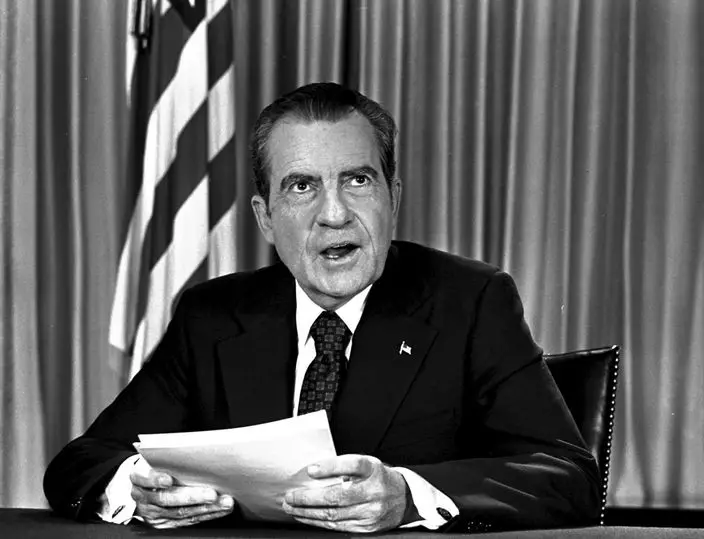
Nixon addresses the nation on Watergate, August 15, 1973.
Social media feeds are flooded with archival Nixon footage. Editors chop it into short clips and memes, set to music from popular American rappers, and the results spread fast. Young conservative influencers now wear merchandise printed with slogans like "Pretty Girls for Nixon" and "Nixon Now More Than Ever." Baseball caps, T-shirts and fanny packs bearing the word "Nixonmaxxing" have reportedly sold out within hours of hitting shelves.
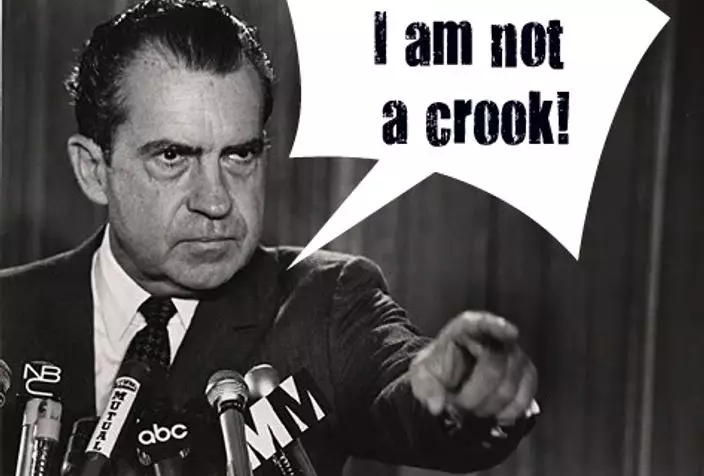
"I'm not a crook" is trending again. Gen Z conservatives have made Nixon their idol.
From Disgraced President to Meme Icon
The Wall Street Journal reported on July 17 that young American conservatives are using TikTok and Instagram to recast Nixon as a pioneer who stood up to the establishment and the "deep state." Some American netizens have even joked online: "Is Nixon staging the greatest political comeback in history?"
Five men broke into the Democratic National Committee headquarters in 1972 to plant wiretaps, and got caught in the act. The investigation that followed traced the break-in back to Nixon's re-election campaign. Nixon then tried to cover it up and failed, triggering the scandal that bears the building's name to this day.
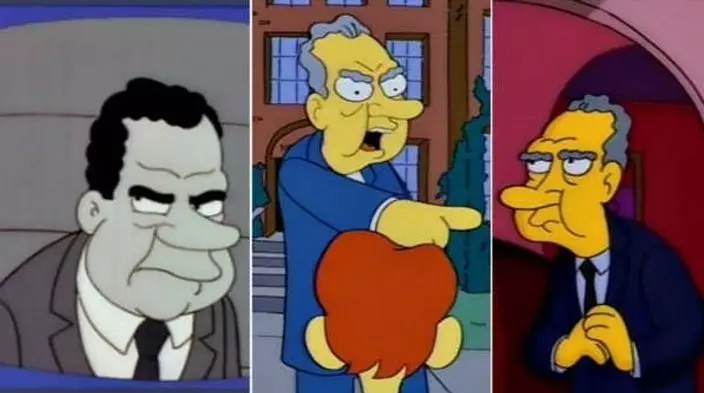
The Simpsons has mocked Nixon for decades.
Ultimately, Nixon resigned in 1974, the only US president in history to leave office mid-term. Several of his aides went to prison, and Congress passed a wave of reforms curbing presidential power. Nixon and Watergate have served as staple material for American political satire ever since.
Nixon has long been a punching bag on American television. The Simpsons mocked him repeatedly over the years. Futurama went further, portraying him as a disembodied head floating in a jar. The 1999 comedy Dick built its entire plot around Watergate, poking fun at Nixon throughout.
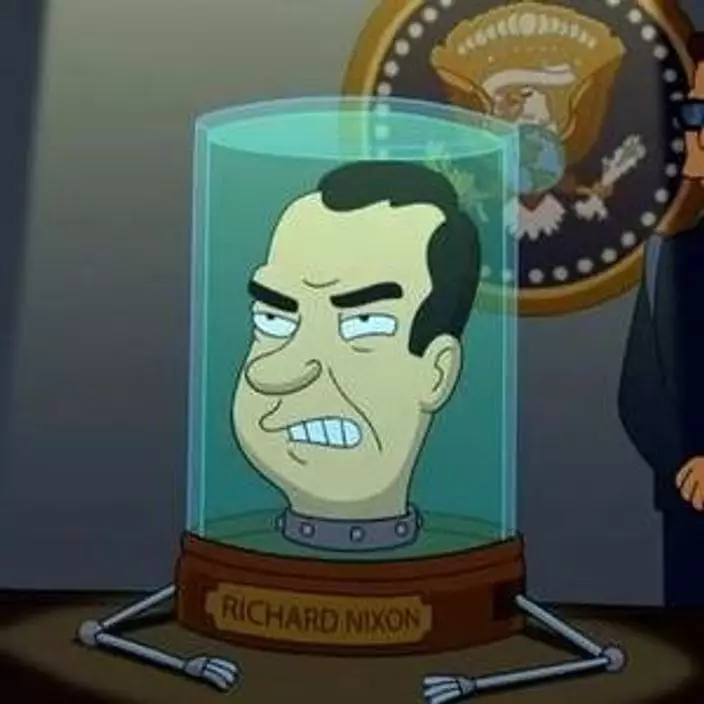
Futurama's take: Nixon, reduced to a head in a jar.
The anonymous administrator behind the Instagram account "Kawaii Richard Nixon" told the US online magazine Arc: Religion, Politics, Et Cetera that they don't fully support Nixon. But they believe Watergate overshadowed some genuine achievements of his presidency. "Watergate was of course wrong," the administrator said, "but compared to some of the things happening today, it's barely anything."
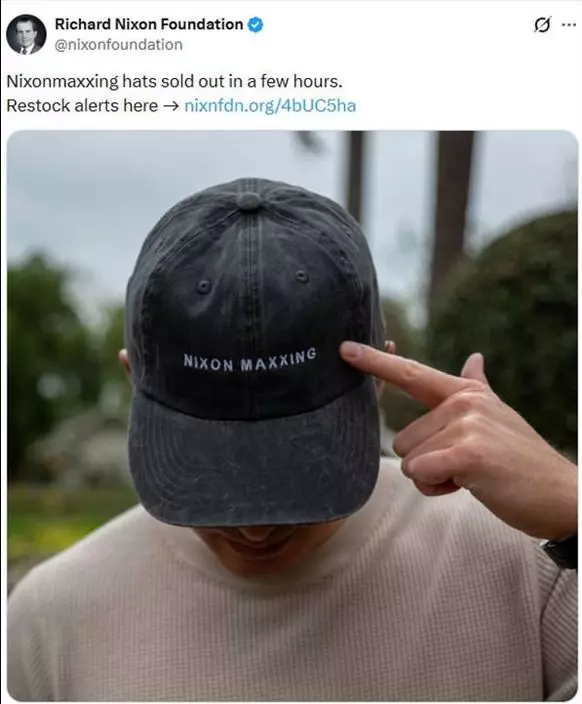
"Nixonmaxxing" caps sold out in hours.
Nixon's politics symbolize a bygone era, they added, one "completely different from today." He pushed through liberal policies such as establishing the Environmental Protection Agency and the Occupational Safety and Health Administration, and advanced cancer research. The administrator estimated that most of the account's followers are high school and college-age Gen-Zs.
The Trend Takes Hold in US Politics
The "Nixon craze" hasn't stayed on social media. It has taken root inside American political circles. The Wall Street Journal reports that Trump has long admired Nixon. During his second term, Trump has repeatedly pushed back against the limits on presidential power that emerged after Watergate, a stance now echoed by senior Republican figures.
Trump wrote to Nixon in 1982, calling him "one of this country’s great men". The two kept up a correspondence for years afterward, bonding over shared grievances. Nixon wrote back in a 1990 letter: "Dear Donald — I know nothing about the intricacies of your business enterprises but the massive media attack on you puts me in your corner!"
Vance made the connection explicit in June. Speaking at an event at the Nixon Presidential Library in California, he said: "I think that his historical legacy is enjoying a bit of a renaissance, but I think deservedly so."
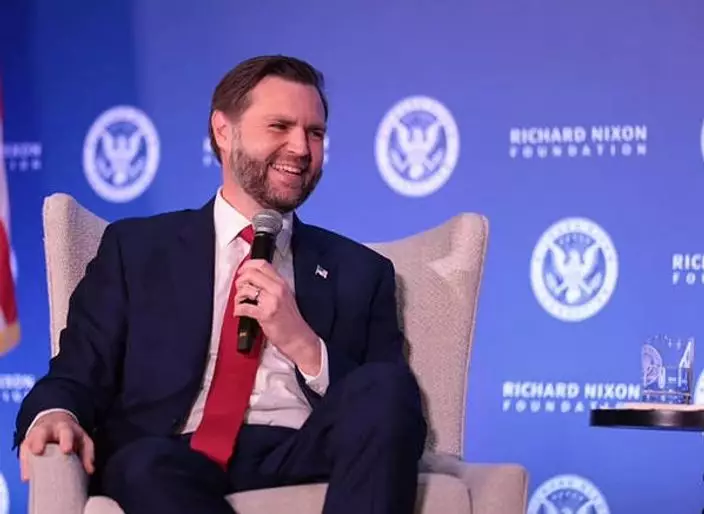
Vance, at the Nixon Library in June: Nixon's legacy is having "a renaissance."
Vance then compared Nixon's 1972 election victory directly with Trump's. He argued that the coalition returning both men to the White House was broader and more durable than the one that elected Ronald Reagan. "you know Reagan could not have won his landslide in 2024," Vance said, pointing to America's changing demographics, "Richard Nixon maybe could have won his landslide in 2024."
To some in this new generation of conservatives, Nixon is no longer labelled as Watergate's villain. He has become an "America First" pioneer instead, a tough president loathed by the mainstream media, besieged by investigative agencies, and ultimately brought down, in their view, by the "deep state."
Years of Rebranding Behind the Scenes
None of this happened by accident. The Nixon Foundation has quietly run a years-long rebranding campaign, working to re-present the former president's "historic achievements." Those include the Apollo moon landing and the Sino-US rapprochement.
Jim Byron, chairman of the Nixon Foundation, said planning began back in 2018. The goal was to repackage the more than 46 million documents and 3,700 hours of recordings held at the Nixon Presidential Library into short-video content. Once the foundation started posting clips on Instagram and TikTok, "We really saw it explode," Byron said. Some clips have racked up millions of views on YouTube.
A 2024 short video posted by the foundation, with selected footage from the old TV series “Mad Men” that features the 1960 Kennedy-Nixon race, went viral on X. The clip opens with the character Don Draper's assessment of the two presidential candidates, waxing poetically about "the Abe Lincoln of California, a self-made man," before concluding: "Kennedy, I see a silver spoon. Nixon, I see myself."
The footage then cuts to photographs of Nixon set to music by an American rapper. In an accompanying recording, Nixon can be heard saying: "And believe me, when you’ve gone through the fires of having to work your way through school, of having to fight campaigns with no money, of having to do it on your own, you’ll come out a pretty strong man, and you’re not in awe of anybody."
Netizens have flooded the comments with praise. Many call Nixon "one of the most underrated presidents," while others say "we were probably too hard on Nixon."
Matthew Foldi, an editor at the conservative outlet Washington Examiner, said the Nixon Foundation once gave him a limited-edition baseball cap. It was printed with Nixon's iconic V-for-victory hand gesture.
A Mirror to America's Political Mood
Nixon's renewed popularity taps into something bigger. It reflects the hard-edged populism and nostalgia that have taken hold on the American right in recent years.
Conservative commentator Shashank Tripathi argues that Nixon represents "heterodox middle finger to the establishment". That is precisely what appeals to the young conservatives championing him. In their eyes, Nixon is no longer merely the "crook" of Watergate. He has become an early victim of the "deep state," a framing that resonates deeply with Trump supporters.
Former Fox News host Tucker Carlson claimed in 2024 that Watergate was actually a "deep-state coup" orchestrated by the CIA and FBI. Podcast host Joe Rogan later echoed similar claims on his own show, saying "the whole thing was set up by the government".
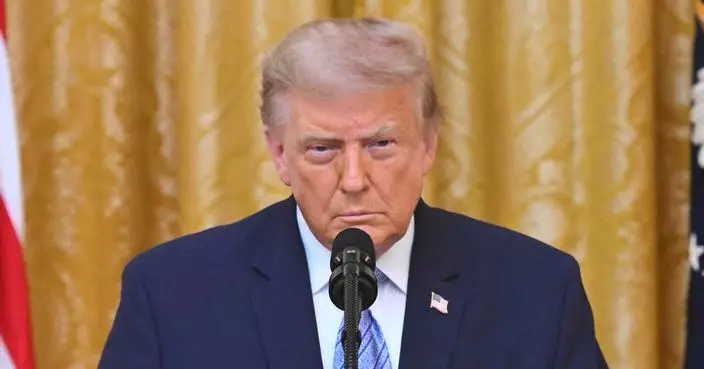
1982: Trump calls Nixon "one of this country’s great men." A friendship is born.
Republican political adviser Roger Stone revealed that Trump has repeatedly asked him why Nixon chose to resign rather than fight back. Stone believes that "Nixon was in fact brought down by the same deep-state institutions that tried to bring down Trump".
White House spokesman Kush Desai struck a similar note. He said former President Nixon exposed the betrayals of the deep state and the "fake news" media. Decades later, Desai added, President Trump continues fighting these entrenched interest groups on behalf of the American people.
The Wall Street Journal noted that those pushing to rehabilitate Nixon's reputation see it as more than restoring the standing of one president. It is also a challenge to the system of constraints on presidential power built up after Watergate.
Since the start of Trump's second term, the White House has taken a series of steps to weaken these constraints. These include expanding presidential control over fiscal spending, firing inspectors-general, and adjusting protections for career civil servants.
Conservative commentator Christopher Rufo has gone further still. Nixon's importance to the right, he says, lies in the fact that "America has been essentially stuck in the year 1968." The right, he argues, needs to launch a "counter-revolution."
Watergate holds fresh appeal today for a simple reason. Americans can now scarcely imagine a president choosing to resign with dignity, sparing the country a long, divisive impeachment battle on the principle of putting "America first" rather than himself first.
Today's "Nixonmaxxing" may have less to do with young Americans genuinely warming to Nixon himself. It works more as a mirror, reflecting present-day American society's fraught relationship with its own past, its institutions, its power structures and its political order.