Despite all the clamour in Washington about dubious “security risks,” America’s farmers are quietly embracing Chinese-made drones to keep their operations humming.
Budget Lifeline
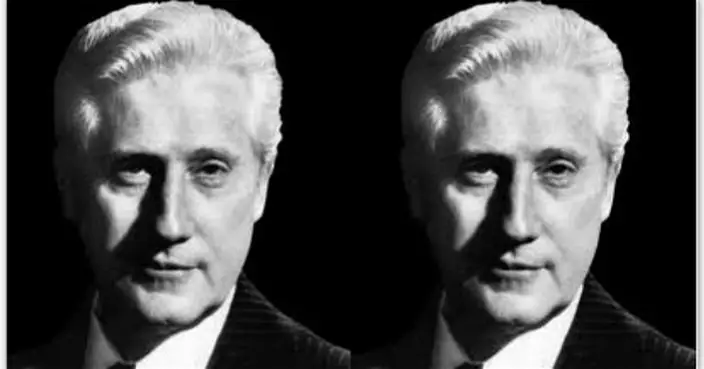
When David Bruntz, VP of the US Meat Export Federation and Nebraska rancher, went hunting for a cattle-monitoring drone, the only one that didn’t break the bank was from DJI. Their seed-planting, pesticide-spraying and livestock-tracking kits have become ubiquitous—and, as Bruntz admits, “Chinese drones are spreading quite quickly.”

David Bruntz (centre), Vice President of the US Meat Export Federation.
Like many in Nebraska, he worries about supply-chain hiccups, but switching to US-made kit? “Neither easy nor cost-effective,” he says. Chinese drones outprice and outpace domestic rivals, making any alternative feel like a non-starter.
Supremacy & Politics
And it isn’t just flying bots—smart ear tags and herd-control systems on US ranches quietly pack Chinese chips and parts. Drone Industry Insights reckons China makes 70–80% of the world’s commercial drones and dominates key bits like sensors and speed controllers. American thinktank CSIS figures put DJI at roughly 90% of the US commercial market, and they’re already pushing into ag-tech as their next growth engine.
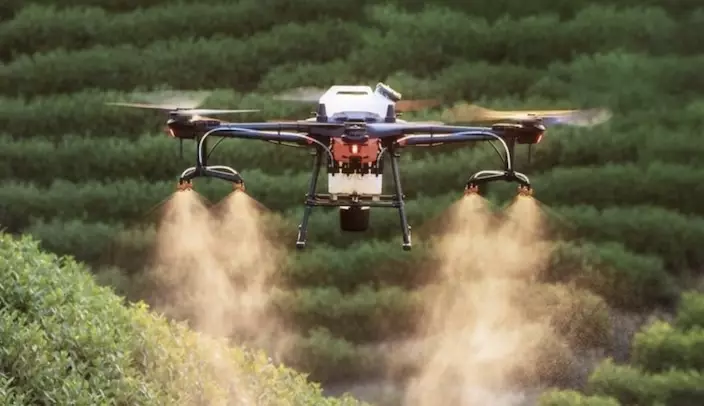
DJI-produced agricultural spray drone.
Unsurprisingly, Washington slapped DJI onto the Entity List, floated potential bans and dangled tariffs over “information security” concerns. Beijing fired back, accusing the US of abusing state power, wrecking global supply chains and hurting American consumers.
Experts reckon red-state farmers won’t be cut off anytime soon—unless those drones start packing serious AI, which might finally rattle Capitol Hill. But full decoupling? Good luck. Chinese firms dominate both finished drones and core components, and even European rivals admit they can’t keep pace.
Deep Throat
** The blog article is the sole responsibility of the author and does not represent the position of our company. **
Trump just rolled out another tariff threat, and this time Iran's trading partners are in his crosshairs. On January 12, the US president announced a blanket 25% tariff on any country "doing business" with Tehran.
The international press immediately fixated on China—Iran's biggest trade partner. Reuters warned this could reignite the US–China trade war and shred the fragile truce both sides hammered out last year. But Chinese scholars aren't buying it. They say Trump lacks the nerve to slap Beijing with new tariffs, because China will hit back hard—and make him regret it.
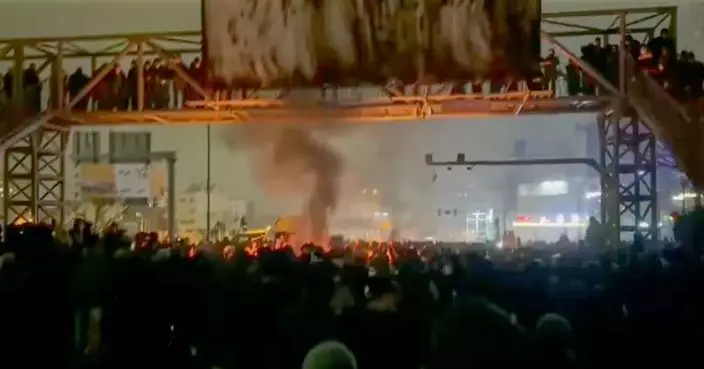
Anti-government protests erupt in Iran. (AP photo)
The Financial Times reported on January 12 that these tariffs—which took effect immediately—could slam China, India, Turkey, Pakistan, the UAE, Brazil, and Iraq. All of them trade heavily with Iran. Russia sealed a new free trade deal with Iran in 2025, making it another potential target.
CNN pointed out the stakes for Beijing. China trades with both Iran and the US, so if Washington applies these tariffs, Chinese goods entering America could see costs spike. The network recalled that after last year's summit in Busan, South Korea, the Chinese and US presidents agreed to pause portions of their tariff war—a temporary truce.
Iran as Flashpoint, Again
Reuters published a piece on January 13 titled "Trump's Iran Tariff Threat Risks Reopening China Rift." The article traced how Iran became a powder keg in US–China relations during Trump's first term (2017–2021).
Back then, Washington tightened sanctions on Tehran and blacklisted Huawei, accusing the Chinese telecom giant of selling tech to Iran. That led to the arrest of Huawei founder Ren Zhengfei's daughter, Meng Wanzhou, in Canada—triggering a diplomatic crisis and sending bilateral tensions through the roof.
Now Trump's targeting Iran again. If he follows through, total US tariffs on Chinese exports could exceed 70%—way higher than the rates both sides agreed to last October when they dialed down their trade fight.
It's still unclear which countries or entities Trump will actually target. He hasn't named China explicitly. But Reuters noted Trump has a track record of making bombastic statements that could upend US foreign policy—only to back off later.
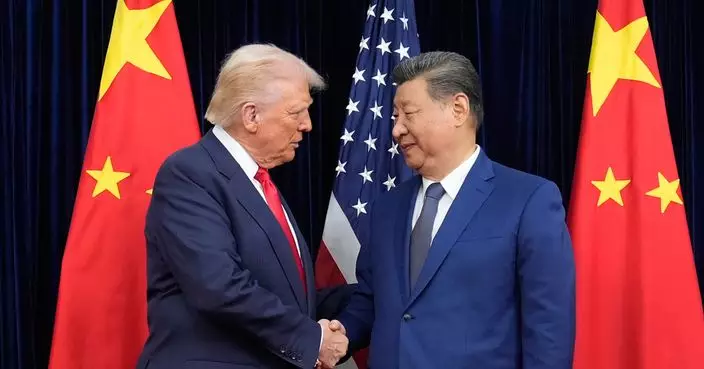
US–China "truce" forged in Busan last year now at risk if Trump's Iran tariffs target Beijing. (AP file photo)
Beijing Calls Trump's Bluff
Wu Xinbo, Dean of Fudan University's School of International Relations, told Reuters that China sees through Trump's posturing. "China will call (Trump's) bluff. I can assure you that Trump has no guts to impose the extra 25% tariffs on China, and if he does, China will retaliate and he will be punished," said Wu.
Another Chinese scholar pushed back on the narrative that China and Iran are economically intertwined, noting that "China and Iran are not as close as in the public imagination".
China Customs data backs that up. Beijing has dramatically reduced imports from Iran in recent years. Through November last year, China imported just 2.9 billion USD worth of Iranian goods—a far cry from the 21 billion USD peak in 2018, during Trump's first presidency.
Some sources claim China's major oil companies stopped doing business with Iran in 2022. Yet China's purchases from Tehran still run into the billions, thanks to independent refiners handling shipments.
China as Convenient Scapegoat
Wang Jin, a researcher at Beijing's Dialogue Think Tank, told reporters that "China is just an excuse, a kind of disguise for the Trump administration, to impose new pressure (on) Iran."
Chinese Foreign Ministry spokesperson Mao Ning responded to Trump's tariff threat on January 13. She stated that China's position on tariffs is crystal clear: tariff wars produce no winners. Beijing will firmly defend its legitimate rights and interests.
Analysts warn that Trump's renewed attempt to cut Iran off from global trade could heighten worries about the Belt and Road Initiative. Iran serves as a strategic hub for Chinese goods heading to the Middle East.
This tariff gambit has cast doubt on Trump's planned April visit to China. Observers had expected him to seal a comprehensive trade deal with Beijing during that trip.
The Wall Street Journal echoed Reuters' concerns, warning that new tariffs on Iran's trading partners could wreck the US–China trade truce.
But Reuters also cited Xu Tianchen, a senior analyst at the Economist Intelligence Unit, who questioned whether Trump's tariff policy is even enforceable. "Last year he announced tariffs related to 'illicit' Russian oil trade, but their implementation was patchy." Xu said.
He went on stating that "Trump is also the kind of person who likes bullying the weak," Xu said. "He should manage his actions to avoid these tariffs escalating into direct confrontation with China".