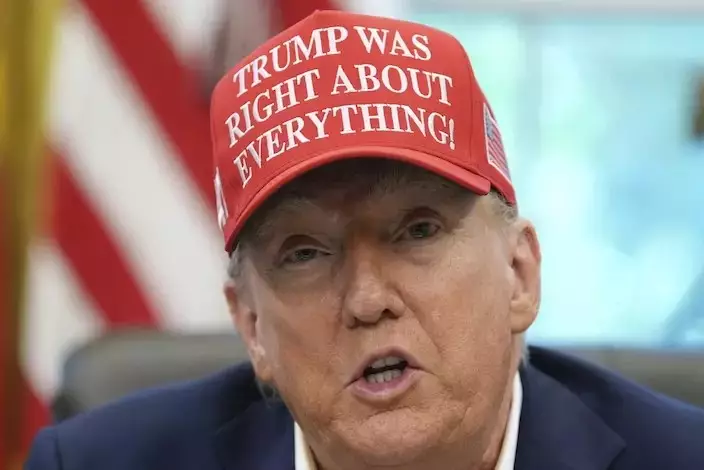

Remember America started its own Belt and Road Initiative two years ago? Yeah, that didn't work out so well.
Two years ago, the US was beating its chest about this brilliant "India-Middle East-Europe Economic Corridor" (IMEC) that would supposedly crush China's Belt and Road Initiative. Western media went wild calling it a strategic masterstroke. Fast forward to today, and this supposedly game-changing infrastructure project has basically flatlined against the backdrop of complex geopolitics and diverse interests.
The Big Launch That Led Nowhere
Back in September 2023 at the New Delhi G20 summit, America rolled out this grand plan with India, Saudi Arabia, UAE, and the EU. Railways, pipelines, power systems spanning from the Indian Ocean through the Persian Gulf to Europe - Biden himself called it "a real big deal". The whole thing was marketed as the new Spice Route that would change everything.
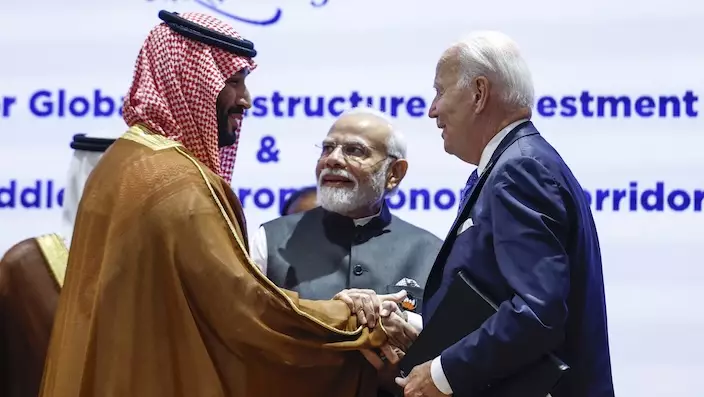
The handshake that meant nothing: Biden, Modi, and Saudi Crown Prince Mohammed bin Salman in 2023.
Western pundits immediately framed it as the ultimate counter to China's Belt and Road Initiative. Biden was practically gloating about how this would deliver “game-changing regional investment” for everyone involved.
But here we are two years later, and not only has nothing substantial happened, but the whole thing has been pushed to the side as Middle Eastern tensions and great power competition took over.
When Your Key Partners Walk Away
The UAE was supposed to be a cornerstone of this whole operation. Then Gaza happened, and suddenly UAE-Israel relations went straight into the freezer. UAE officials started openly slamming Israel's West Bank actions as crossing "red lines" and basically declared that extremist forces had trashed the Abraham Accords.
When Israel decided to bomb Hamas leadership in Doha, that really set off the Gulf states. The UAE President and his ministers personally flew to Qatar to show solidarity, publicly opposing Israel. As experts point out, Israel is basically throwing away hard-won cooperation opportunities - relations are now at rock bottom.
Saudi Arabia has done a complete 180 too. They had promised $20 billion for this corridor, but after the whole invasion of Gaza, they made Palestinian statehood a non-negotiable condition for any normalization with Israel. The railway investments? Suspended. After Israel hit Doha, Riyadh went even further, declaring it would stand with Qatar 'without limits' and harness 'all capabilities' for Qatar's response."
So the corridor that was supposed to depend on Middle Eastern cooperation now has its foundation completely shaken by regional conflicts.
India Plays It Safe
Unlike the UAE and Saudi Arabia backing away, India recently signed a bilateral investment deal with Israel. On paper, this looks like they're keeping some hope alive for the corridor. But both countries completely avoided mentioning the corridor in their joint statement. Delhi clearly doesn't want to stick its neck out too far.
Researchers are calling India's approach more like a mere kept-up appearance. Fair enough - unlike the UAE and Saudi Arabia, India doesn't have to deal with the direct political fallout from Middle Eastern conflicts. For Israel, getting any agreement with India counts as some kind of diplomatic win. But this barely dents the overall decline.
America Loses Interest Fast
Here's where it gets really telling - the US, which started this whole thing, has basically lost the will to grind on its own project.
Trump promised India's PM he'd convene a summit within six months after taking office. That deadline came and went and nothing happened. Instead, Washington's focus shifted to slapping high tariffs on India and dealing with Middle Eastern drama. When Trump visited Saudi Arabia and the UAE, he didn't even bother mentioning the corridor plan.
Analysts point out that this project was originally America's key tool for pushing the Abraham Accords and improving Israel-Saudi relations. But now? The US hasn't just failed to resolve contradictions - it's actually made regional uncertainty worse through its policy flip-flopping.
Turkiye Swoops In
While America sits there twiddling its thumbs, Turkiye is actively pushing forward with its own "Iraq-Turkiye-Europe Development Road Project". This corridor aims to connect Turkiye with the Gulf region through Iraq. Especially after the Kurdistan Workers' Party dissolved, Ankara sees a golden opportunity to advance this project.
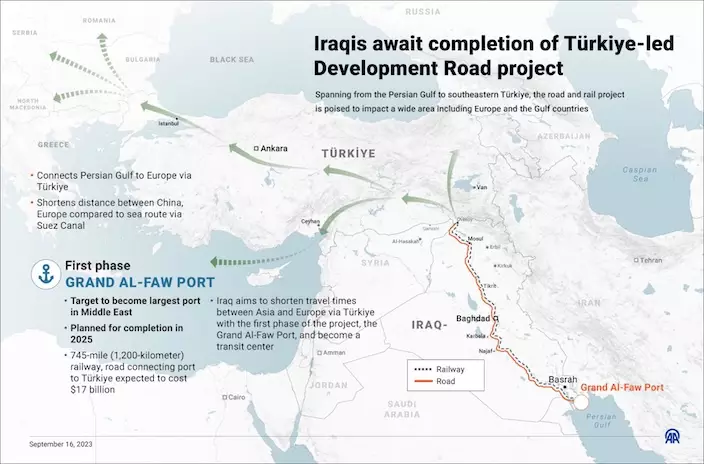
Turkiye's "Development Road" - while America fumbles, Ankara moves ahead with its own grand plan.
Turkiye's moves aren't just intensifying competition with Israel - they're also annoying India. The route Ankara is promoting could seriously impact India's original strategic vision of connecting to Europe through Iran, Armenia, and Russia.
Europe Can't Make Up Its Mind
The EU's commitment to this project has been half-hearted at best. Initially, Greece, Italy, and France were fighting over who would dominate the maritime hubs, but they ended up just dumping responsibility on some subordinate team within the European Commission.
More problematically, some European diplomats are now demanding that Israel allow Palestinian participation in corridor construction. Obviously, Israel isn't going to accept that condition under current circumstances.
European analysts are even acknowledging that the corridor project is literally 'on ice'. One of them went a step further and called it “collasped”.
Reality: Strategic Failure
The IMEC was supposed to be America's big answer to the Belt and Road Initiative. Two years later? Virtually zero progress. Middle Eastern conflicts drove away key partners, US interest evaporated, Europe can't decide what it wants, and Turkiye is busy promoting its own alternative.
Looking back now, this supposedly "game-changing" corridor didn't just fail to achieve its intended effect - it's actually exposed the limitations of the US and its allies when it comes to regional cooperation. As one analyst put it: as long as the Gaza war continues, this plan can't possibly get off the ground.
Deep Throat
** 博客文章文責自負,不代表本公司立場 **