America’s “free speech”—once worn proudly like a badge—has, unbelievably, become a paper-thin test no one can pass.
Right now, the US is deep into a full-blown “doxxing fanfare”—and the rules couldn’t be simpler. Whether you’re a colonel or a teacher, a commentator or a random netizen—say the wrong thing about Charlie Kirk’s murder and you could lose your job, your future, or even land in much hotter water.
Click to Gallery
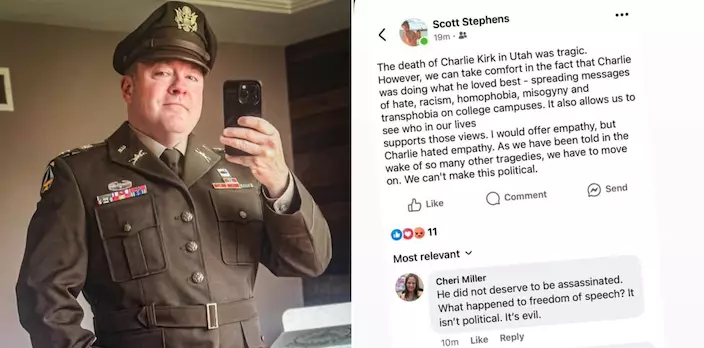
Colonel’s words that sparked a storm
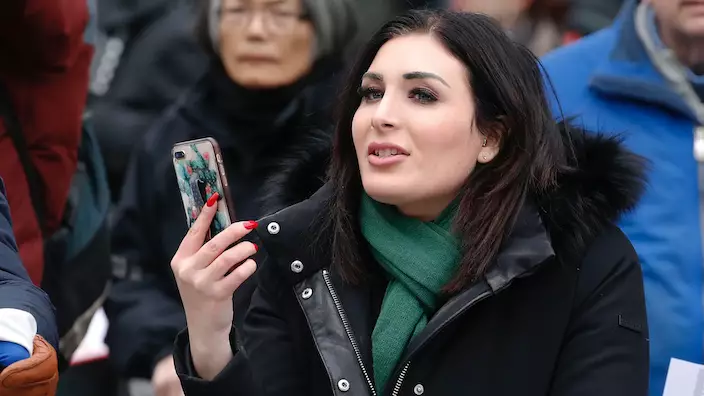
Right-wing firebrand Laura Loomer on the attack
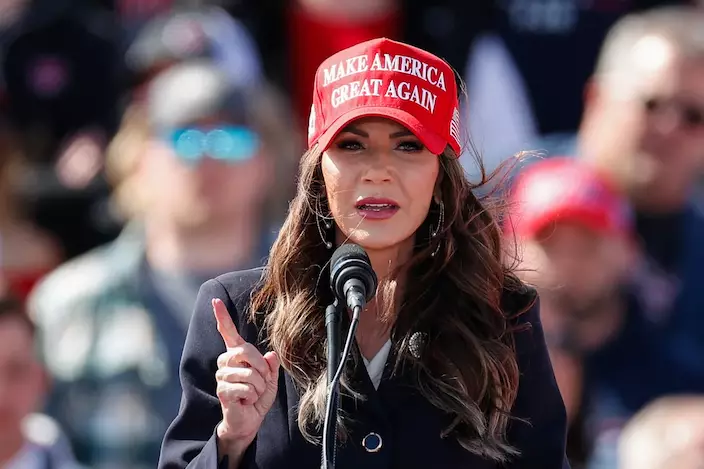
DHS Chief Kristi Noem
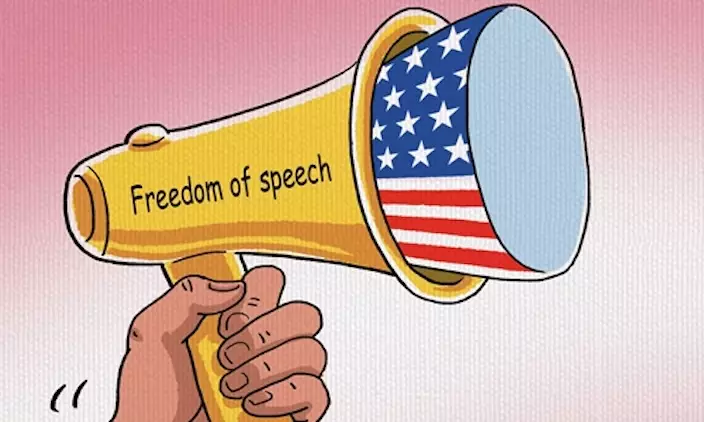
A divided America, Global Times graphics
One Post, One Career Down: The Colonel’s Case Goes Viral
Latest headline: US Army Colonel Scott Stephens just got the boot. His crime? On social media, he said the murder was tragic, but he remarked that Kirk had spent years spreading hate and discrimination on college campuses, and suggested that “We can’t make it political.”
Colonel’s words that sparked a storm
In other words: Kirk’s death is tragic, but the man bears some responsibility. Not exactly a flamethrower of a comment, yet the backlash was instant. Critics pounced: “Kirk did not deserve to be assassinated. What happened to freedom of speech?"
Stephens doubled down: Kirk had spent years inciting political violence, and now he’d become a casualty of what he started.
And it’s not just the military. A high school teacher in South Carolina posted: “Thoughts and prayers to his children but IMHO [in my honest opinion] America became greater today.” The price? Fired under pressure from Republican lawmakers.
New Rules: Welcome to America’s “Accountability Machine”
In today’s America, “free speech” is being replaced by what can only be called an accountability machine. On social media, the hunt is relentless: spot someone making an “inappropriate” comment about Kirk, and immediately broadcast their name and workplace, demanding they be sacked.
Far-right influencer Laura Loomer was first to the megaphone, declaring that anyone “sick enough” to celebrate Kirk’s death should “prepare to have your whole future professional aspirations ruined”. Her warning: Gloat now, and your career is over.
Right-wing firebrand Laura Loomer on the attack
In this climate, new “doxxing” cases flood social media: military officers’ posts aired, teachers’ opinions exposed, even firefighters and commentators get the treatment. The scoreboard? Dozens already lost their jobs and counting.
CNN reports that this feeding frenzy is only picking up speed. Some are even curating live updates: “Who Got Fired Today?”—all in real time. There’s even been an anonymously-registered doxxing site named “Expose Charlie’s Murderers” that “gathered information about people who made posts about Kirk”.
What started as outrage has become a nationwide political purge.
Is There Any “Free Speech” Left To Defend?
So you have to ask: can America’s legendary “free speech” even survive this?
US Secretary of Homeland Security Kristi Noem put it bluntly after Kirk’s murder: This is a turning point for America and the world. “It feels like a grief has settled on not just the country, but the entire world, something has changed.”
DHS Chief Kristi Noem
She went on with the criticism of the left-wing, stating that “Some of the rhetoric we’re seeing out of the left and out of political animals is ugly and it’s bitter and it’s seeking to seize this opportunity to turn it into evil.”
Elon Musk, never one for restraint, went even further—accusing the left of “celebrating it openly” after Kirk’s death, and branding them “the party of murder and celebrating murder”. In Musk’s world, it seems “the left” and “Democrats” are interchangeable.
This flood of statements from politicians and influencers is turbo-charging the movement. Once upon a time, Americans prided themselves on the motto: “I disapprove of what you say, but I will defend to the death your right to say it.” In today’s America, that sounds hollow.
The Exiles and the Internet Trap
Some of the sharpest changes are happening to America’s political exile community—people who once saw the US as a safe haven, some Democrat, some Republican. Previously, they’d disagree occasionally within their own circles, but that was it.
Now, after Kirk’s death, everything’s tense. Some may have voiced criticism of Kirk—even in their native tongues—never expecting to end up targets themselves. People are tagging Trump-era officials, demanding these “ungrateful” exiles be investigated.
For these folks, the internet simply doesn’t forget. Any statement, present or past, can be used against you. Lose US protection, get sent home—and real danger looms. Exiles facing exile, again. It’s an unsolvable maze.
How Do We Even Talk About This?
So how do we even make sense of all this? Mainland media veteran “Niu Tanqin” makes three observations.
First, America’s “speech purge” is now a mass movement. Republicans used to accuse Democrats of attacking dissenters as “homophobic” or “sexist.” Now the tables are turned—Democrats say Republicans have only doubled down. The result? Political feud is dragging everyone deeper into the mire.
Second, the American “enemy logic” is spinning faster than ever. Oregon scholar Whitney Phillips notes that collectively denouncing those “celebrating Kirk’s death” is just manufacturing new foes. Diverse groups get bundled together, turning into the “public enemy” in conservative circles—and this cycle just keeps fracturing society.
Third, peace and stability suddenly look priceless. The Middle East burns, Europe protests, Russia-Ukraine war slog through generations. And in America, political hate and division have made purges and violence normal. In contrast? China’s quiet stability—built on both system and environment—is something to treasure.
A divided America, Global Times graphics
From Warning to Witch-Hunt: What Kirk’s Murder Became
Charlie Kirk’s murder could have been a wake-up call to reject violence. Instead, it set off a doxxing circus. Now people of all stripes get reported, sacked, and cast out—free speech reduced to empty words.
When politics becomes the only yardstick, rationality is the first to go. America’s rifts and clashes have wrecked its cherished values of freedom—and proved that no society can thrive on endless hostility and purges.
A truly stable society is never a given. It’s those ordinary days—so easy to take for granted—that matter most.
Deep Throat
** 博客文章文責自負,不代表本公司立場 **