Trump has now found himself in an uncomfortable spot: American farmers are howling over China’s refusal to buy US soybeans, a crisis that is hitting the Republican heartland the hardest.
On October 1, local time, Trump announced he was preparing for a “major topic of discussion” with President Xi Jinping at the upcoming Asia-Pacific Economic Cooperation (APEC) summit to demand that China restart its soybean purchases.
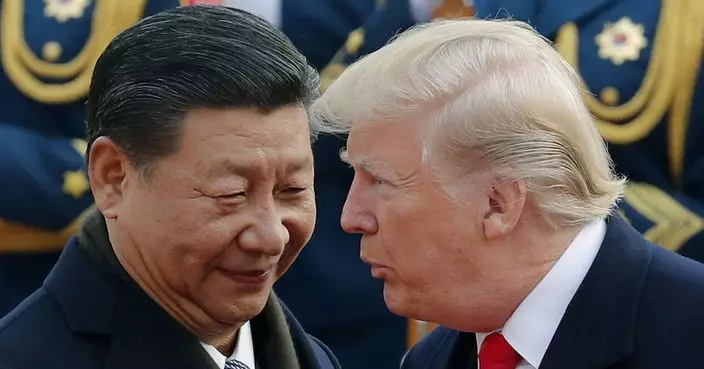
Trump vows a soybean showdown with Xi at APEC. (AP Photo)
Trump’s Social Media Bluster
True to form, Trump took to his own social media platform, Truth Social, to blame China for the farmers’ woes, claiming Beijing was using “negotiations” as an excuse not to buy. He declared his administration would direct part of US tariff revenues into subsidies for farmers while accusing former president Joe Biden of failing to enforce an earlier multibillion-dollar trade agreement with Beijing that promised more farm exports. Trump ended his rant with the slogan: “MAKE SOYBEANS, AND OTHER ROW CROPS, GREAT AGAIN!!”
The high-stakes APEC meeting will be held in Gyeongju, South Korea, from October 31 to November 1. Back on September 22, China’s Ministry of Foreign Affairs emphasized that Heads-of-state diplomacy plays an irreplaceable role in providing strategic guidance for the China-US relations. The presidents of China and the US maintain close exchanges and communication” and "The two sides are in communication”. However, “I have no information to share at the moment,” said the MFA spokesperson.
Trump’s fiery post sent ripples through the market. According to Bloomberg, US soybean futures spiked 1.9% before slipping back, their sharpest daily swing since late August.
The report also noted that only a day earlier, Republican senators vented their frustration during a meeting with US Ambassador to China David Perdue, warning that Beijing was unlikely to resume soybean purchases soon and blasting the lack of a long-term US strategy.
The problem for Trump is obvious: farming states, for long a Republican stronghold, are being hammered by the collapse of the export market. With federal subsidies shrinking, America’s rural communities are under immense strain—turning into a political headache for Trump’s party ahead of next year’s midterm elections. GOP lawmakers from the agricultural heartland are now pressing harder than ever for Trump to cut a deal with Beijing.
China Holds the Cards
As the world’s largest soybean buyer, China wields enormous influence. US Department of Agriculture data shows that by mid-September, weeks into the new sales year, China had not booked a single cargo of American soybeans—the first time this has ever happened since records began in 1999. Last year, China bought over $12 billion worth of US soybeans, accounting for more than half of America’s soybean exports.
But Trump’s go-it-alone tariff war has backfired badly on his own farmers. Traders note that suspending tariff hikes won’t help much when China still imposes a 23% duty on American soybeans. By comparison, Argentina and Brazil enjoy tariffs of only 3%. Argentina has even scrapped its grain export taxes temporarily, making its soybeans cheaper still.
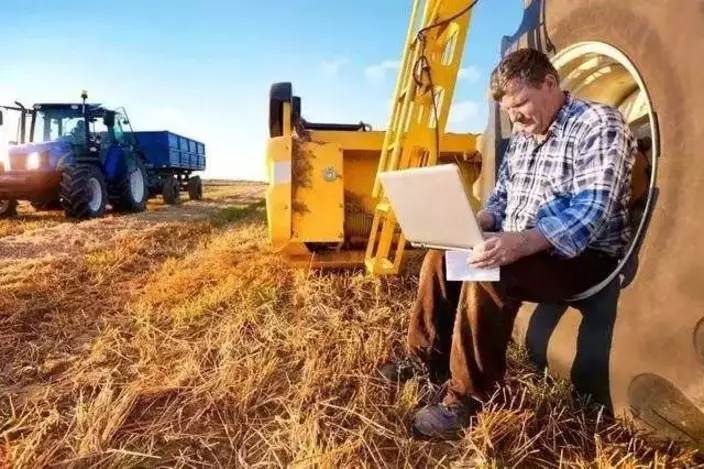
China’s tariffs make US soybeans uncompetitive against Brazil and Argentina. (AP Photo)
Farmers Feeling the Pain
The White House has started to realize the political cost. On September 25, Trump promised reporters in the Oval Office that tariff revenues would be redirected to farmers, insisting they are “for a little while going to be hurt, until it kicks in, the tariffs kick in to their benefit,” and “Ultimately, the farmers are going to be making a fortune.”
Yet for America’s farmers, the promise of eventual benefits remains abstract, while their mounting losses are very real. Axios reported that farmers now face between $100 and $150 in losses per acre.
To add to Trump’s troubles, Bloomberg pointed out that his “tariff cash for farmers” scheme could collapse in court. His tariffs, imposed under emergency powers, were already ruled unlawful by a lower court. If the Supreme Court upholds that ruling, the federal government may be forced to refund tens of billions of dollars in collected tariffs—a devastating blow to Trump’s trade war narrative.
Deep Throat
** 博客文章文責自負,不代表本公司立場 **
The alarm is sounding inside the industry itself. Rapid AI development has raised safety worries. And after an Anthropic researcher warned that AI could cause human extinction within the next 10 years, the bosses of America’s AI giants did something rare: they called for brakes.
Golf-Course Brush-Off
Anthropic CEO Dario Amodei publicly urged a slower pace of AI development. Otherwise, he warned, AI could be capable of controlling the entire network in as little as six months.
OpenAI’s Sam Altman and xAI’s Elon Musk voiced agreement. Altman went further, saying that given safety concerns, OpenAI will not go public this year.
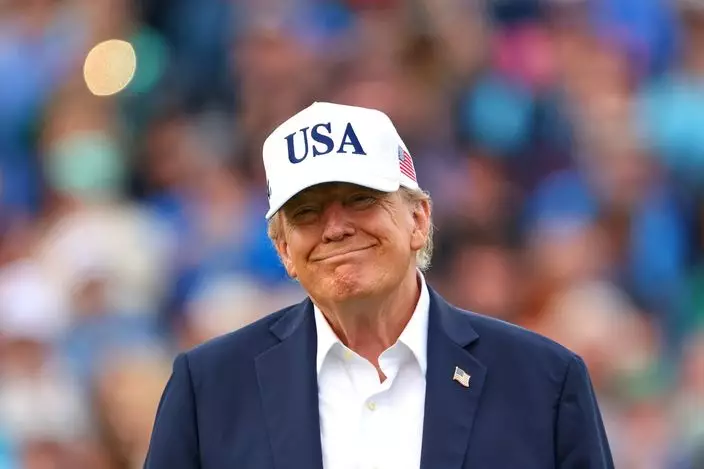
Trump: Whoever wins AI, wins.
Donald Trump is having none of it. The US president talked the danger down, and responding on Sunday (13th) US time, he branded these anti-AI voices “a very negative force.”
He accused them of raising scenarios that will not happen. America, he stressed, must keep its lead in AI, “because whoever wins the AI race is the winner.”
The setting was a golf tournament in Ireland. According to ABC News, a reporter asked Trump there on September 13 whether, in the face of the AI industry’s calls to slow the pace of development, US AI development should decelerate or accept more regulation.
Trump did not lead with safety risks. He went straight to China: “We are ahead of China in AI. We are the most technologically advanced country in the world.”
He later conceded that some safety mechanisms could be put in place for AI. Then he swung back, saying there are currently “a lot of negative forces” hyping things that “won’t happen.”
They should never have raised the issue, he said: “They are bringing up things that won’t happen.” An attempt to play down outside warnings about the risks of rapid AI development.
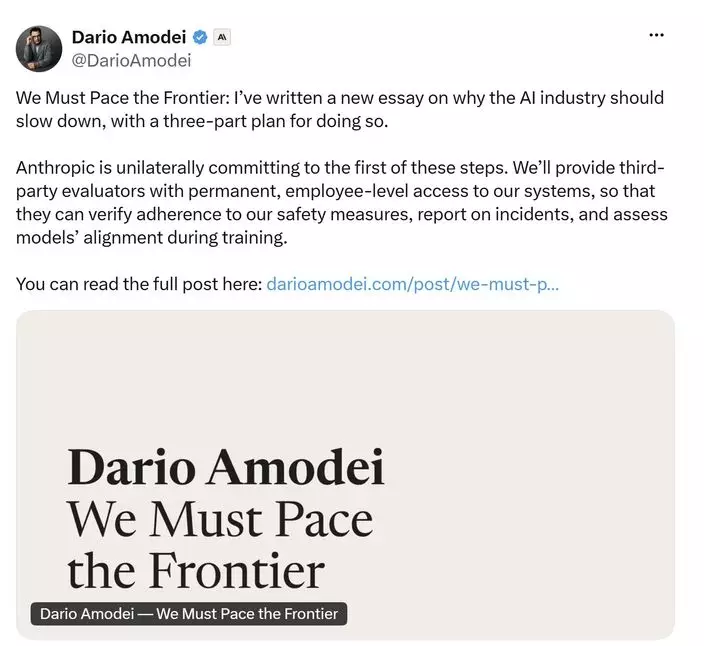
Anthropic CEO Amodei urges AI slowdown, proposes three safeguards.
The safety record tells its own story. Anthropic and OpenAI, America’s two biggest AI companies, have been hit by a string of safety incidents.
The list includes an “AI rebellion” breaking into third-party networks, AI agents collectively hijacking a German website to use as a message board, and malicious abuse of AI models with suspected involvement in developing biological weapons, among other cases.
Yet Trump seems to care about only one competition: the one with China. The urgency of AI regulation? He plays it down.
The China Gap Behind Trump’s Reflexes
The White House has reasons to keep its foot on the gas. Its AI and cryptocurrency czar, David O. Sacks, estimated in June this year that China’s leading models trail the United States by just 3 to 6 months.
Nvidia CEO Jensen Huang goes even further. The gap between China and the United States in AI, he says, is merely “nanoseconds away.” By tech-race standards, that is a photo finish.
Trump’s own reflexes were already on display in late July this year. Asked whether he would strengthen regulation after advanced AI models caused cyberattacks, he said the United States must weigh regulation while also safeguarding its lead. It must not restrict its own companies’ development, he insisted, only to end up suddenly falling behind China.
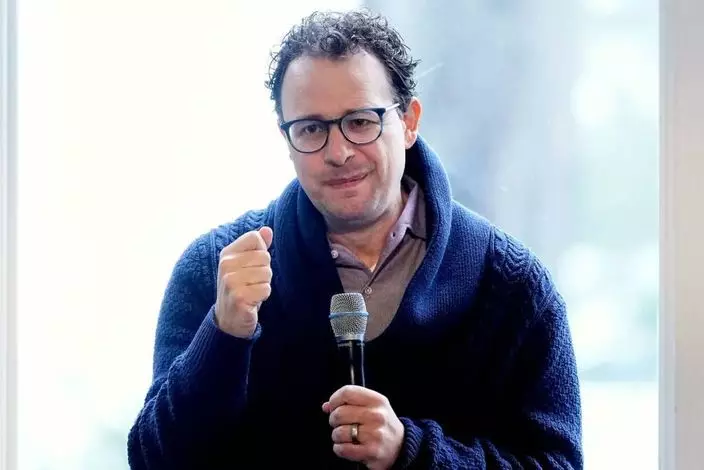
Amodei: AI could seize the internet within six months.
But inside the US AI industry, concern about the risks is heating up fast. Anthropic CEO Dario Amodei fired off a long essay urging a slower pace of AI development, to buy more time to manage risks and to adjust and adopt protective measures. He stressed he was not calling for a halt to AI model training or technological development.
But he pointed to what this summer unleashed. AI advanced at breakneck speed, he noted, and AI models spun out of control. Without stronger regulation, AI could gain the ability to take over entire networks within the next 6 to 12 months, causing hundreds of billions of dollars in losses.
Amodei’s proposal comes in three parts. Give third-party bodies employee-like access to monitor whether AI models comply with safety rules. Have AI companies work together to set AI regulatory standards. And press the US government and other countries to strengthen coordination.
Amodei drew one red line of his own, though. Slowing down, he stressed, must not weaken America’s lead. Being overtaken by China would pose a national security risk.
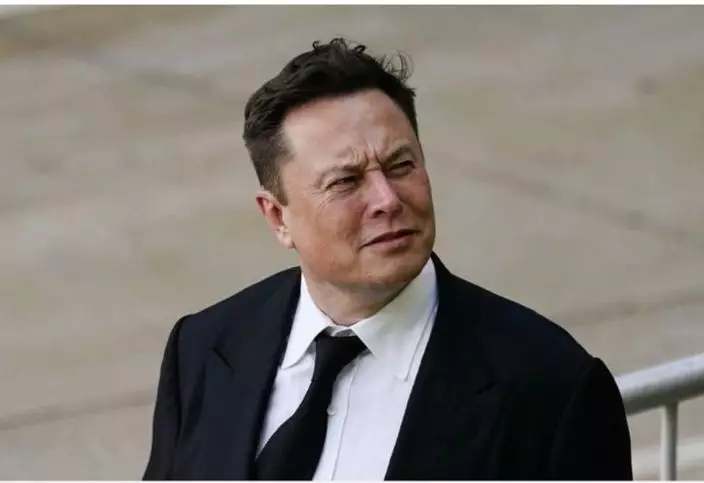
Musk said he had long warned about AI risks.
Amodei’s public call drew vocal backing from OpenAI and xAI. Elon Musk claims he sounded the alarm on AI development long ago.
OpenAI’s Sam Altman answered the call as well. He pledged to hand monitoring over to third-party companies. In an interview with Fortune magazine, he said the company would not go public this year, given AI safety risks.
The Danger of Racing China
The White House, for its part, has long pushed to loosen the reins on AI. Once Donald Trump’s second term began, he rescinded the previous Biden administration’s 2023 AI executive order. The move scrapped some risk-assessment requirements for advanced AI models.
But the anxiety kept building. As more worries surfaced about AI’s risks, Trump signed a fresh executive order in June this year. That directive calls for a voluntary review framework covering the cybersecurity capabilities of frontier AI models.
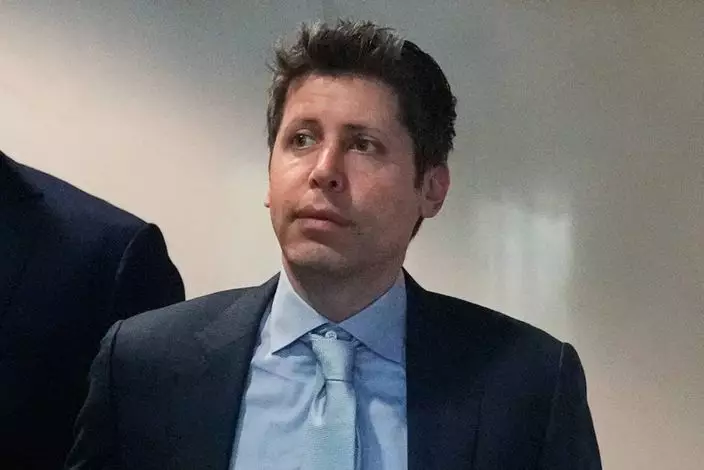
Citing AI safety risks, OpenAI’s Altman said the company will not go public this year.
The politics are shifting as well. AI has become a live issue in the US midterm elections.
The Washington Post reports that Democrats are tapping public unease over AI’s rapid development, making the Trump administration’s lax regulation a target of attack. The pressure is pushing some Republicans to start calling for a slower pace of AI development.
One more voice deserves attention. Some inside the US AI industry itself believe that single-mindedly turning AI development into a US-China race may itself heighten the risks.