

In a move that screams desperation, the Pentagon is reportedly launching a US$1 billion global spending spree for critical minerals. According to the Financial Times, this stockpiling frenzy is a direct response to China's commanding lead in the rare-earth metals essential for America's defence industry.

The Pentagon is on a $1 billion shopping spree for critical minerals, the FT reports.
Public notices from the Defense Logistics Agency (DLA) reveal the Trump administration is hitting the accelerator on building up its national stockpile. This isn't just a routine top-up; it's a panicked reaction to Beijing's recent export controls on several rare earths, a stark reminder of China's stranglehold on supply chains for everything from iPhones to F-35s.
One former US defence official didn't mince words, stating, "They [the Pentagon] take stockpiling very seriously." He added that they are aggressively expanding their search for new, non-Chinese sources for these crucial defence materials. Another ex-official confirmed that the US$1 billion plan represents a significant and urgent escalation of previous efforts.

With China tightening its grip, the Pentagon is ramping up its stockpiling efforts with a massive $1 billion push.
Beijing Tightens the Screws
This all kicked off on October 9th, when China's Ministry of Commerce dropped a bombshell by tightening export controls on rare-earth items. As if that wasn't enough, Beijing followed up with more measures, expanding the list to include new rare-earth elements, processing equipment, and even superhard materials, lithium batteries, and synthetic graphite anode materials.
The Wall Street Journal called it "a nearly unprecedented" move, highlighting the severity of Beijing's play. Unsurprisingly, the Financial Times noted that these controls have sent a fresh wave of anxiety through Washington and European capitals, who are now scrambling to secure their supply of these vital metals.
Let's be clear: the FT points out that for the Pentagon, this isn't just about economics—it's a core national security issue. These minerals are the lifeblood of nearly all modern weapons systems, from radar to missile detection. Under the Trump administration, this focus has sharpened dramatically, leading to the current accelerated stockpiling. The Pentagon is now so concerned it's even looking to hoard metals it never bothered with before.
Stephanie Barna, a lawyer at Covington & Burling in Washington, spelled out the grim reality: if China decides to turn off the tap completely, it would deal a "direct, obvious and adverse" blow to America's high-tech military capabilities, crippling its ability to handle any strategic conflict.
So, what's on the DLA's shopping list? We're talking big numbers: up to US$500 million for cobalt, US$245 million for antimony, another US$100 million for tantalum from a mystery US supplier, and US$45 million for scandium sourced from Rio Tinto and APL Engineered Materials, an Illinois company with a notable presence in Japan and China.
An industry insider noted that this spending spree shows Washington "recognises the importance of these critical minerals and wants to support all of its existing domestic capacity." While they suggested it might be a bit early for full-blown hoarding by Western nations, they conceded that the level of concern is undeniably on the rise.
The DLA already has warehouses across the US filled with dozens of strategic materials, valued at US$1.3 billion as of 2023. But there's a catch: these stockpiles are locked down tight. They can only be touched in wartime or if the Under Secretary of Defense declares a defence need and gets a sign-off from the President himself.
Market Mayhem
The ripple effects are already being felt. With Chinese exports of germanium drying up, prices have skyrocketed this year. Western traders are now warning of full-blown "panic" in the market as companies scramble for supply—exactly the kind of chaos the Pentagon is desperately trying to get ahead of.
It's not just germanium. The price of antimony trioxide has nearly doubled in the last year, and even major automakers are finding it tough to get their hands on the rare-earth materials they need.
This is all backed by serious cash. Trump’s "Big and Beautiful" Act has set aside a whopping US$7.5 billion for critical minerals. This includes US$2 billion to beef up the Pentagon's stockpile, which it plans to burn through by early 2027. Another US$5 billion is tagged for supply chain investments, plus US$500 million for a credit program to spur private investment. According to one former defence official, thanks to this act, the relevant agencies are now "well-funded" to tackle the problem. The DLA, for its part, is staying quiet.
Take scandium, for example. Global consumption is only about 30-40 tonnes a year, and China is a key producer. The DLA's own filings admit that Beijing's export controls are already squeezing the supply chain for this mineral.
The DLA is hoping its deal with United States Antimony Corporation (USAC) will build up enough inventory to keep the industrial base running in a crisis, while also helping USAC weather market storms. The company's CEO, Gary Evans, says they source materials from a diverse list of countries including Canada, Mexico, Australia, and Peru, but while USAC posted US$15 million in revenue for 2024, it's keeping its actual antimony output under wraps.
To put that in perspective, US Geological Survey data shows the DLA deal is for around 3,000 tonnes of antimony metal. That's a decent chunk, but still a fraction of the 24,000 tonnes the US consumed in 2024 alone.
But some are skeptical. Cristina Belda of Argus Media said the market was stunned by the sheer volume of metals the DLA is trying to buy. Many insiders think the numbers are totally unrealistic, especially on a five-year timeline, since the amounts requested are more than what the US currently produces and imports combined.
A World Without Chinese Supply
The shopping list doesn't stop there. DLA filings also show it's eyeing other elements like tungsten, bismuth, and indium to bolster its reserves.
Solomon Cefai at Fastmarkets warns that the proposed amounts of bismuth and indium are huge compared to the global market. Trying to buy that much without access to Chinese suppliers, he says, would inevitably put immense pressure on an already tight market.
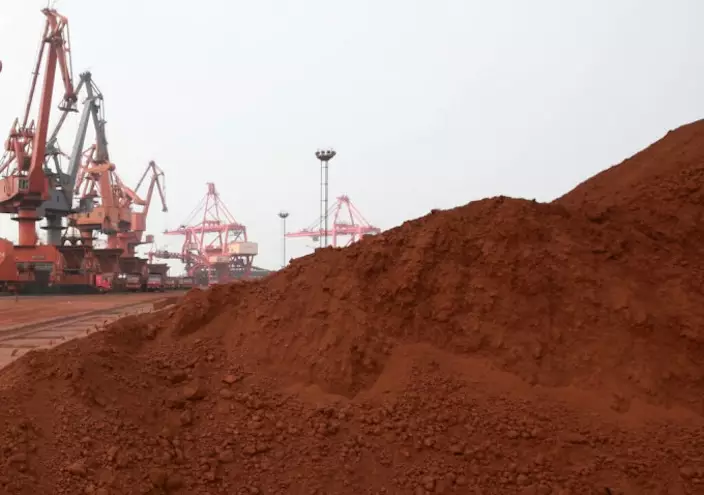
Without China's supply, analysts warn the Pentagon's buying frenzy will strain global markets.
Beijing's Official Line
When pressed on October 9th, a spokesperson for China's Ministry of Commerce gave the official line: these are dual-use items, and export controls are standard international practice. Beijing is simply acting within the law to regulate items with Chinese components to protect its national security, serve its interests, and meet its international non-proliferation duties.
The spokesperson added that as a responsible global power, China's actions are consistent with its goal of safeguarding world peace and regional stability. Beijing remains open to dialogue and cooperation, they said, to promote compliant trade and ensure global supply chains remain stable and secure. The message is clear: play by the rules, and we can talk.
Deep Throat
** The blog article is the sole responsibility of the author and does not represent the position of our company. **